

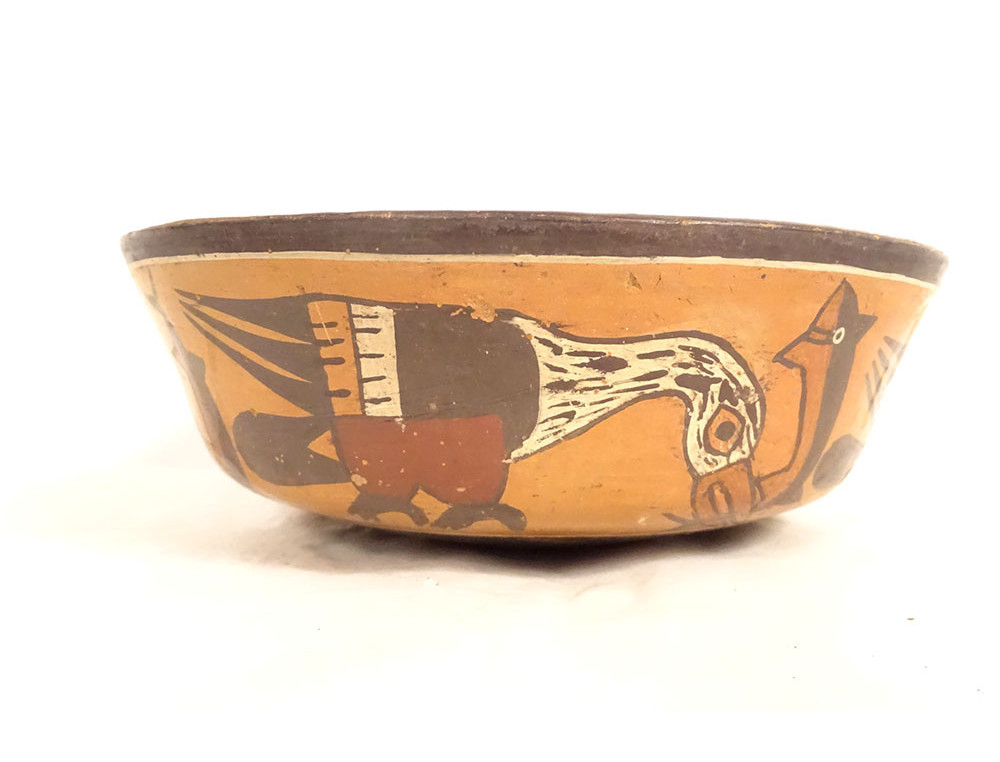
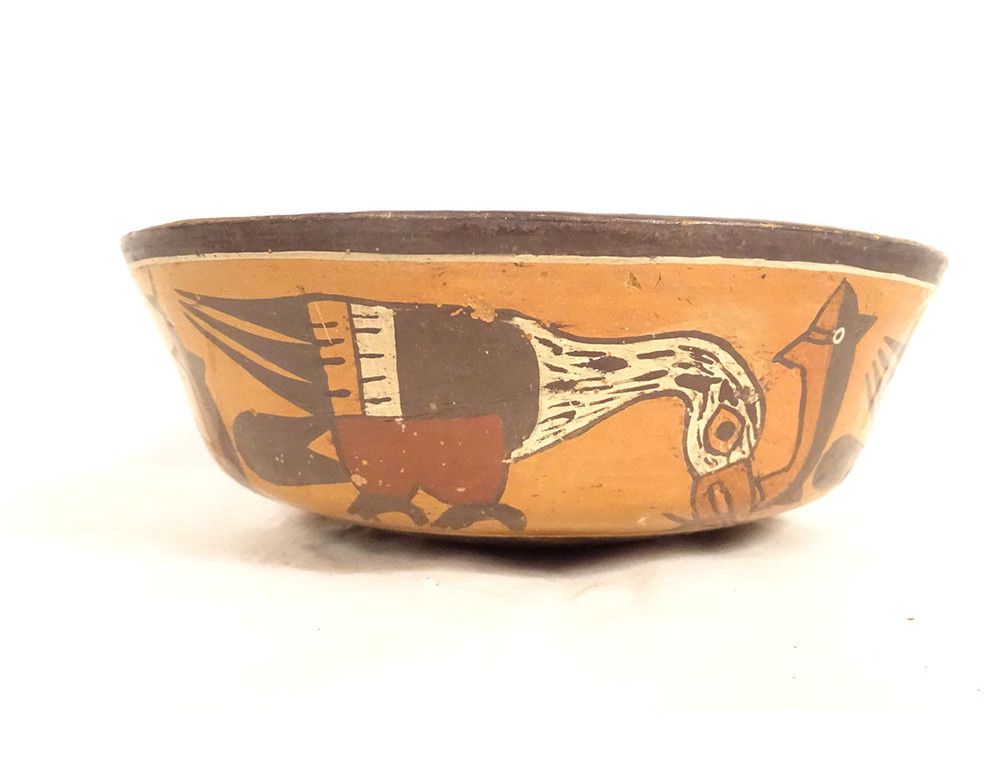
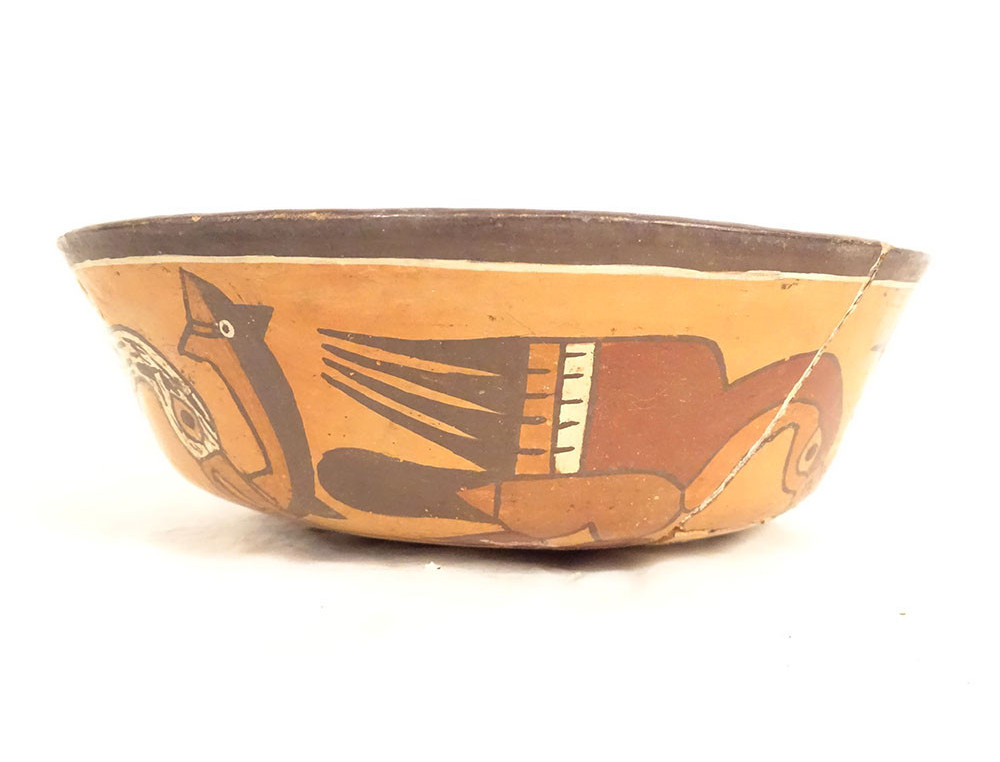
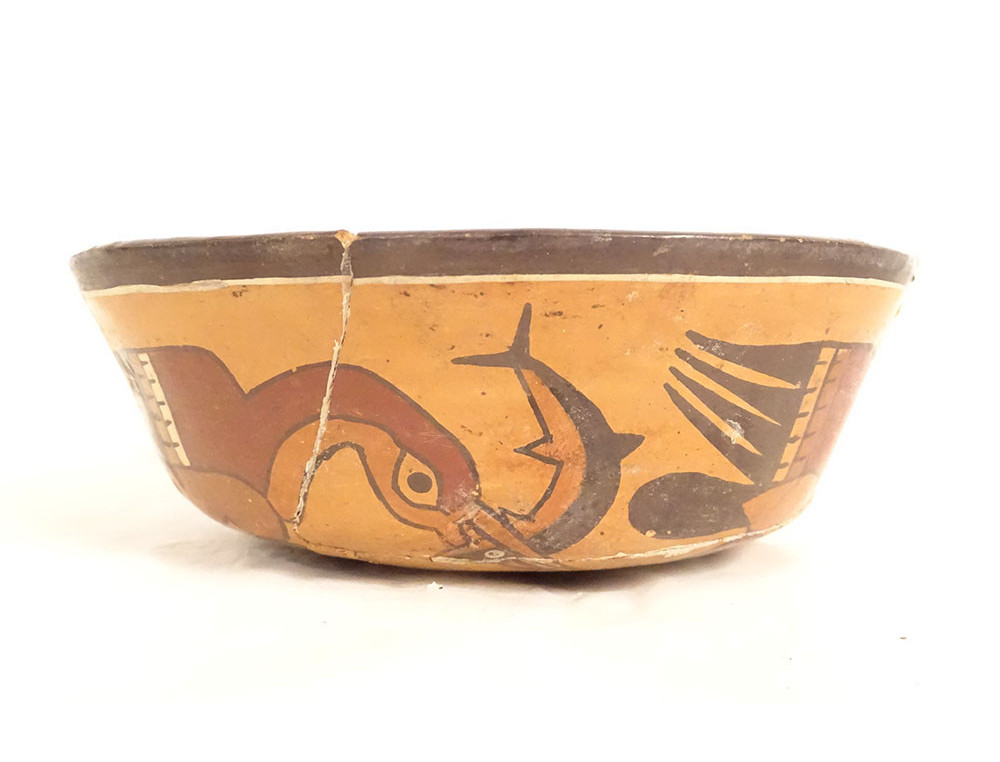
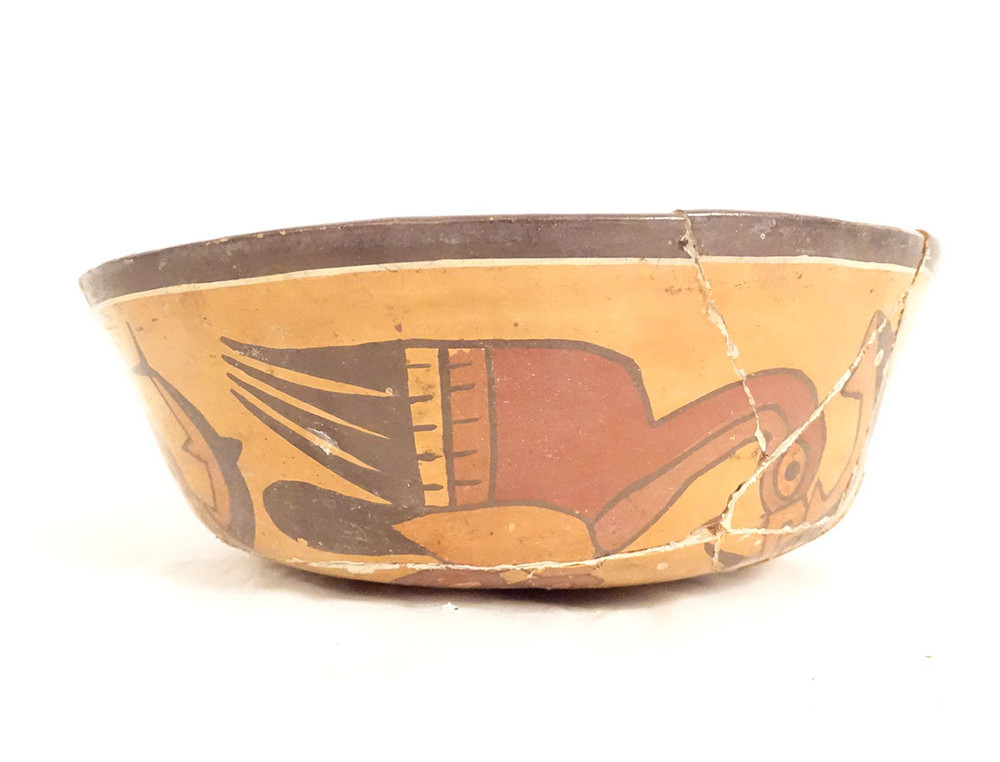
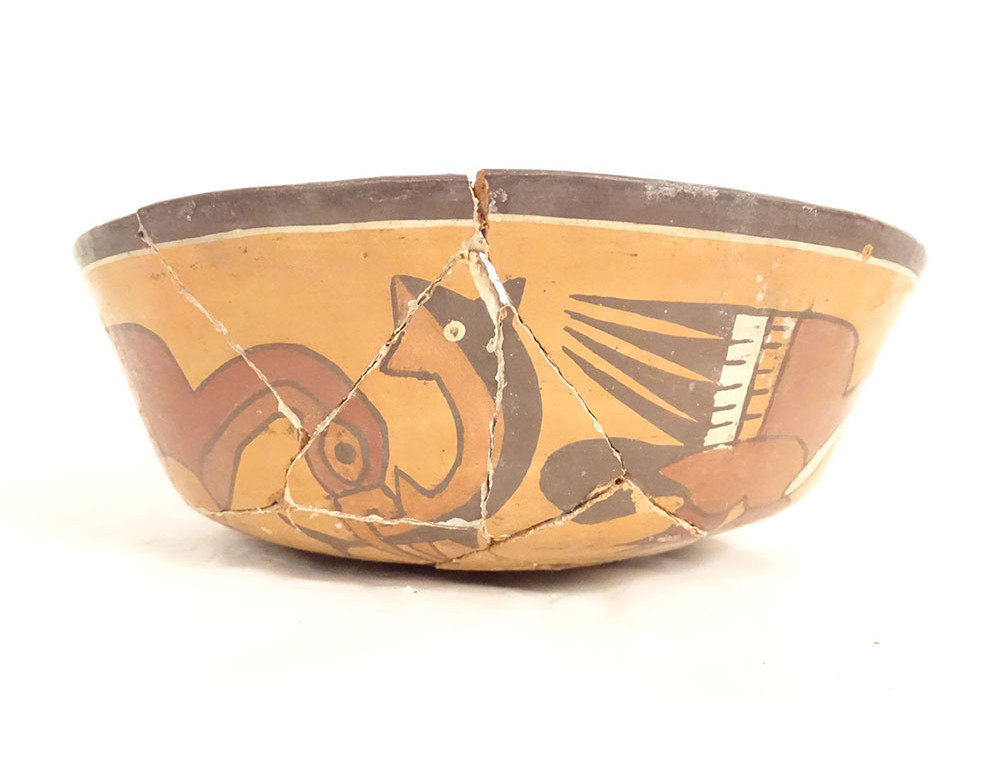
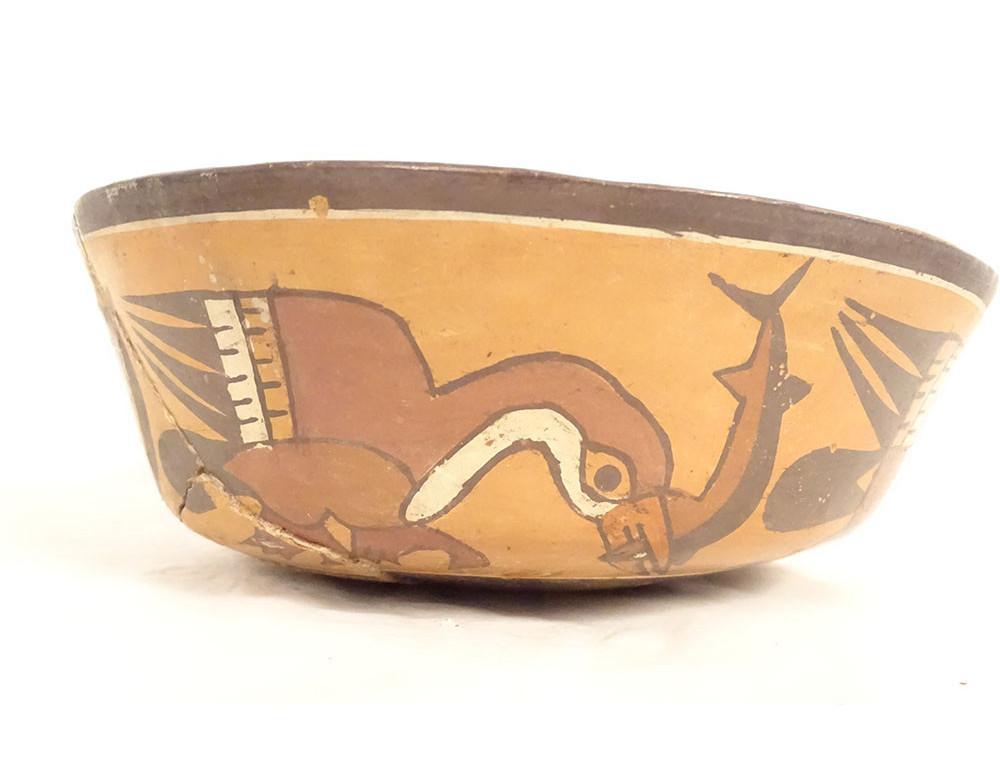
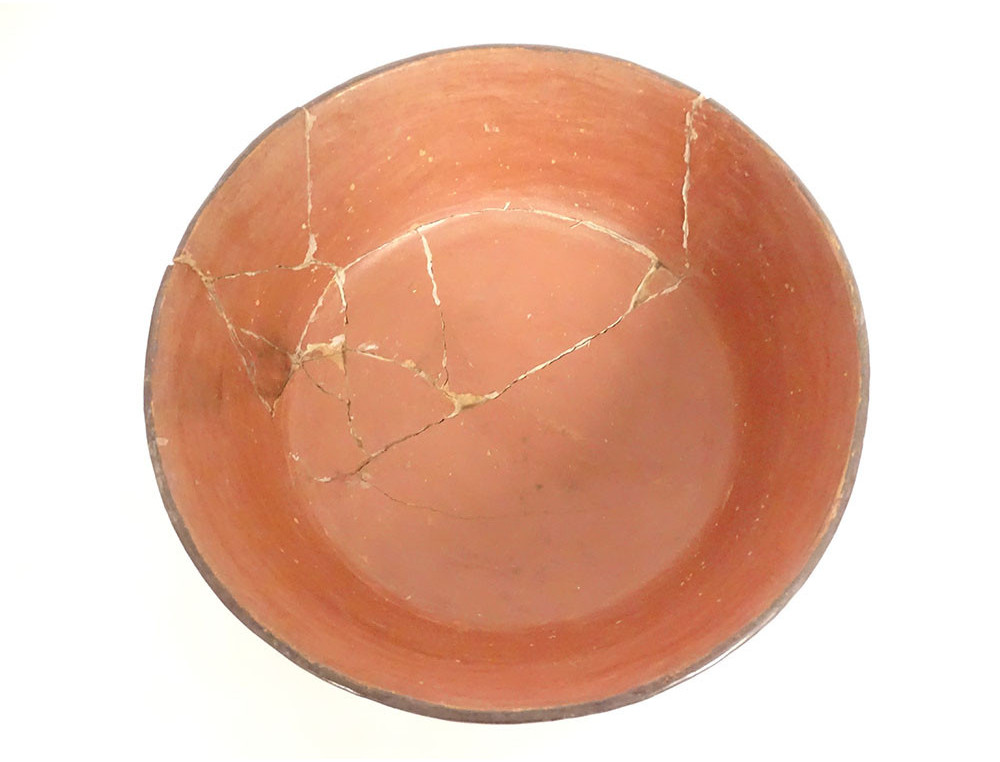
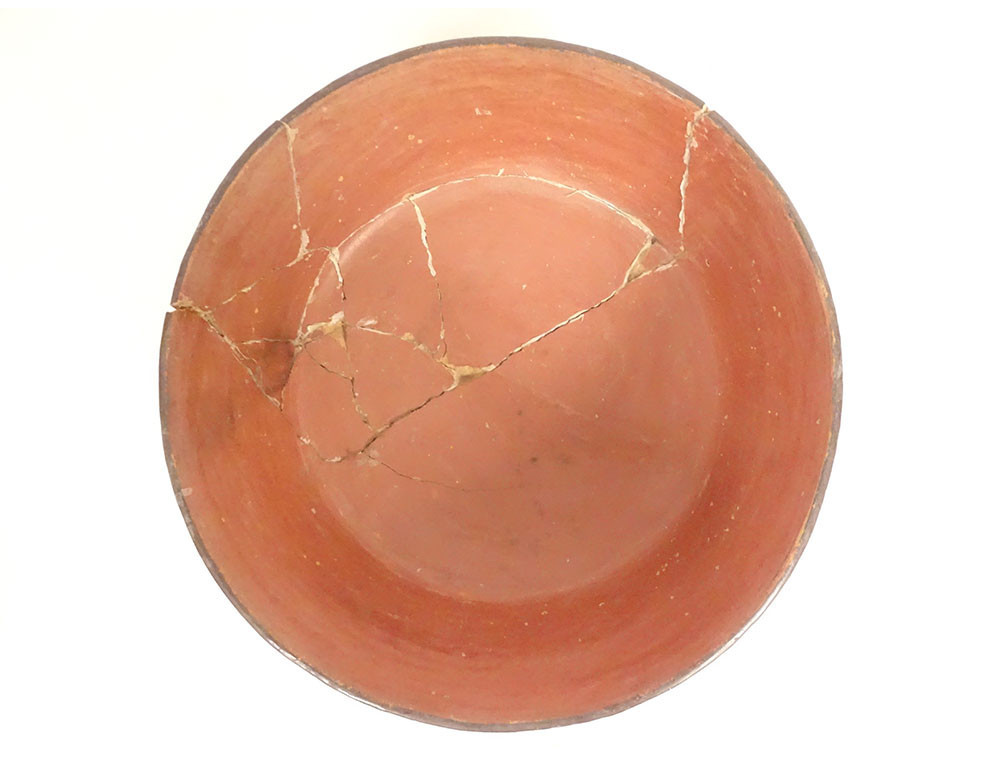
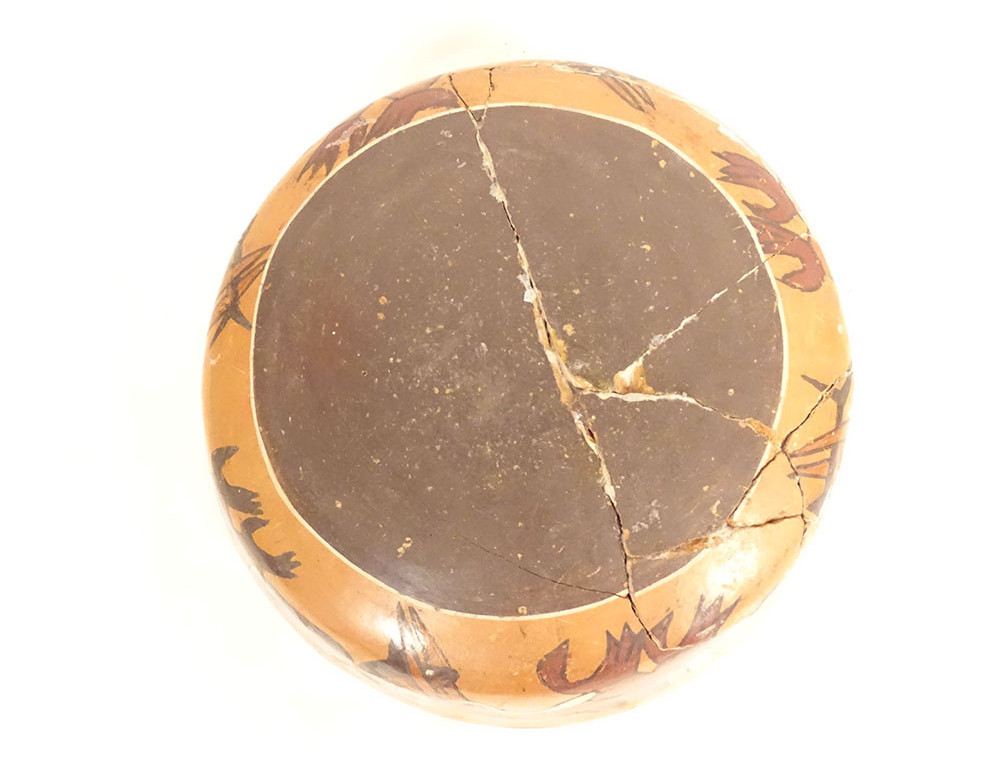
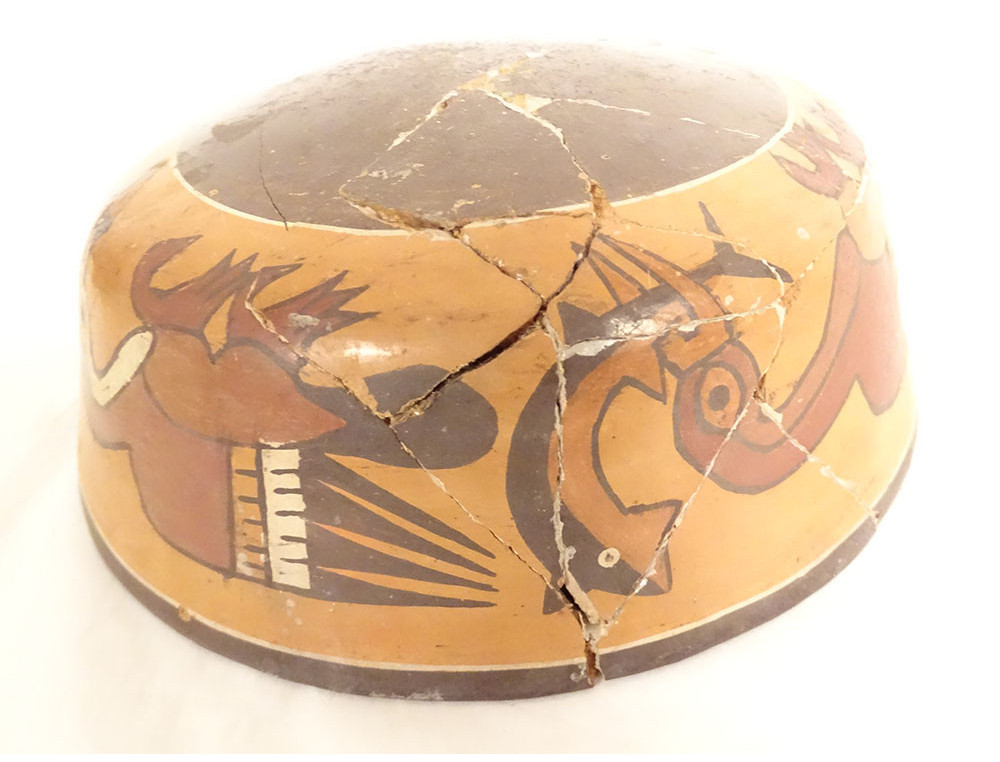

Pre-Columbian Nazca bowl from Peru, featuring birds and fish, polychrome terracotta.

 Articles
Pre-Columbian polychrome terracotta cup or bowl, depicting a frieze of birds fishing and eating fish, Nazca origin - Peru, circa 100-650 AD. Provenance: South/Central America.
This bowl is in its original condition; it has suffered the effects of time.
We have other pre-Columbian items for sale on this site.
Please note: this bowl has been broken and glued back together, signs of wear and tear from age, see photos.
This refers to the period in American history that begins with the arrival of humans in the New World and ends when Native American societies are replaced or transformed by European civilization. (Synonym: pre-Hispanic). The term "pre-Columbian" is used in the study of the indigenous civilizations of the Americas, particularly Mesoamerica (Olmecs, Toltecs, Zapotecs, Mixtecs, Aztecs, and Mayans) and South America (Caral civilization and Andean civilizations: Inca, Moche, Chibcha, and Cañaris).
Most pre-Columbian civilizations evolved within a chronology divided into three major periods, themselves subdivided, which define the styles:
– The Preclassic period (c. 2000 BC–c. 250 AD) includes the Early Preclassic (c. 2000–c. 1000 BC), the Middle Preclassic (c. 1000–c. 300 BC) and the Late Preclassic (c. 300 BC–c. 250 AD); – The Classical period (c. 250 AD–950 AD) includes the Early Classic (c. 250–c. 600) and the Late Classic (c. 600–c. 950); – The Postclassic period (c. 950–1500) includes the Early Postclassic (c. 950–1200) and the Late Postclassic (c. 1200–1500).