 Articles
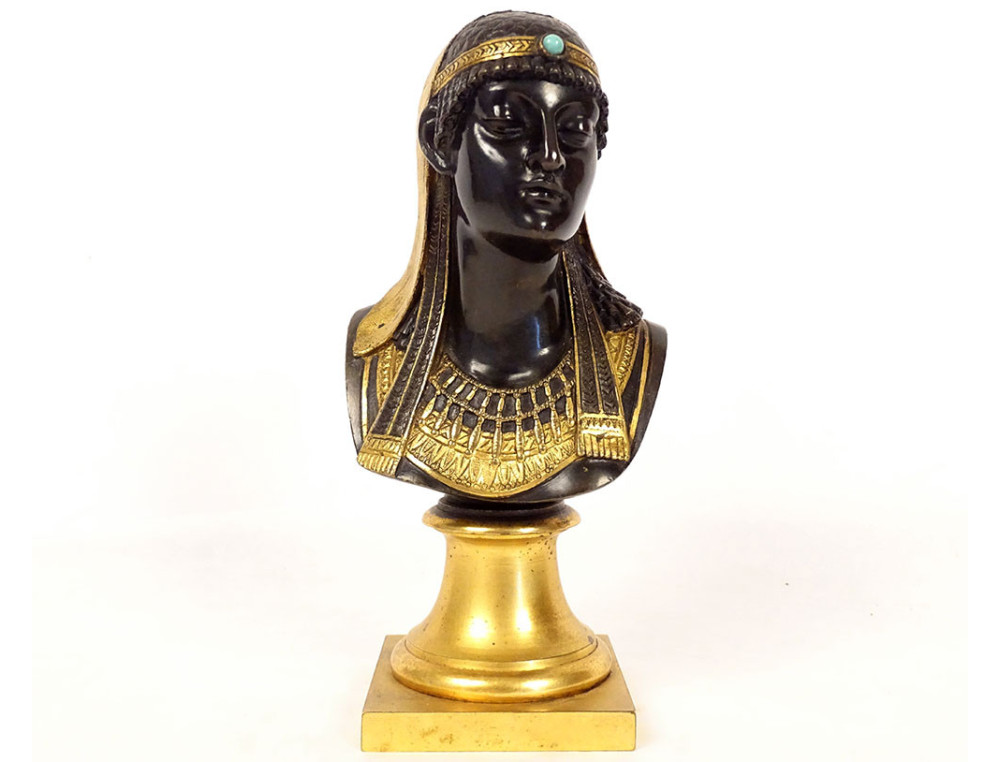
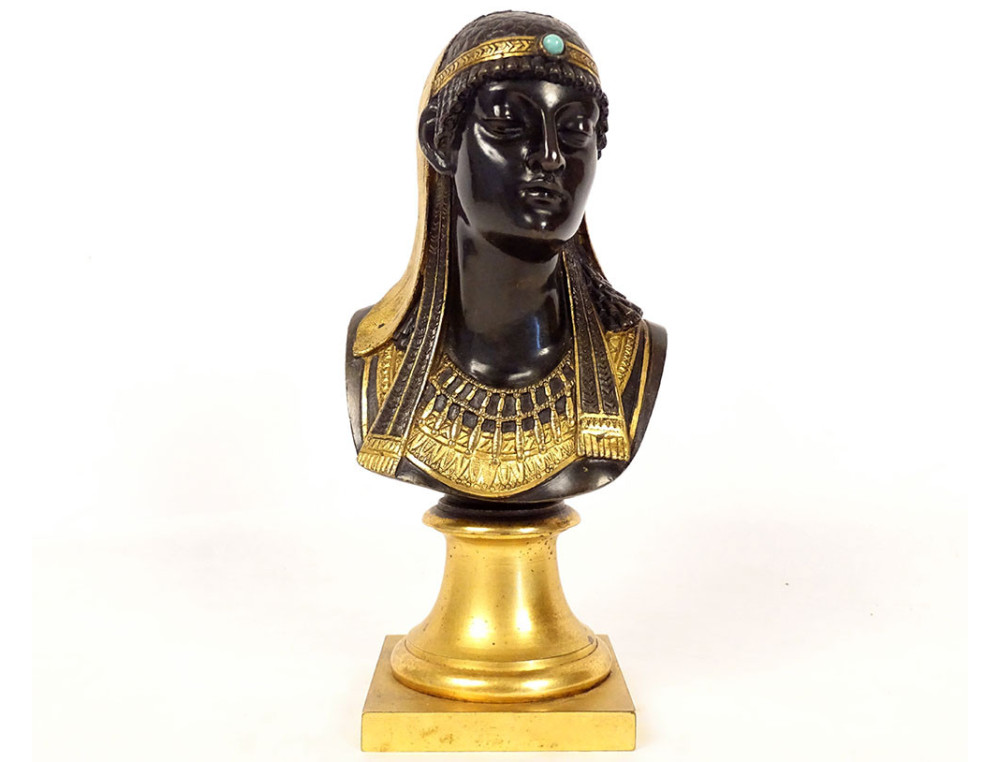
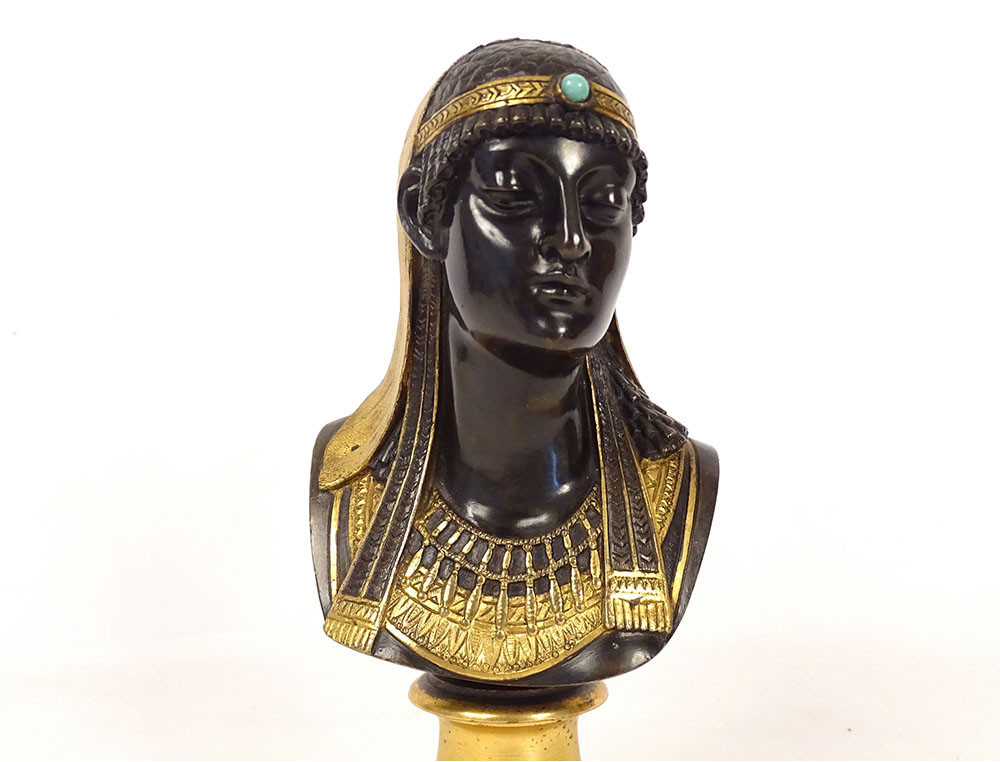
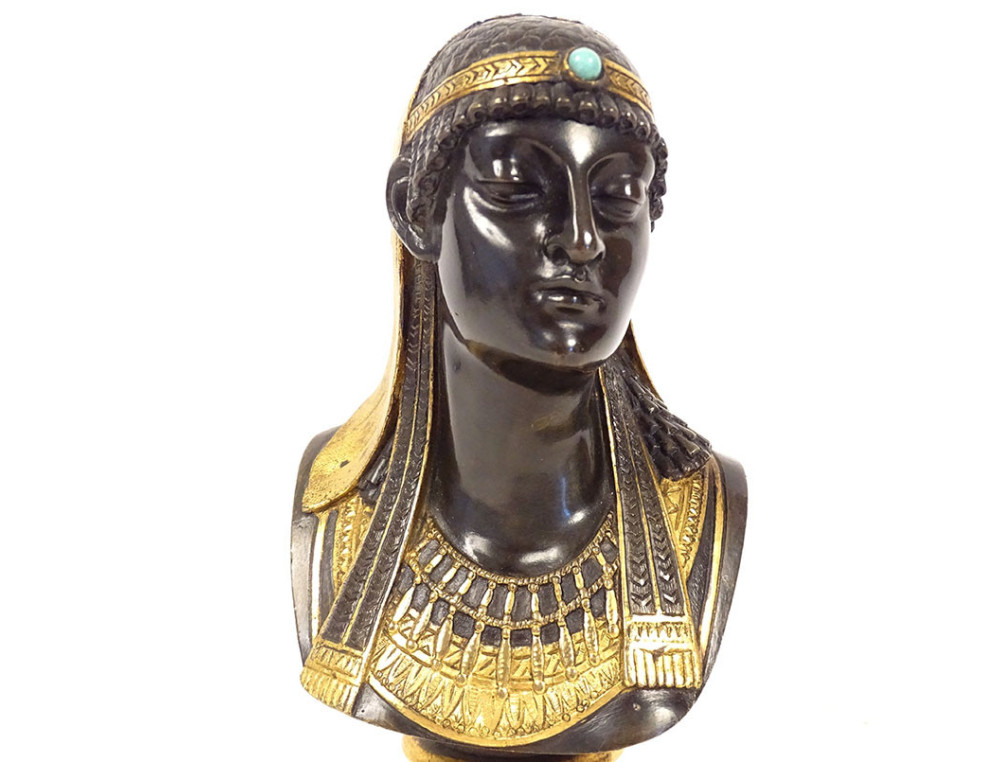
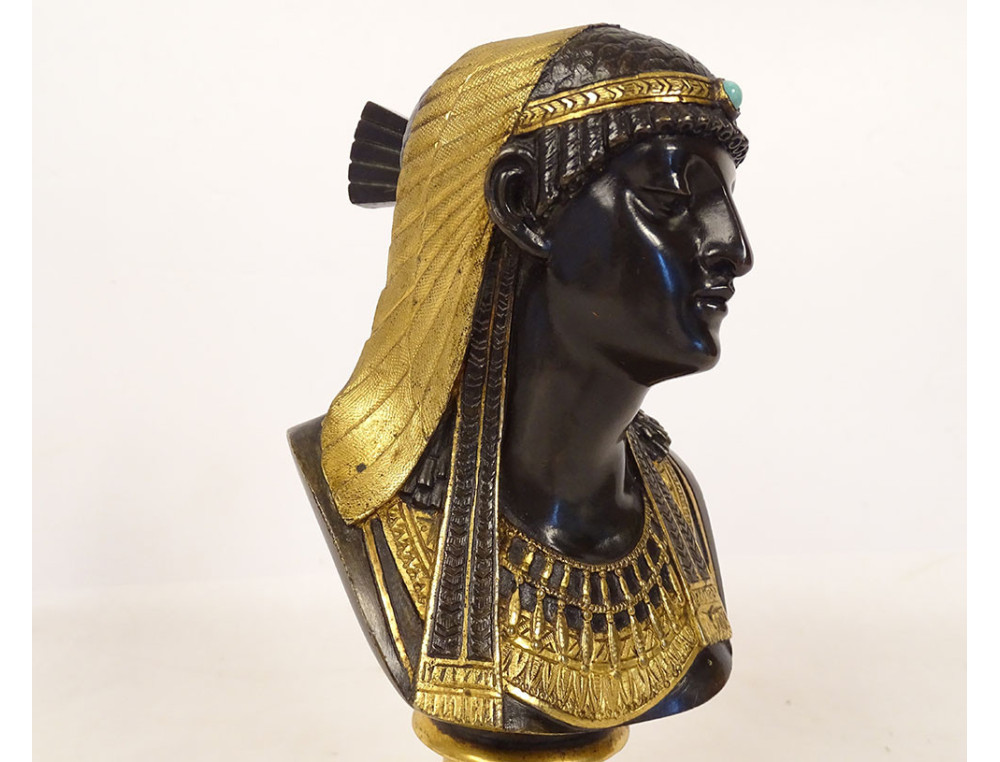
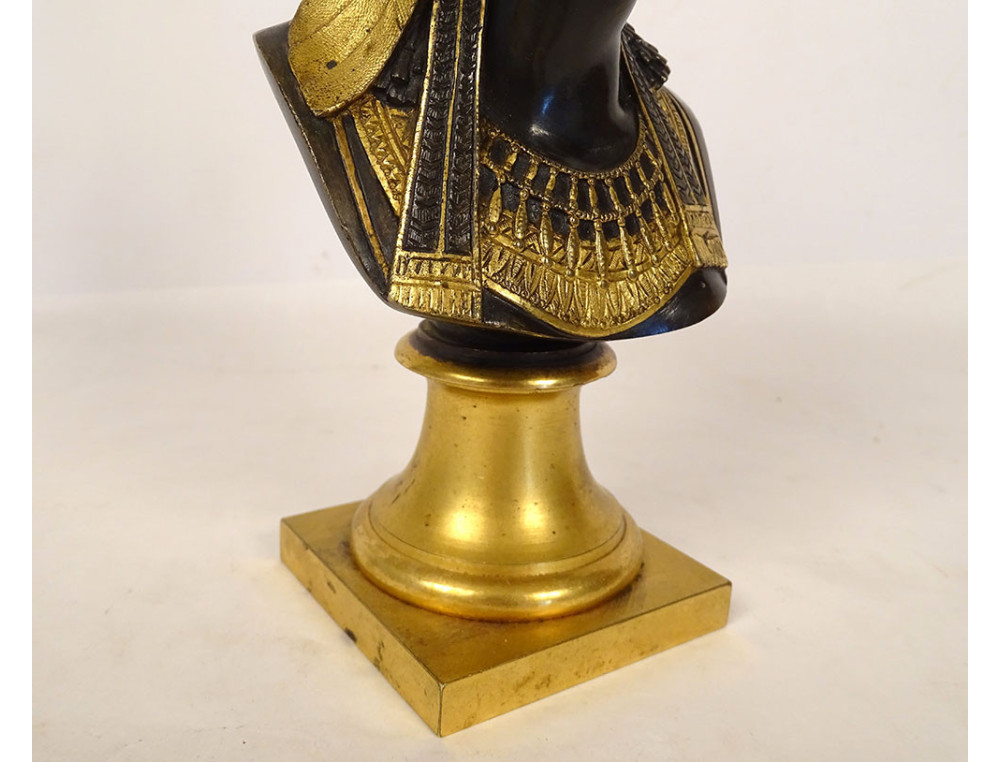
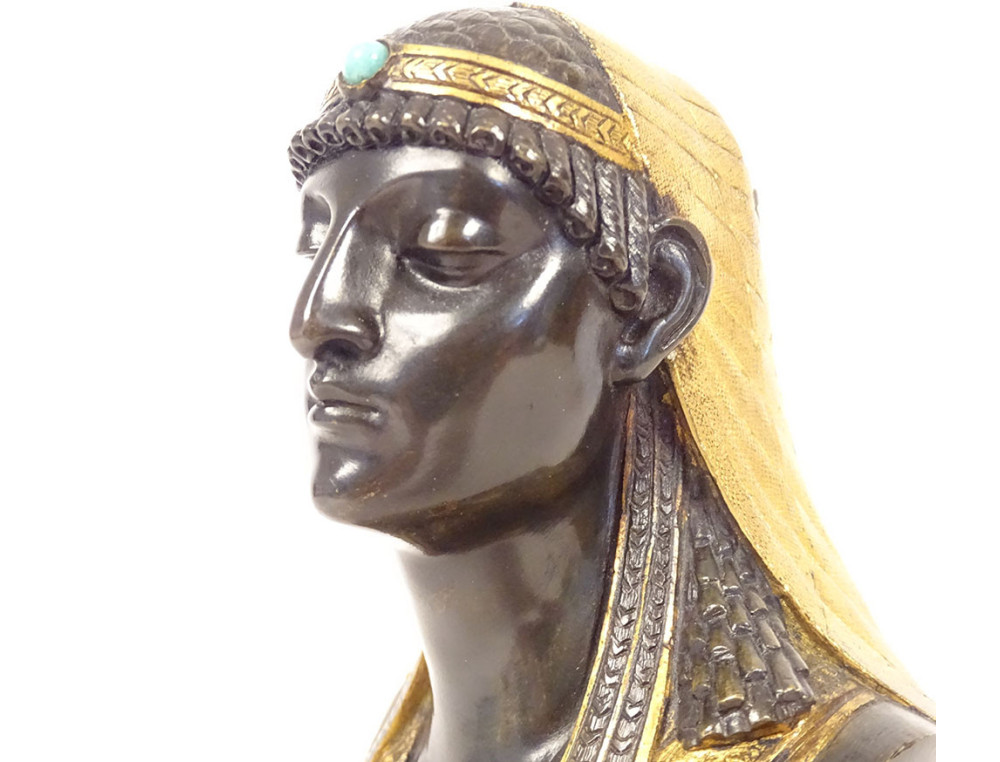
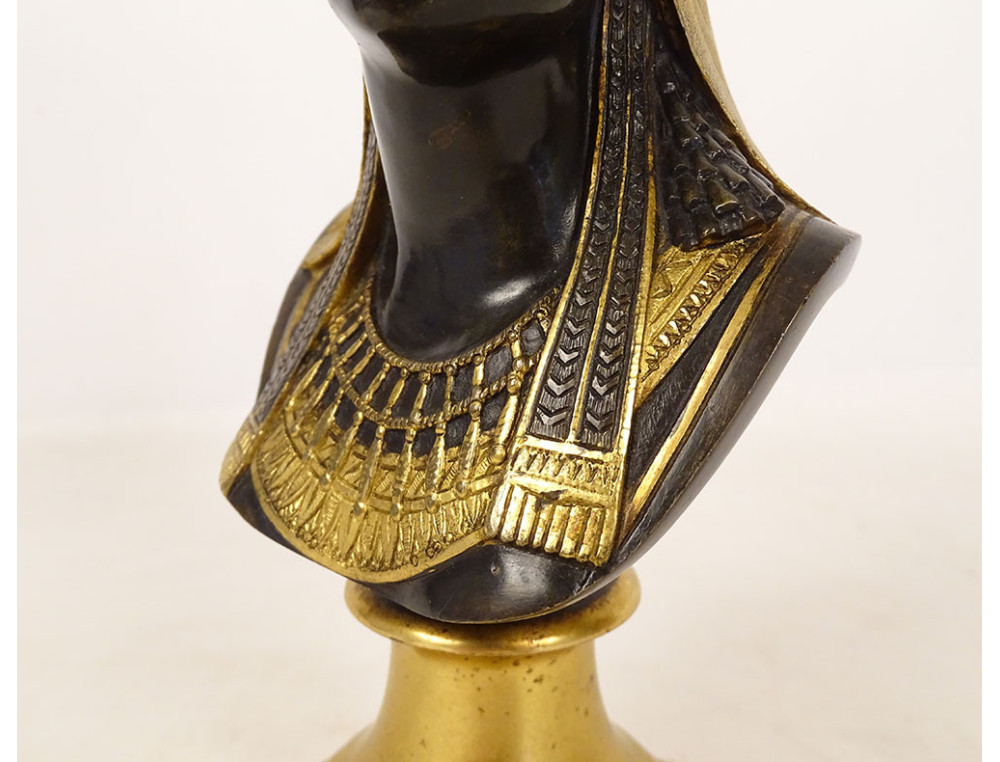
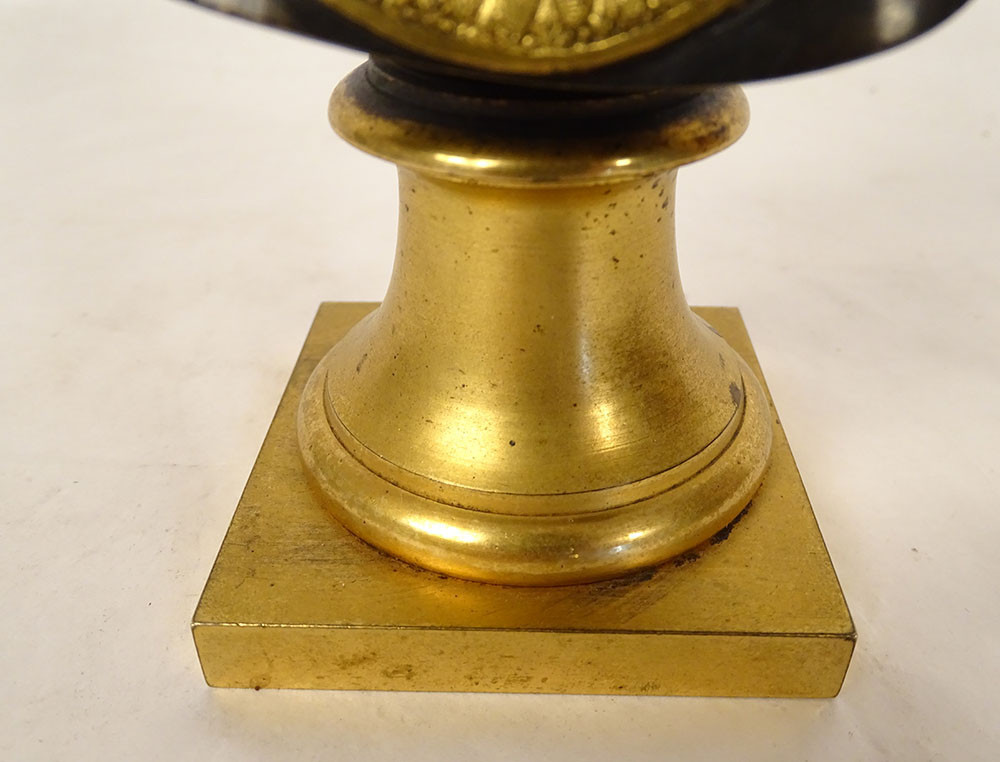
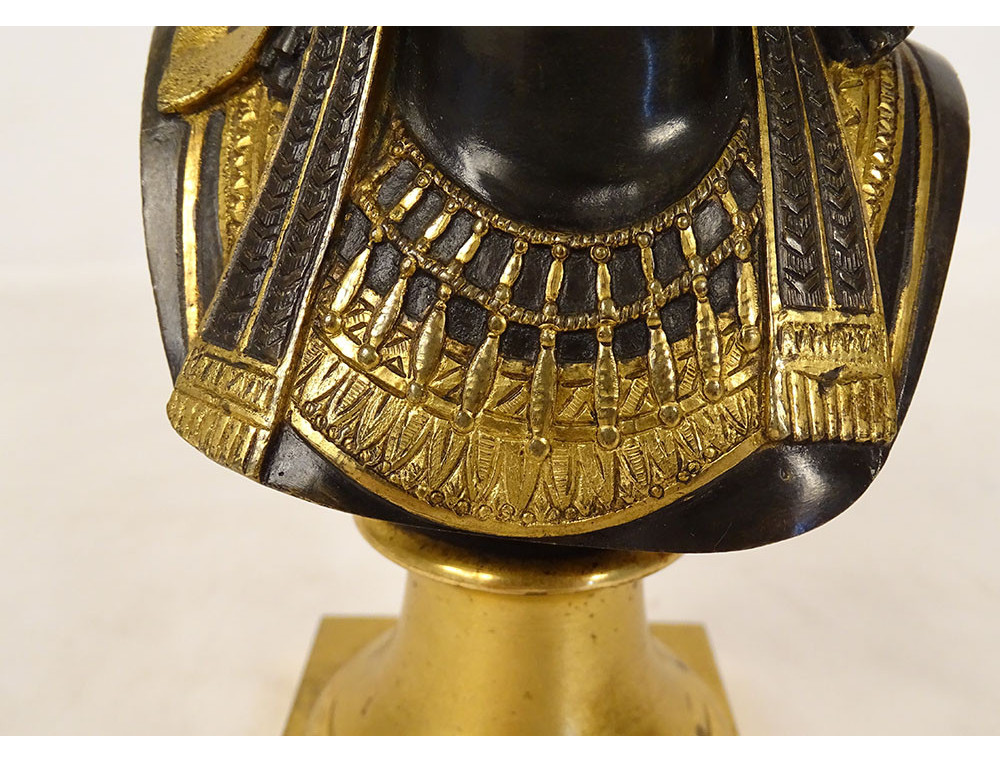
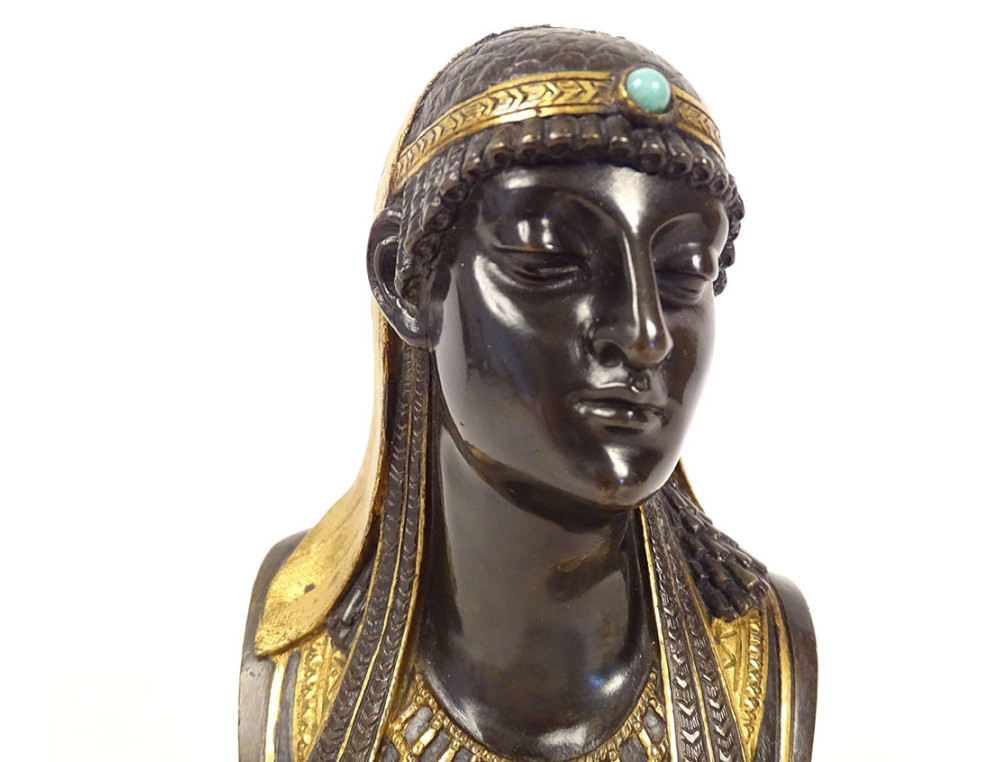
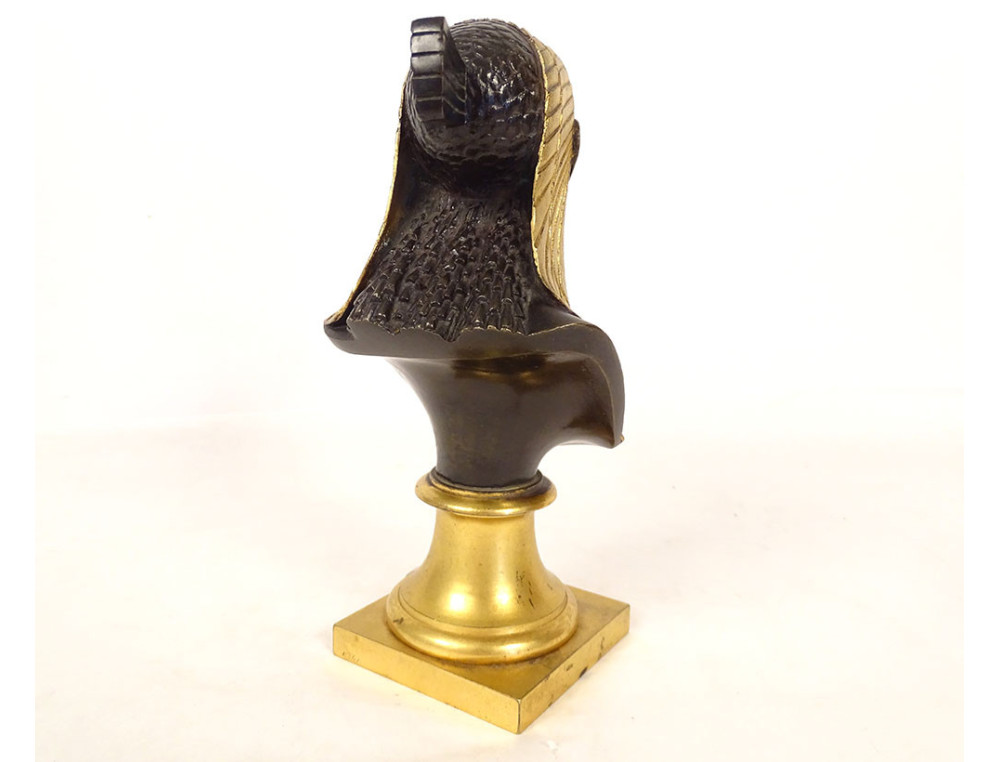
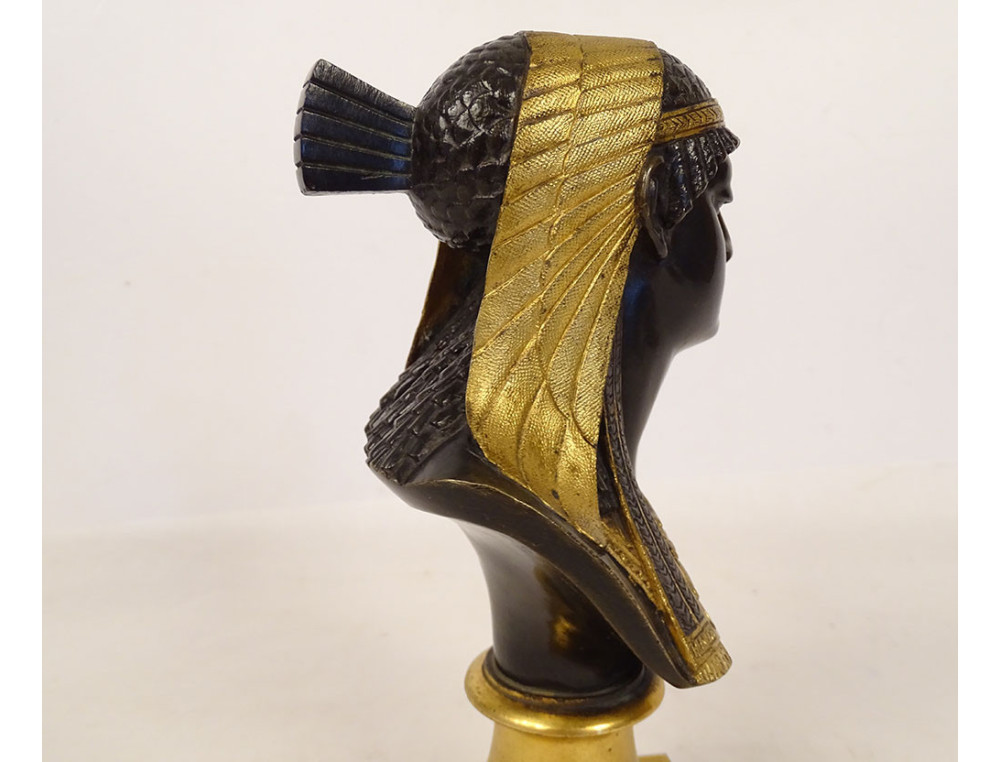
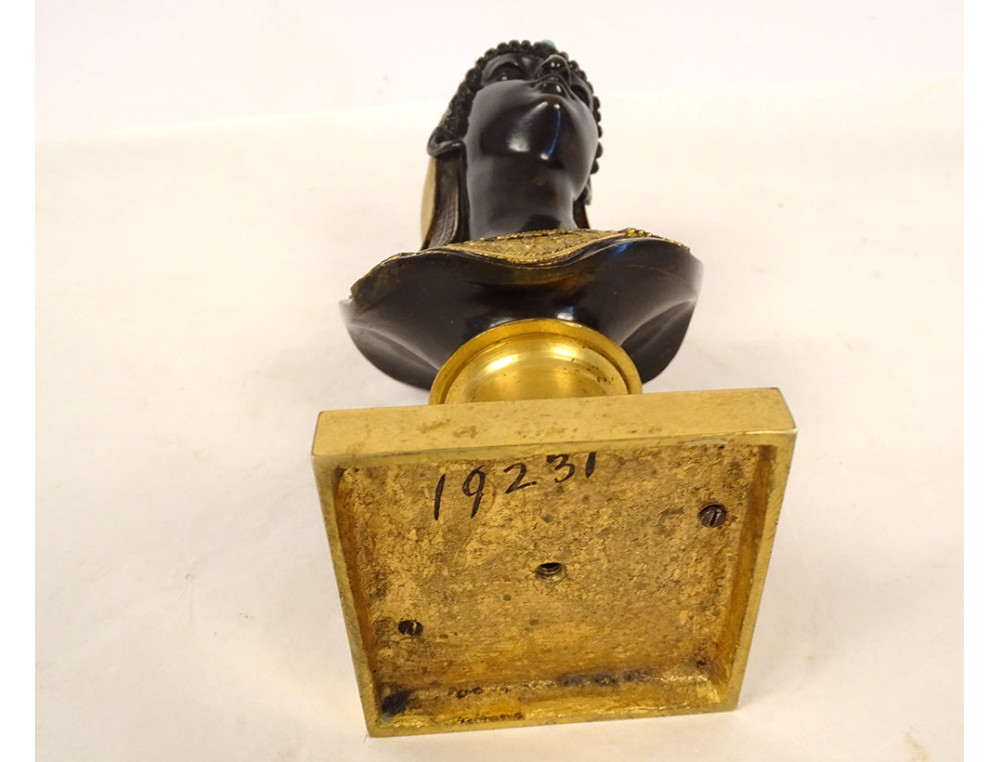
Neo-Egyptian* (Egyptian Revival) bronze sculpture with two patinas (black and gold) representing the bust of a Queen wearing the traditional headdress adorned with a diadem with cabochon and a wide plastron necklace, very probably the bust of Cleopatra or Nitocris, from the 19th century.
This bust is in very good condition and is very decorative, superb quality.
Note: minor scratches and slight wear consistent with age, see photos.
The Neo-Egyptian style, a modern interpretation of the art and culture of ancient Egypt, has experienced various periods of influence since the 19th century, leaving a lasting mark on the decorative arts. The Neo-Egyptian style emerged after Napoleon's Egyptian campaign (1798-1801), which sparked a craze for ancient and Pharaonic Egypt in Europe. The scientists and artists accompanying Napoleon's army documented the treasures of ancient Egypt, leading to a wave of publications, such as the monumental "Description of Egypt." This interest influenced architecture, fashion, and the decorative arts, giving rise to Egyptomania. Neo-Egyptian decorative arts are characterized by the use of motifs and symbols directly inspired by ancient Egypt.