

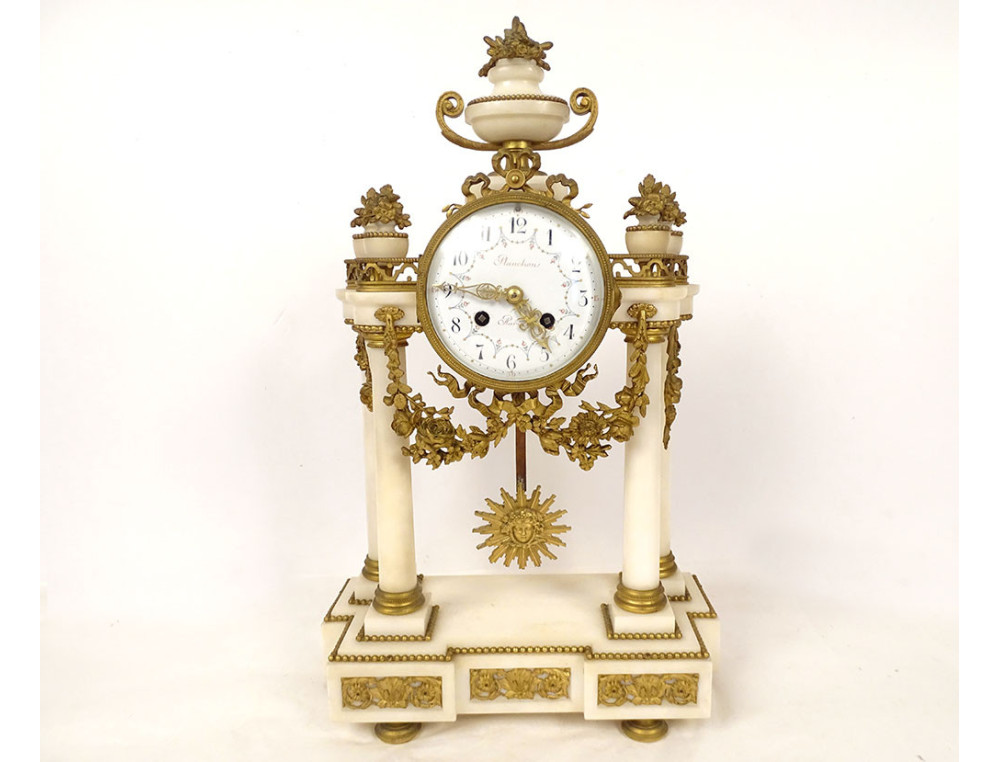
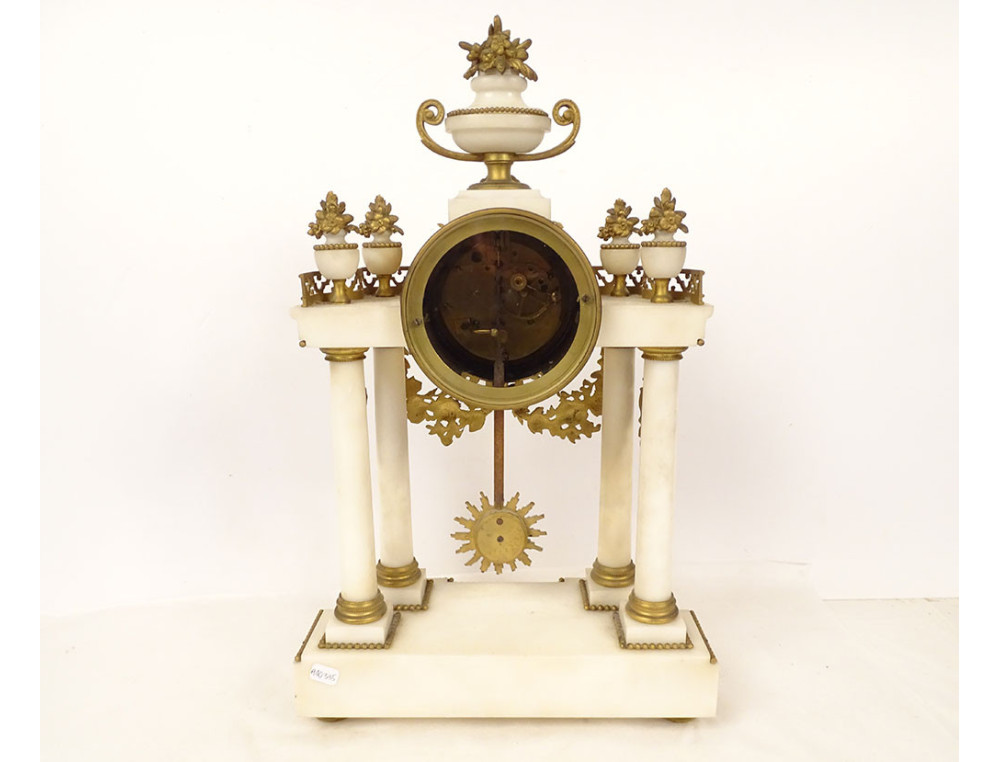

Louis XVI portico clock with white marble and bronze columns, Napoleon III style, 19th century

 Articles
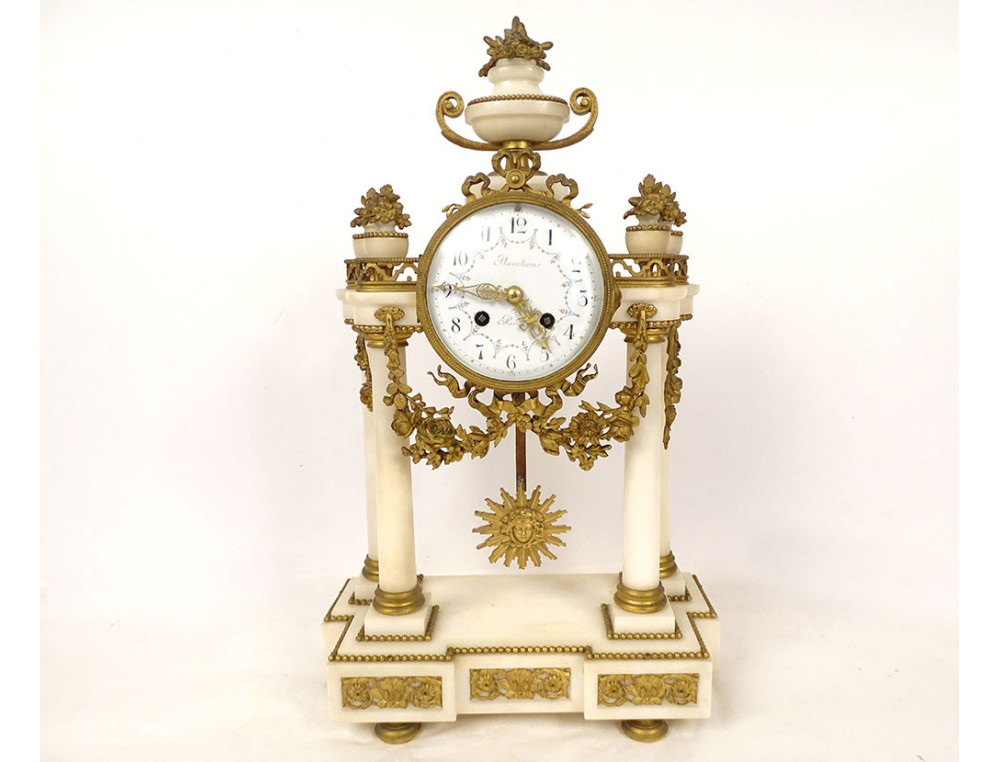
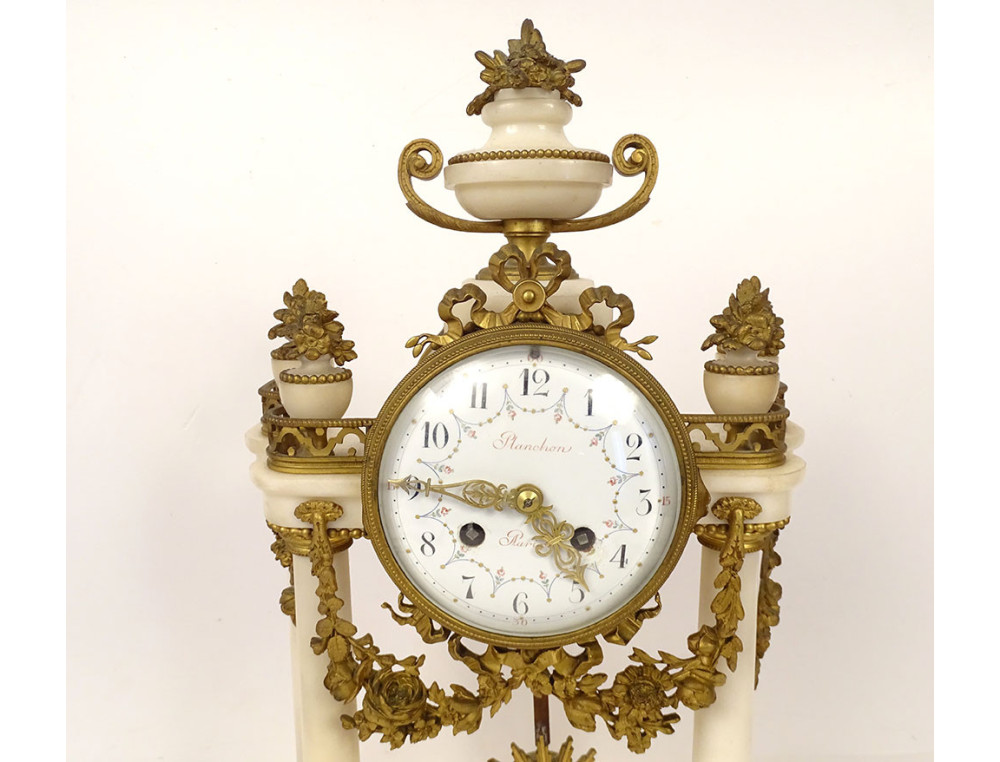
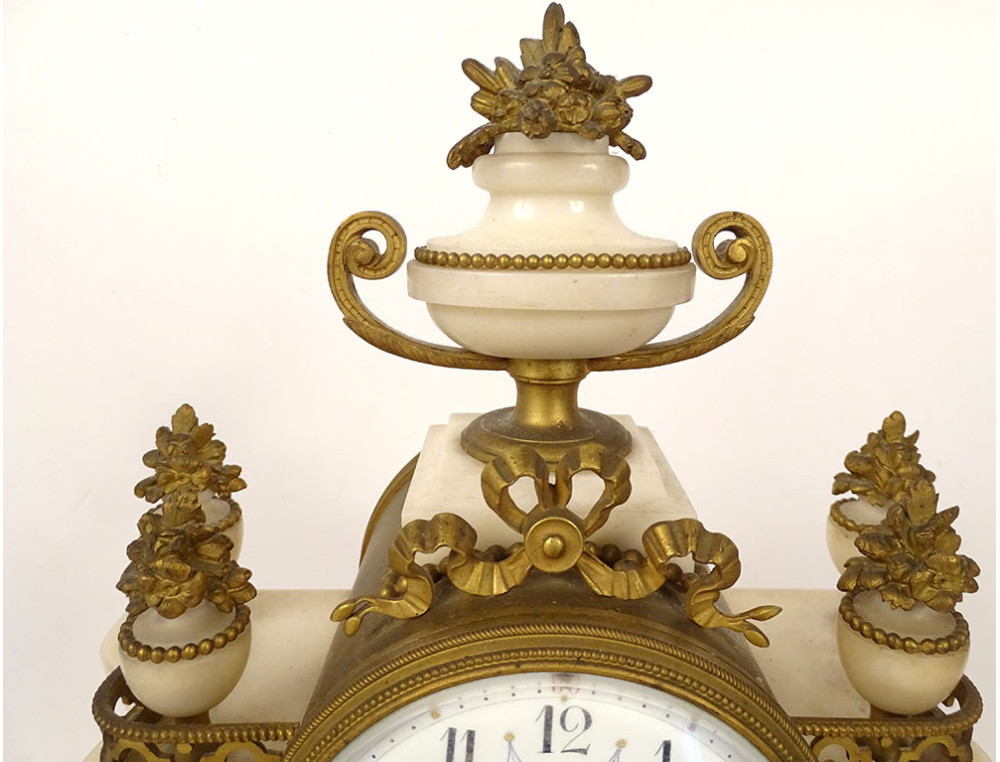
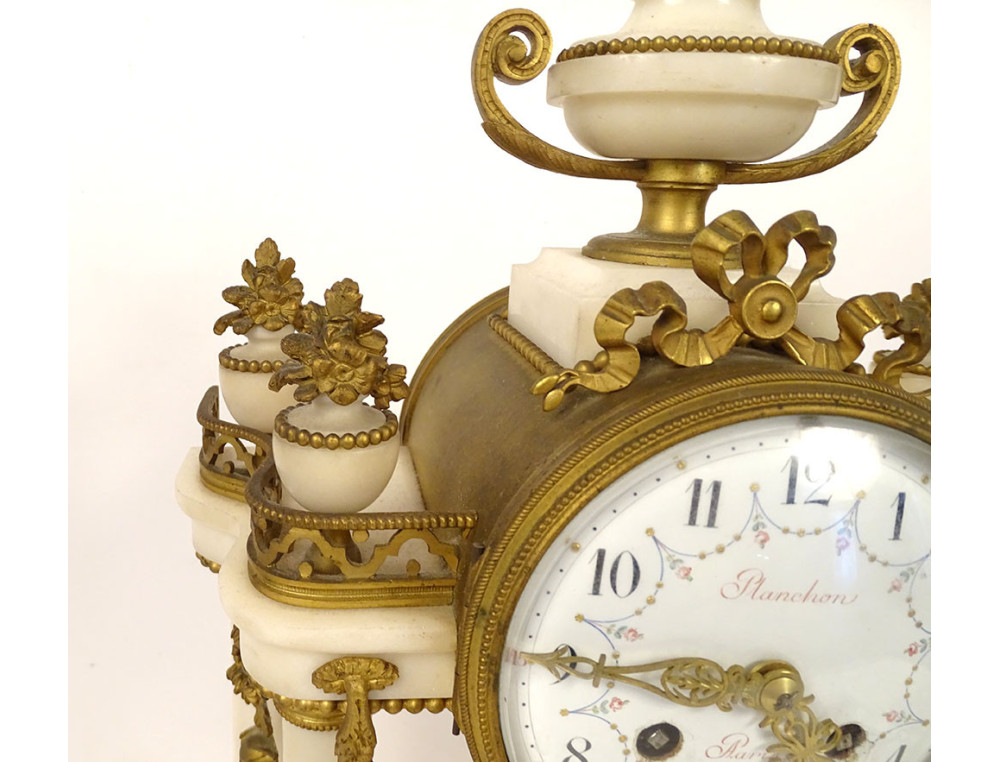
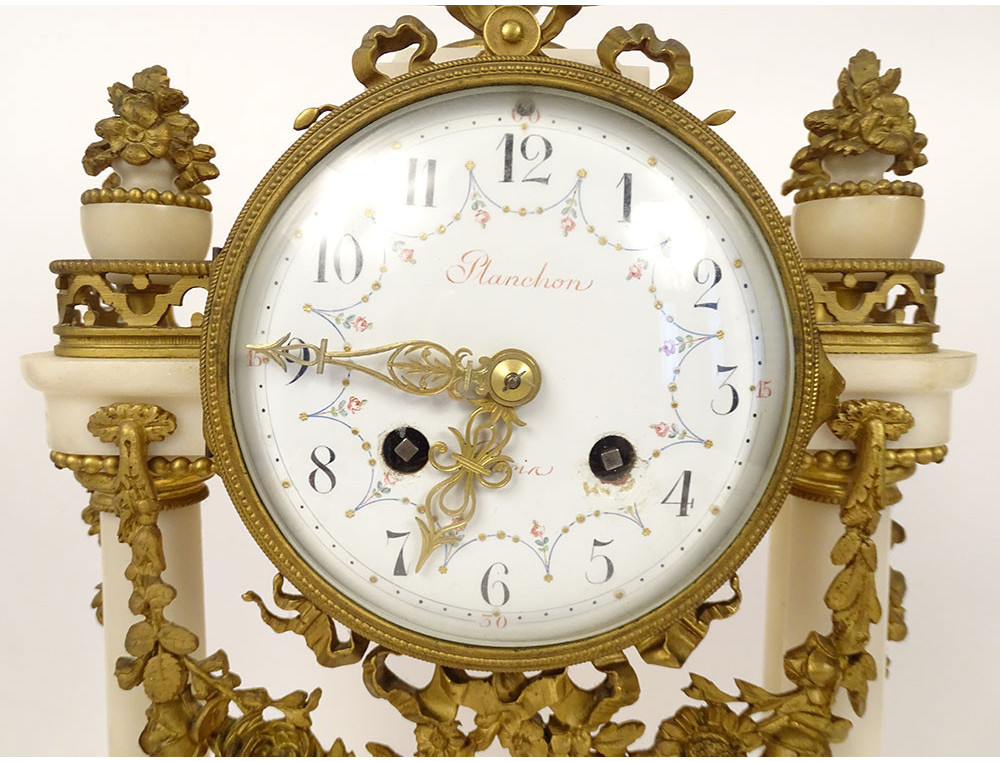
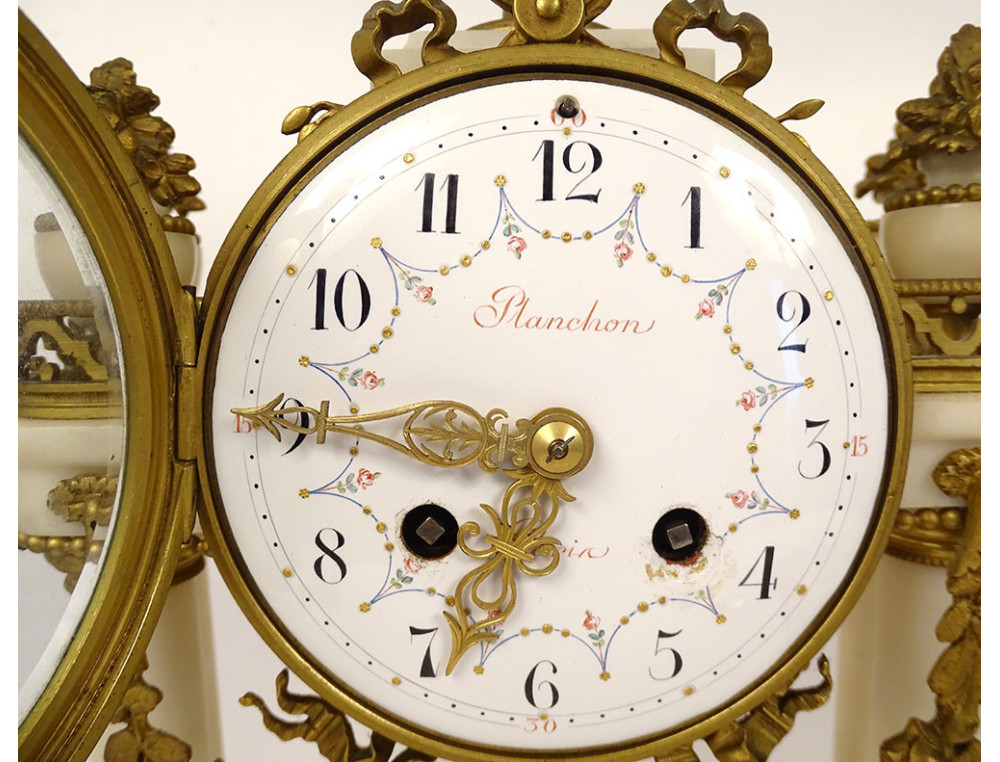
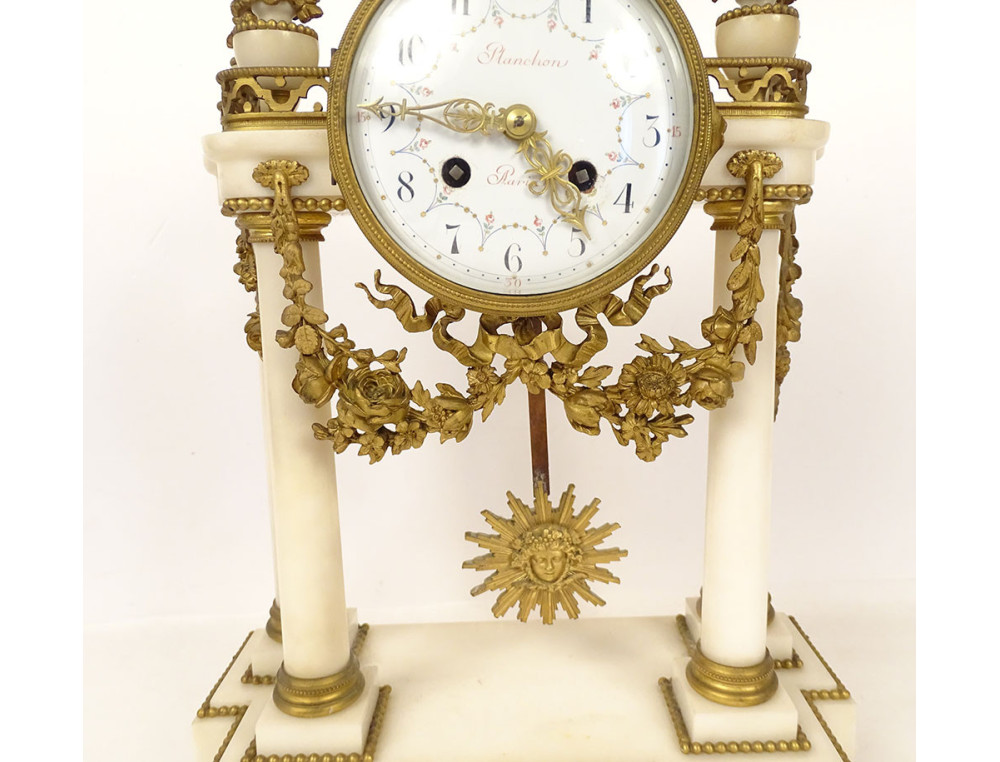
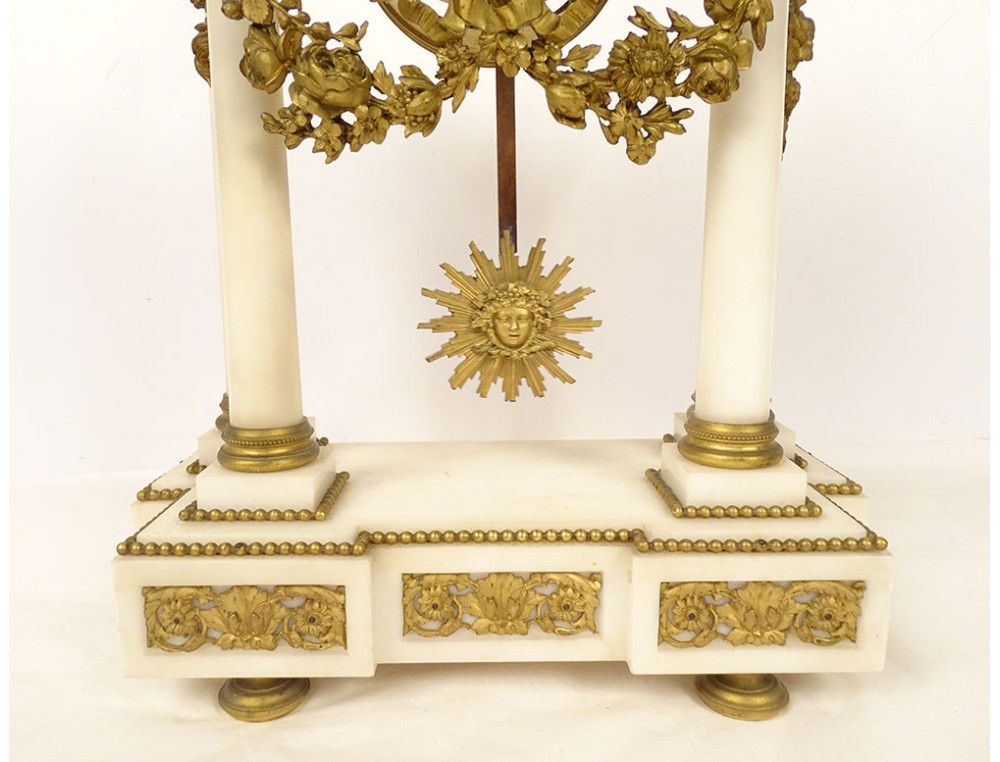
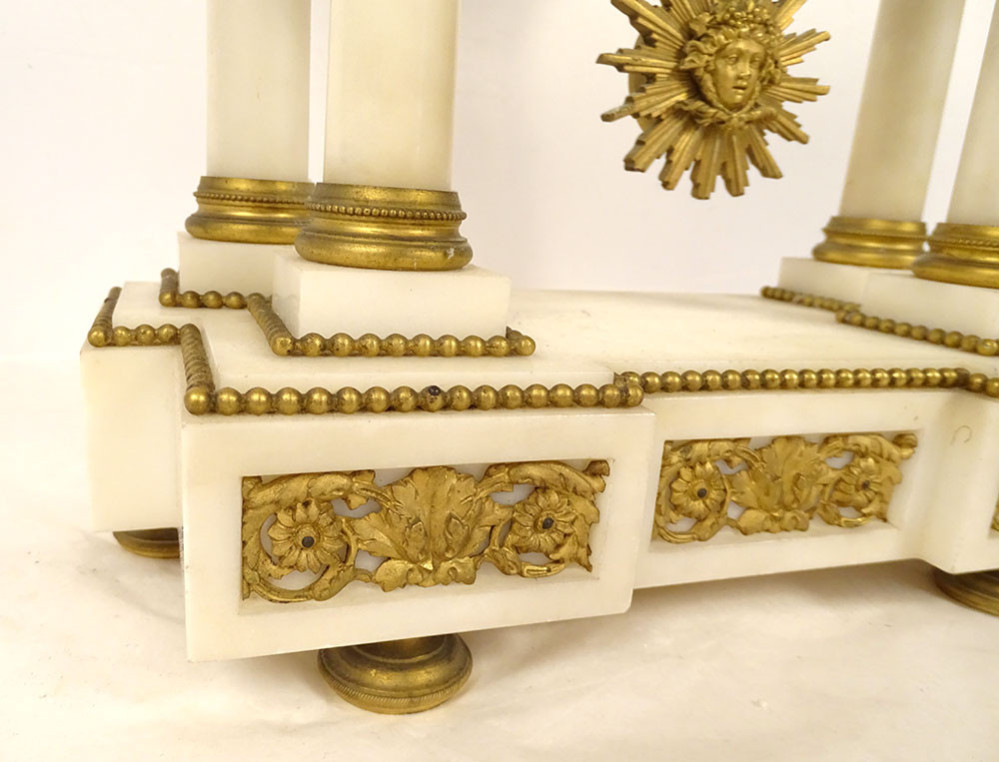
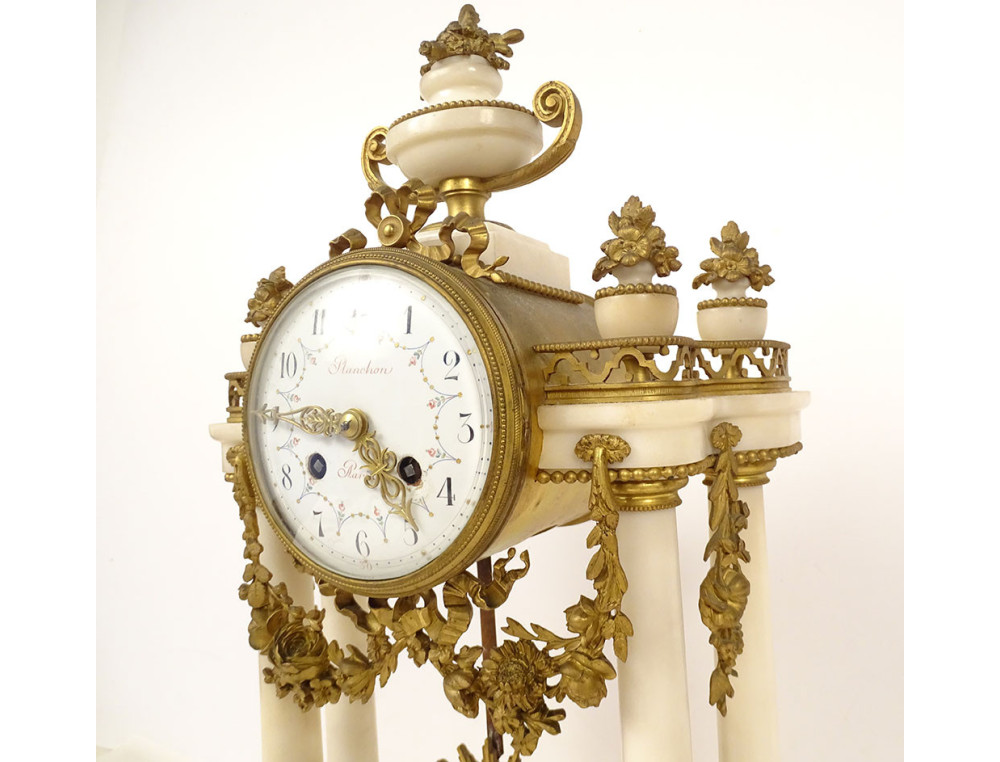
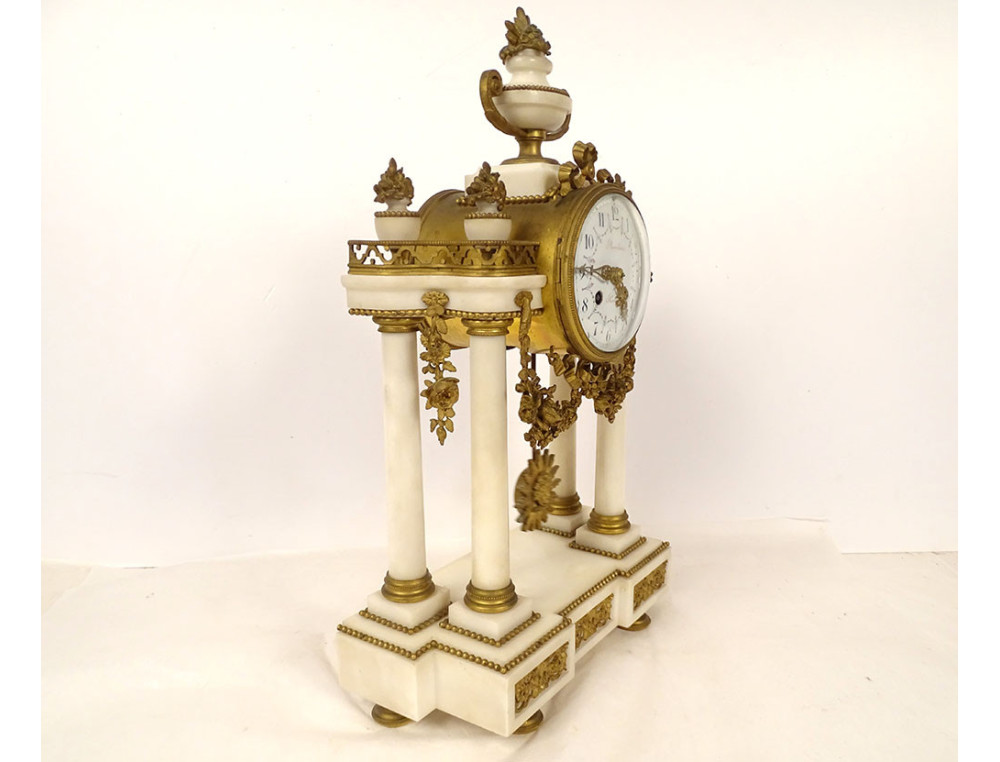
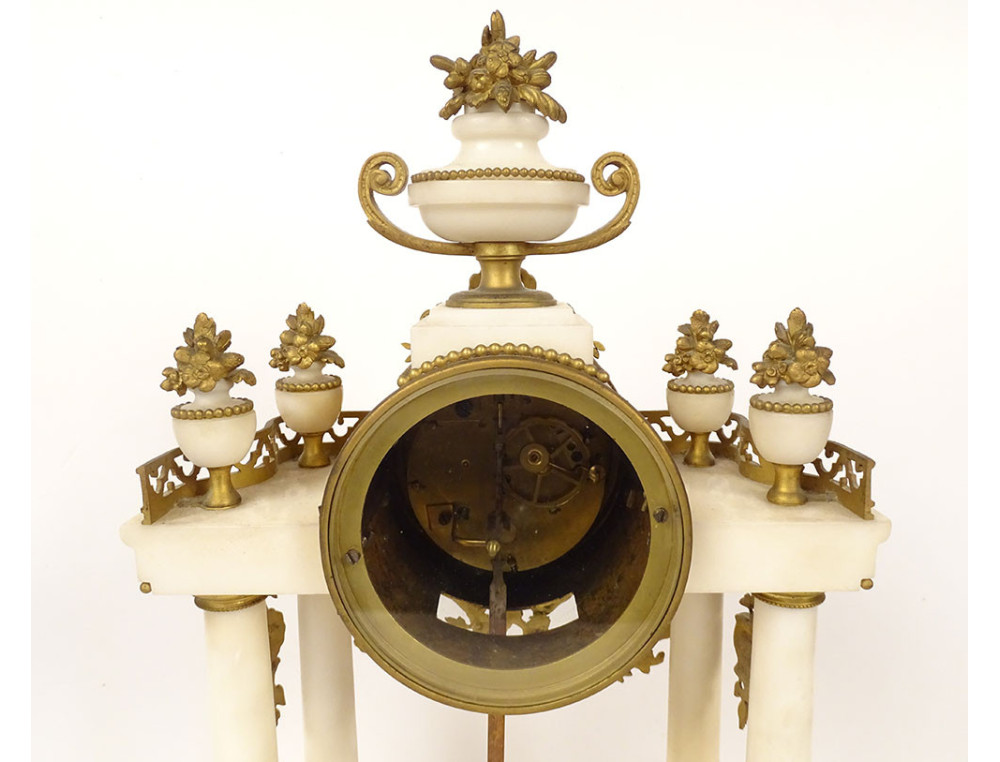
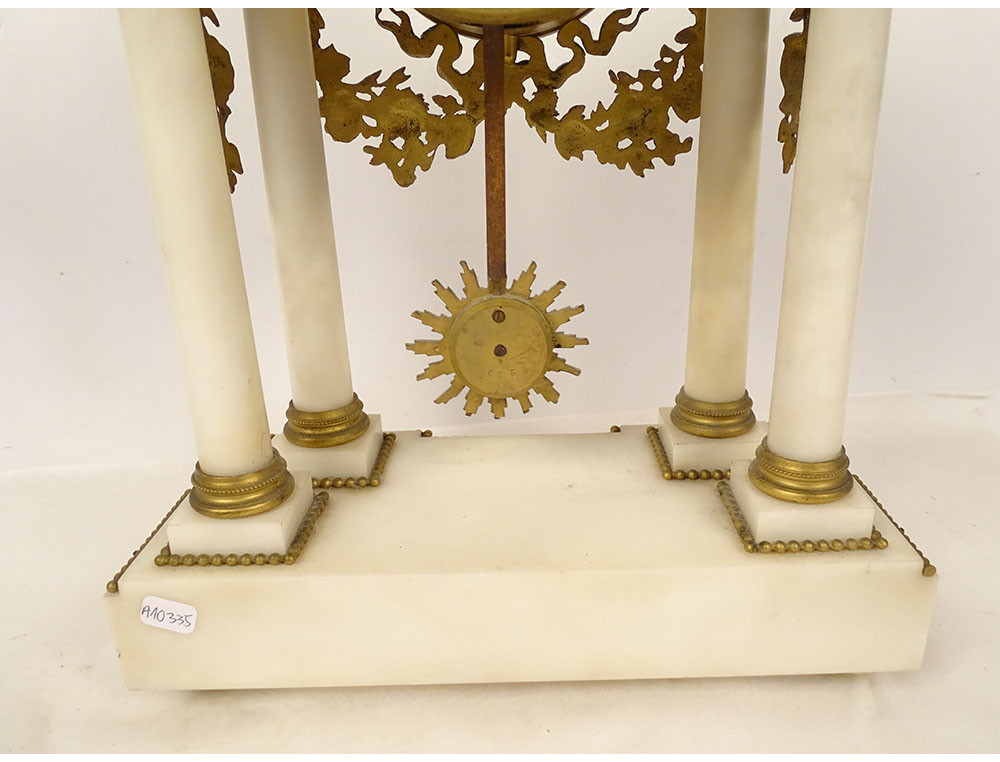
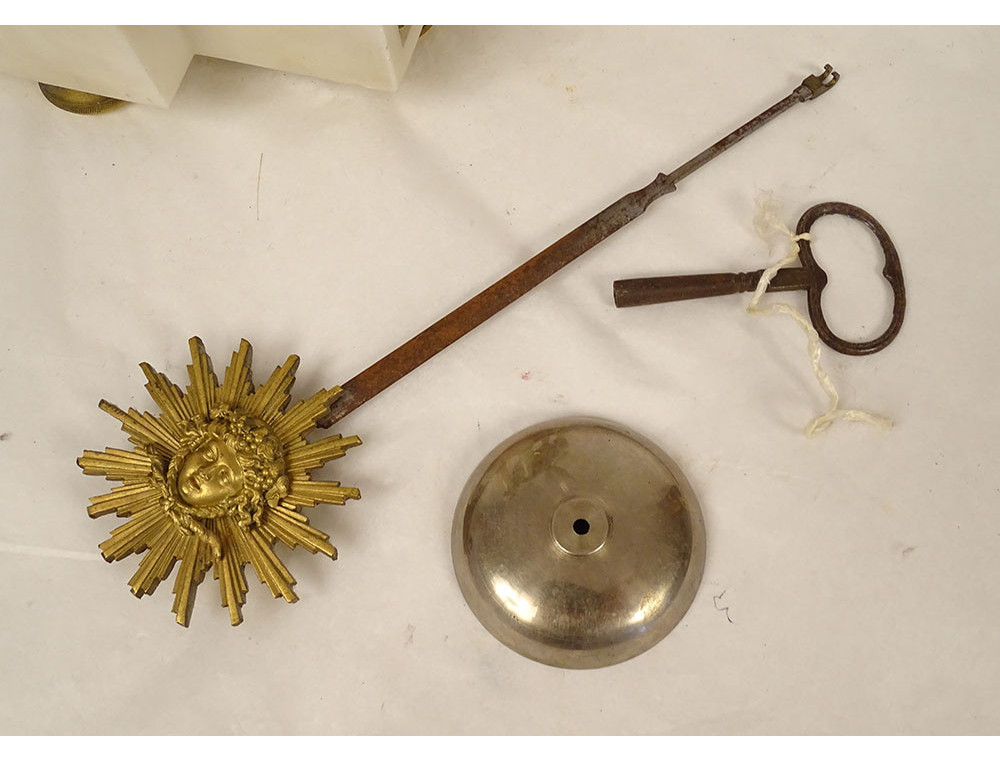
Louis XVI style portico clock in white marble and gilt bronze ornamentation, at the top a large antique vase accompanied by 4 flower pots, enamel dial signed Planchon in Paris, decorated below with a wide floral garland, 4 columns framing the sun pendulum, base decorated with foliate scrolls and beaded friezes, Napoleon III period 19th century.
This clock is in good condition and of very high quality. It is entirely representative of the quality of clockmaking during the Second Empire. The floral decoration on the dial is delicate, and the bronze work is very finely chased.
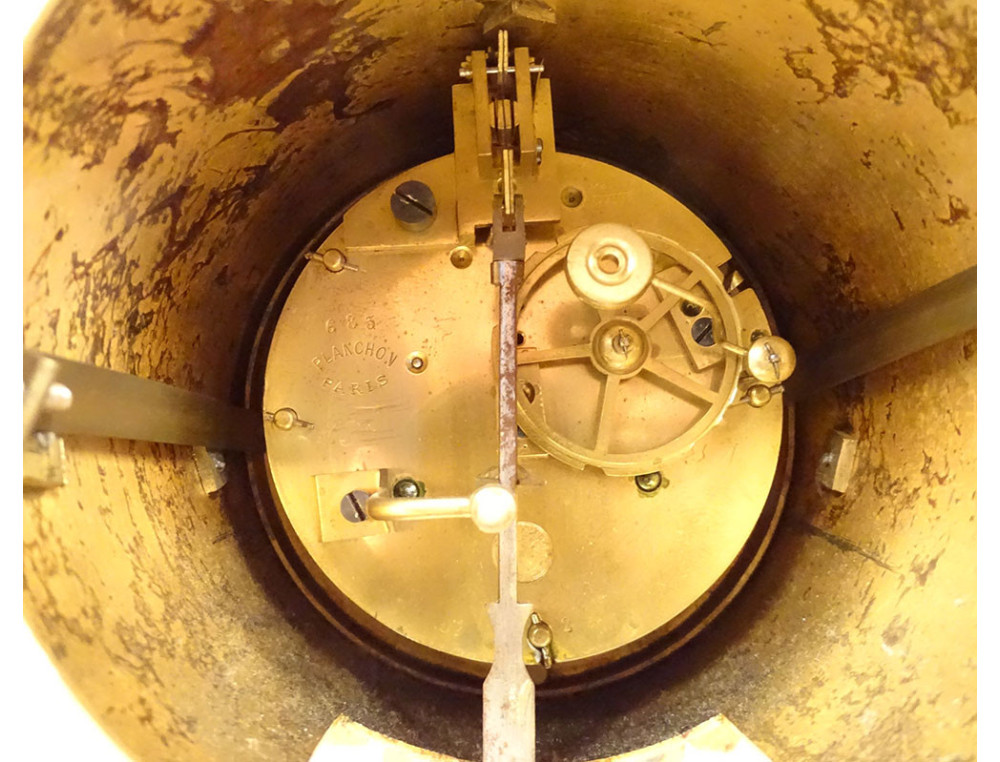
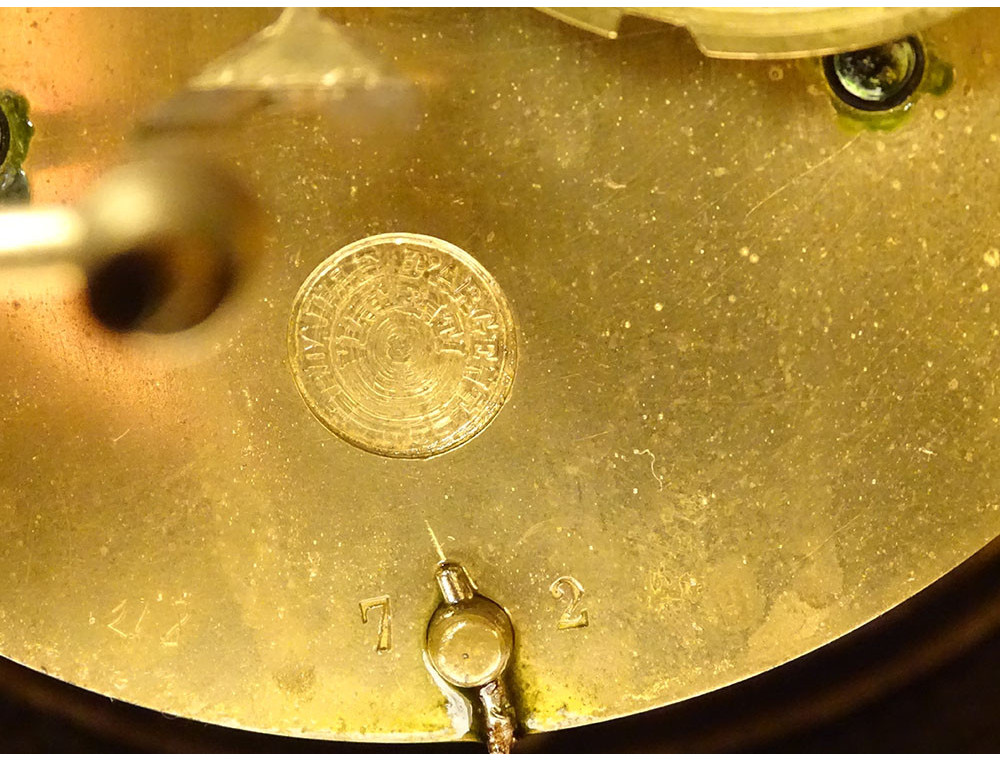
We have its pendulum and keys. Dial signed Planchon* in Paris. Movement also stamped PLANCHON and bearing the hallmark of "Vincenti & Cie à Paris/Silver Medal".
Please note: slight soiling, scratches and wear consistent with age, see photos.
Trained in the family workshop, a journeyman watchmaker from 1862, Mathieu Planchon earned the favor of renowned practitioners in the Parisian capital, such as Robert Houdin (1805-1871) and Adrien Philippe (1815-1894), whose prestigious establishment at 66-67 Galerie Montpensier in the Palais-Royal he acquired around 1870. Working in this location, imbued with a medieval or Renaissance charm, until 1896—the year he moved his watchmaking and bronze art business to 5 rue de la Chaussée d'Antin, a "beautiful shop, constantly visited by a wealthy and numerous clientele"—this "ingenious and learned watchmaker, in love with his craft," with "impeccable taste," "strived to manufacture and operate," unlike many others. of his colleagues, than "his own models." "Teeming with felicitous motifs, with varied details acknowledged by sound tradition," these established his reputation among connoisseurs enamored of their singular aesthetic qualities. The "Planchon Style" was then evoked and praised. "A curious mind, a tireless researcher," "a marvelous collector of prints as well as an eminent bibliophile," Mr. Planchon devoted himself with similar creativity to the reconstruction of antique clocks. Presented in 1889 at the Universal Exhibition in Paris, this "very beautiful and curious collection, the fruit of considerable and conscientious work," captivated the visitor "from the water clocks described in the translation of Vitruvius (...) to the elegant cartels of the Pompadour or Louis XVI periods," passing through "the clocks of the Wisdoms, Vices and Virtues, of the symbolic Temperances that adorn The large Flemish tapestries will be awarded a Gold Medal. Later recognized as an exceptional figure in his field (Grand Prix de l'Horlogerie), Mr. Planchon will be honored with prestigious works, including the Retrospective Clock Museum Report for the 1900 Exposition. Gradually entrusting his business to his son-in-law, Paul Brateau (1875-1958), this unconventional clockmaker ventured into writing two books: *L'Horloge, son histoire rétrospective, pittoresque et artistique* (1898) and *La Pendule de Paris* (1918). These works have become essential classics for passionate collectors of antique and modern clocks, and, like his creations, have the added merit of perpetuating the name of Mathieu Planchon. In them, he wrote: "We have tried to learn by studying, and it is to learn that..." "We write." A motto that is both humble and just. Related literature: Brateau, Paul, Mathieu Planchon Horloger, sa vie et son œuvre, Paris: 1921; - Chapuis, Alfred, "Mathieu Planchon", in: Bulletin de la Fédération horlogère Suisse, no. 43 of October 23, 1941, pp. 355-356; - Saunier, G., "Les Pendules de M. Planchon", in: Revue Chronomètrique: Organe des Sociétés d'Horlogerie, January 1886; - Tardy, Dictionnaire des Horlogers Français, Paris: 1972, p. 525; - "M. Planchon", in: Le Journal du Cher of December 7, 1921, p. 3.