

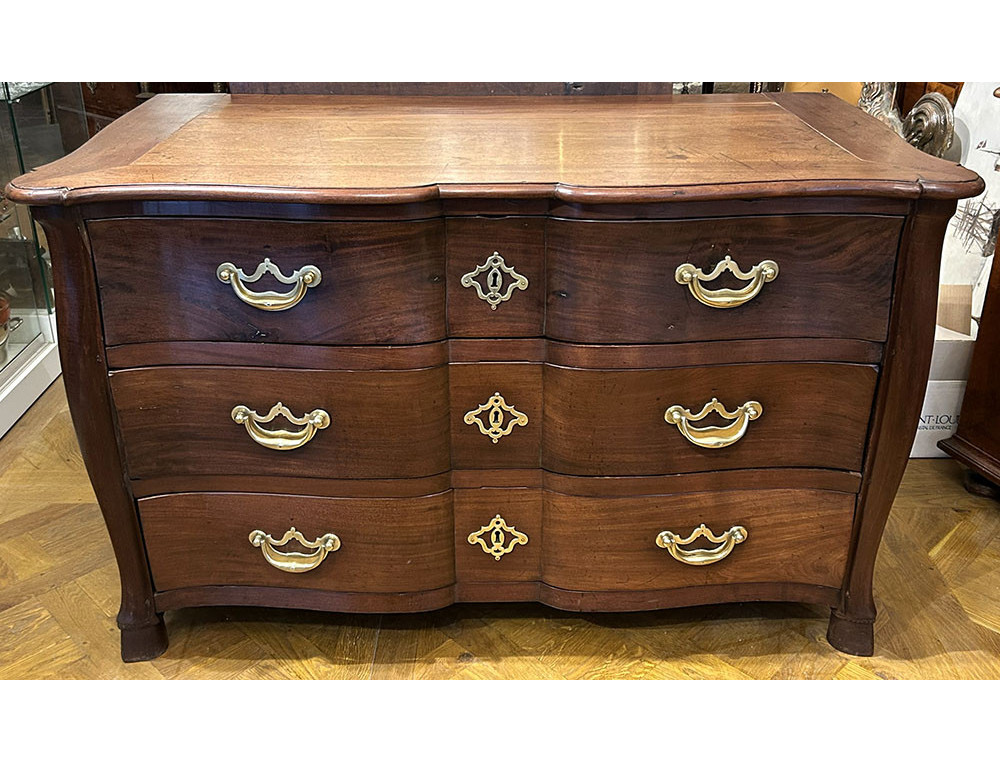
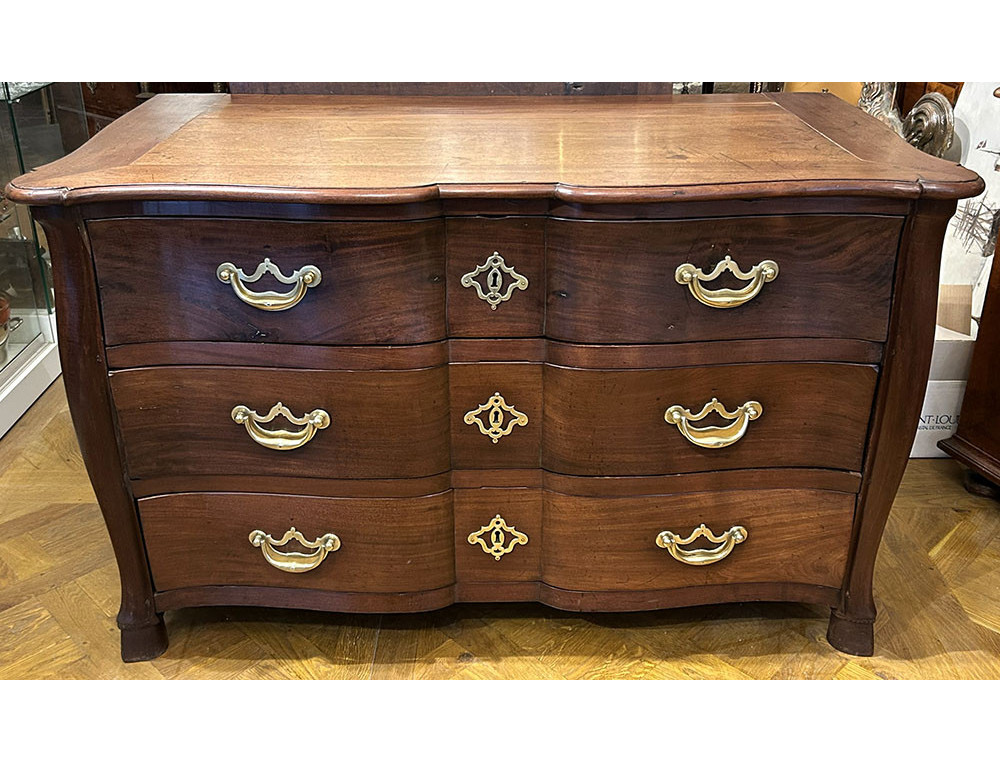
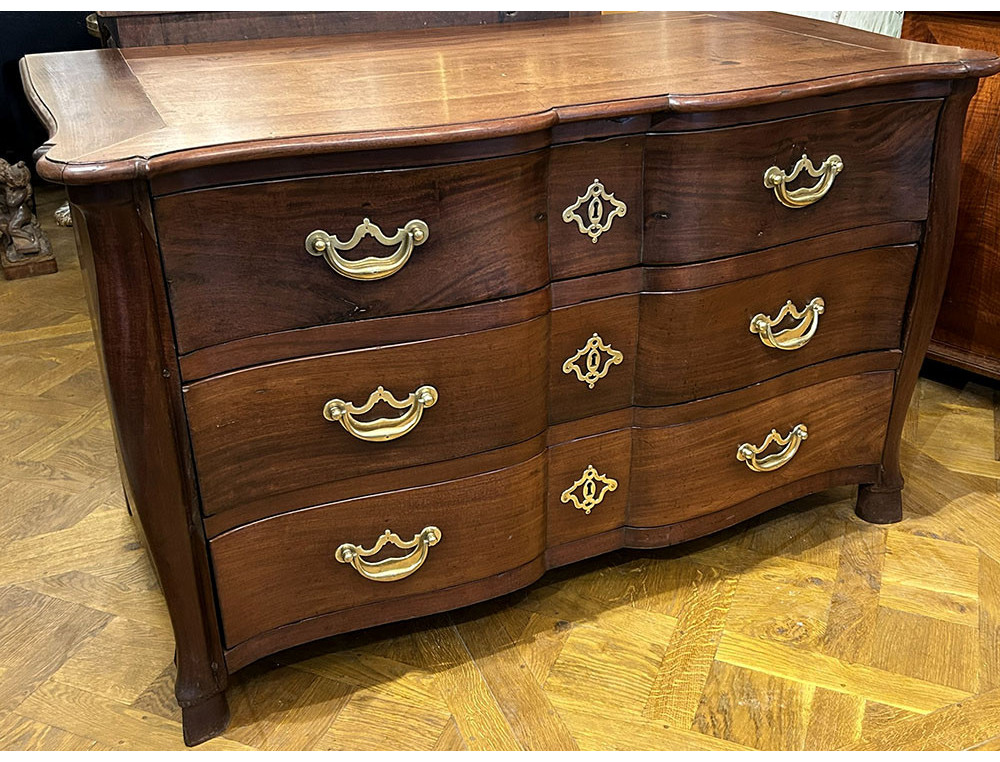
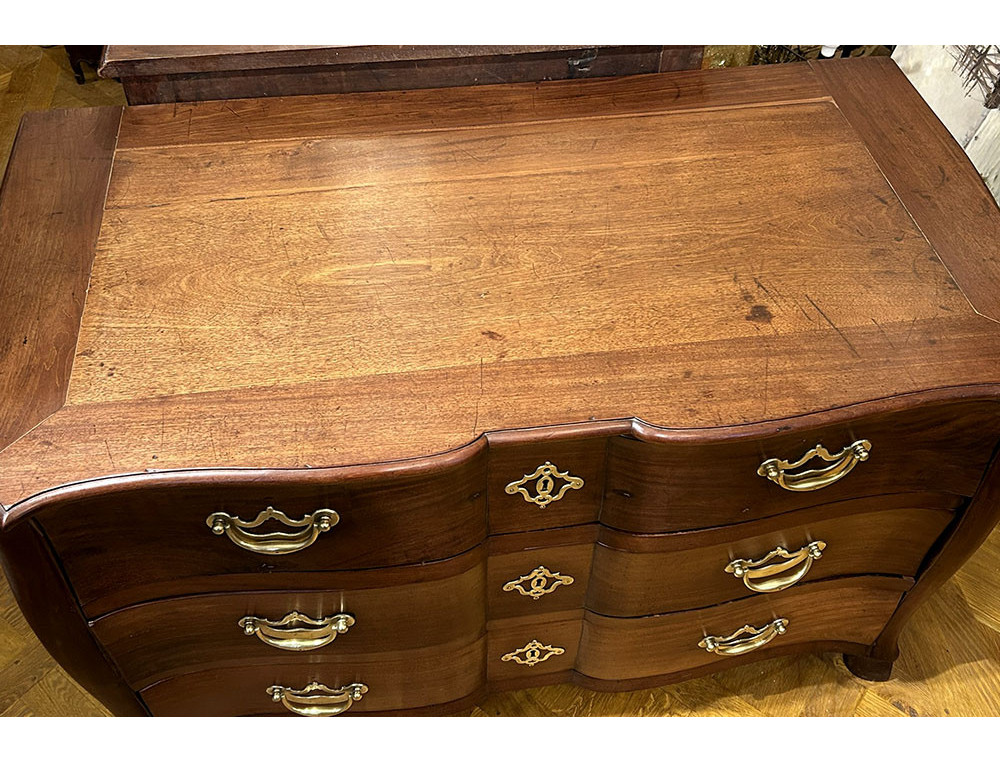
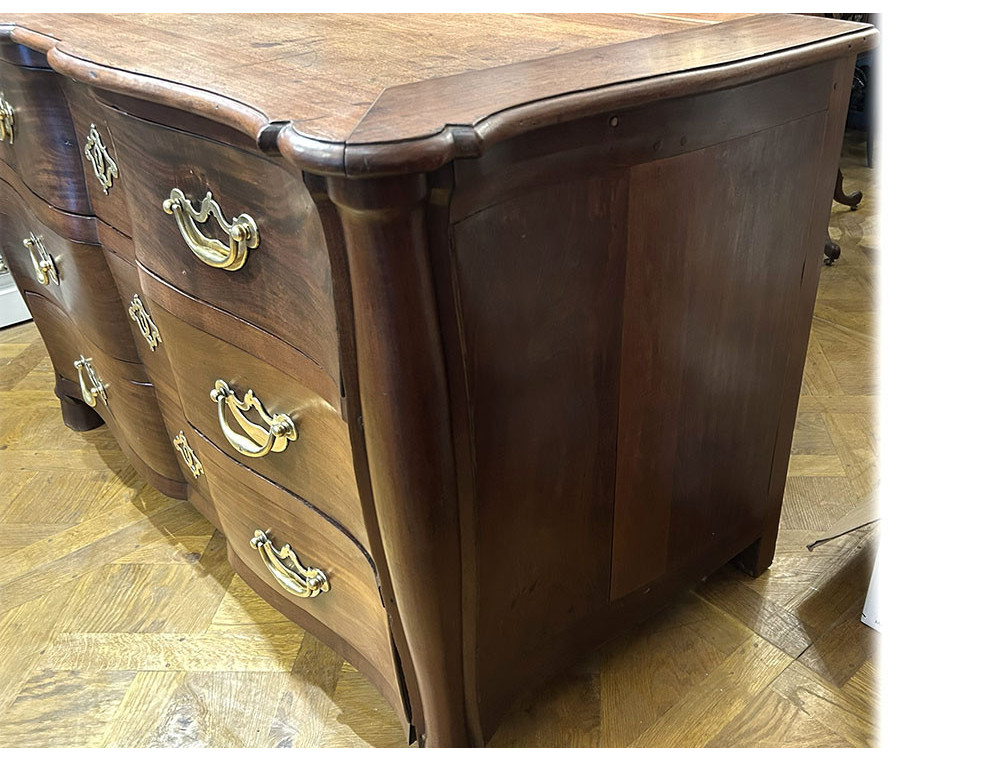
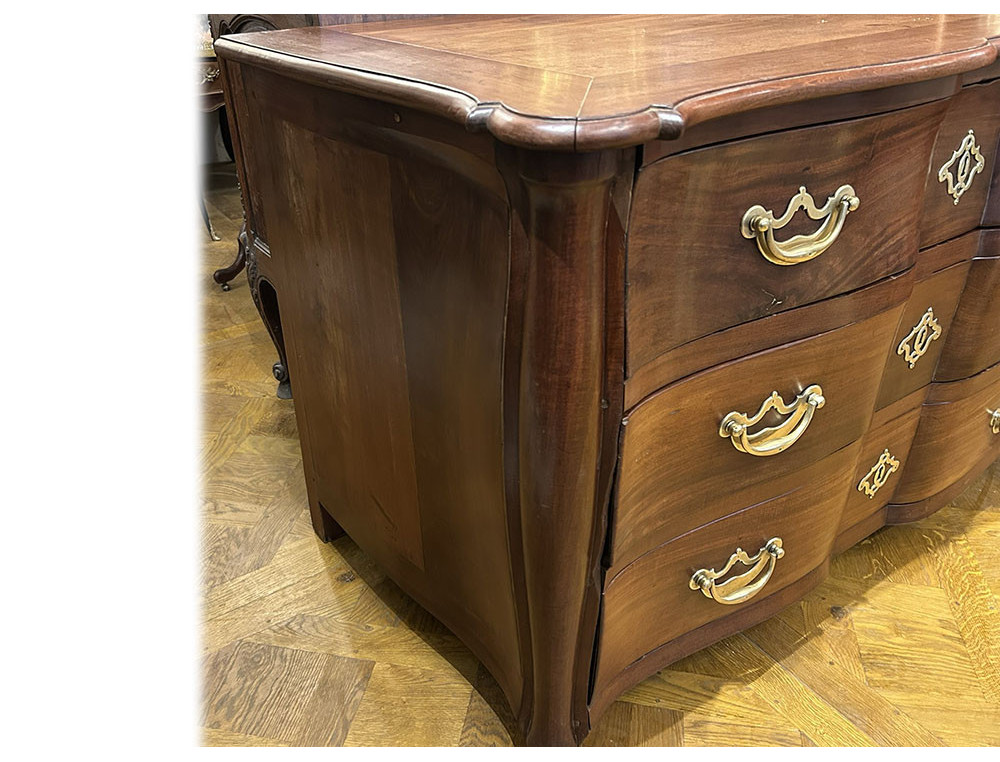
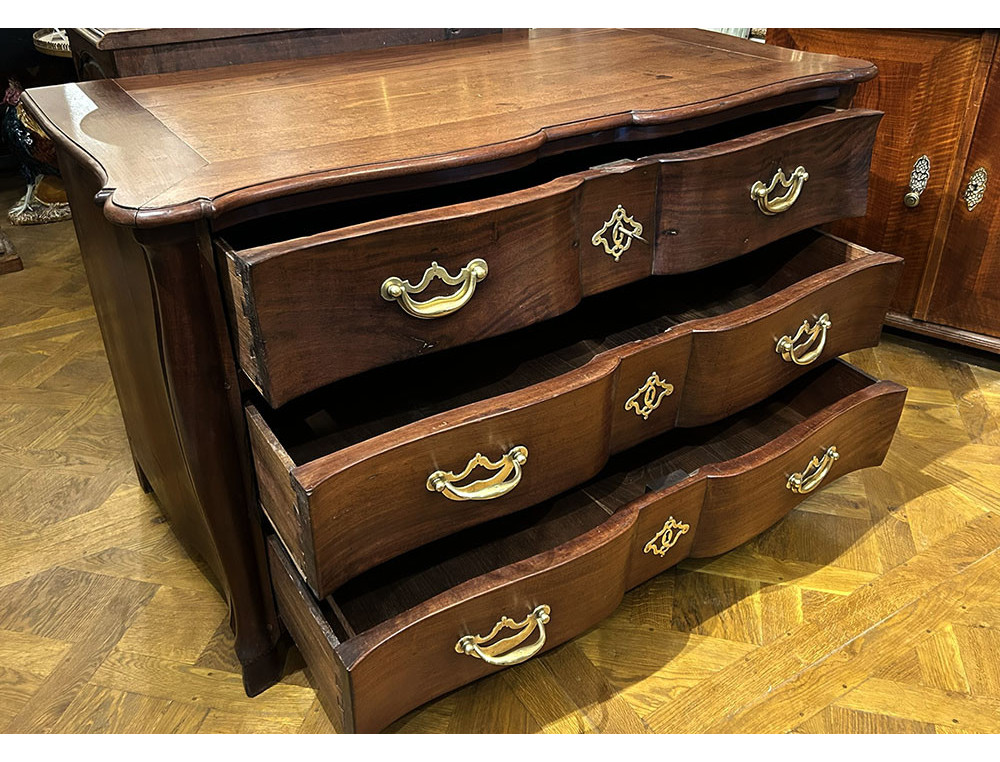
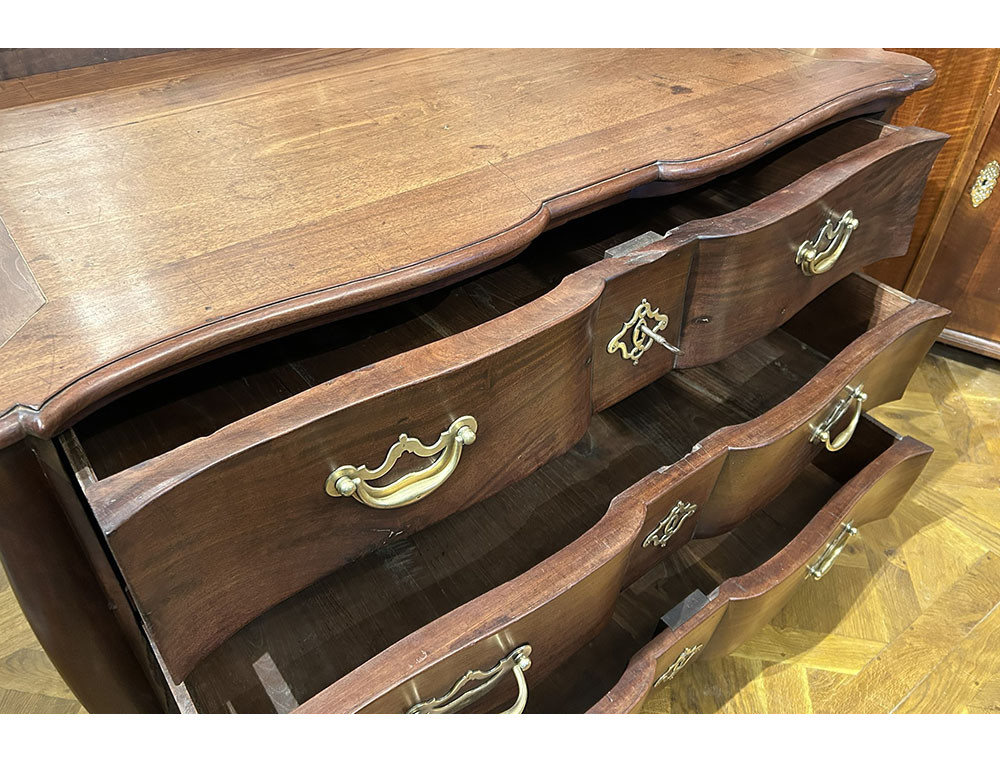
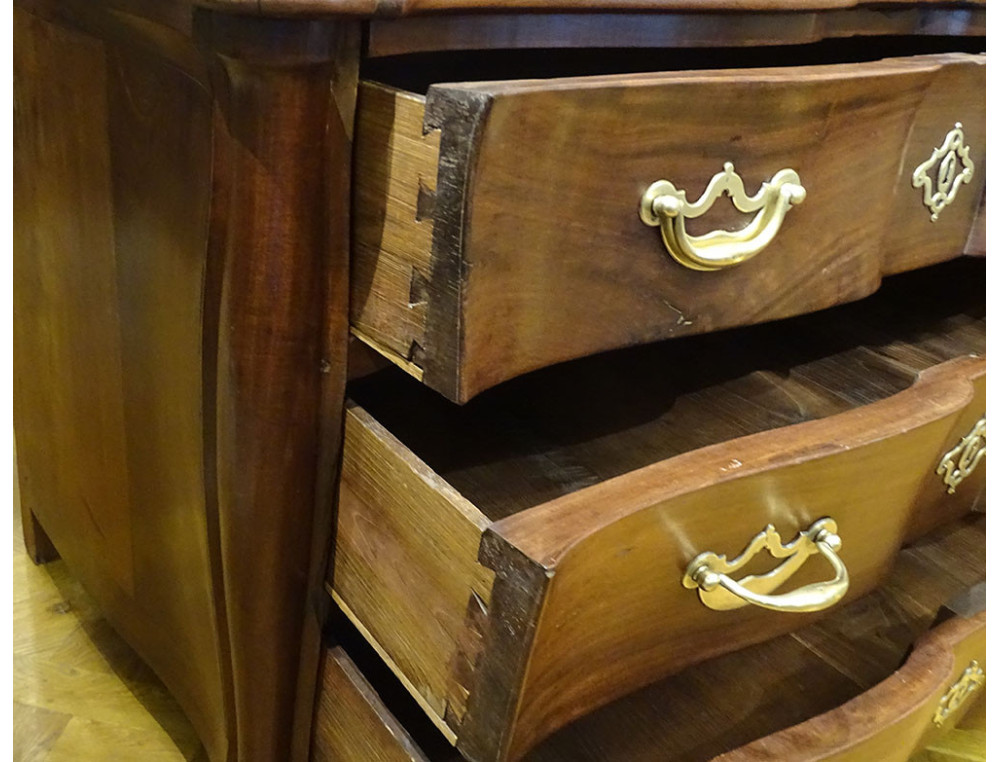
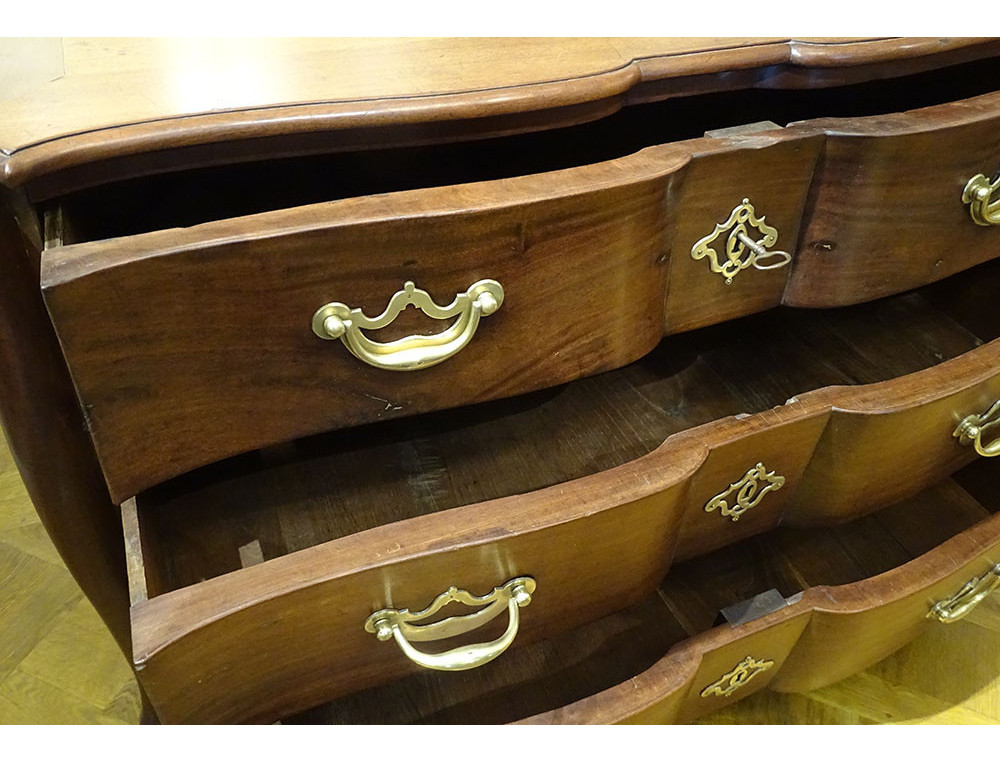

Louis XIV style mahogany and bronze chest of drawers from Saint-Malo, crowned R, 18th century

 Articles
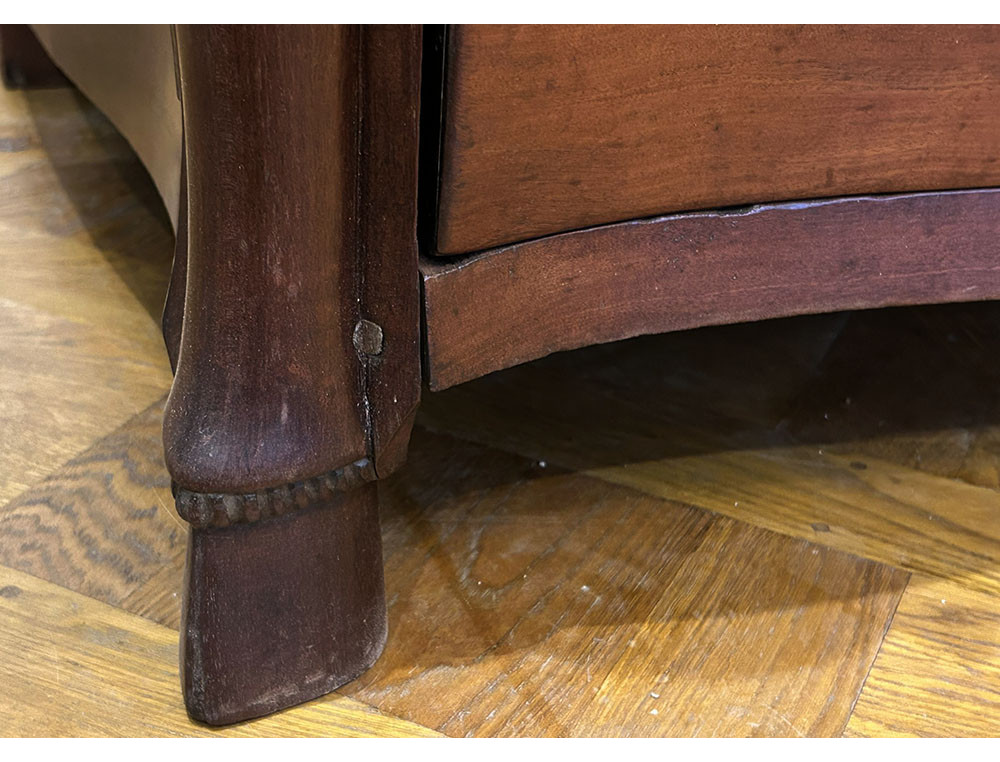
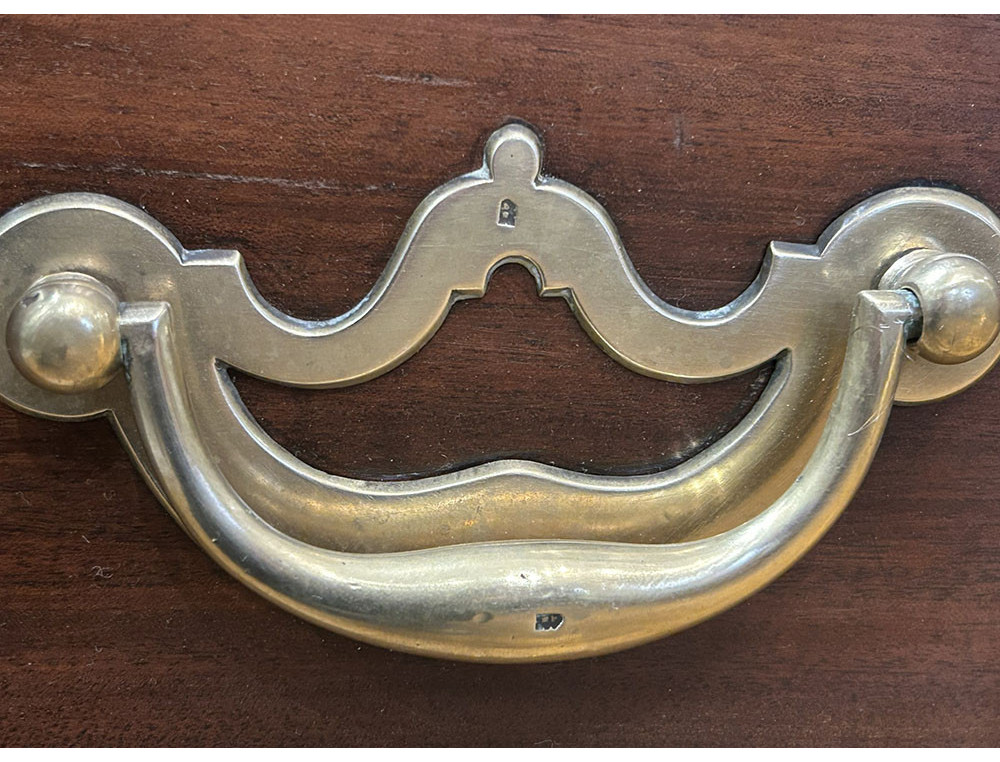
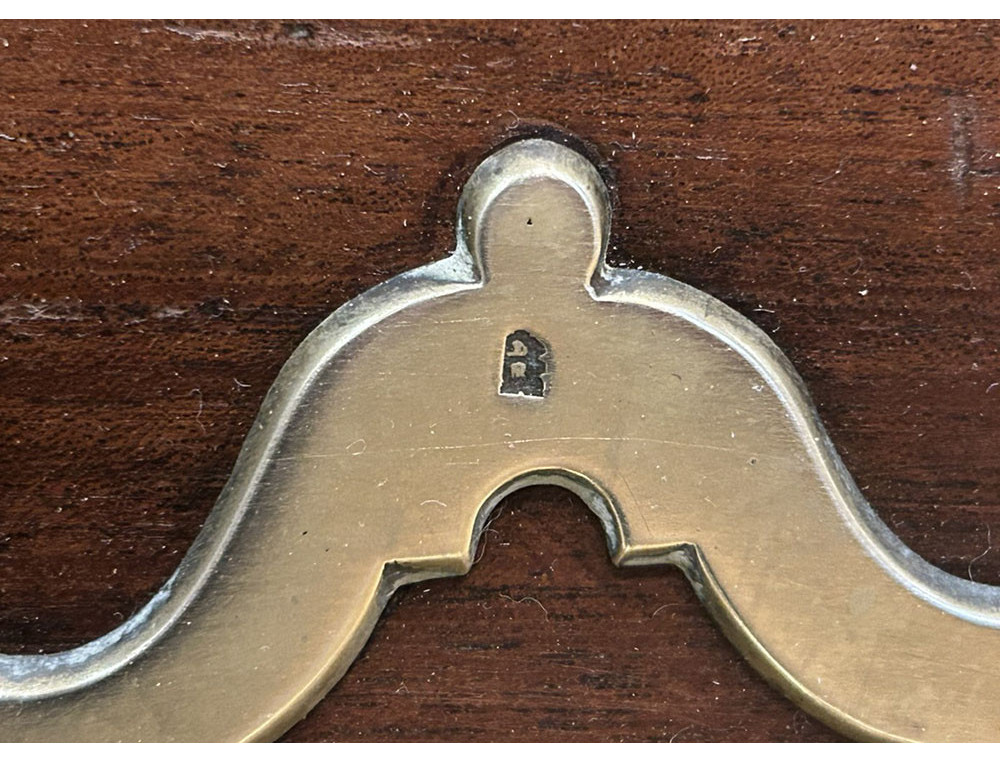
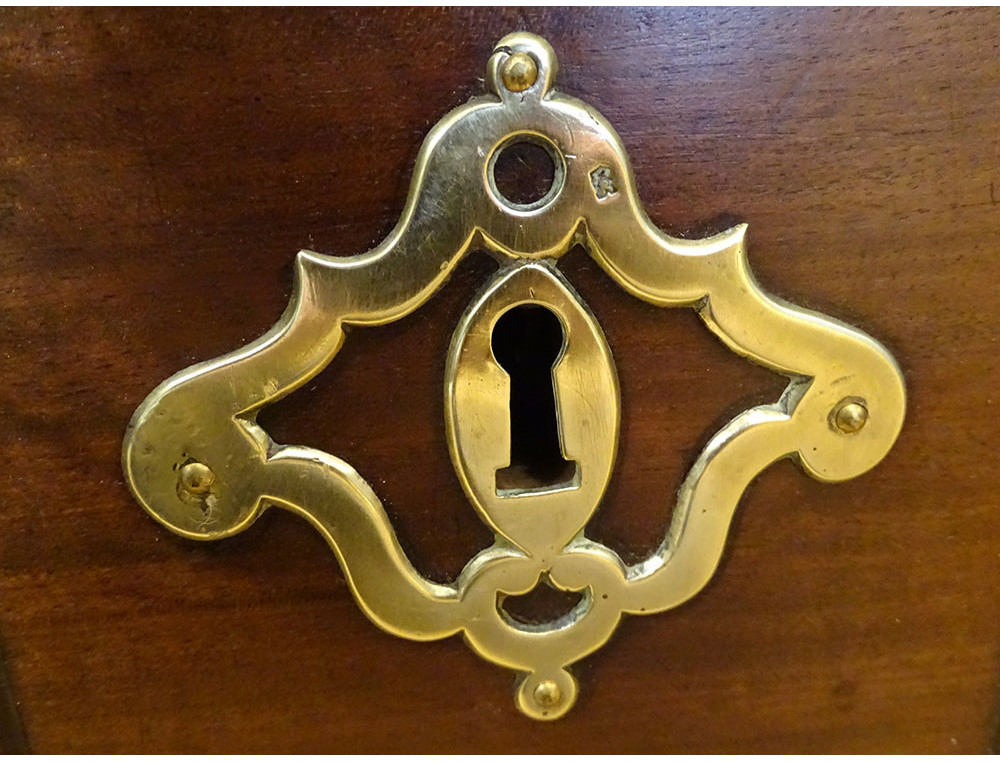
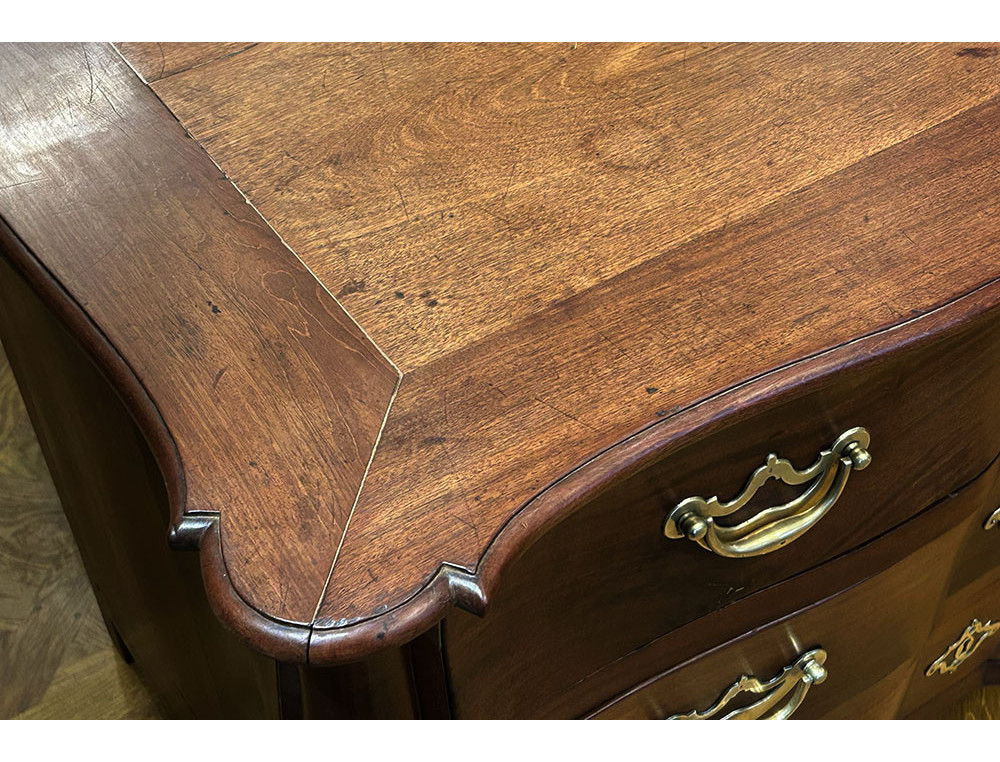
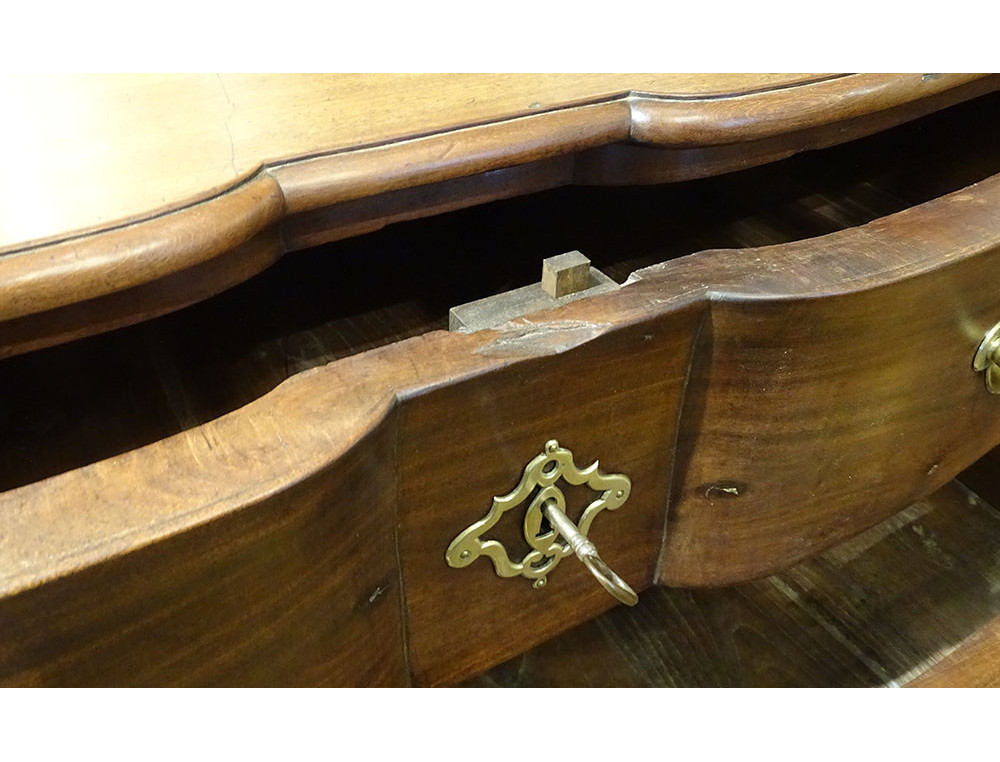
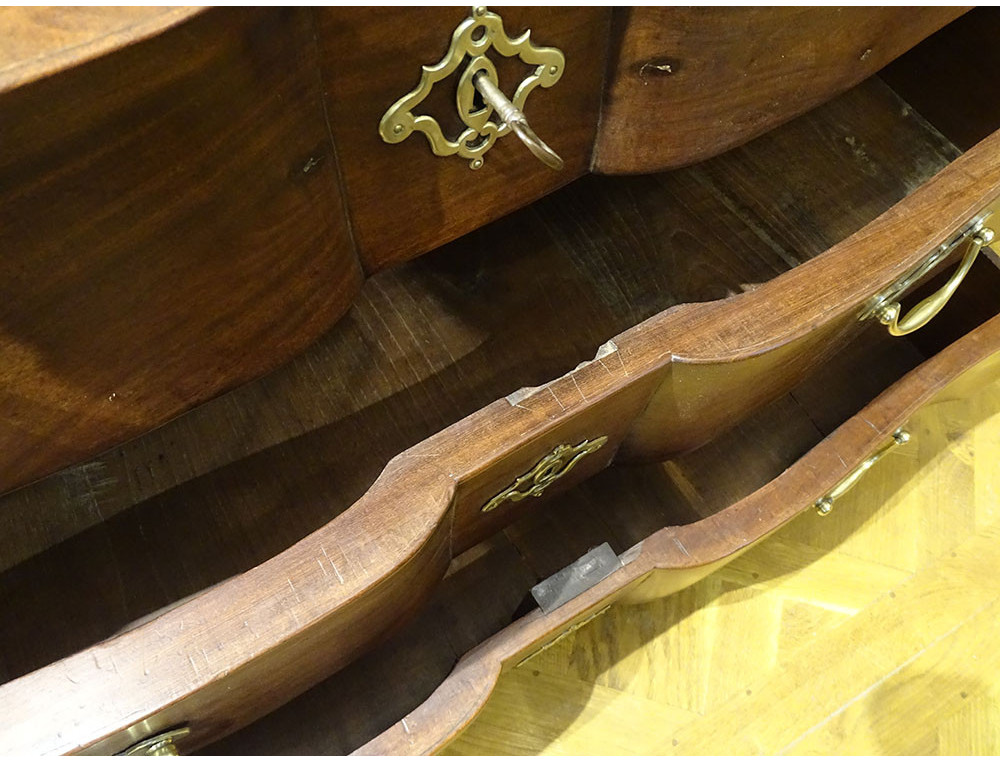
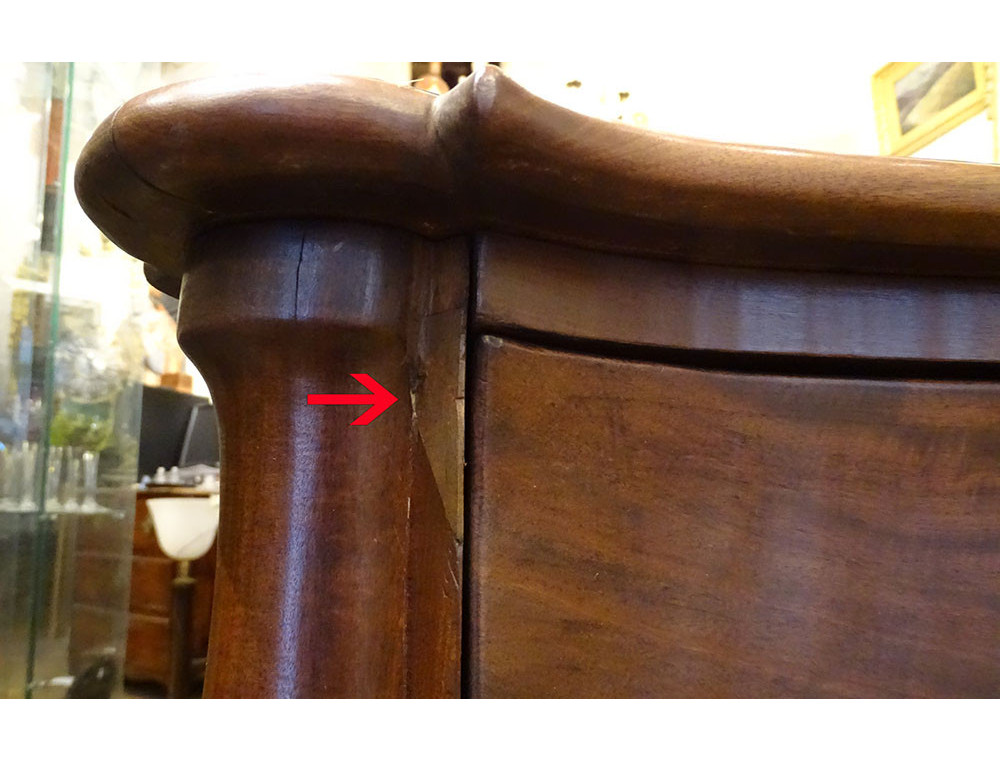
Louis XIV style mahogany commode from Saint-Malo, elegantly decorated with a serpentine front, curved uprights, opening with three drawers, front feet in the shape of hooves, handles and keyhole escutcheons in finely chiseled gilt bronze and stamped with the crowned R**, from the 18th century.
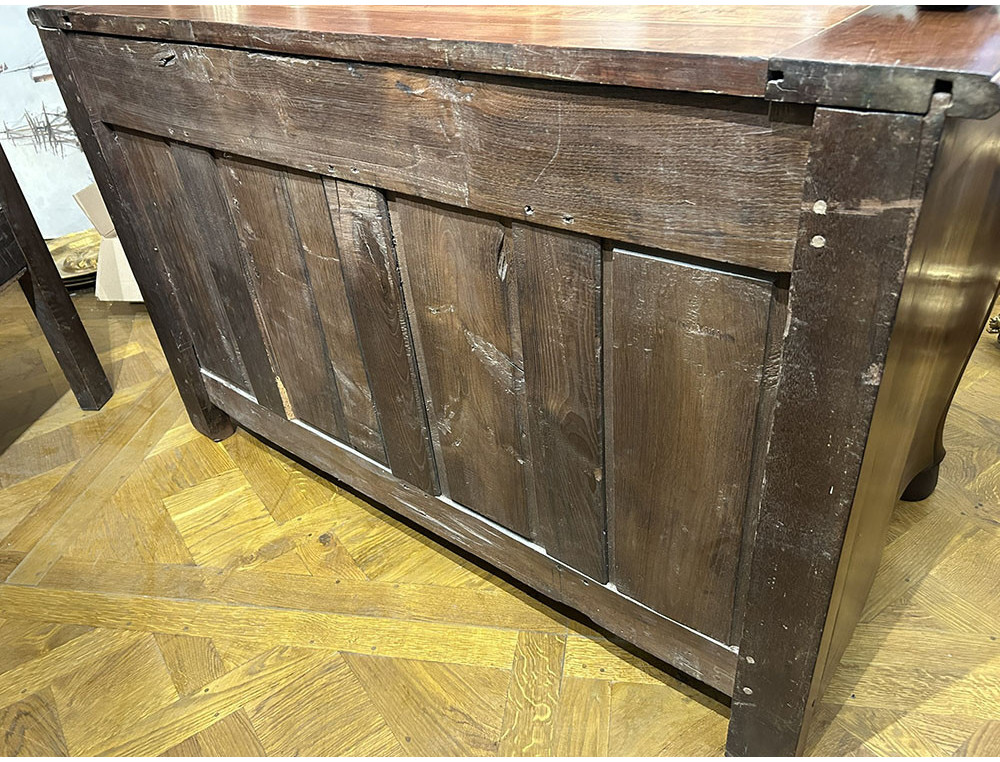
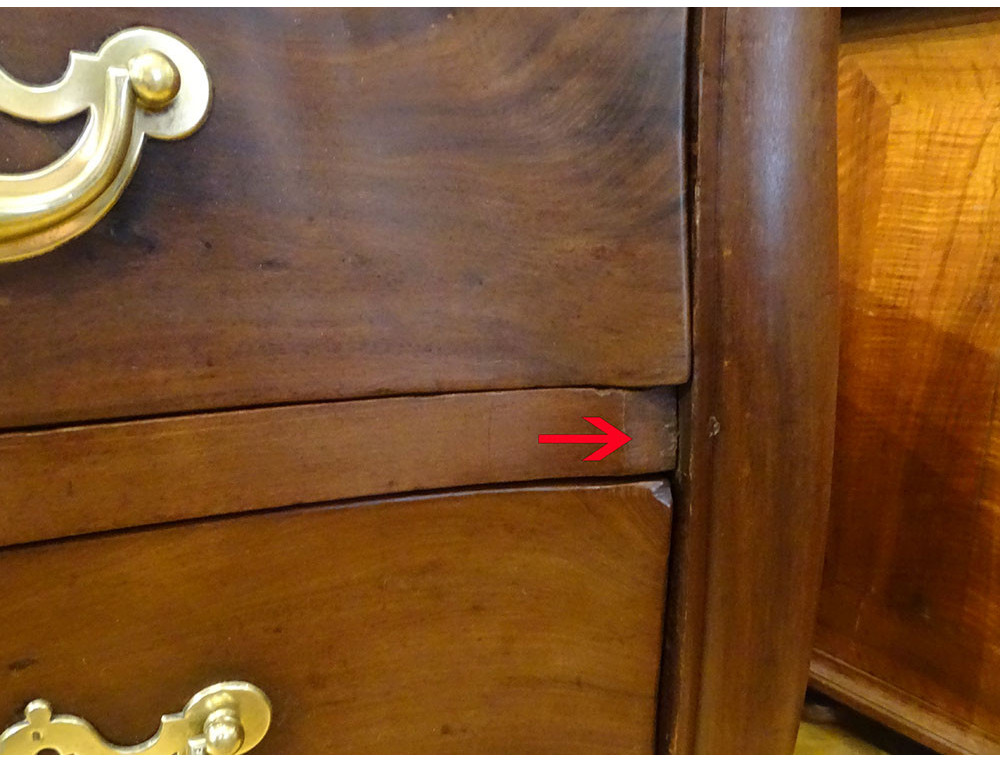
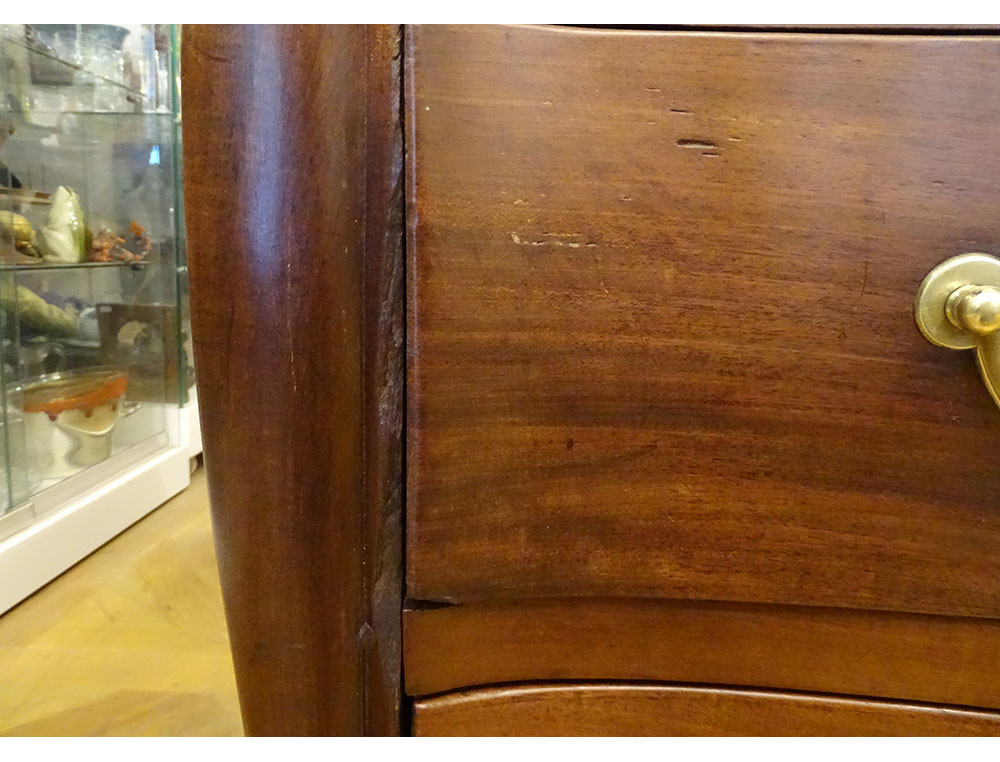
This chest of drawers is in good condition. The handles and keyhole escutcheons are gilt bronze; they are not original. We do not have the key.
Note: some restorations, particularly on the top right drawer, this chest of drawers has been completely overhauled.
_____________________________
*PORT FURNITURE:
Expression referring to solid wood furniture (mahogany, aramant, rosewood, lemonwood) made from the end of the 17th century in the ports of the Atlantic coast, from Bordeaux to Boulogne.
The tree trunks used on ocean-going ships returning from the "Islands" as stowage or return cargo were salvaged by carpenters and transformed into luxurious furniture commissioned by wealthy shipowners, merchants, or prominent citizens of prosperous cities such as Bordeaux, La Rochelle, Nantes, or Saint-Malo. These pieces of furniture, crafted with the utmost care and often adorned with fine carvings, had the advantage, thanks to their hardness, of being resistant to wood-boring insects.
The keyhole escutcheons and drawer pulls are made of copper; they brighten the dark wood and withstand the sea air. Furniture from the Bordeaux port, most often made of Cuban or Saint-Domingue mahogany, is distinguished by its rather heavy forms with pronounced curves. Nantes pieces generally feature a serpentine front between straight uprights ending in small, snail-shaped feet. Cabinets from Saint-Malo are decorated with octagonal motifs in high relief. Some cabinets from North Finistère feature lemonwood panels framed with aramanta. Port furniture, prized for the beauty of its wood and its impeccable finish, has not been copied due to a lack of wood species of sufficient quality for reproduction.
** Crowned R hallmark : This hallmark was in use in the first third of the 18th century, guaranteeing the quality of copper alloys. It predates the crowned C hallmark (1745-1749). This mark is most often found on Louis XIV and Regency style objects (everyday utensils in brass or copper) but also on candlesticks and bronze furniture.
ATTENTION: FOR A DELIVERY QUOTE CONTACT US WITH CITY AND COUNTRY OF DESTINATION.
BE CAREFUL: PLEASE CONTACT US FOR THE DELIVERY PRICE.