

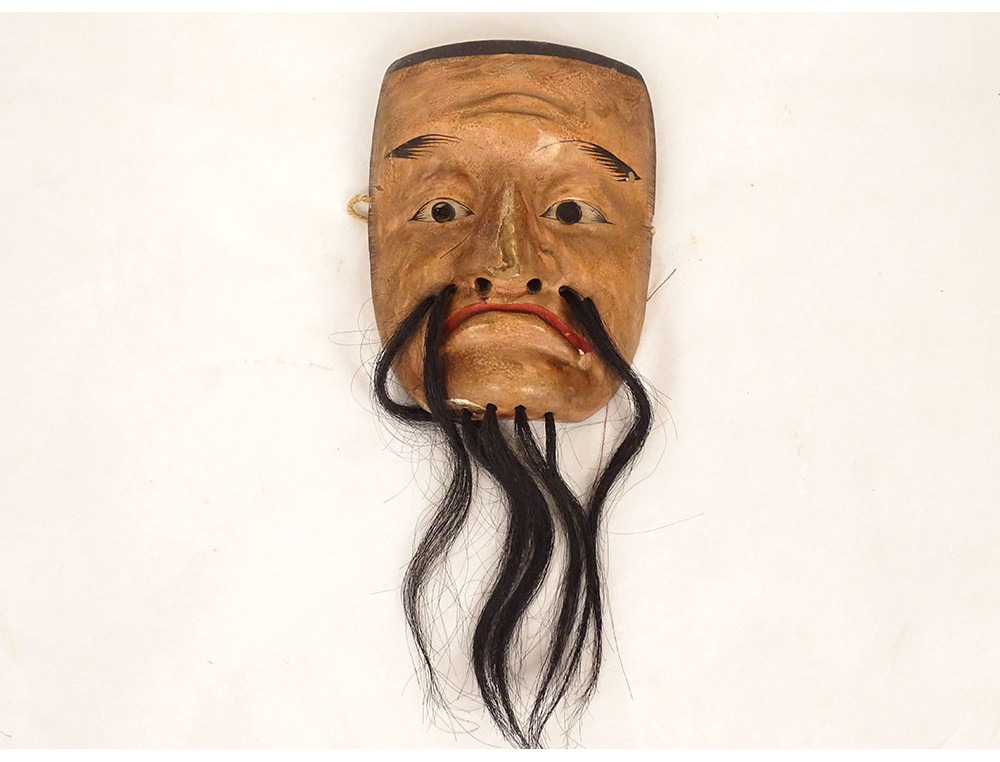
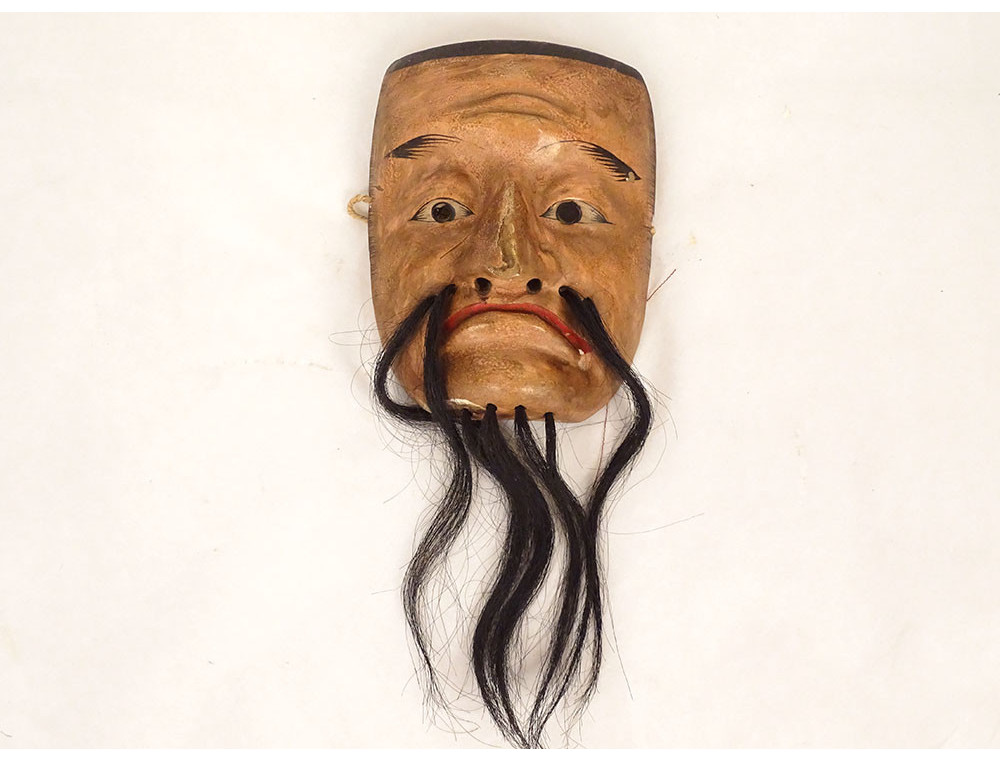
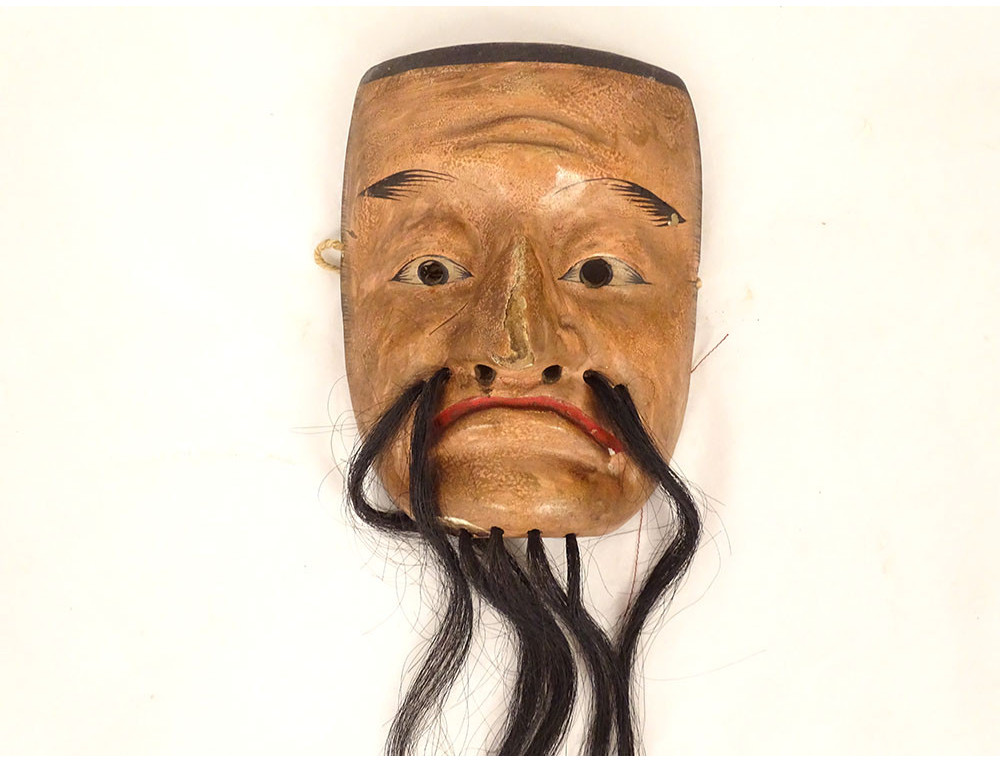
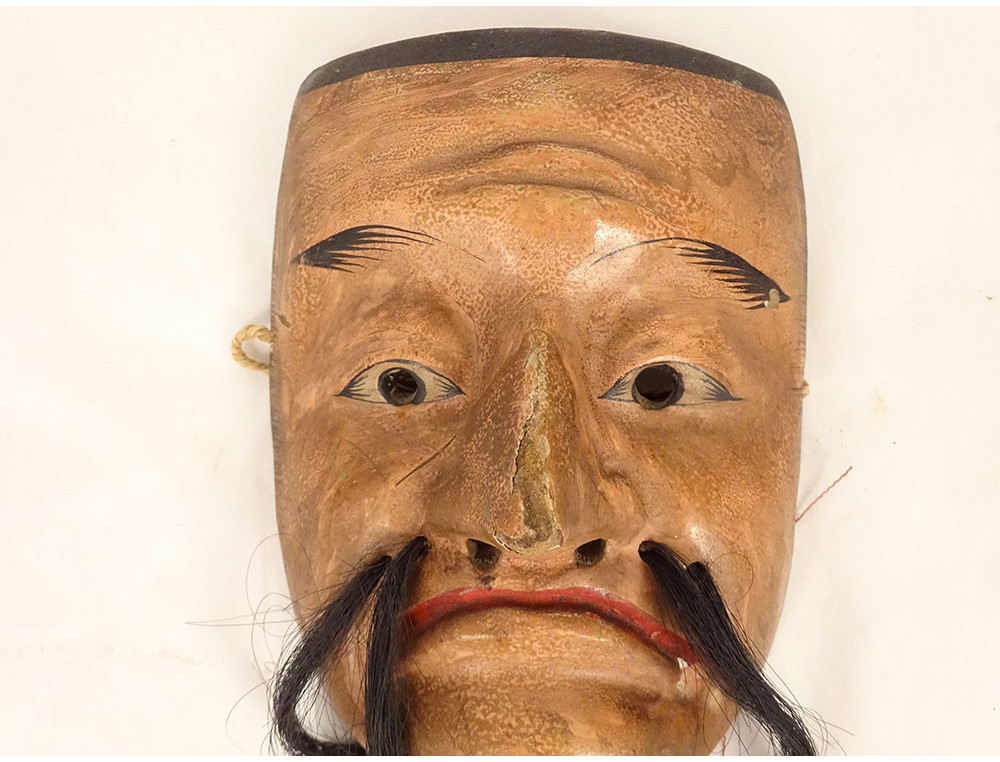
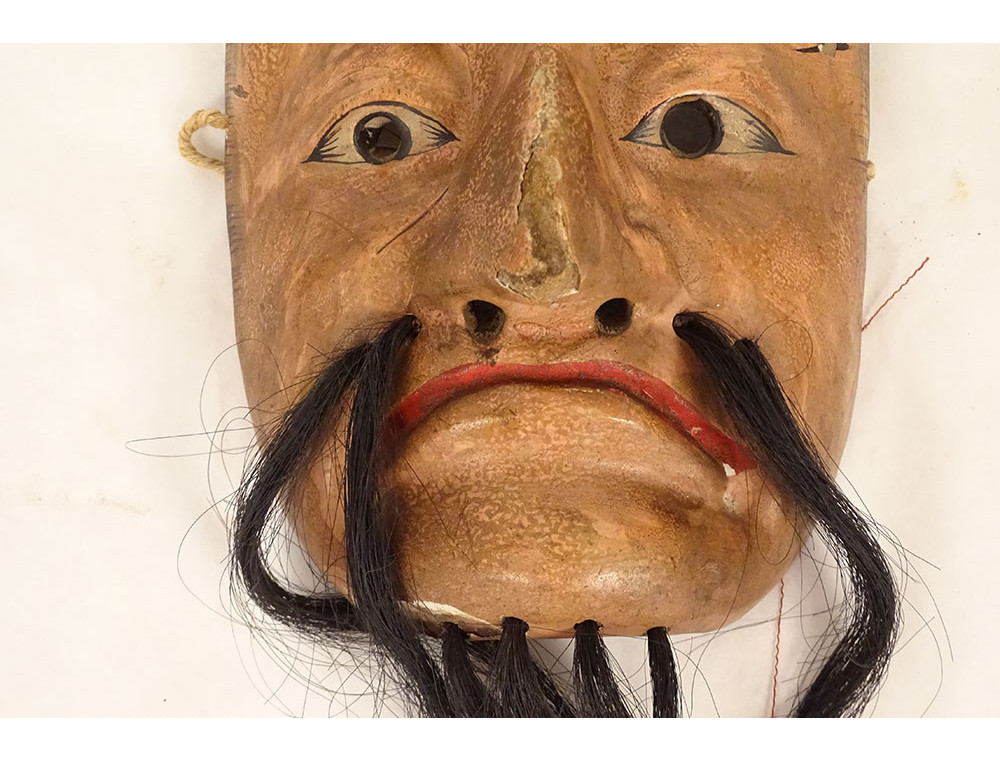

Noh theater mask, polychrome wood, demon man, Gigaku Obeshimi, Japan, 19th century

 Articles
Polychrome wooden Japanese Noh* theatre mask representing a frightened-looking man's or demon's face, from Japan, late 19th century.
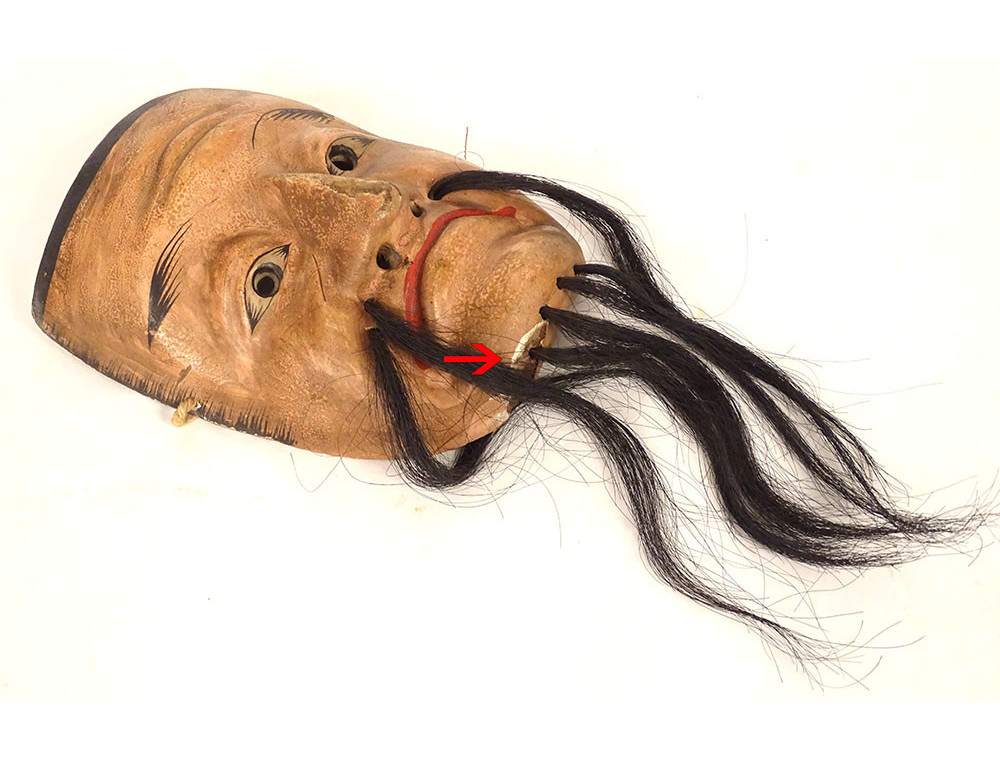
This mask is in good condition. The nostrils and eyes are pierced, and it retains the hairs of the beard and moustache.
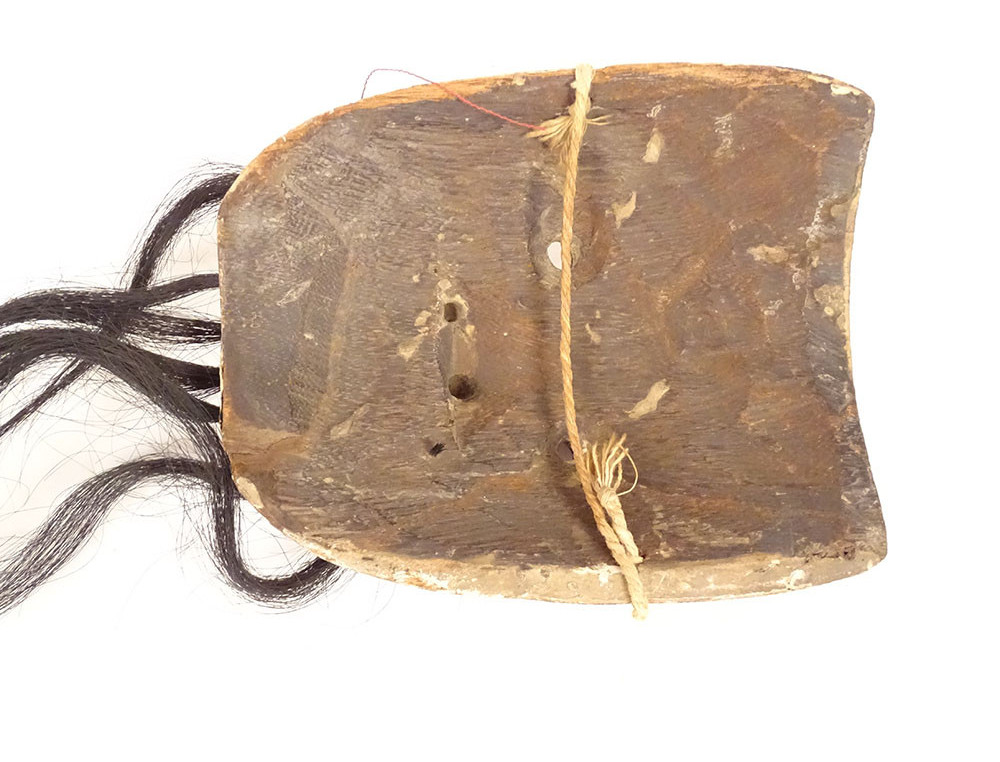
Note: some damage to the bottom of the mask (at the level of the beard hair), lack of polychromy, wear and tear of time, see photos.
We have other Noh masks for sale on this site.
Noh is one of the traditional styles of Japanese theater, stemming from a religious and aristocratic worldview. It combines narrative verses with pantomime dances. Adorned in sumptuous costumes and specific masks (there are 138 different types), the actors primarily performed for shoguns and samurai. Masks are used for all shite roles except those of children and living adult men (as opposed to ghosts). When the shite performs without a mask, they must maintain a neutral expression, exactly as if they were wearing one. The design of Noh masks blends real and symbolic elements, their purpose being to convey the character's nature and mood. When donning the mask, the actor symbolically relinquishes their own personality to embody the character they are about to portray. Contemplating the mask is thus an integral part of the preparation for the role. Furthermore, due to the lighting, the mask's expression is designed to vary depending on the angle of exposure. The actor must therefore constantly control the tilt of their head to present the mask to the light in the orientation required by their character's mood. Demon masks, which may have open or closed mouths, are distinguished by the great expressiveness of their features and the golden coloring of their eyes. These two elements express the raw power and savagery of the supernatural beings they represent. Only female demon masks have horns; male ones do not.