

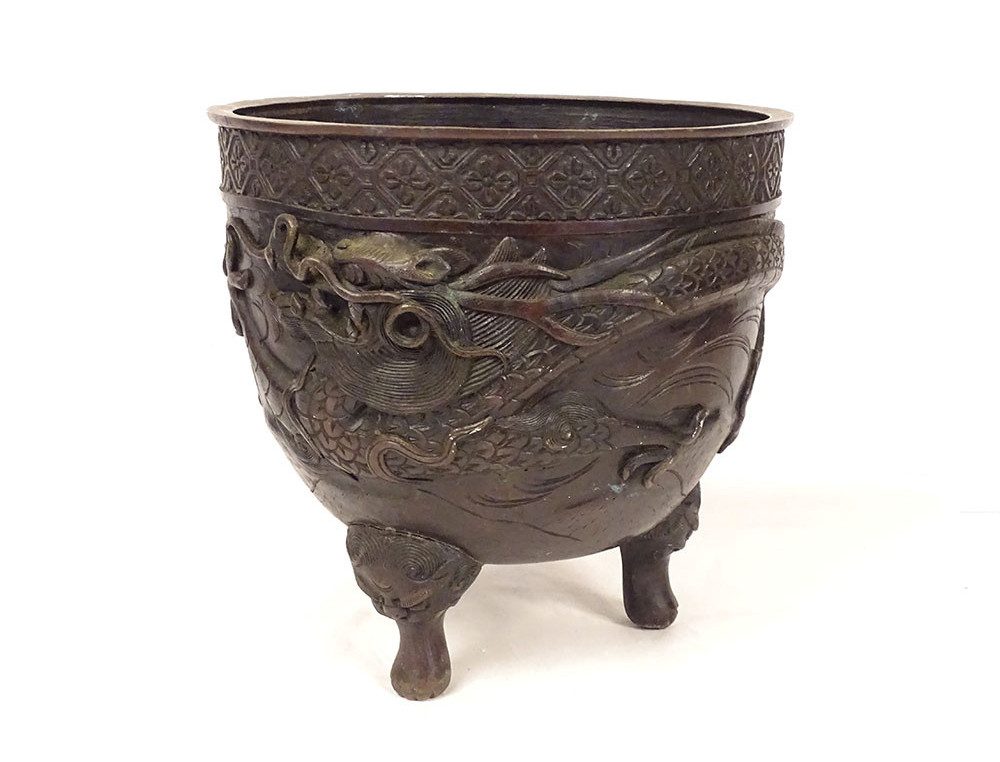
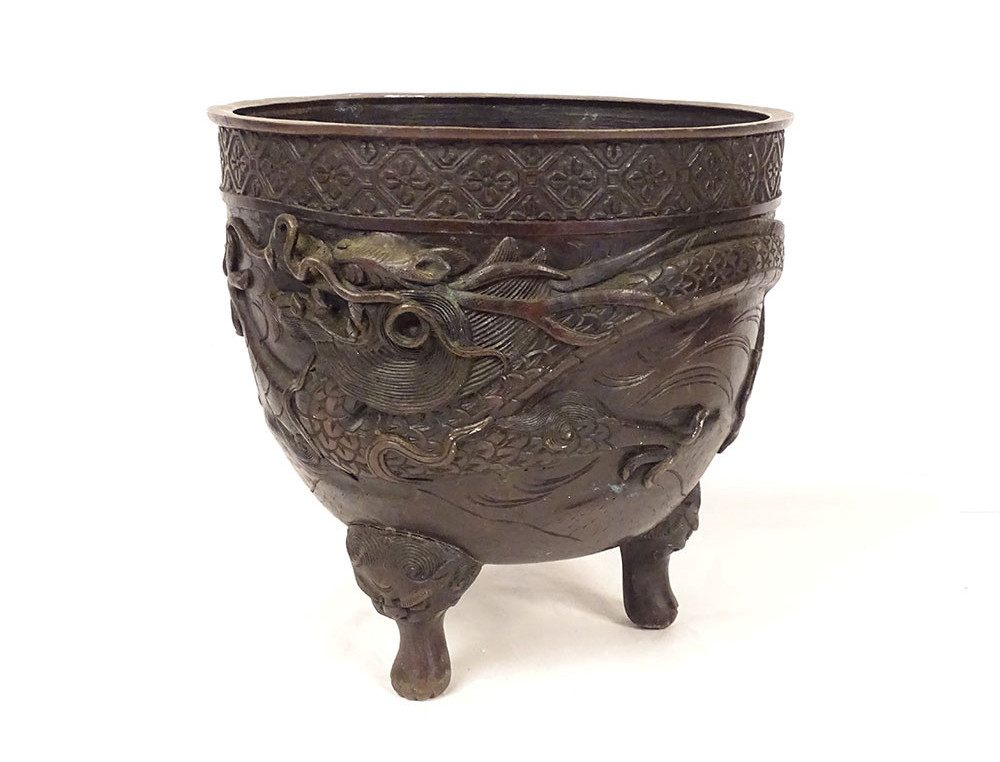

Large bronze dragon planter cachepot Taotie Nomura Kyoto Japan Meiji 19th century

 Articles
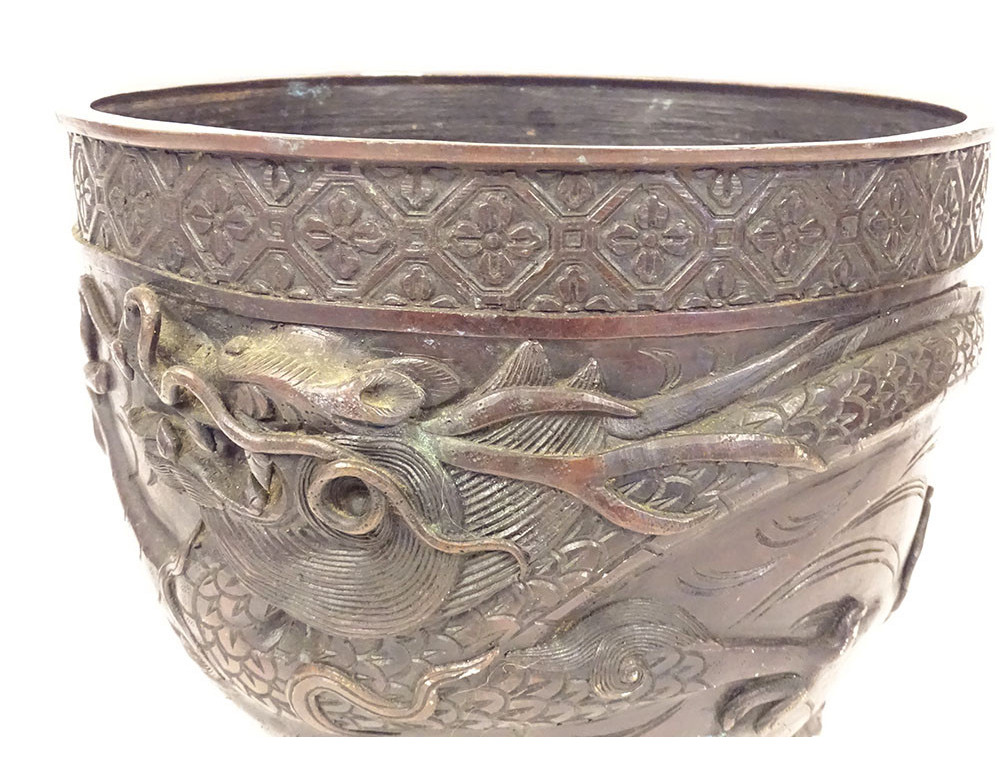
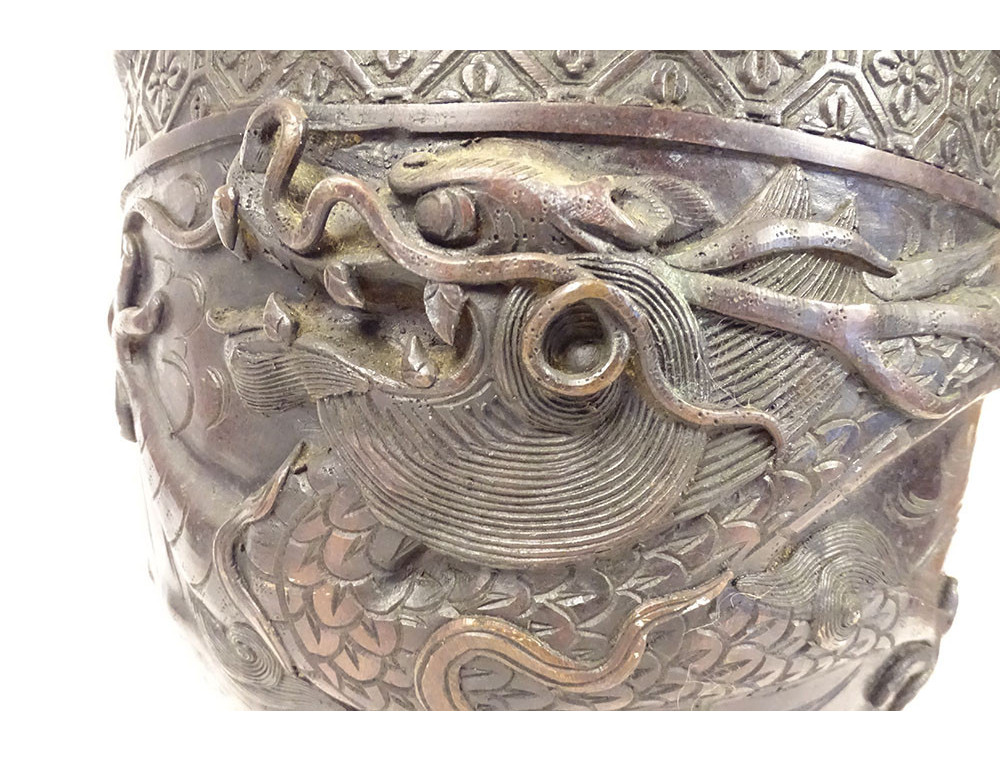
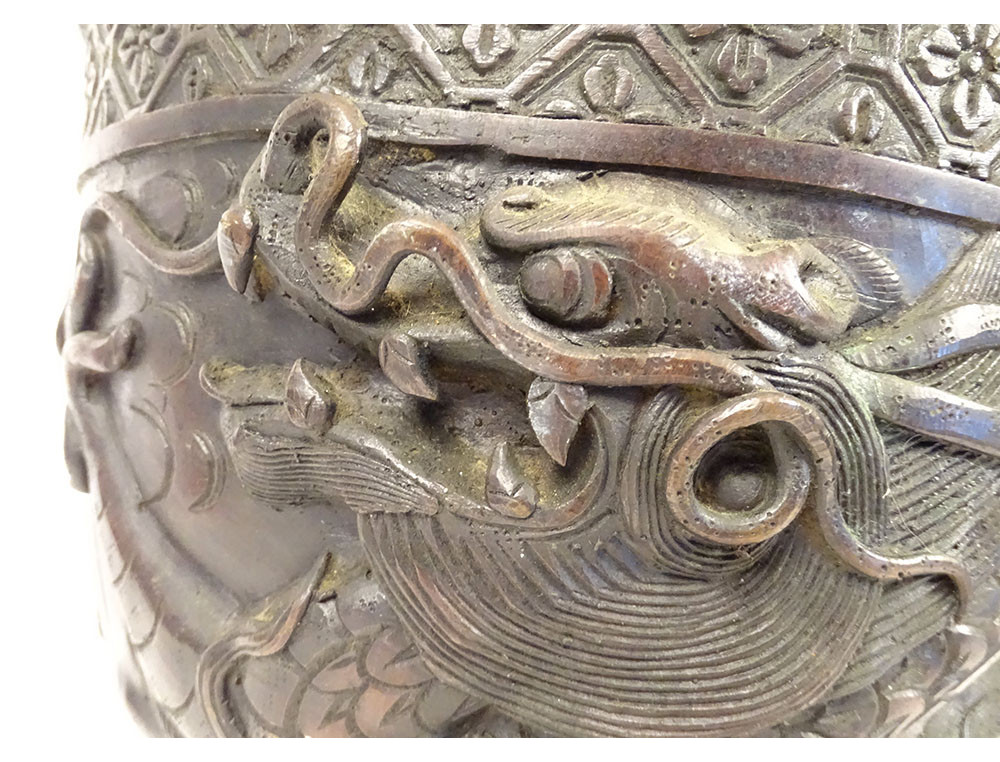
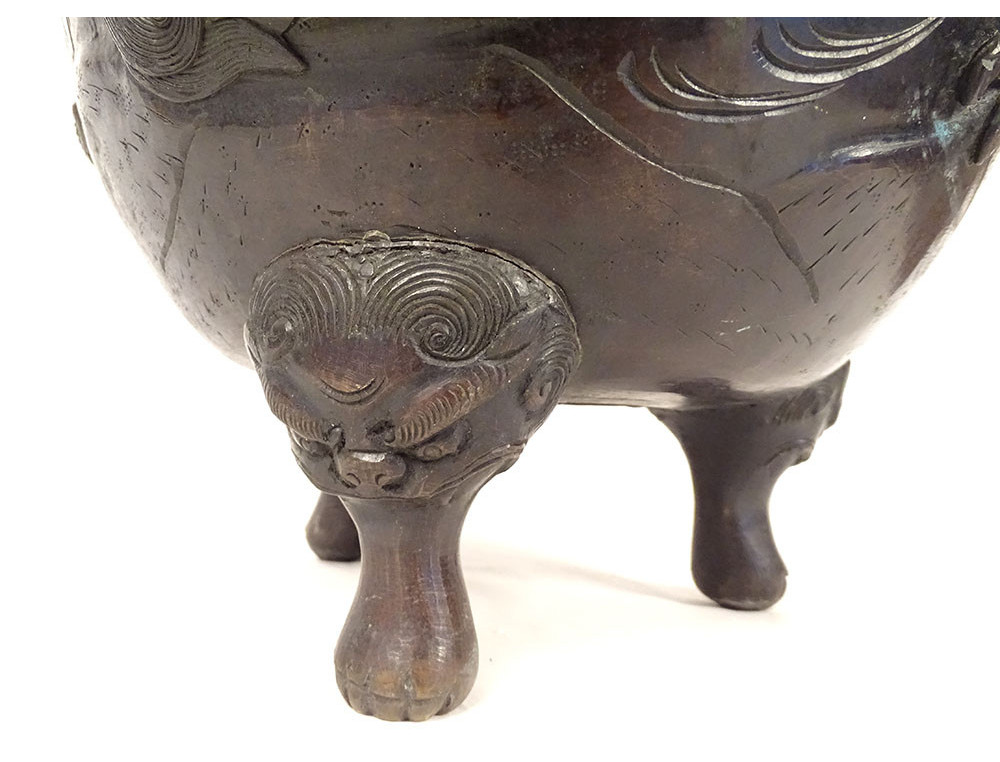
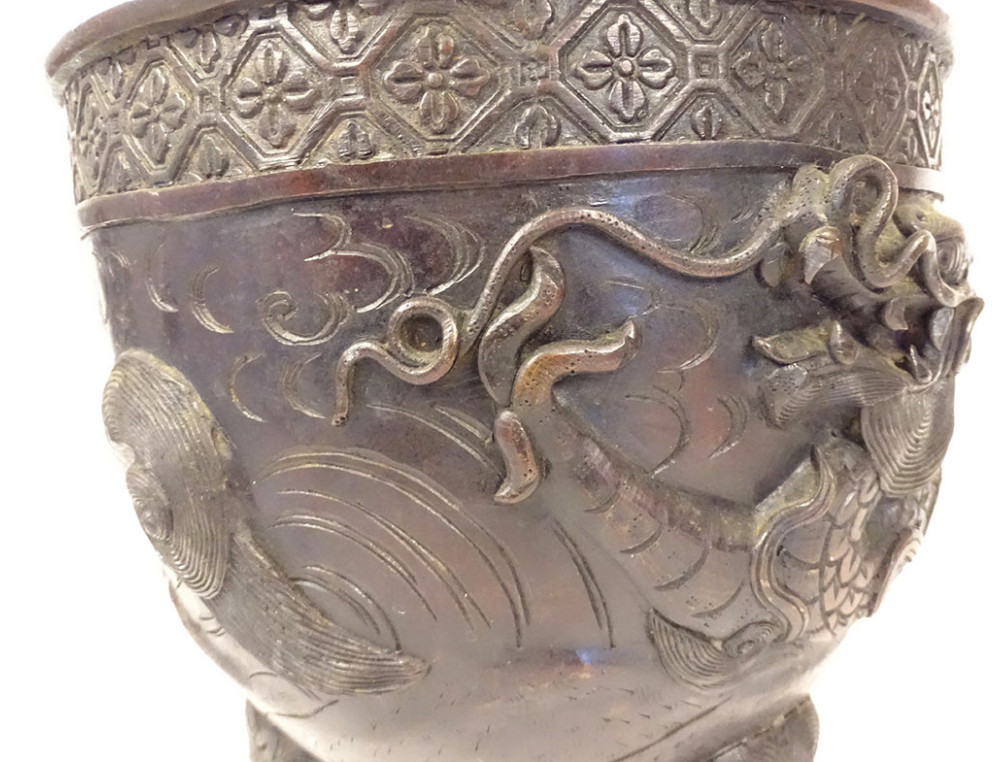
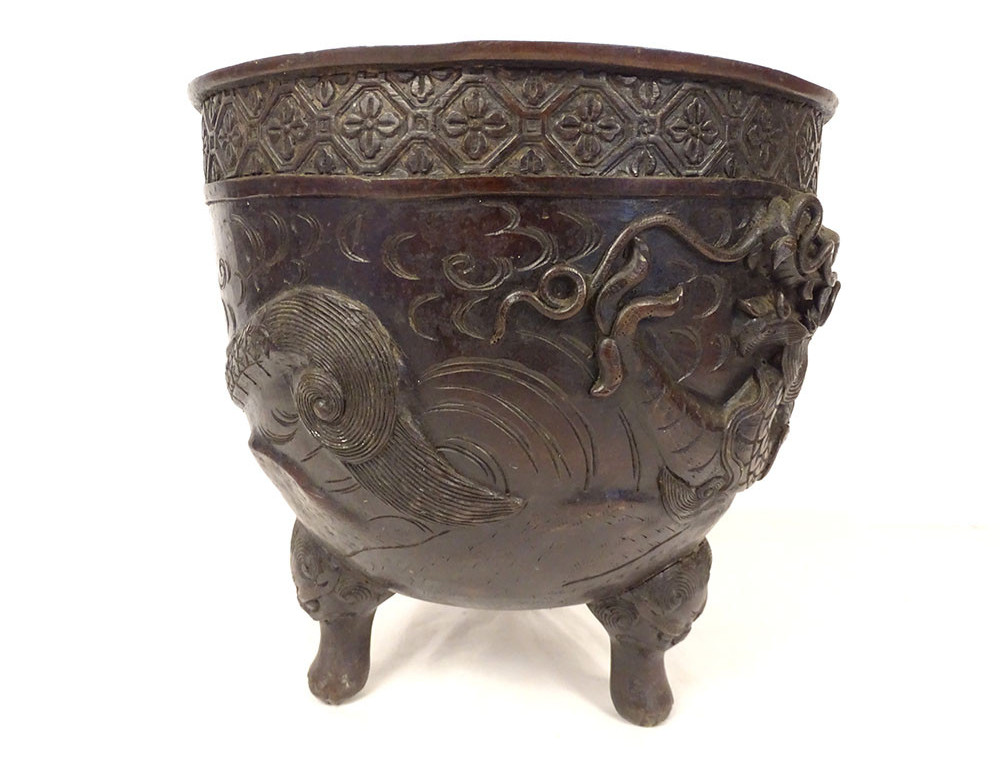
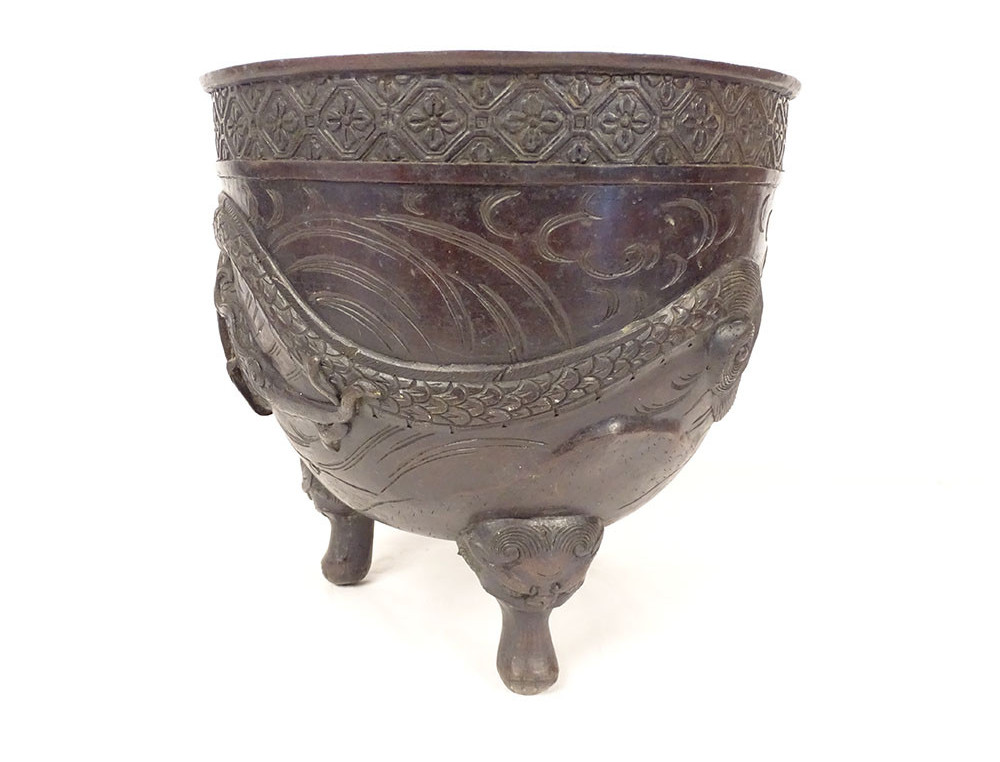
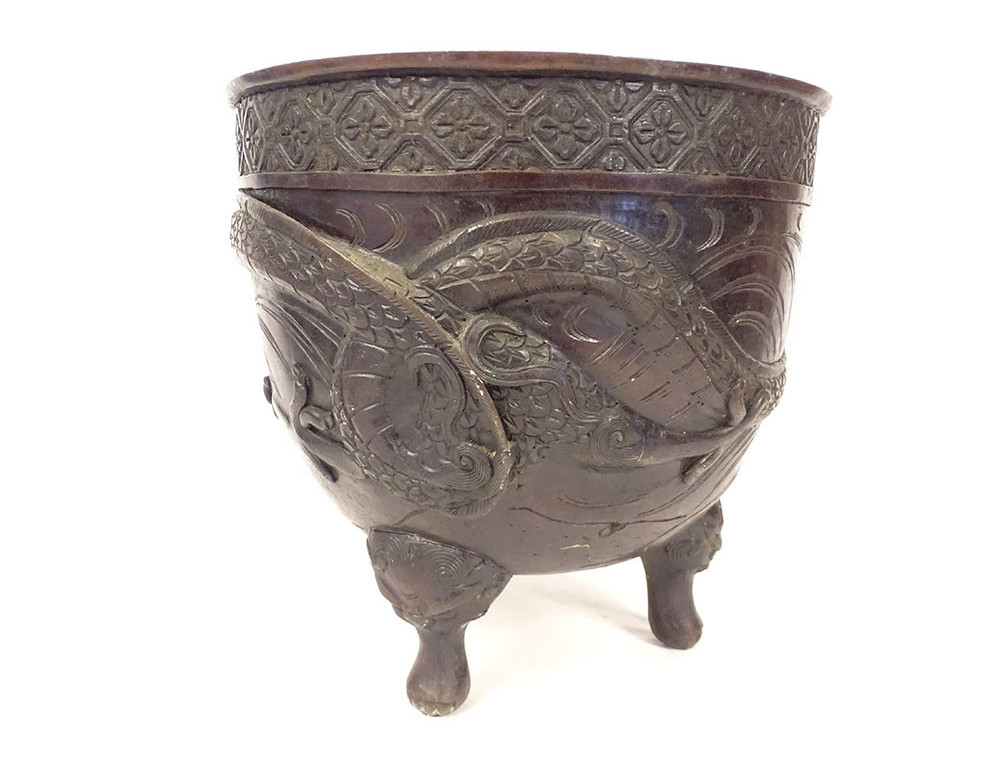
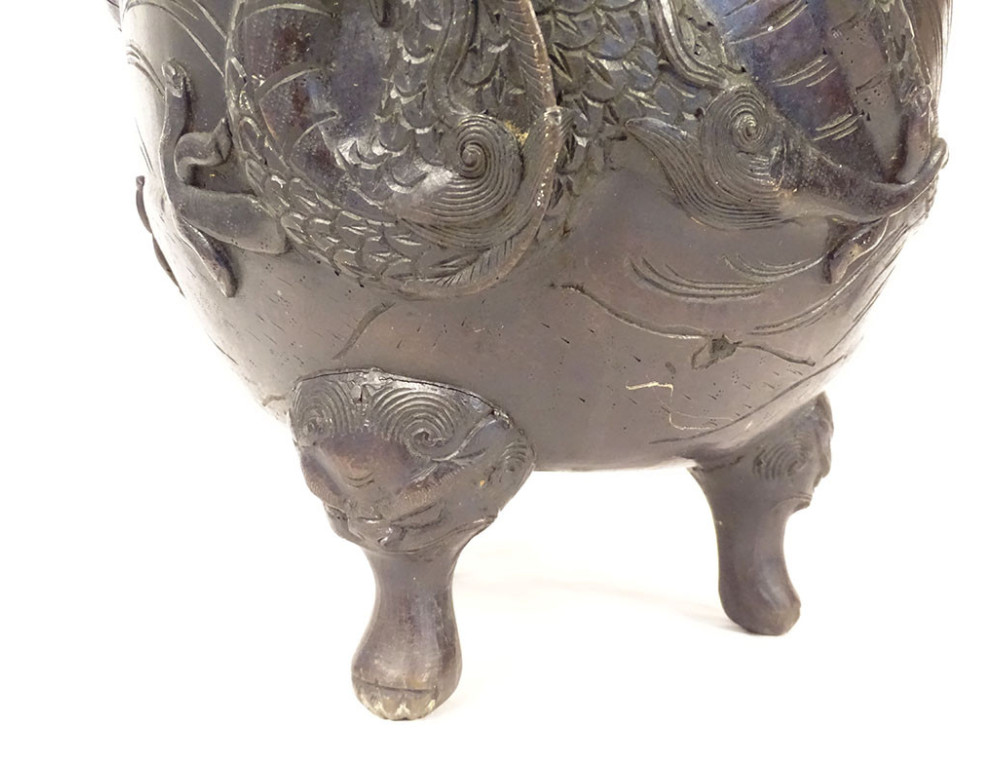
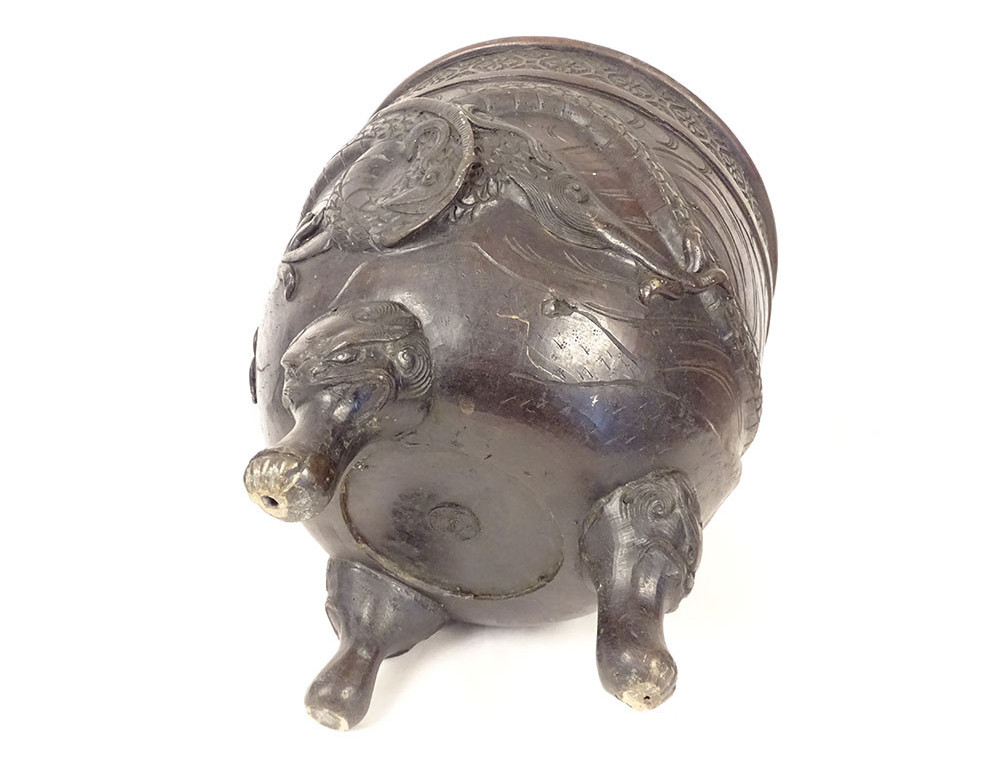
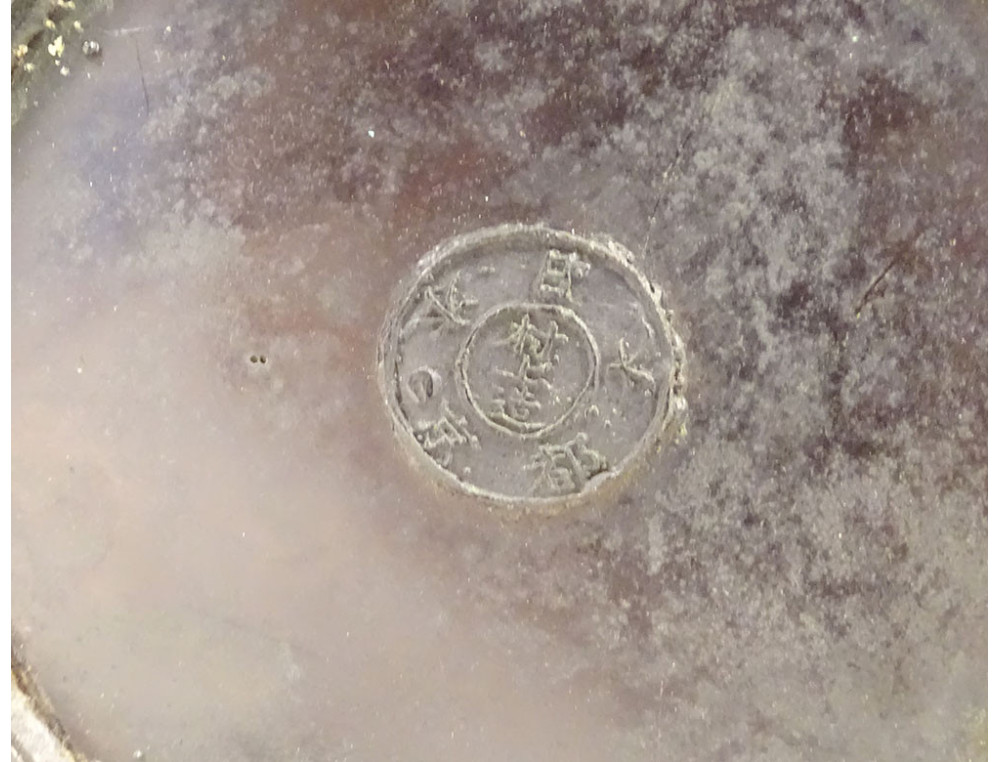
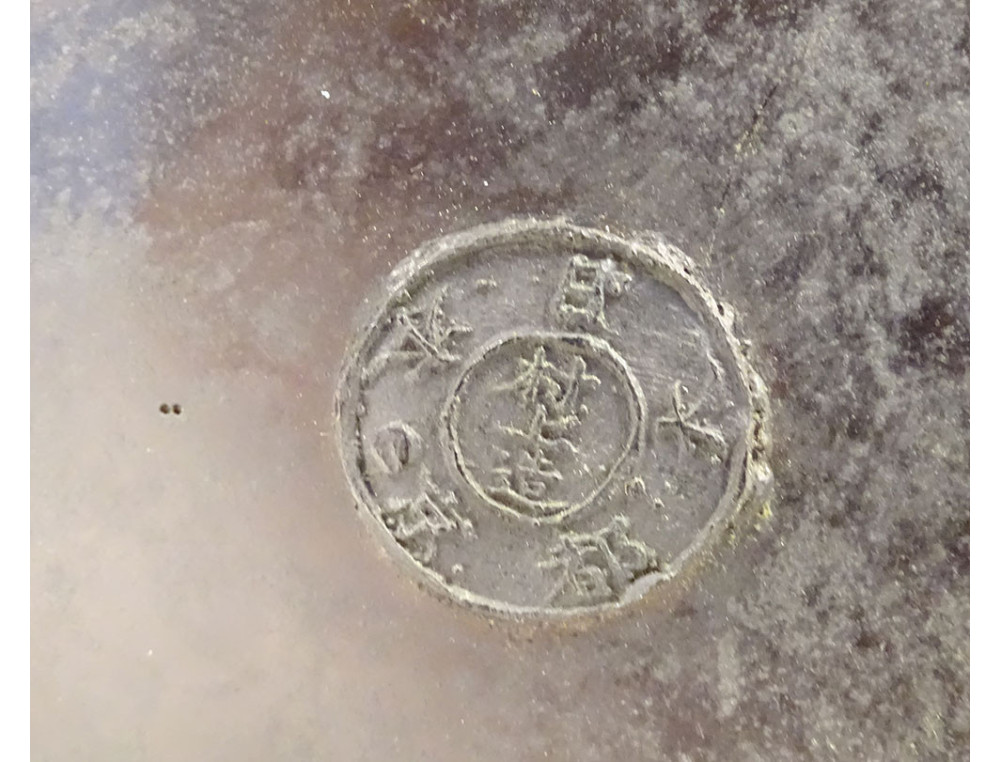
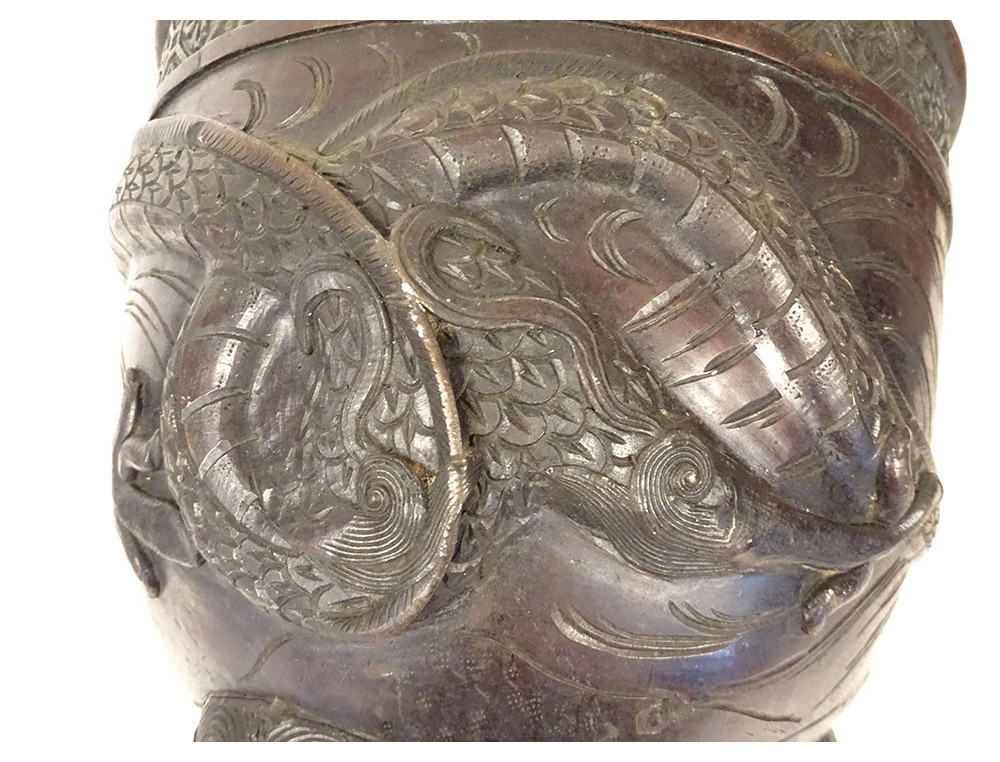
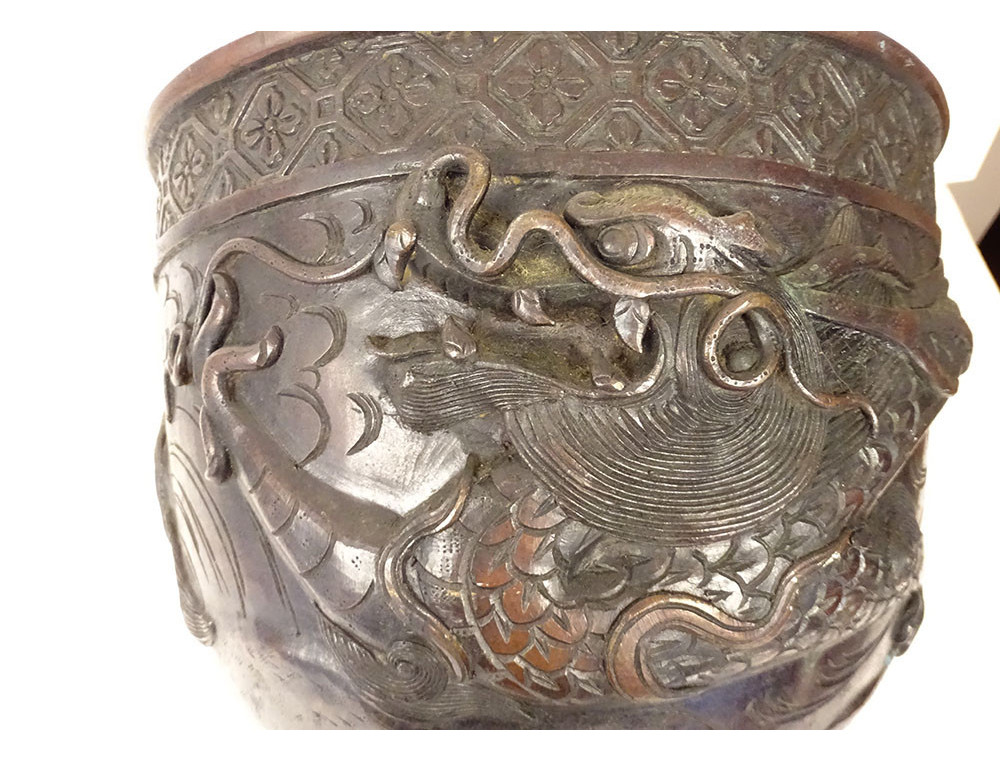
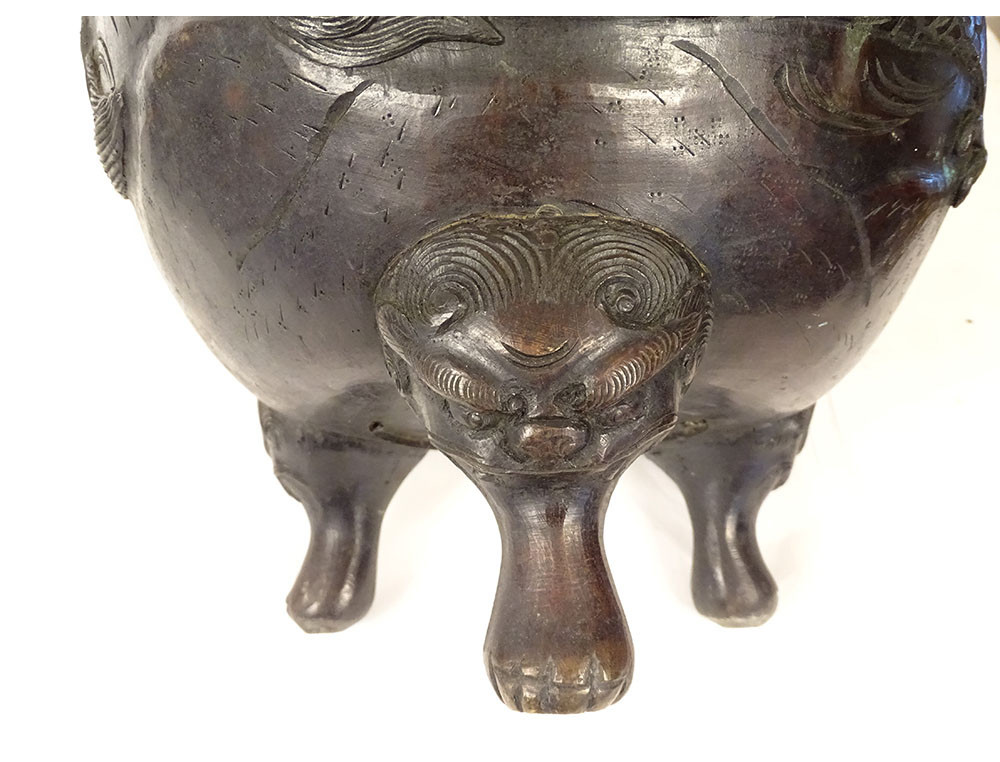
Large bronze planter cachepot decorated with a traditional oriental dragon: its open mouth and menacing eyes precede its body covered with scales snaking in relief on the object, above a beautiful stylized frieze of flowers, tripod base chiseled with fantastic animal heads (Taotie*), Nomura workshop stamp in Kyoto, provenance Japan, Meiji period (1868-1912) 19th century.
This planter is in very good condition and of remarkable quality. The decoration is particularly interesting, the dragon being a very important mythological creature in Japanese culture. This planter could very well have also served as an incense burner.
A stamp on the base bears the inscription "Dai Nippon Kyoto" (Greater Japan, Kyoto) on the outer circle. This is the typical geographical inscription found on bronze art pieces cast in Kyoto intended for major exhibitions or international export. The central medallion bears the inscription "Nomura Zō," which translates to "Made by Nomura." The characters are rendered in a slightly cursive calligraphic style, typical of Meiji art casting on metal.
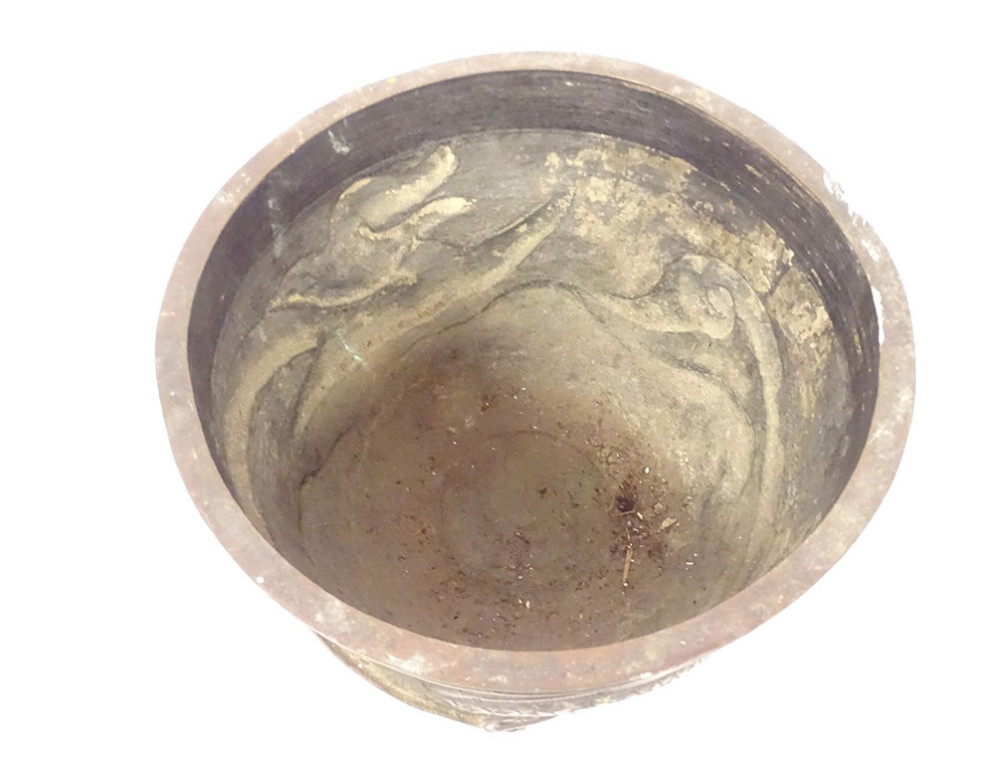
Note: there are a few minor dents, dirt and wear consistent with age, see photos.
The taotie motif is a stylized and symmetrical representation of an imaginary animal, borrowing some of its features from the dragon. Other aspects link it to the tiger, or even the ox or sheep. The animal is described as a ferocious, horned creature with bulging eyes beneath thick eyebrows, its half-jaw adorned with sharp fangs. The term taotie is sometimes translated as "glutton," also known for its voracious appetite.