

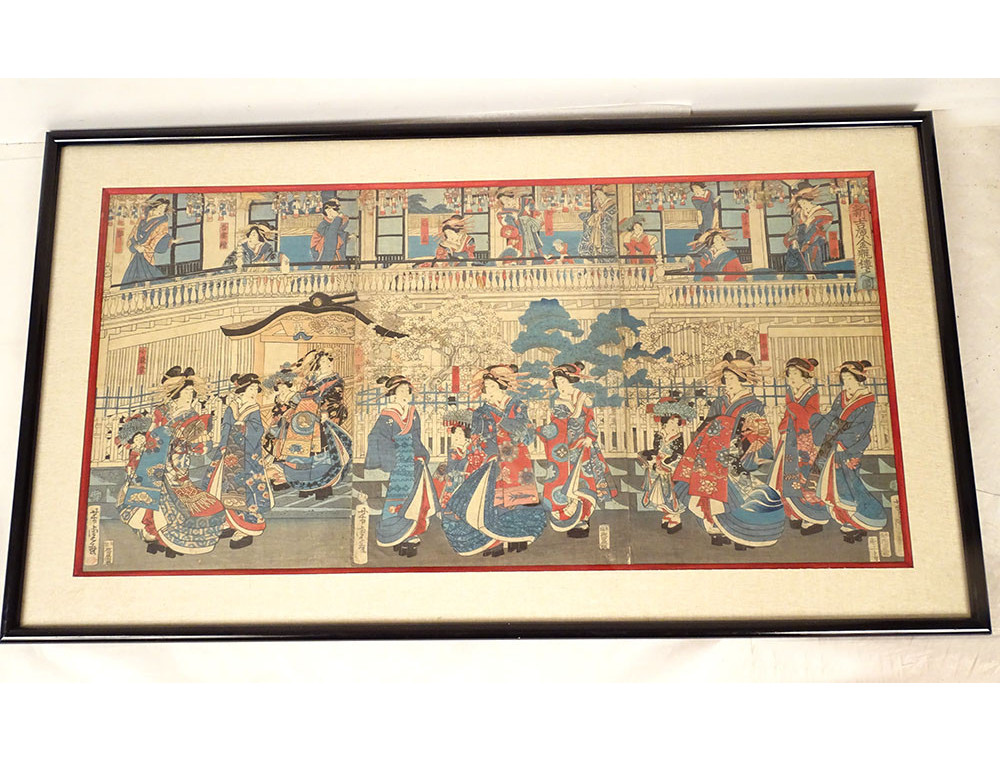
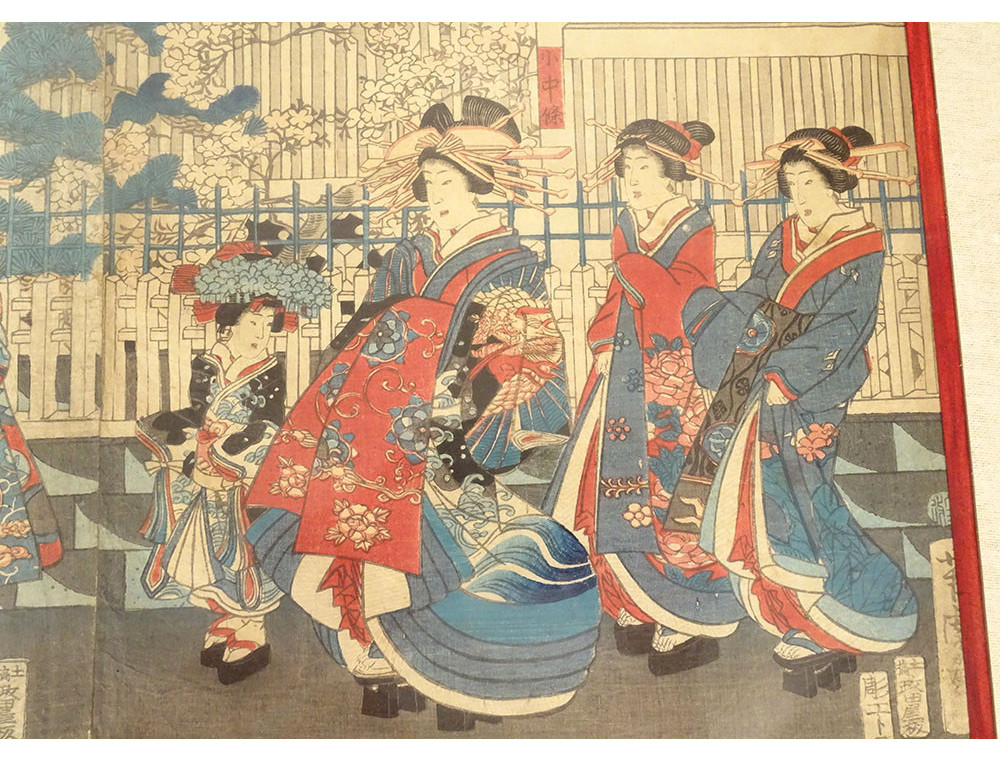
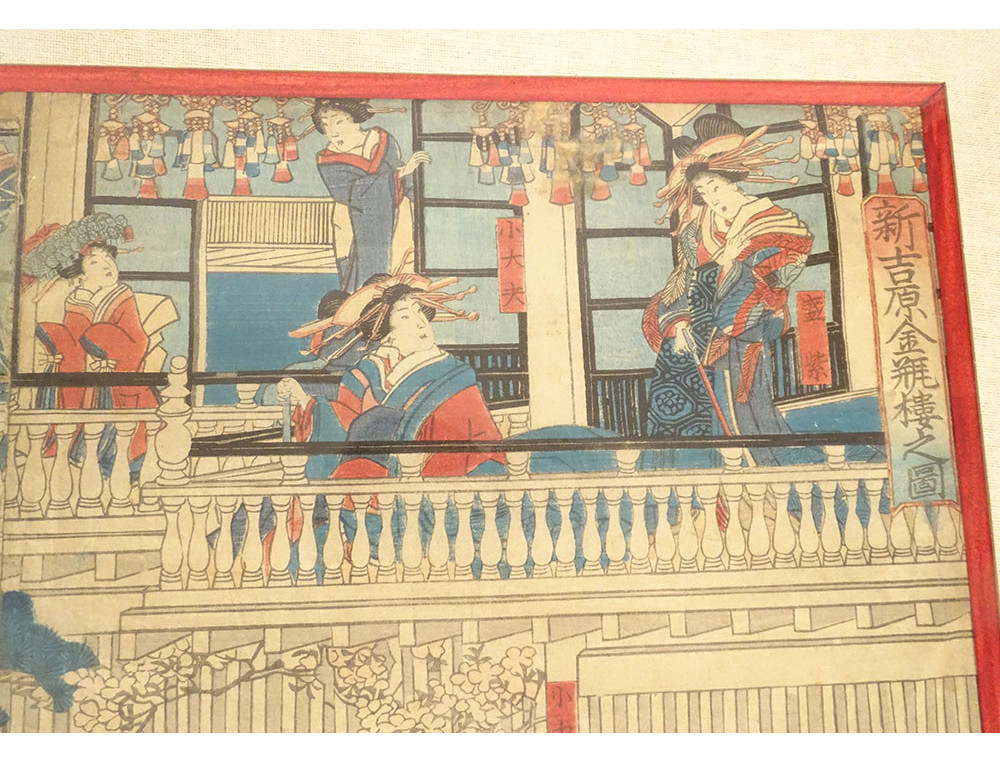
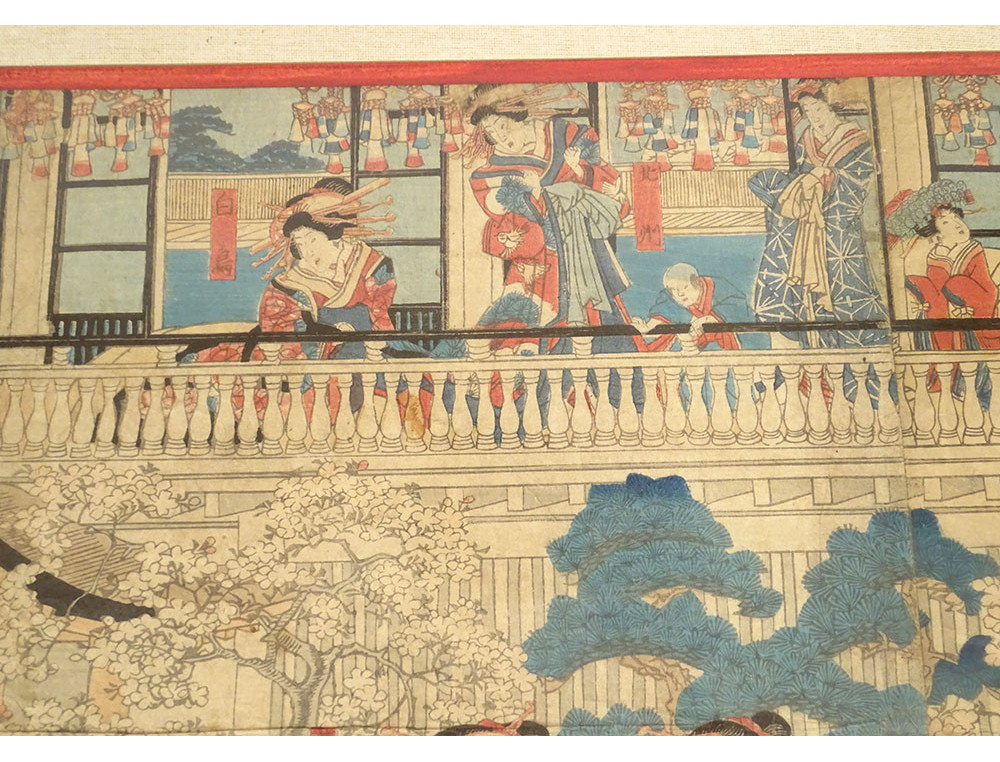
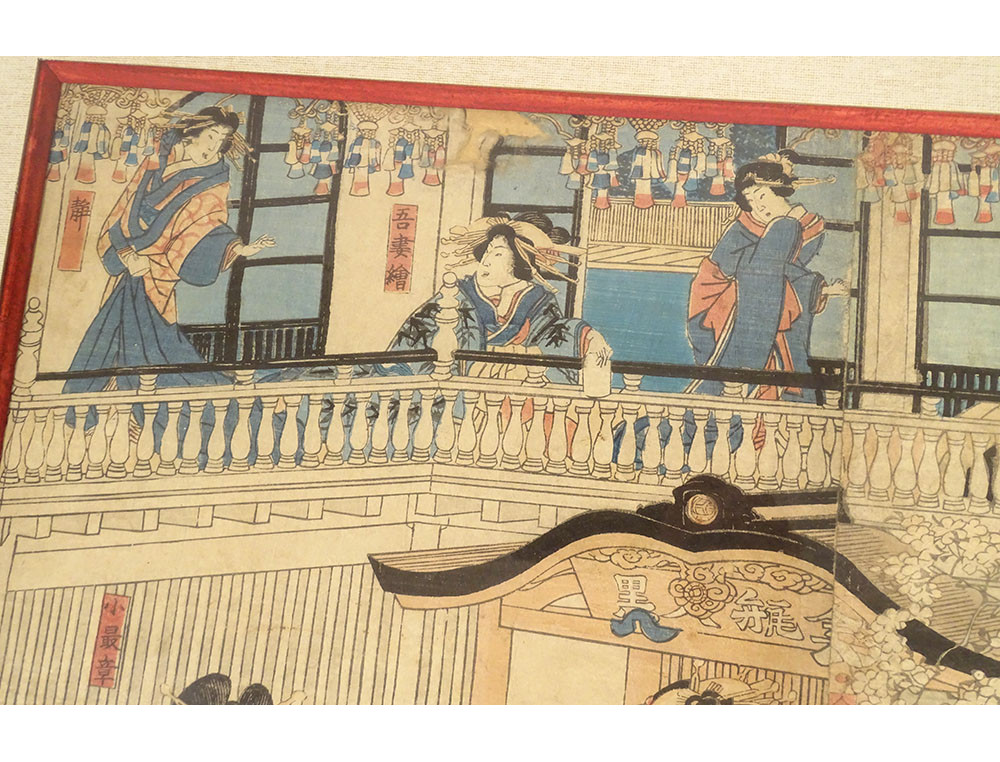

Ukiyo-e print of courtesans, Oiran brothel, Yoshitora, Meiji period, 19th century

 Articles
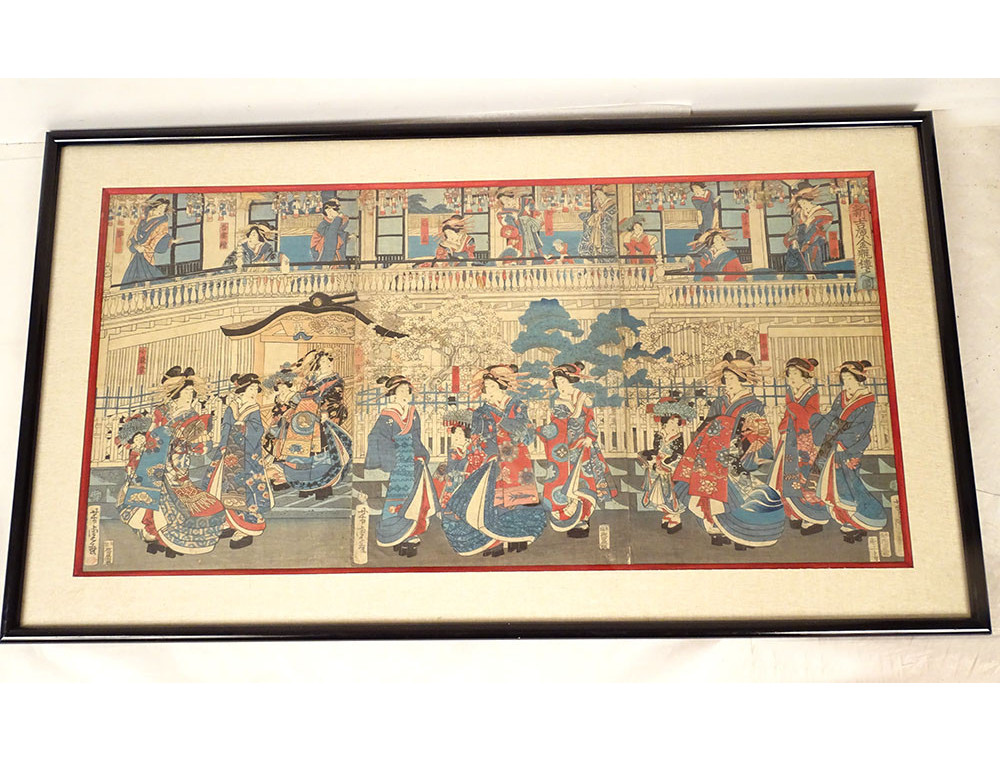
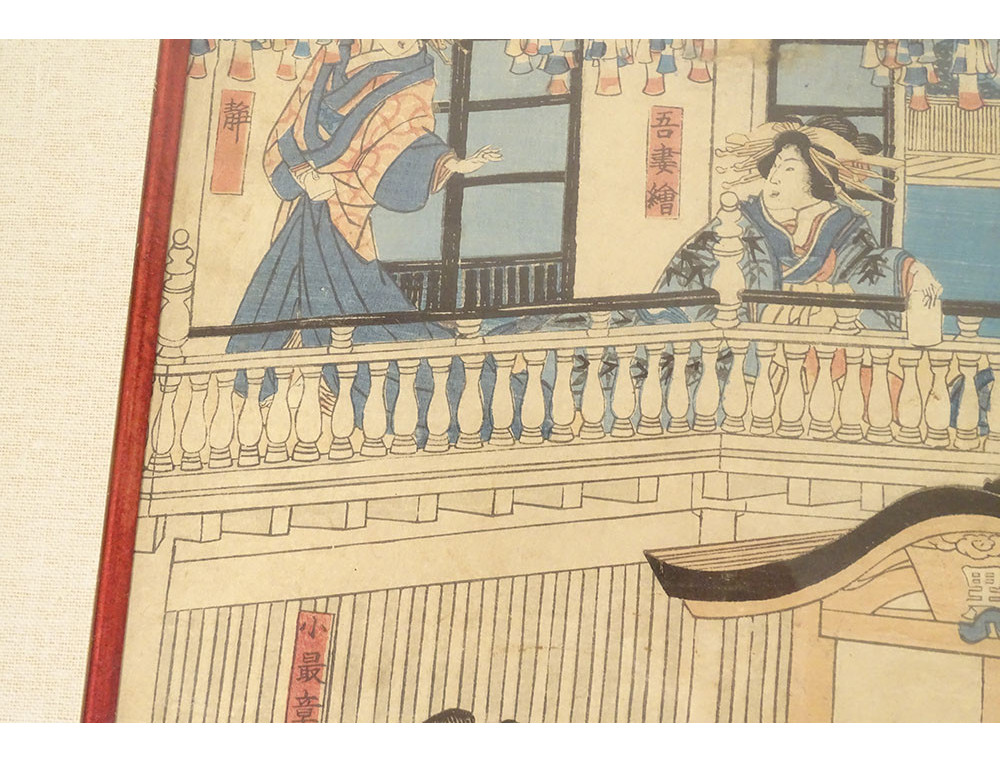
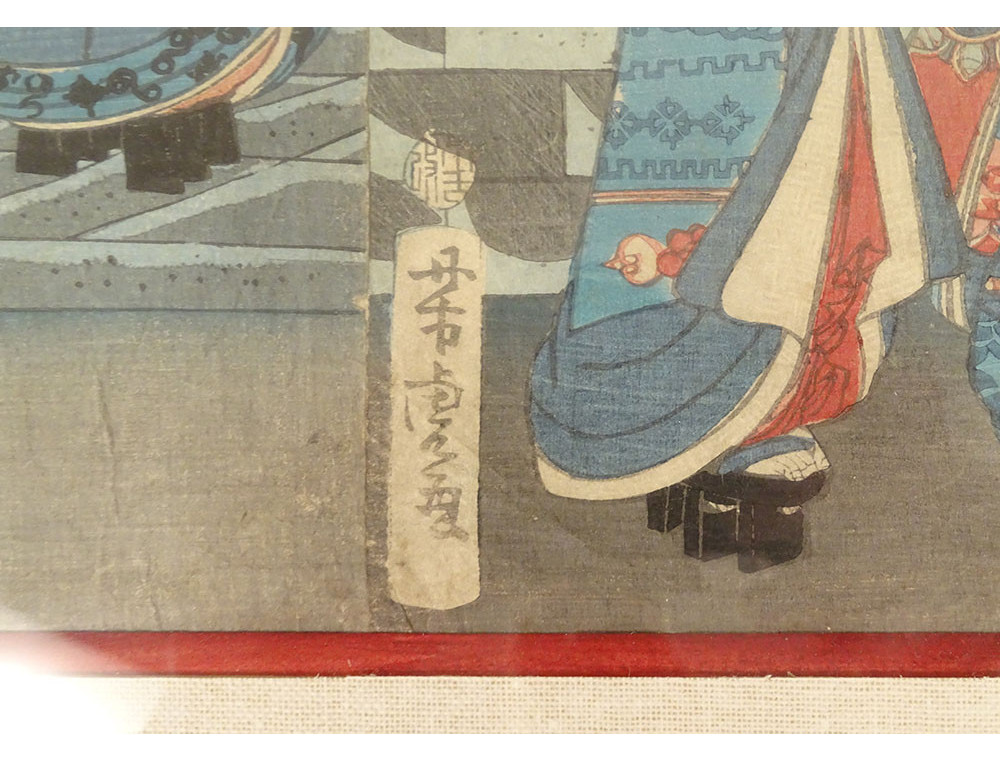
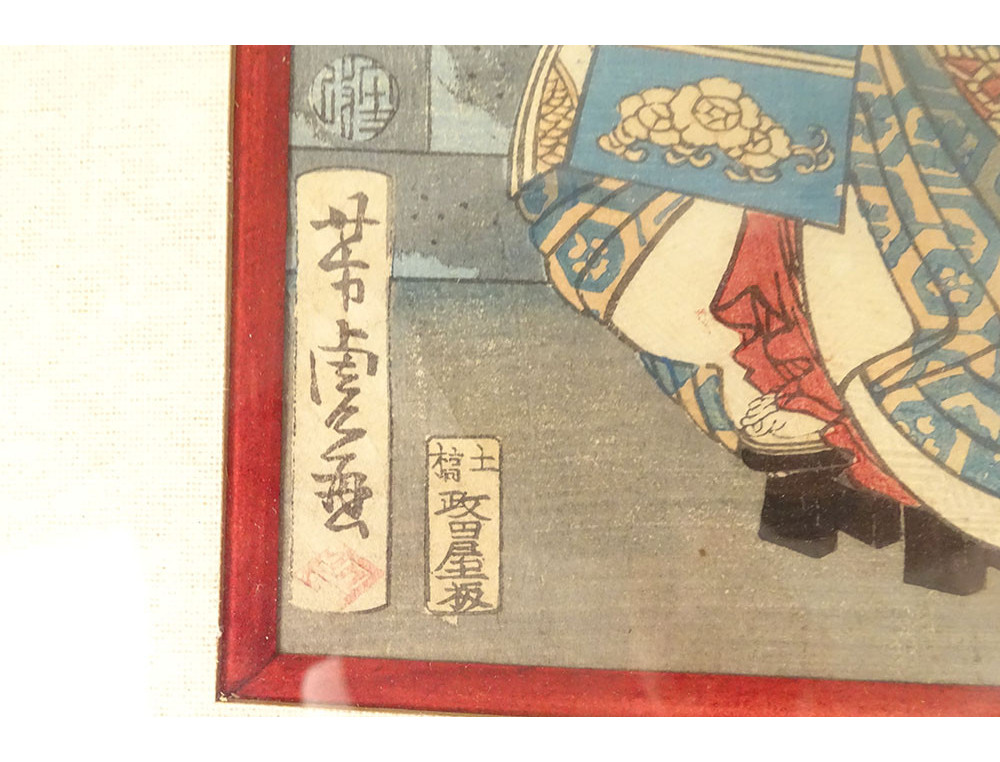
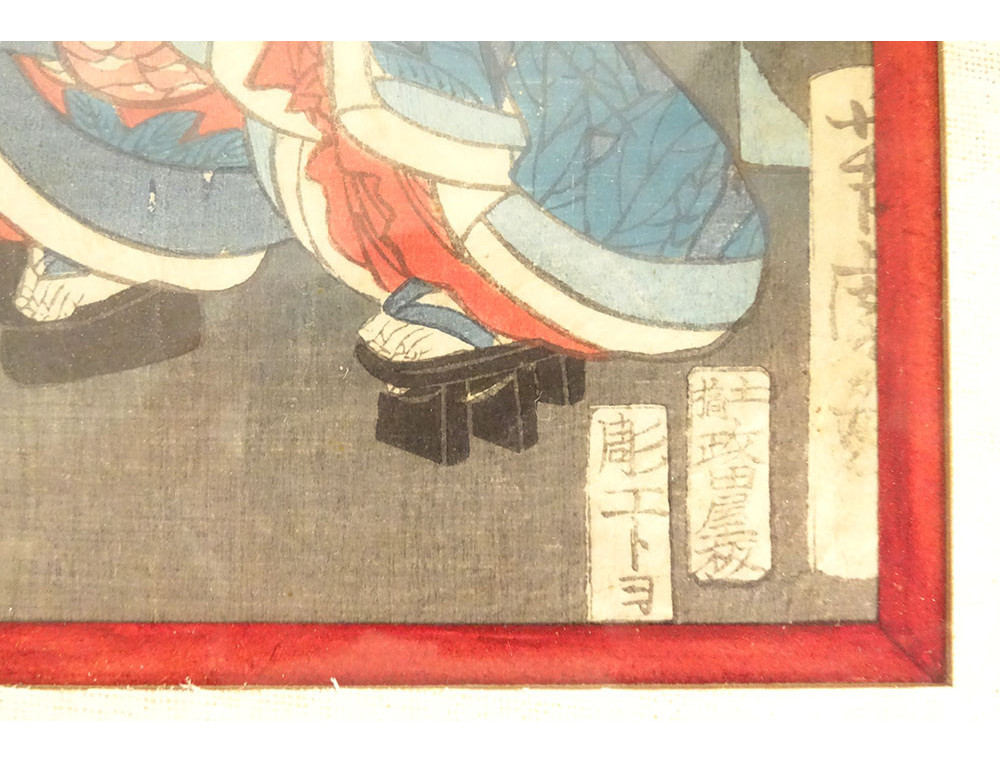
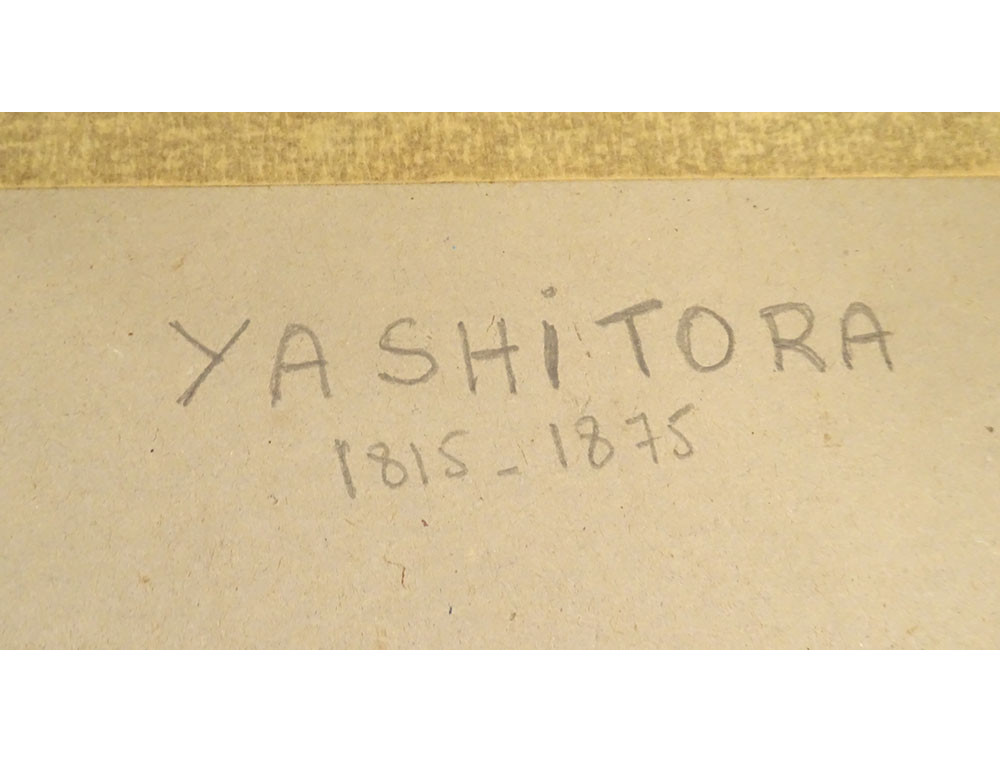
Japanese print on Ukiyo-e type paper**, in three parts (triptych-oban form) representing a very lively view of the Kimpeiro brothel in Shin-Yoshiwara in Tokyo, signed by the artist Utagawa Yoshitora*, Meiji period 19th century.
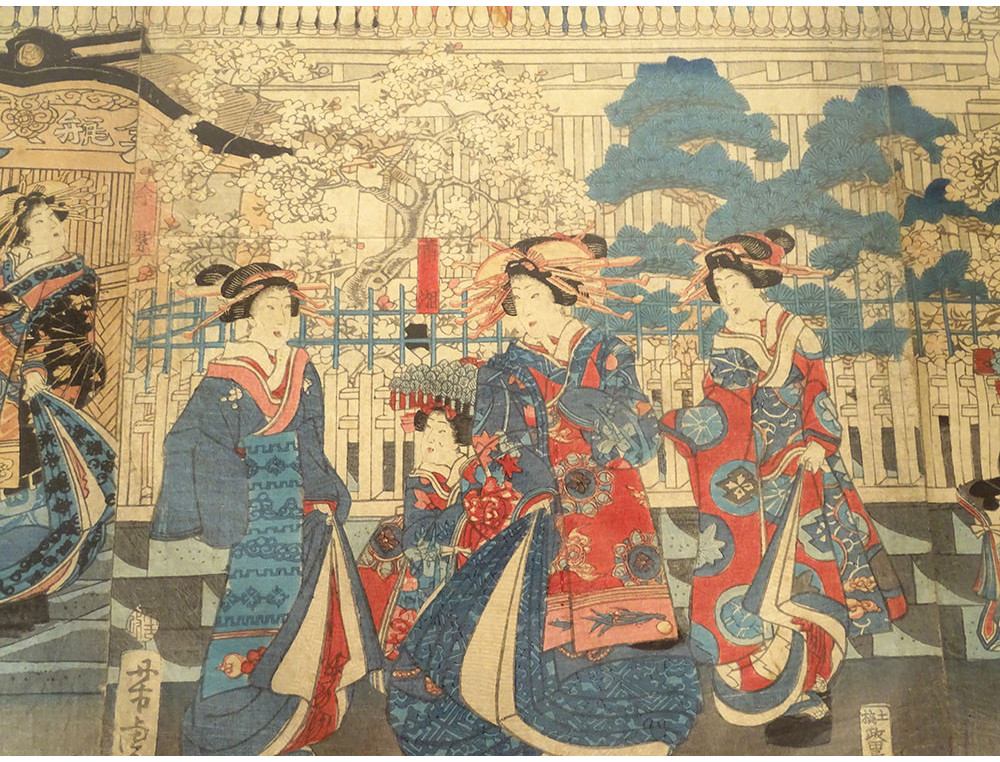
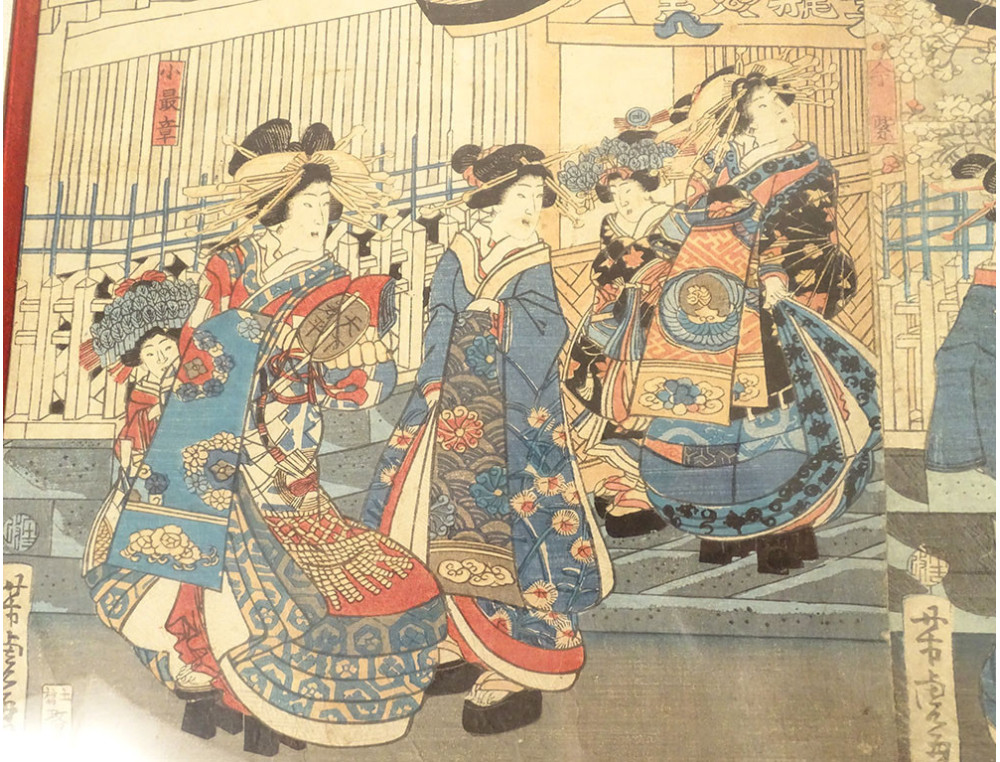
A Western-style balustraded balcony is visible, with French-style glazed windows at the rear. Numerous courtesans (oiran) accompanied by their young servants (kamuro) wear richly embroidered kimonos and elaborate hairstyles (with pins and combs). The courtesans' names are inscribed in small red cartouches beside them. A print on the same theme by the same artist is held at the Victoria & Albert Museum, London.
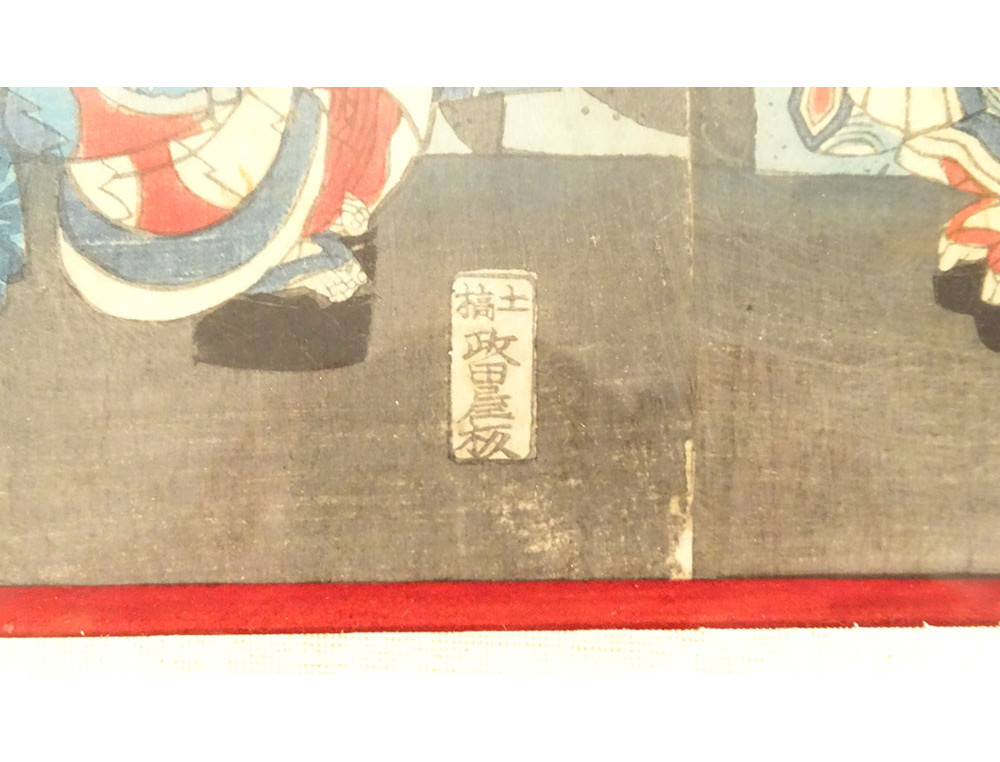
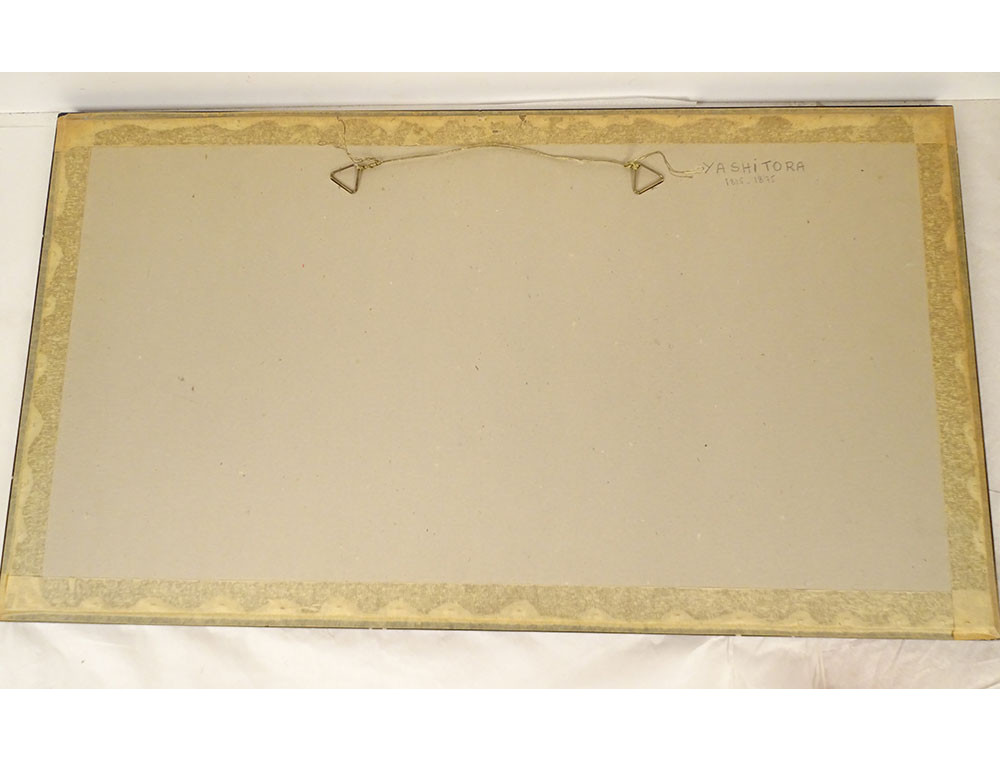
This print is in good condition, it is under glass, later framed. Signed, see photos.
Note: some wear and tear on the paper, please look carefully at the photos.
He was a woodblock print artist in the ukiyo-e style and an illustrator of books and newspapers active from approximately 1850 to 1880. He was born in Edo (Tokyo), but his exact birth and death dates are unknown. He was a student of Utagawa Kuniyoshi, who excelled in paintings of warriors, kabuki actors, beautiful women, and foreigners.
The Japanese term (meaning "pictures of the floating world") is a Japanese art movement from the Edo period (1603-1868) encompassing not only original popular and narrative painting, but also and especially Japanese prints. The main themes are Bijinga ("pictures of beautiful women"), Kabuki and Yakusha-e (images of Kabuki theater and its actors), Shunga (erotic paintings), Landscapes (fkei-ga) and "famous views" (meisho-e), as well as flora and fauna.