


Oil on canvas, after Auguste Delacroix, Prayer, Italian Madonna, Virgin, 19th century

 Articles
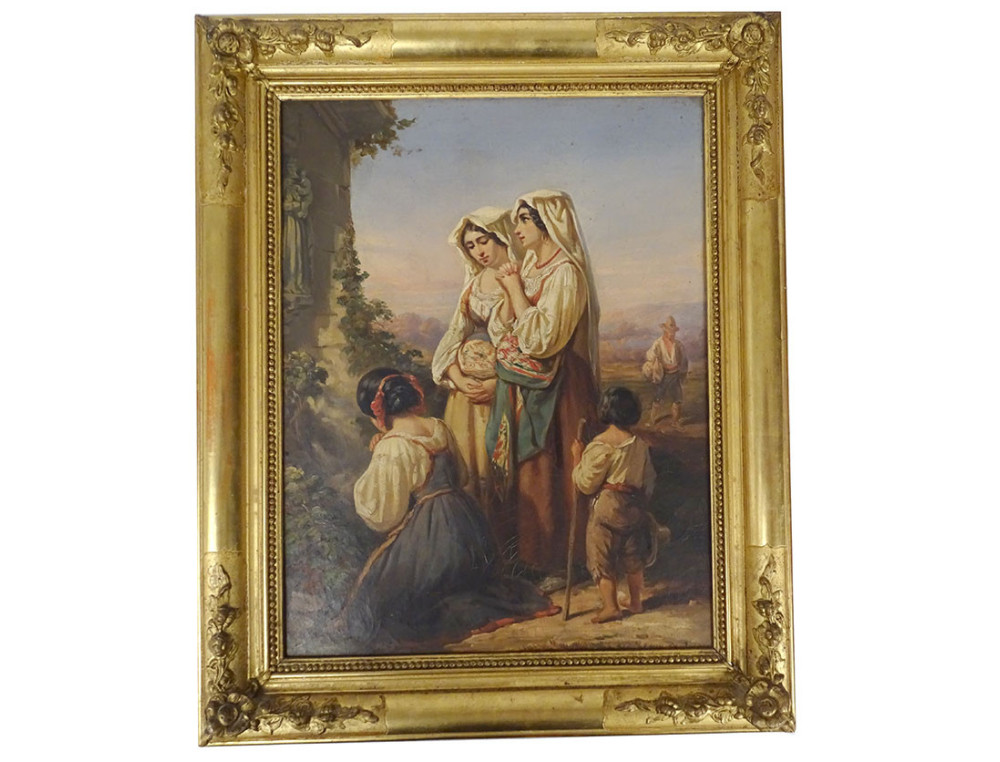
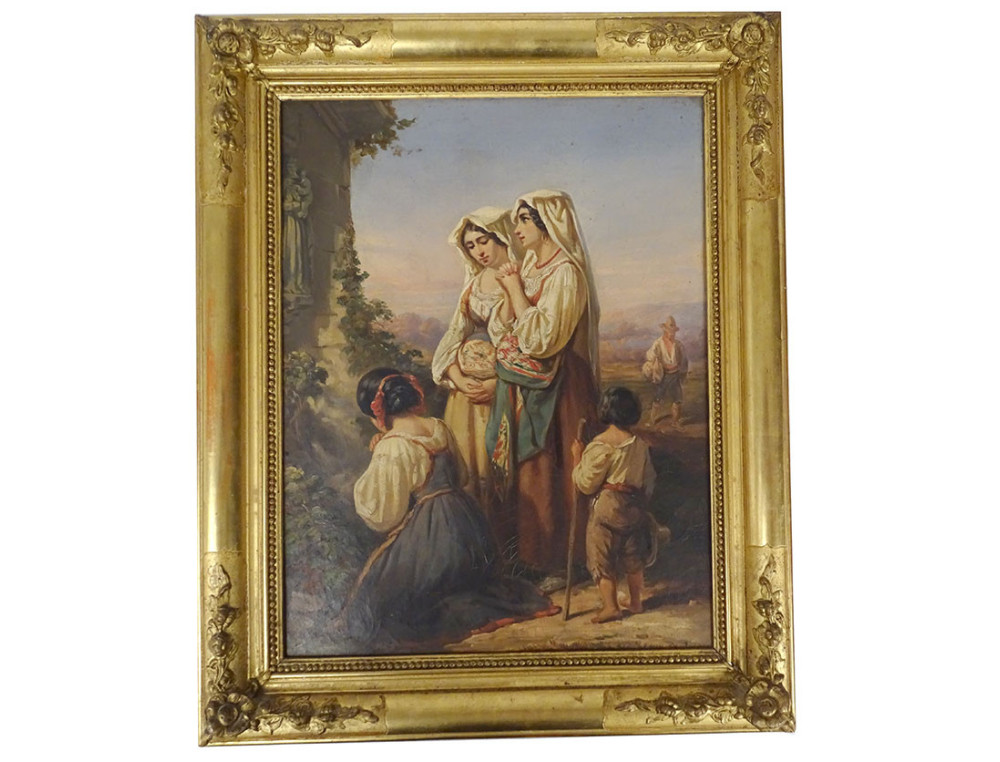
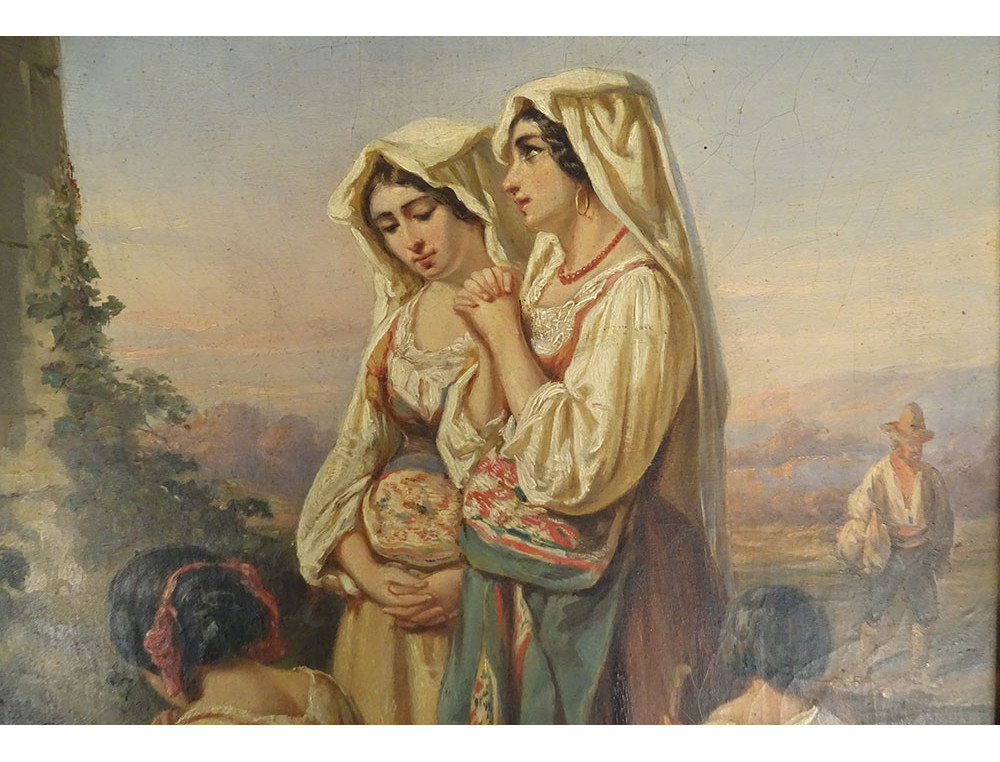
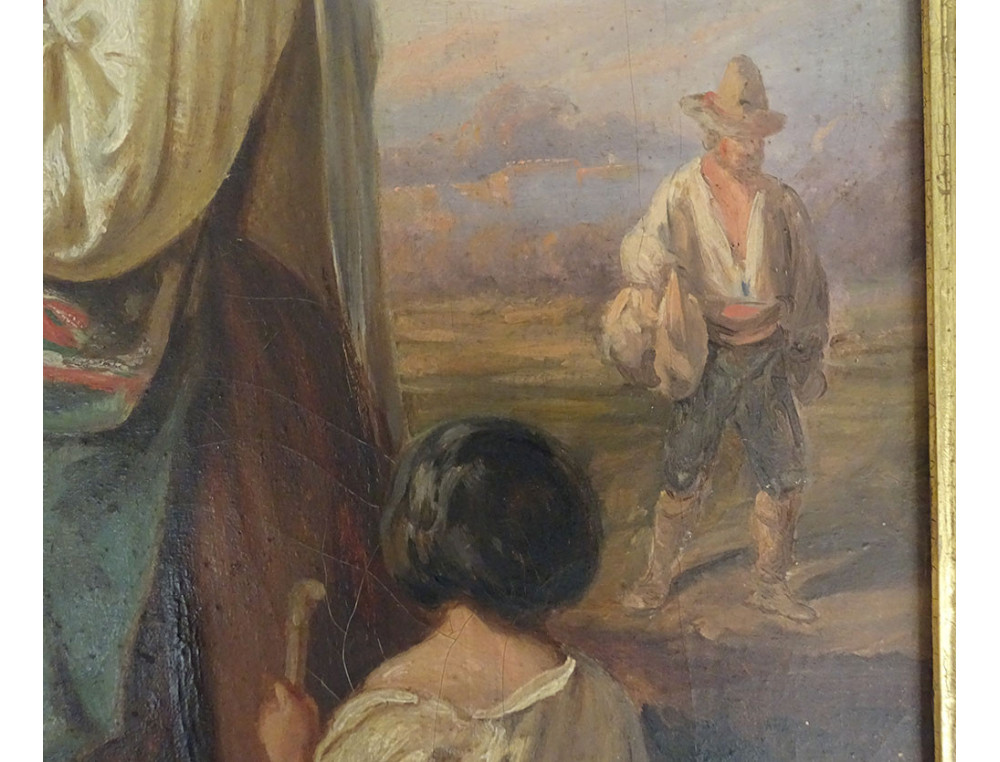
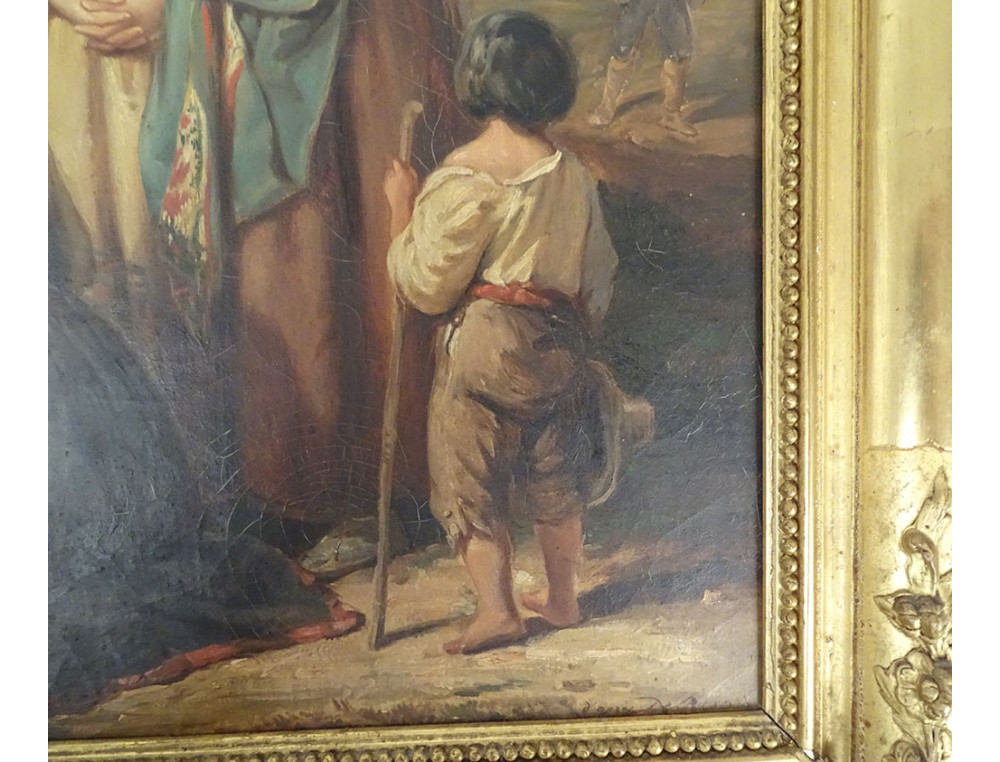
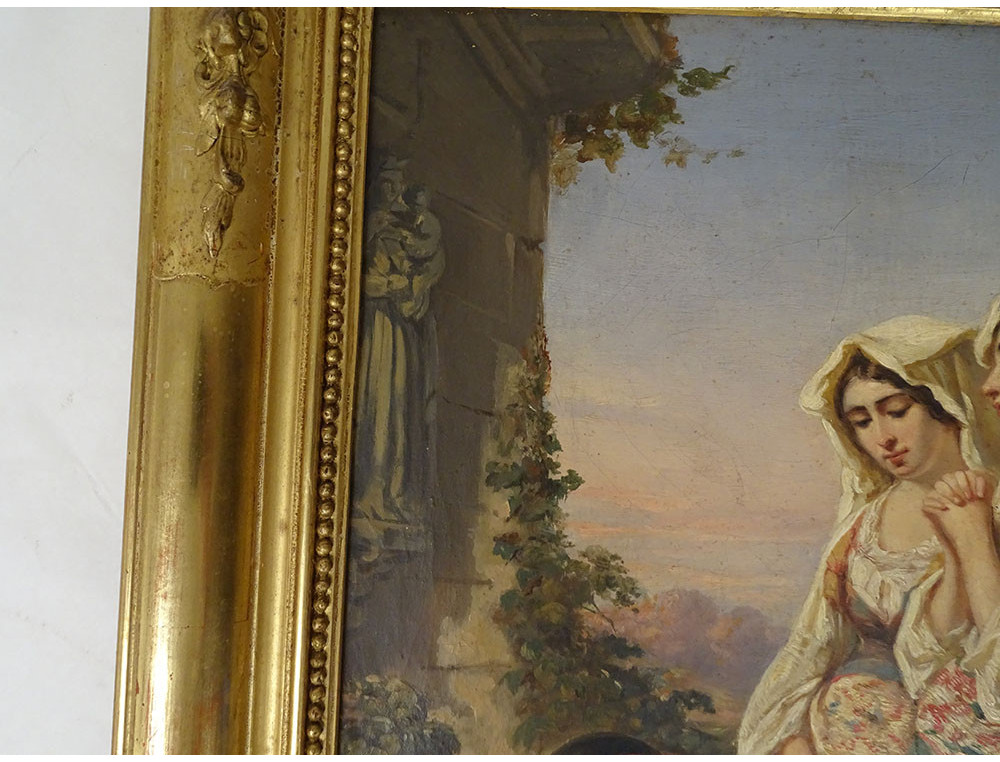
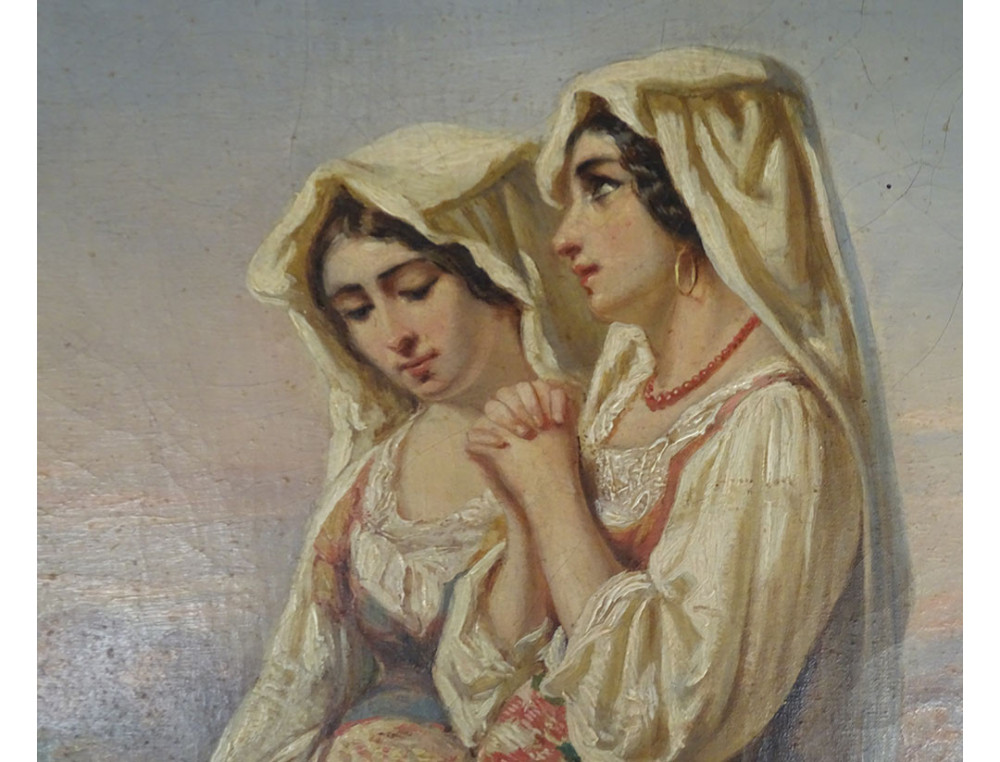
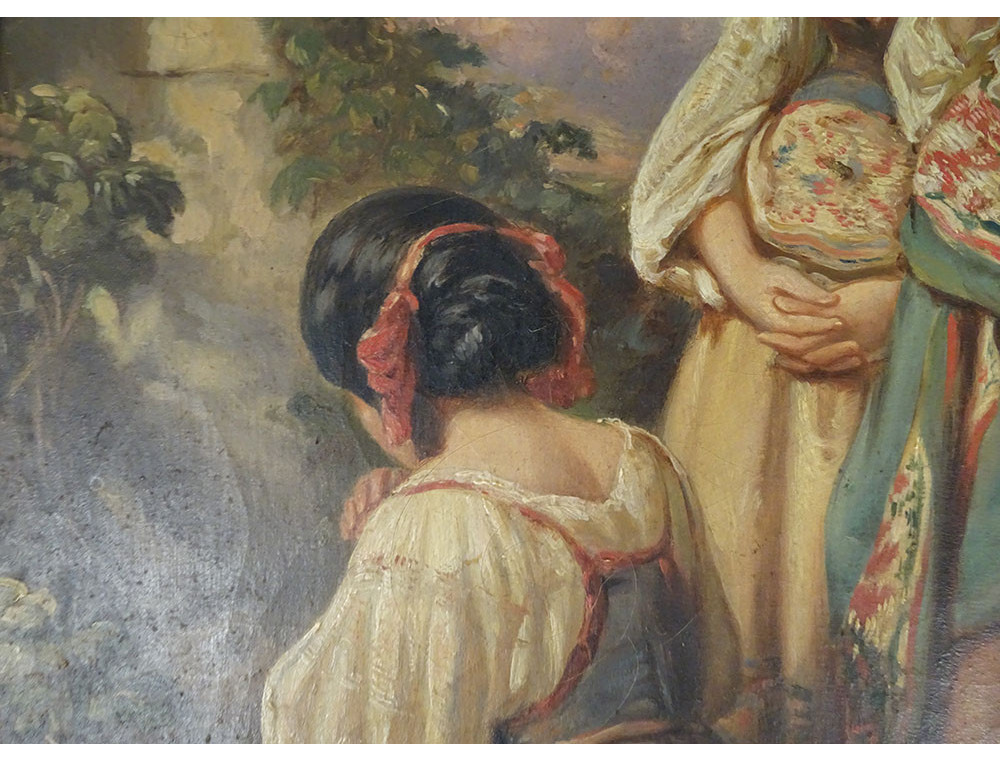
Oil on canvas after Auguste Delacroix's "Prayer to the Madonna" (held at the Musée des Beaux-Arts de Reims). This painting depicts Italian peasant women (from the region of Rome, as evidenced by their headdresses and colorful belts) praying fervently before a statue of the Virgin Mary nestled in a recess on the left.
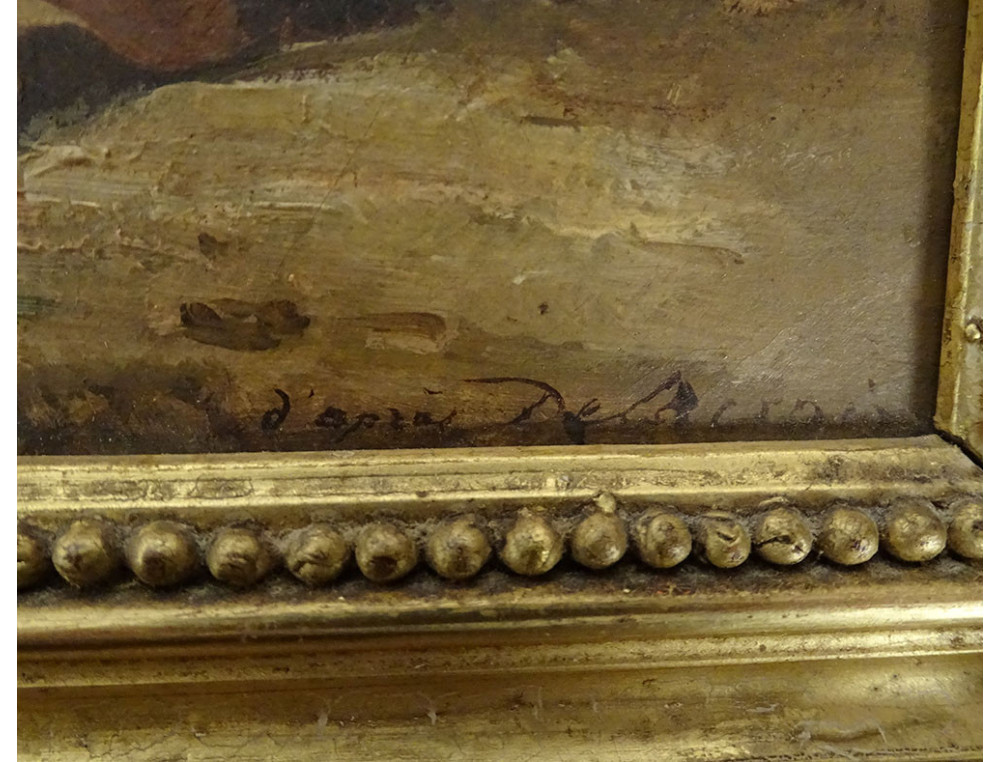
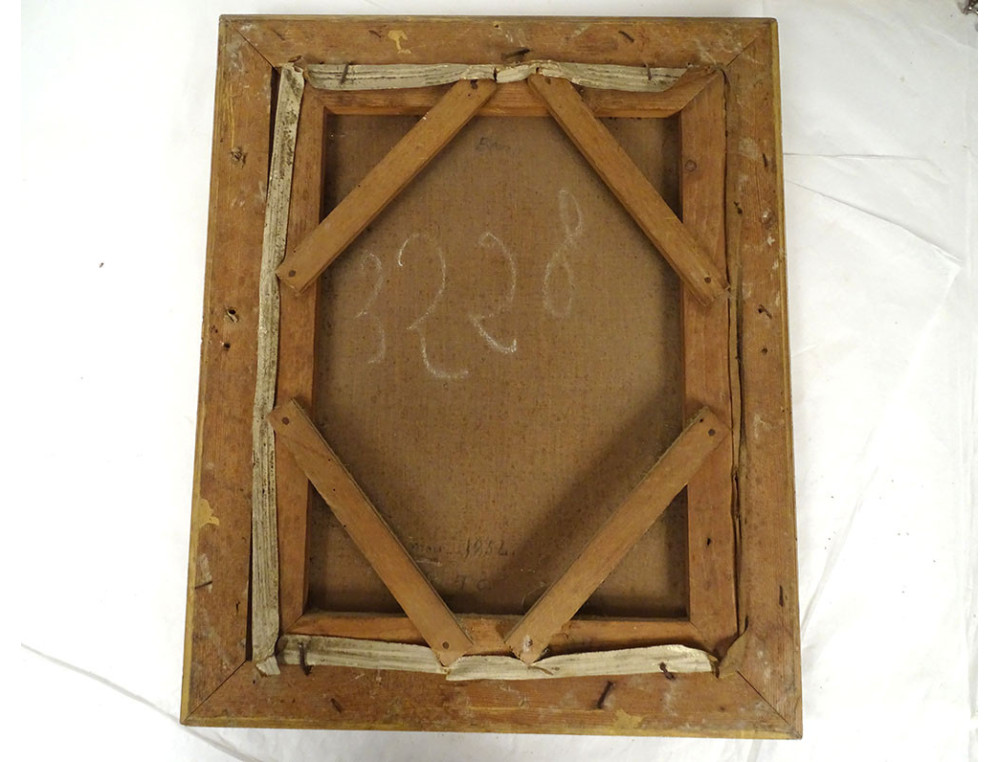
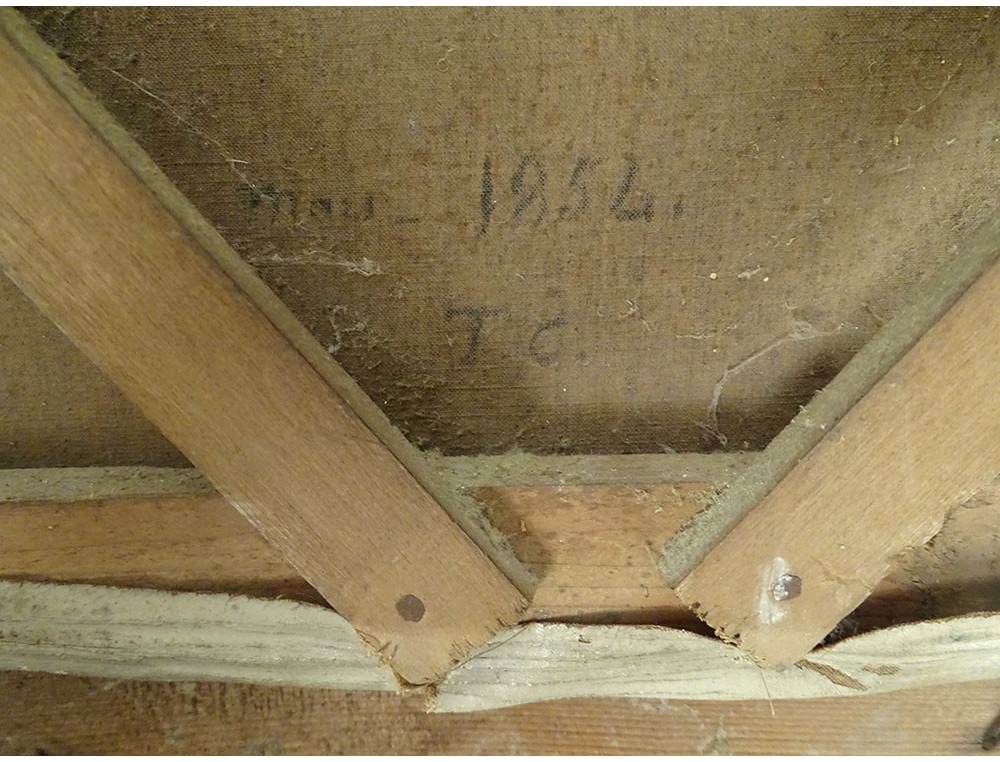
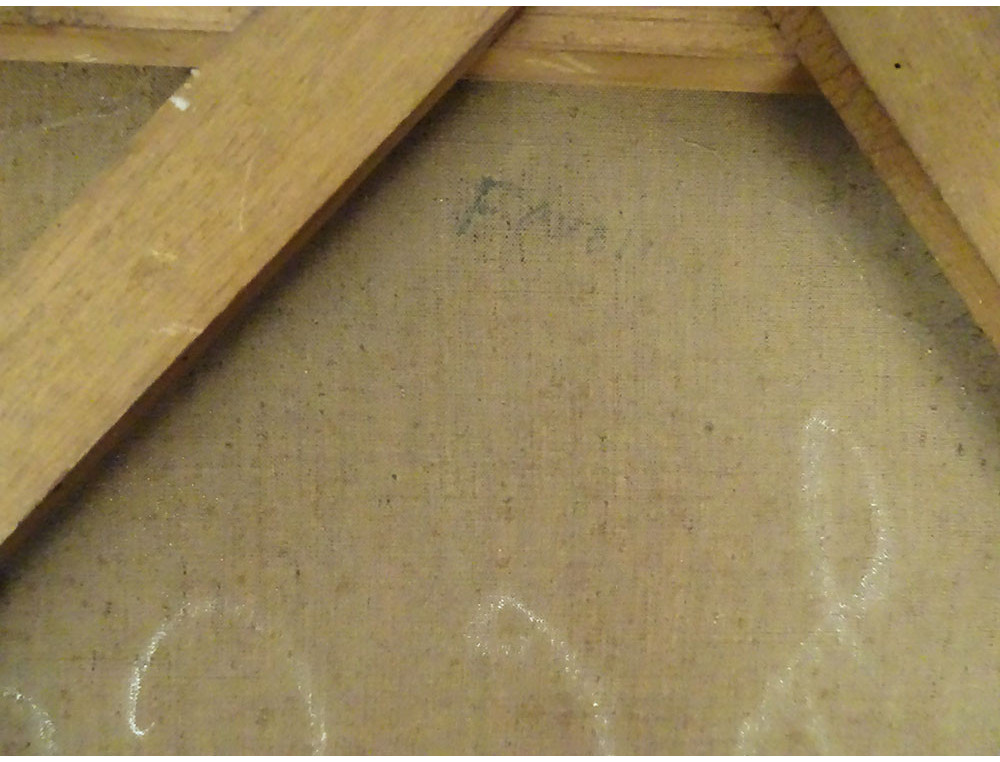
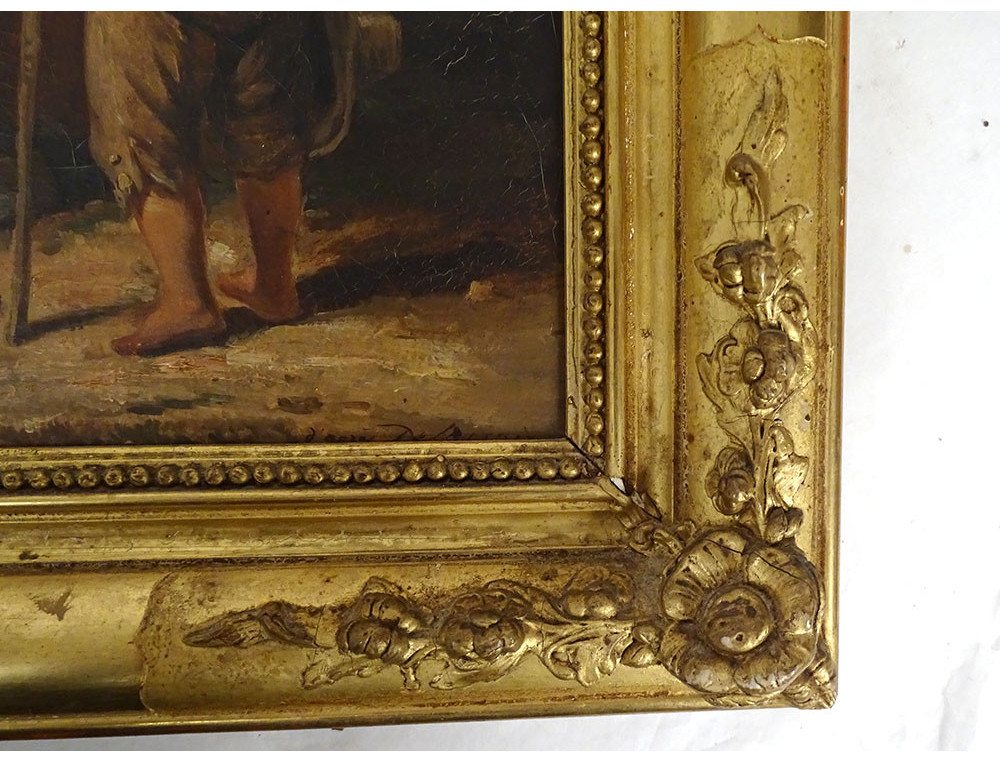
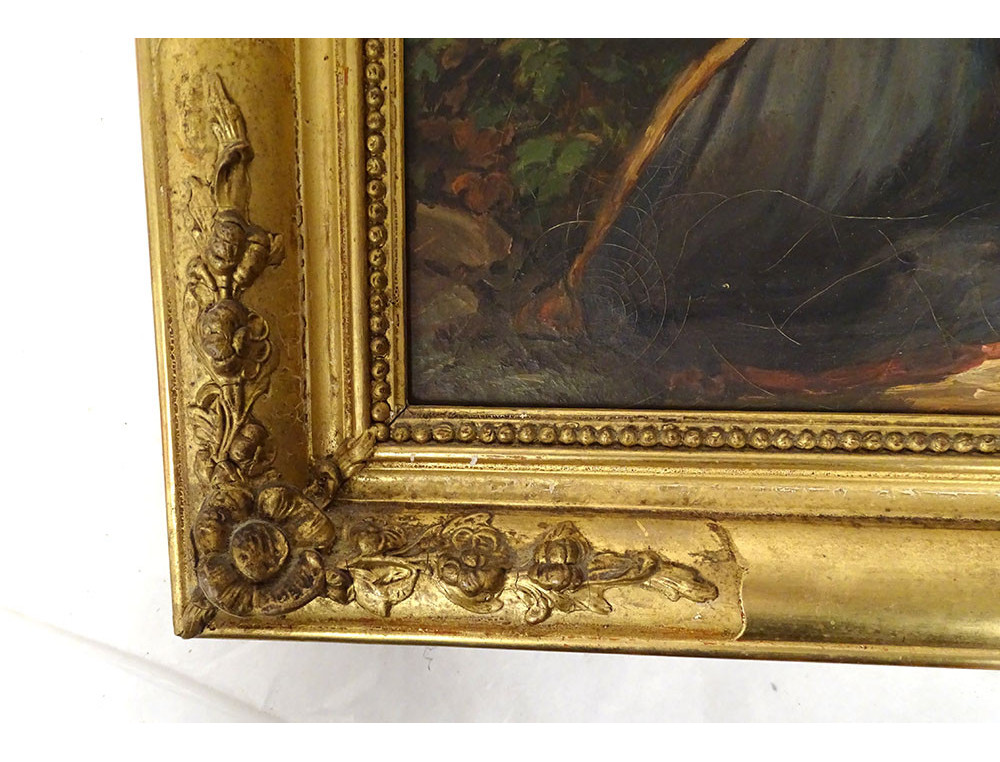
This oil painting was painted in March 1854 and is signed with the initials TC on the back. It is marked "after Delacroix" in the lower right corner. The painting is presented in a beautiful giltwood frame, adorned with floral garlands in the corners.
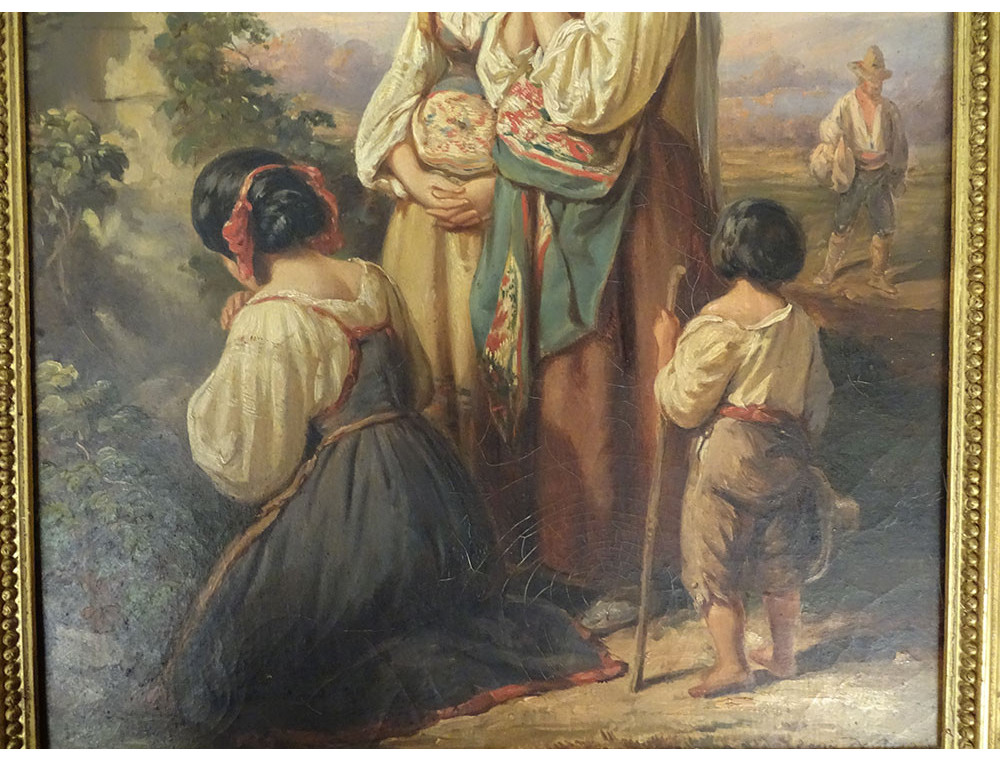
This painting and its frame are in good condition. It is a high-quality period copy (made during the artist's lifetime), very faithful to the original in terms of colors and details.
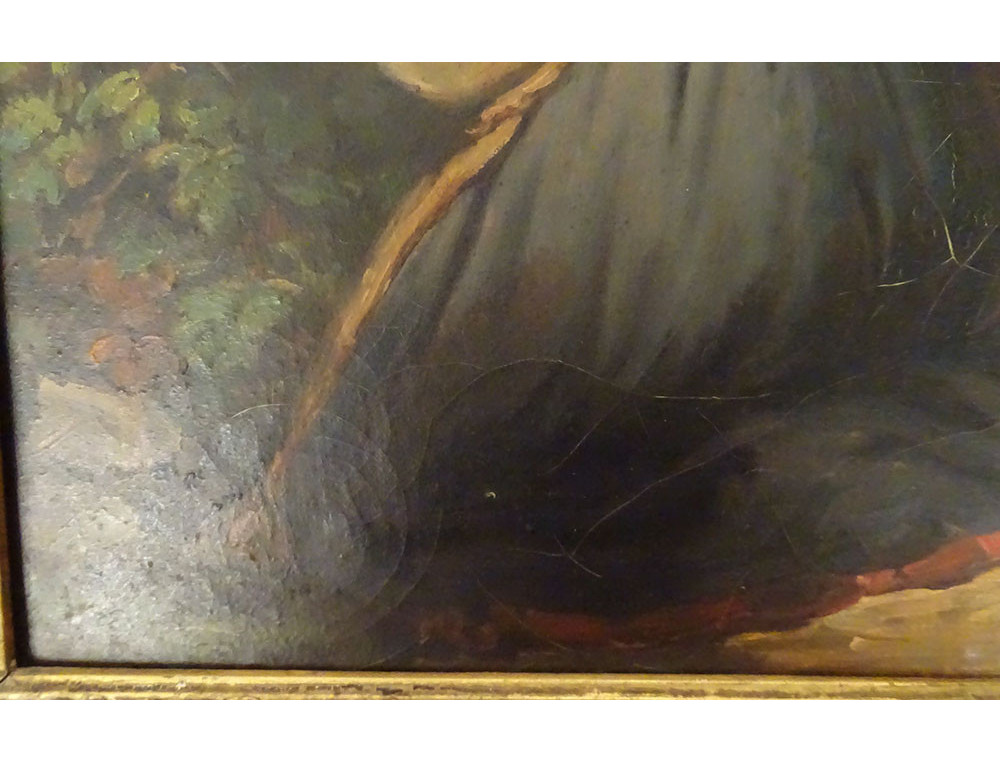
Note: tiny age-related cracks on the canvas, slight wear on the frame, see photos.
Auguste Delacroix was a French painter. The son of Auguste Martial Delacroix and Sophie Adélaïde Foissey, he belonged to a well-known family in the Boulonnais region, particularly through his father's side of the family. As early as 1835, he participated in the Paris Salon with two views depicting Boulogne-sur-Mer: "Beach of Boulogne-sur-Mer, Fishing Boat Stranded at Low Tide" and "Interior of the Port of Boulogne-sur-Mer on an Autumn Afternoon." In 1839, he received a third-class medal, then a second-class medal in 1841, and finally a first-class medal in 1846. He remained a regular exhibitor at this Salon until 1865. Concurrently, he also exhibited at the salons of the Société des Amis des Arts in Boulogne-sur-Mer from 1837 to 1867. In 1867, the French state purchased his submission to the Salon, "Benediction of the Sea, at Le Portel, near Boulogne-sur-Mer on the first Sunday of July before the departure of the herring fishermen." The work was subsequently deposited in the Boulogne-sur-Mer museum. He painted seascapes on the French coast and in North Africa, as well as some African genre scenes. One of Auguste Delacroix's most notable characteristics is the number of trips he undertook for his time. Although he remained very attached to his hometown, he also spent time in Brittany around 1835, and in Normandy and the Somme region around 1837-1838. In 1850, he traveled across France, passing through Loches, then went to Spain (Seville, Sierra Morena), followed by Morocco (Tangier, Tetouan) and Tunisia (Sidi Bou Said). A decade later, Italy beckoned. He visited Abruzzo, Rome, and southern Italy. Several of his works were subsequently submitted to the Salon.