



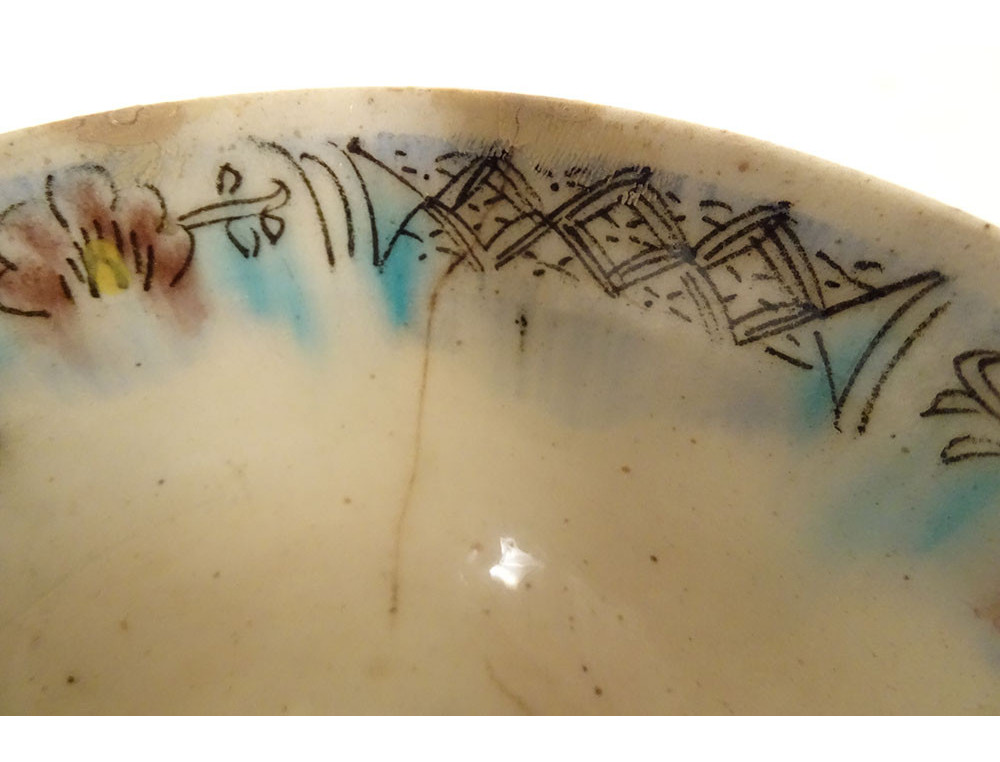


Ottoman ceramic bowl, Kütahya, Islamic Arts, Türkiye, Joseph Soustiel, 18th century

 Articles
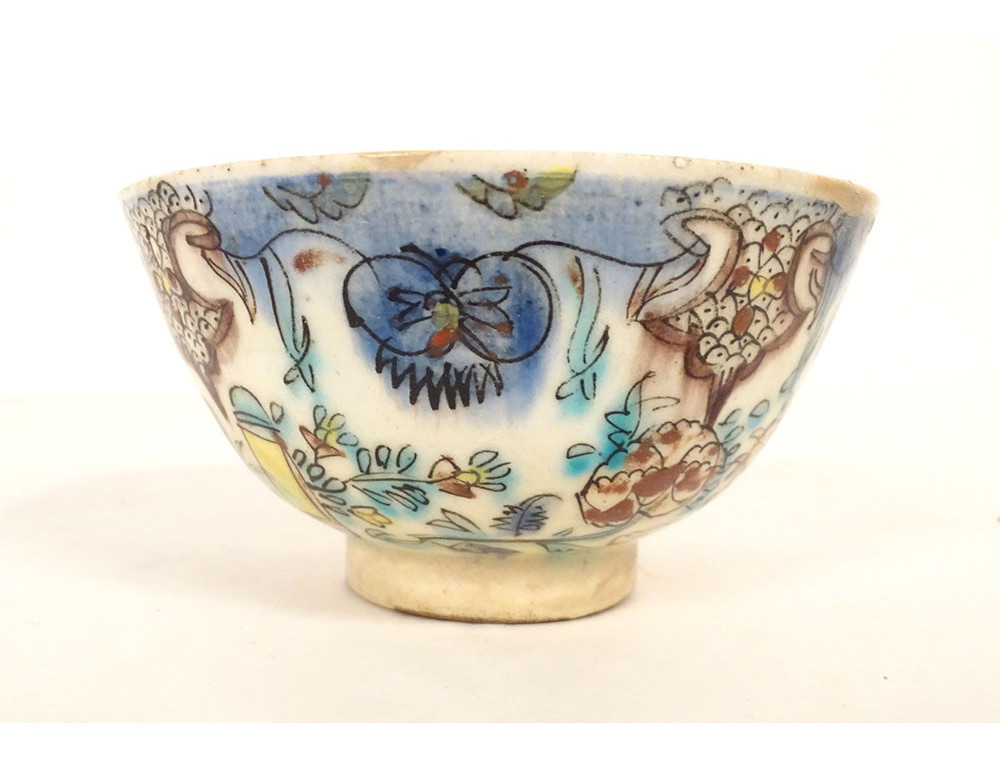
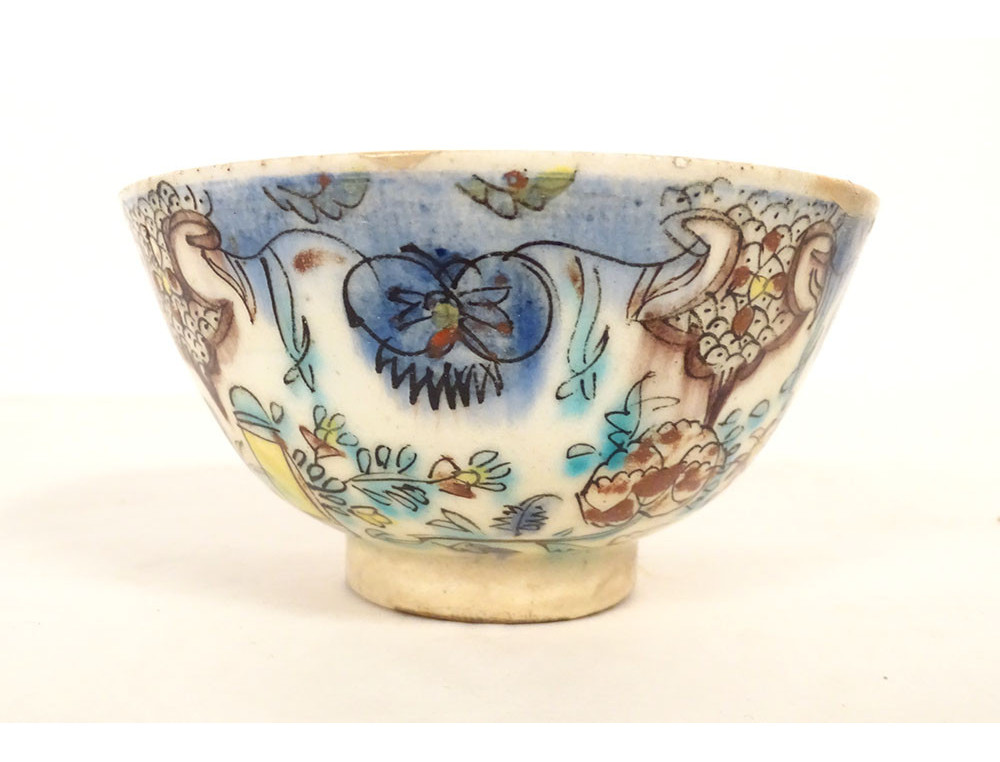
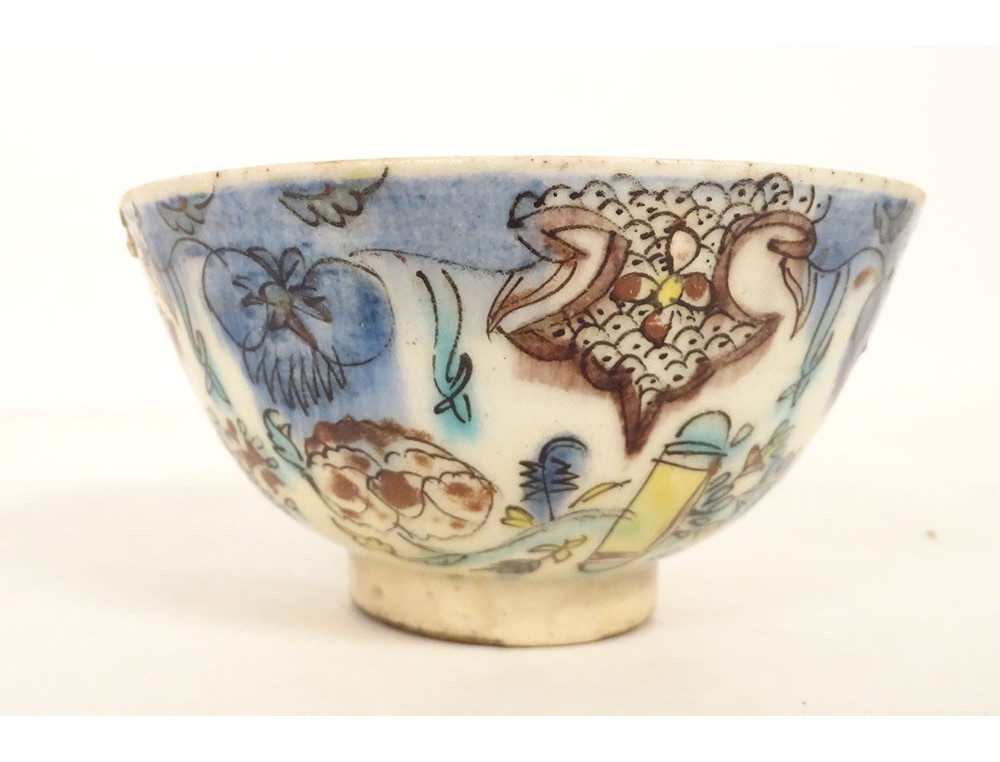
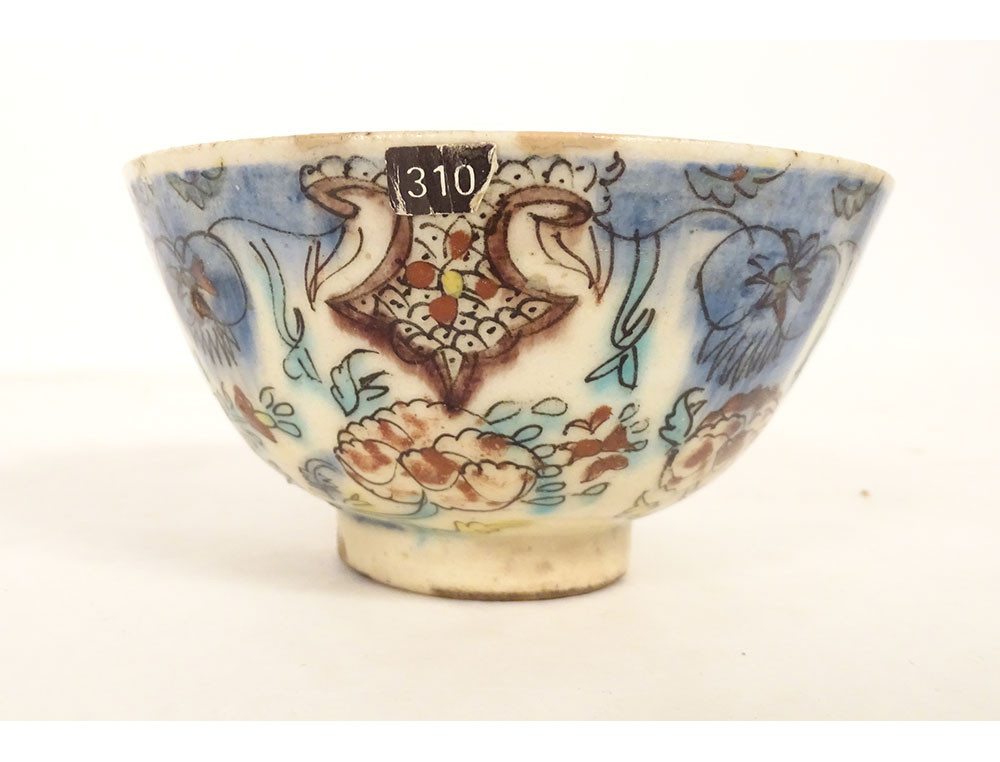
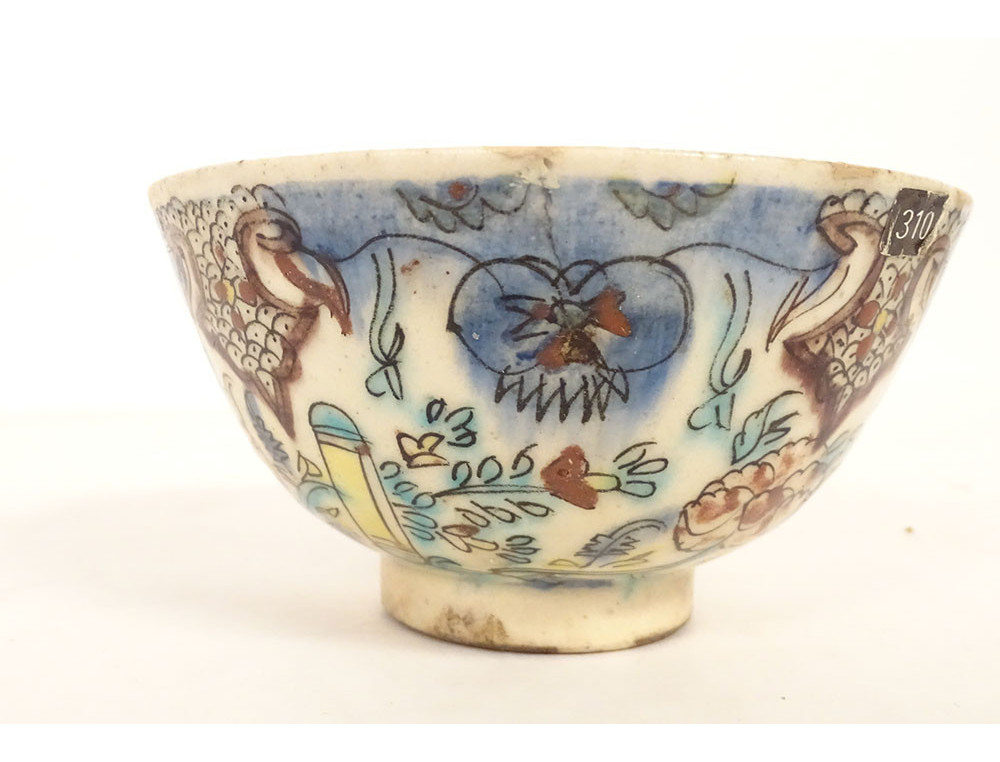
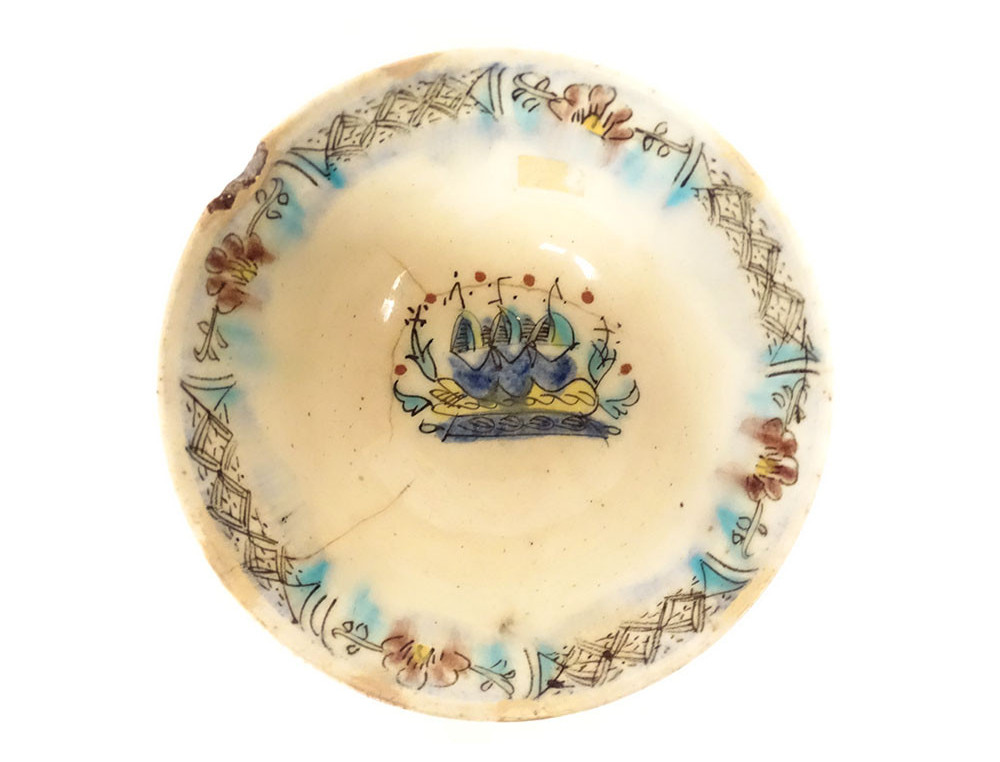
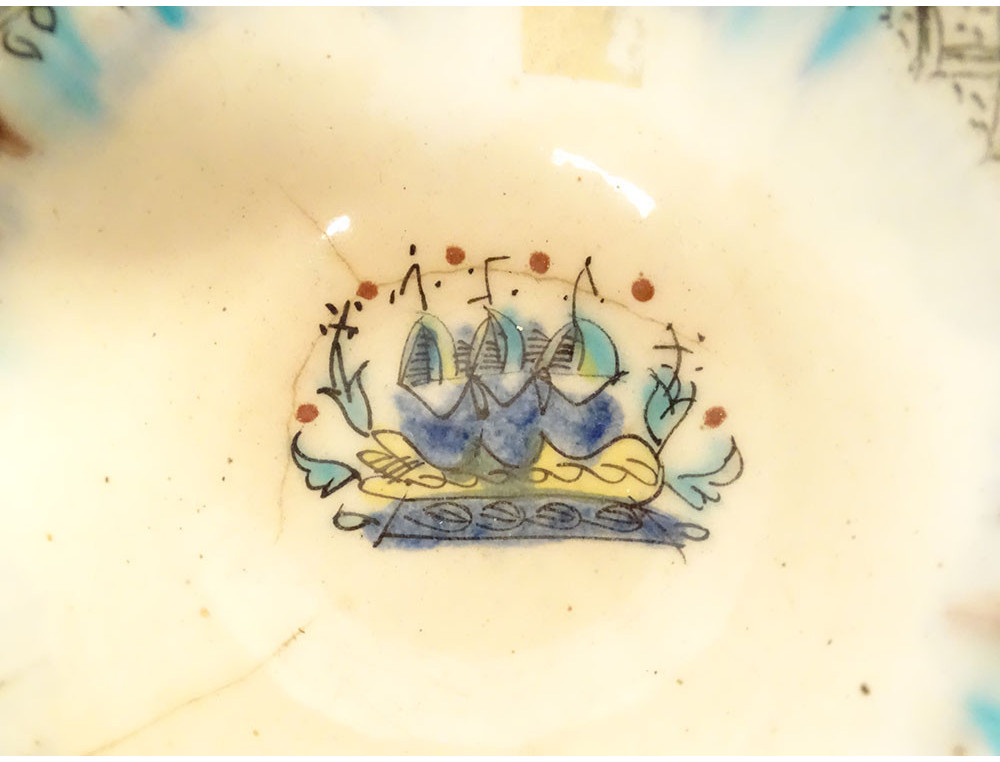
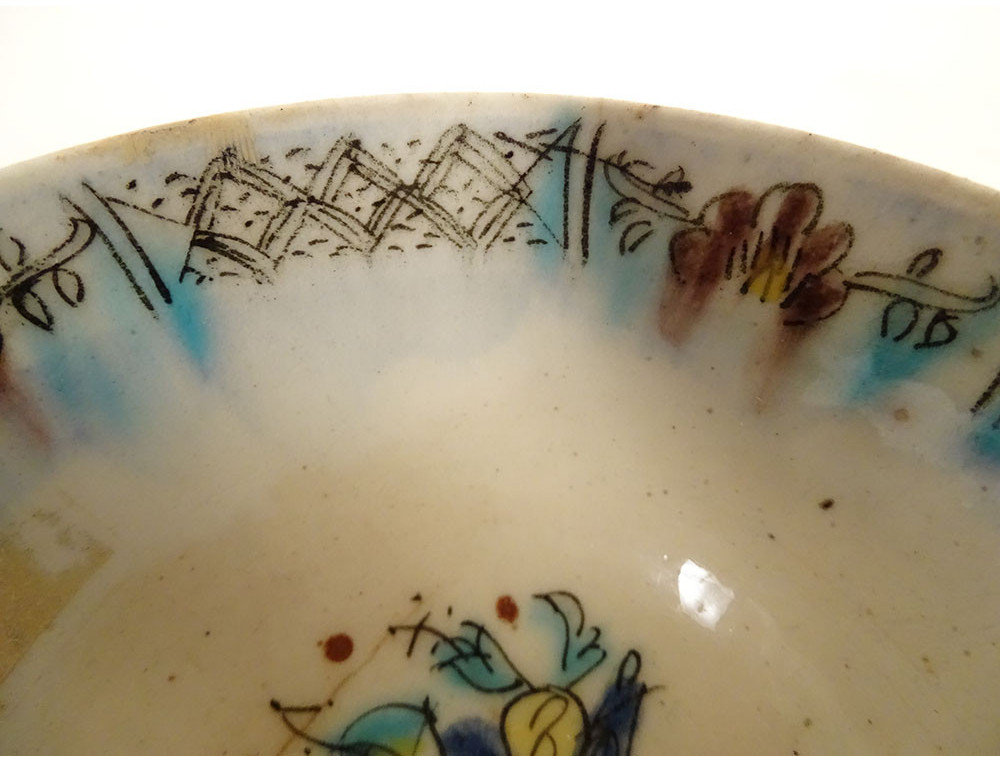
Ottoman ceramic bowl or cup from Kütahya, with rich decoration of stylized foliage, flowers and plant motif, in the background perhaps the representation of a mosque, provenance private collection (perhaps from the Muslim Art antique shop of Joseph Soustiel*), provenance Ottoman Turkey, 18th century period.
This bowl is in good overall condition. It has old collectible labels on the base.
This item comes from a private collection, some of the earthenware pieces of which were purchased from Joseph Soustiel's Parisian shop (labels and numbers on the base). We have many other items from this collection for sale on this website.
Please note: some hairs and cracks, chips, accidents and wear and tear of time, see photos.
Antique dealer and expert in Islamic art.
Joseph Soustiel was the heir to a dynasty of antique dealers whose ancestors, Abraham and his grandfather Moses (1836-1916), founded an antique shop in Thessaloniki in 1883, with branches in Skopje (Üsküb), Sarajevo, and Istanbul. Thirteen years later, his father, Haim (1871-1939), settled in Istanbul, where he opened a shop in the Grand Bazaar (Tarakçılar Sokak), followed by a second in the Zincirli Khan in 1913. After completing his primary and secondary education at the Brothers' School in Thessaloniki and then at the German School in Istanbul, Joseph left the Ottoman capital in October 1921. While en route to Tunis aboard the Mega Hellas, a violent storm forced his ship to stop in Marseille. He took advantage of this to visit his uncle Albert in Paris. In 1926, he partnered with Berthe Léger-Eskénazi (d. 1929), an antique dealer located a short walk from the Hôtel Drouot at 26 rue Grange-Batelière, and developed the business Art Musulman. In 1935, he married Irène Eskénazi, his partner's daughter, and that same year the young couple moved to 146 boulevard Haussmann.
A perfect polyglot and a great connoisseur of Islamic arts, he participated in the creation of the France-Turkey Committee in 1949 and, from 1952, with Jean David-Weill, oversaw the organization of the first exhibition devoted to Turkish Art at the Pavillon de Marsan of the Museum of Decorative Arts in Paris (Splendor of Turkish Art, February-April 1953).
His most cherished areas remained textiles and Islamic ceramics, to which he devoted several articles. A patron of the arts, he was a generous donor who contributed to the enrichment of the Islamic collections of the Louvre, the National Ceramics Museum in Sèvres, the Museum of Decorative Arts, as well as numerous provincial museums, museums in Turkey (including the door of the Green Türbe and the cradle of Sultan Mahmud II in the Bursa Museum), and museums around the world. Appointed a Knight of the Legion of Honor in 1977, he handed over his gallery to his son Jean in 1983.
Frédéric Hitzel, CNRS / Notice published in François Pouillon (ed.), Dictionnaire des orientalistes de langue française, Editions Karthala, Paris, 2008, pp. 908-909.