 Articles
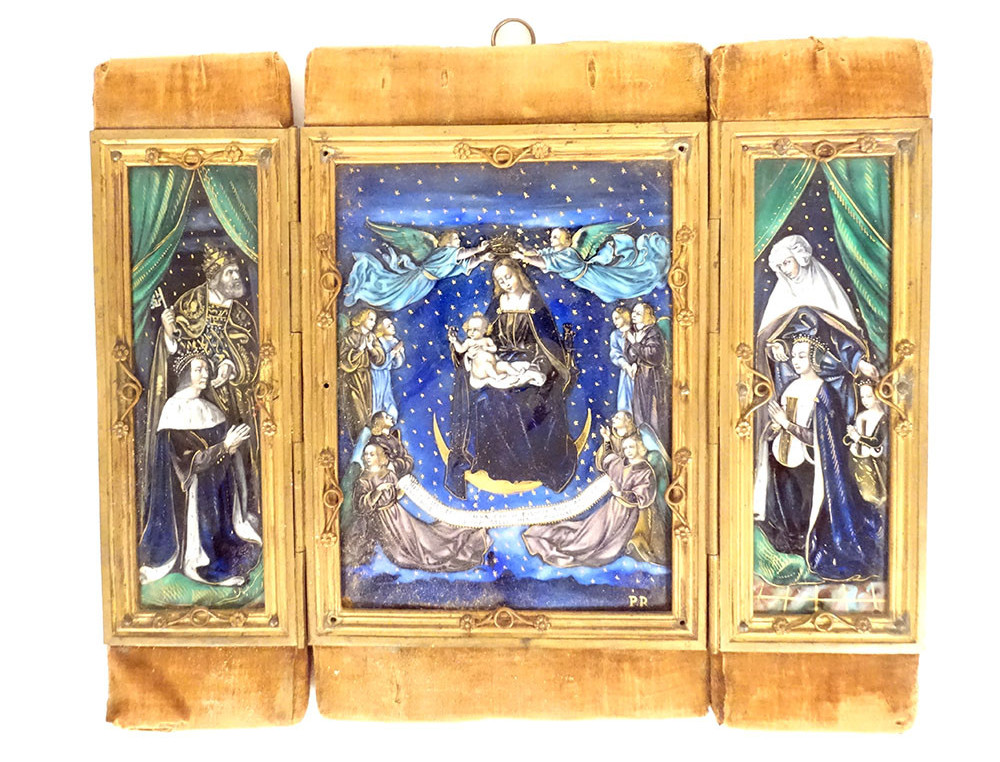
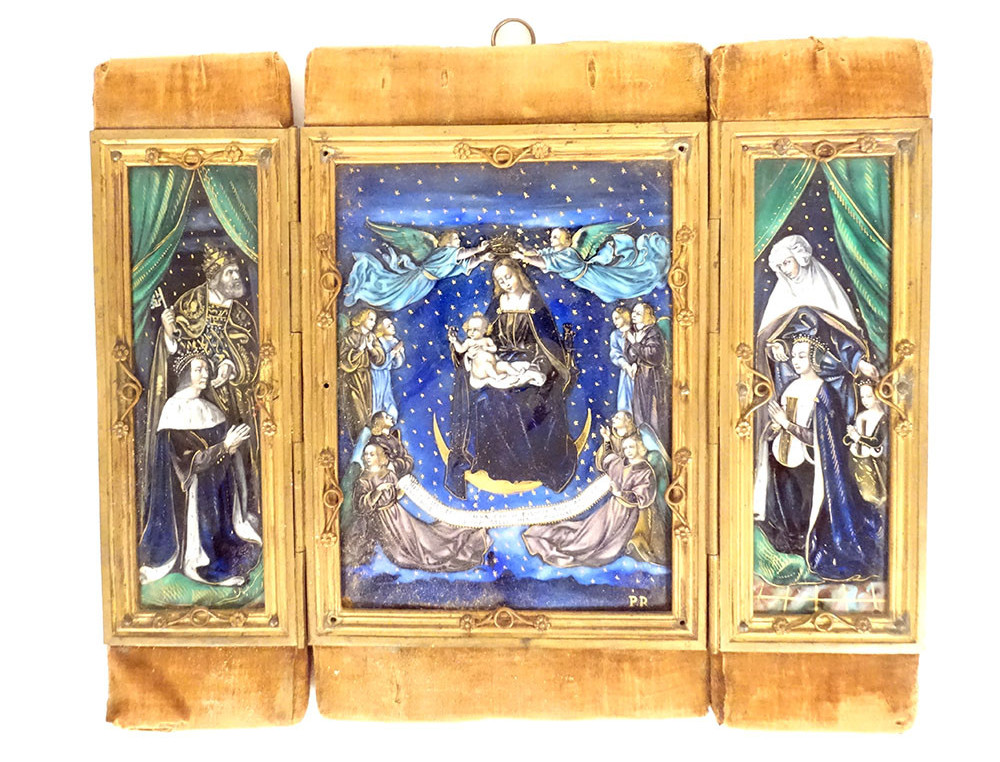
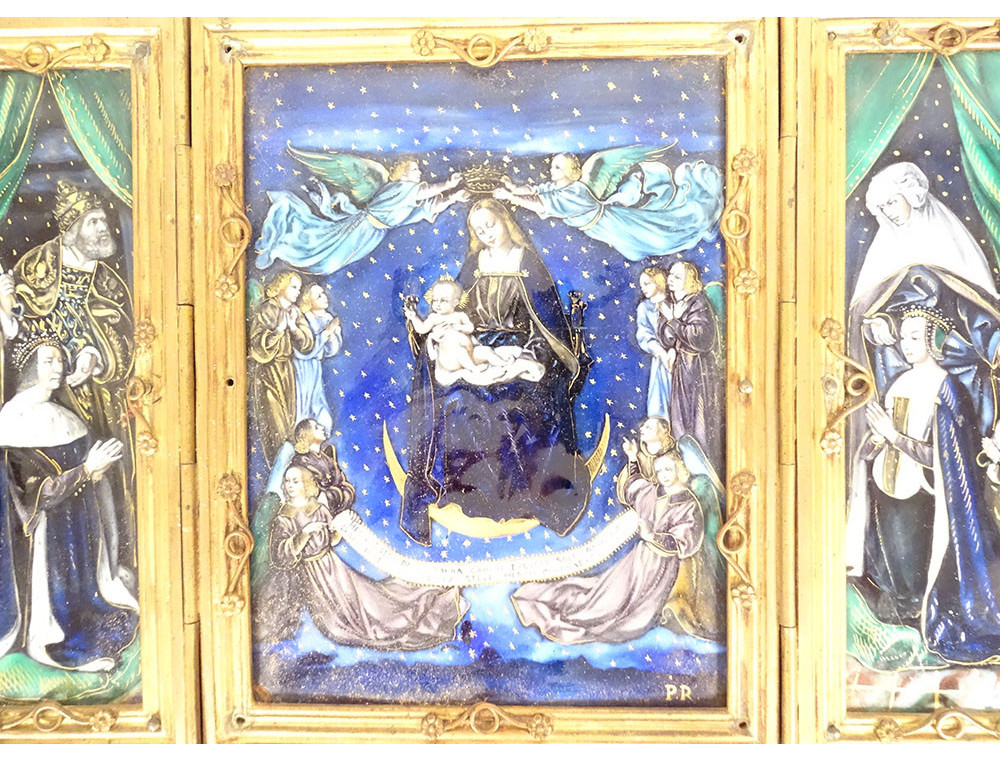
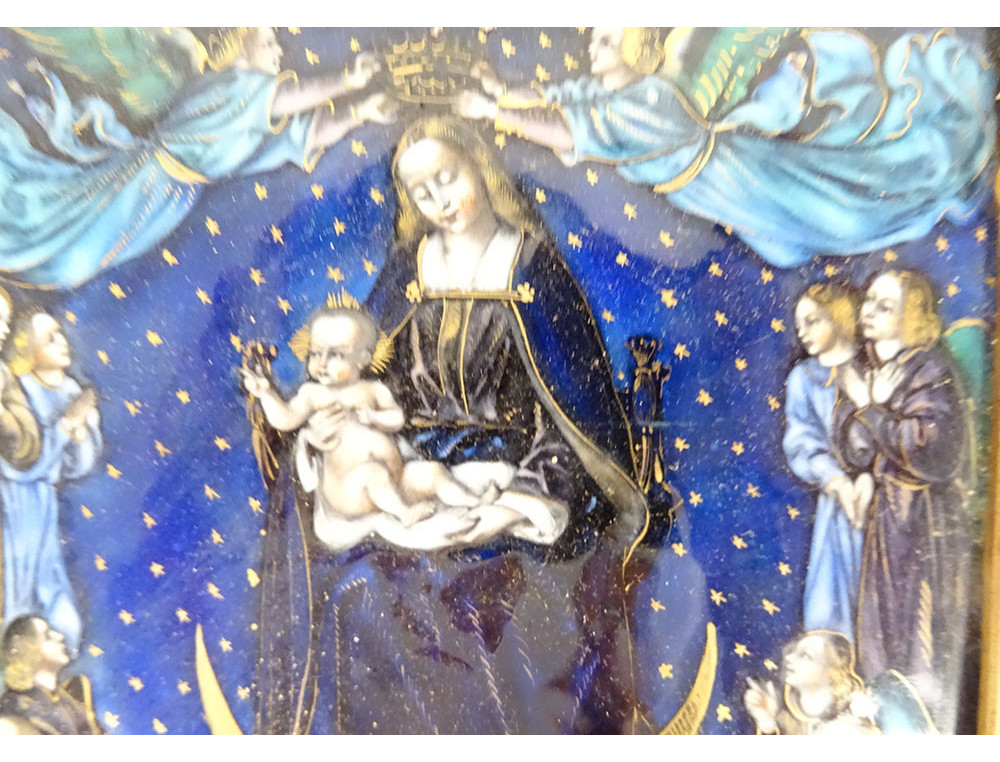
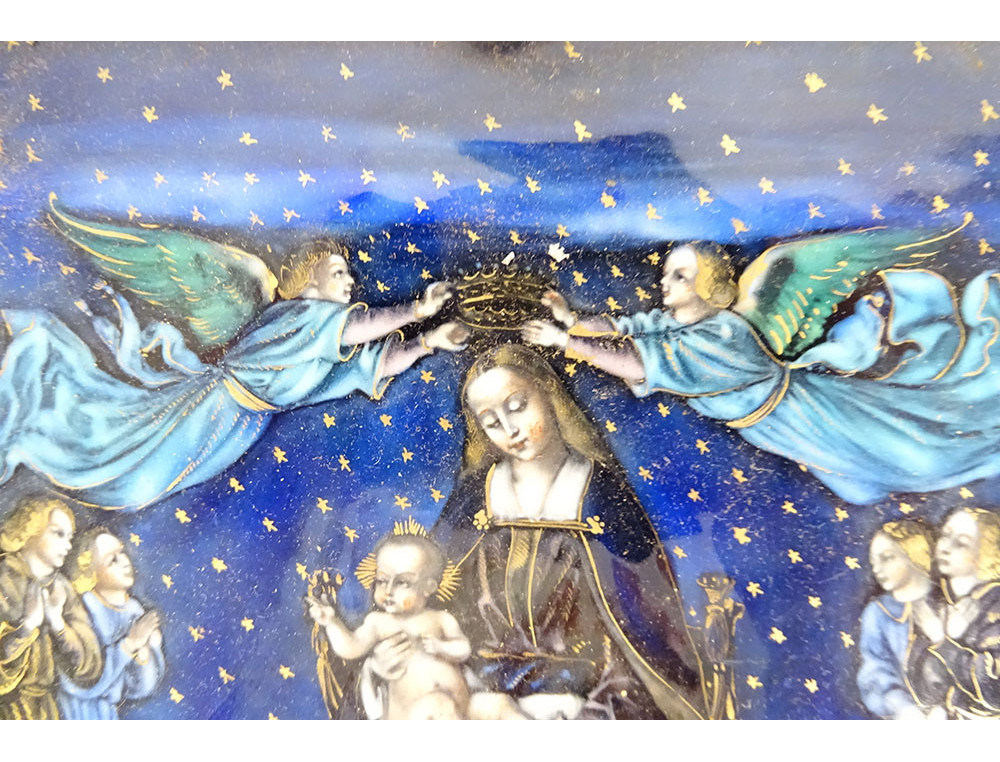
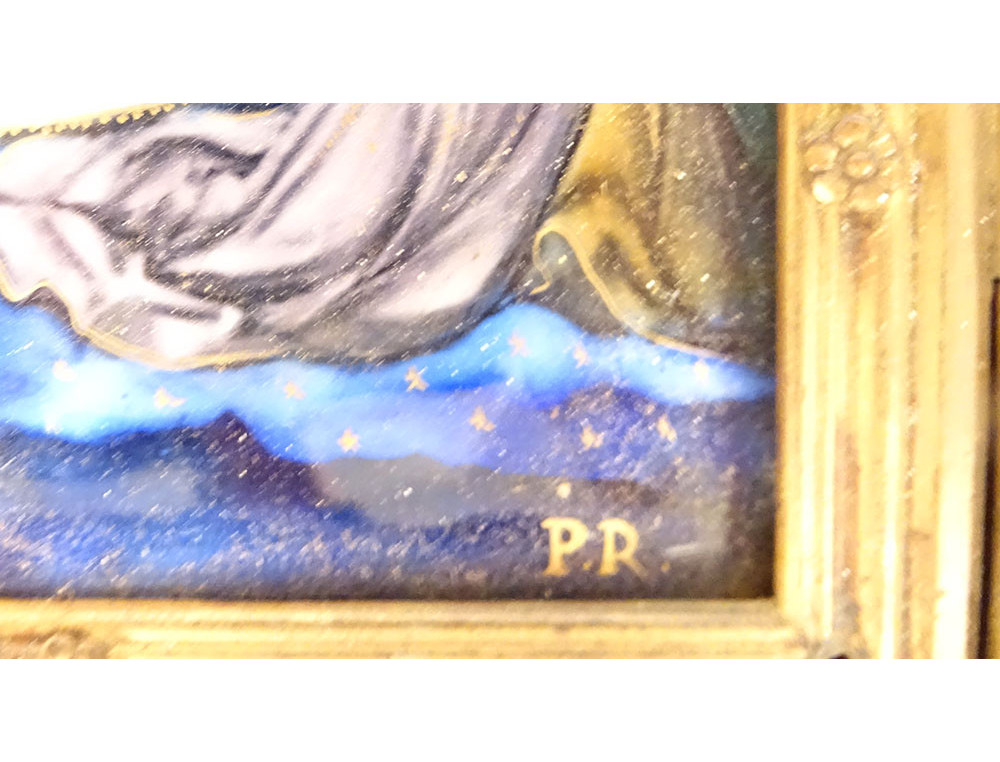
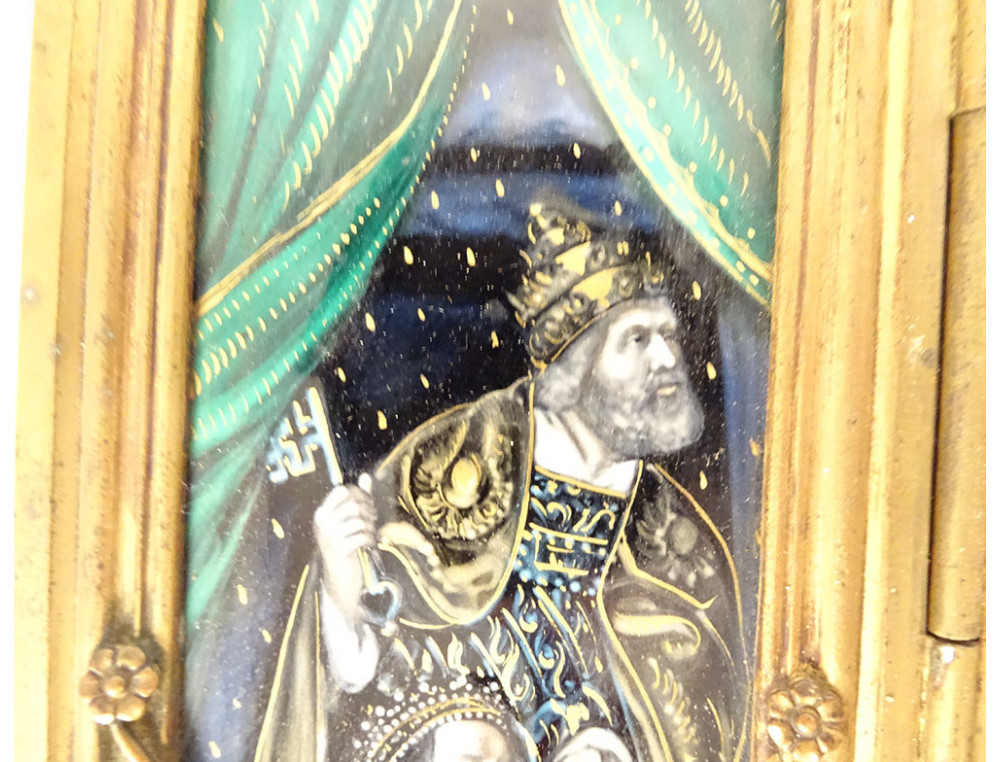
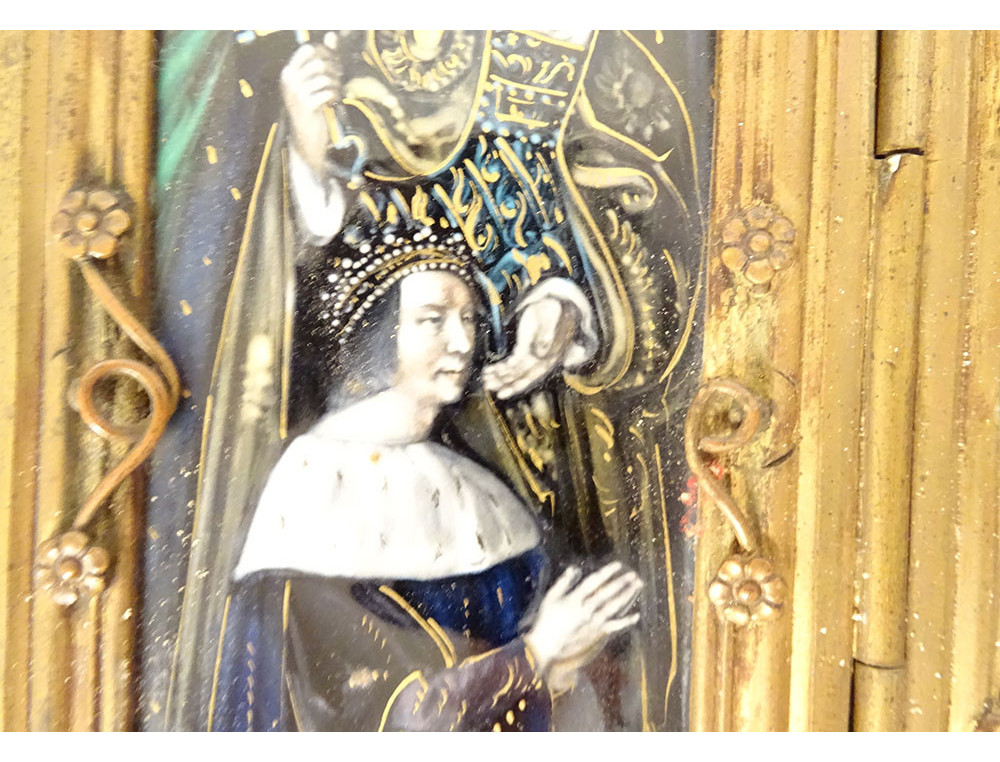
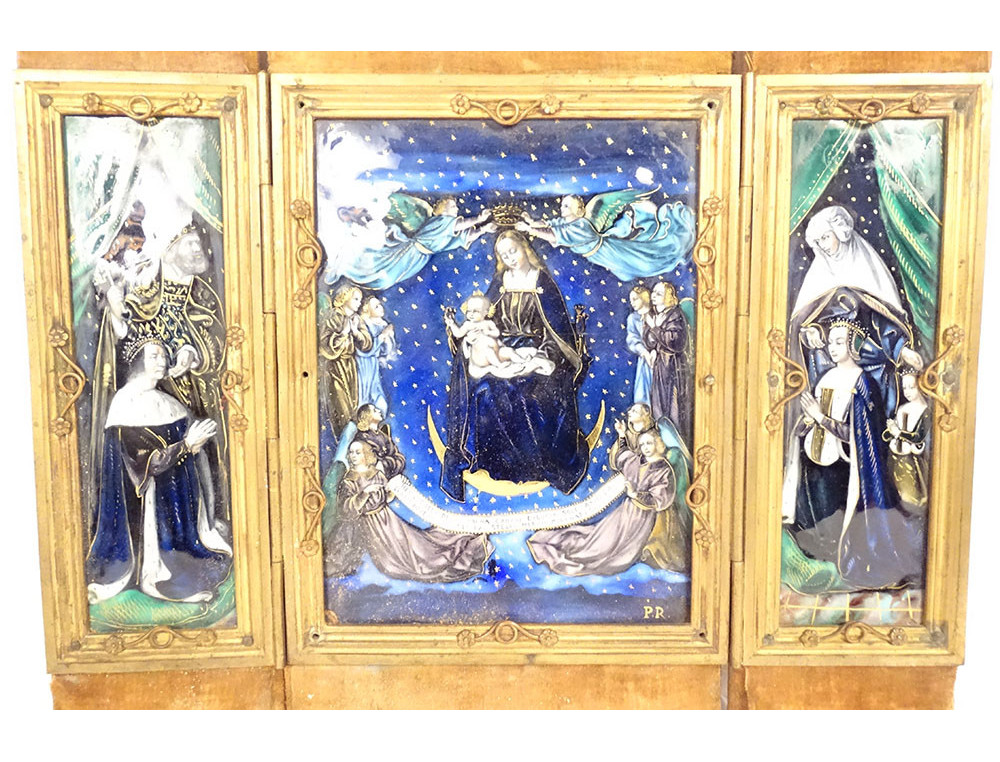
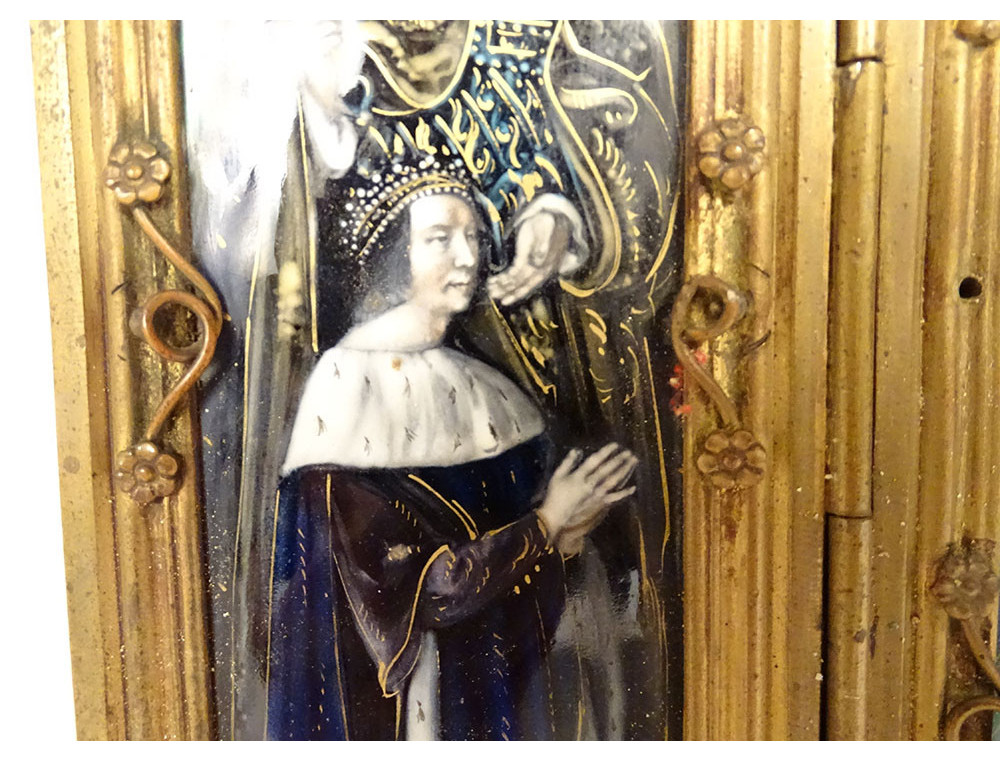
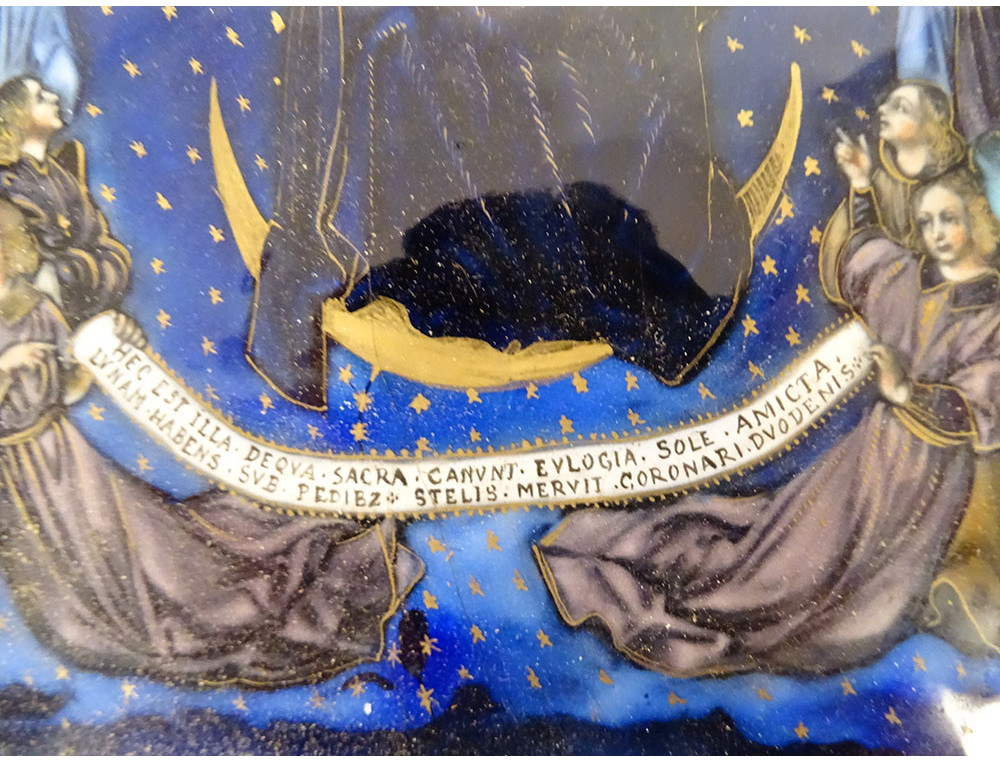
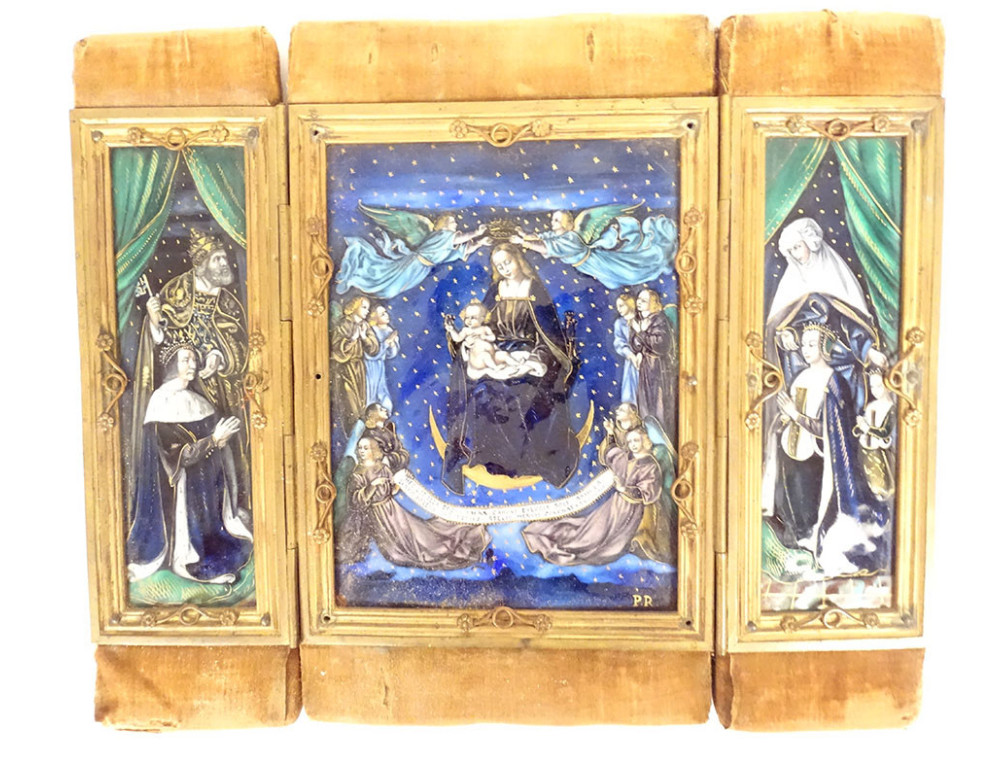
Triptych in Limoges enamels*, representing on the central panel the Virgin of the Assumption (on the crescent moon) holding the infant Jesus, surrounded by angels and archangels, on the sides a King kneeling in prayer with Saint Peter behind him; on the other side the Queen and her daughter with Mary Magdalene, in the style of the enamels from the workshop of Pierre Raymond, from the 19th century.
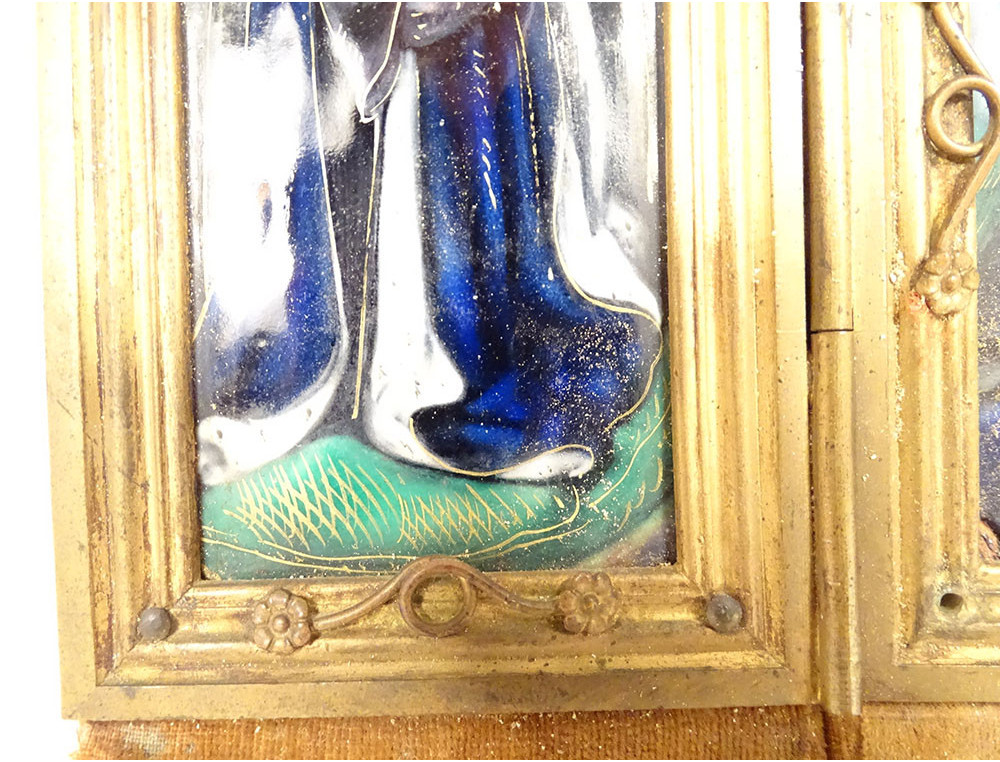
This triptych is in good overall condition. Presented in a bronze frame, itself on a velvet support.
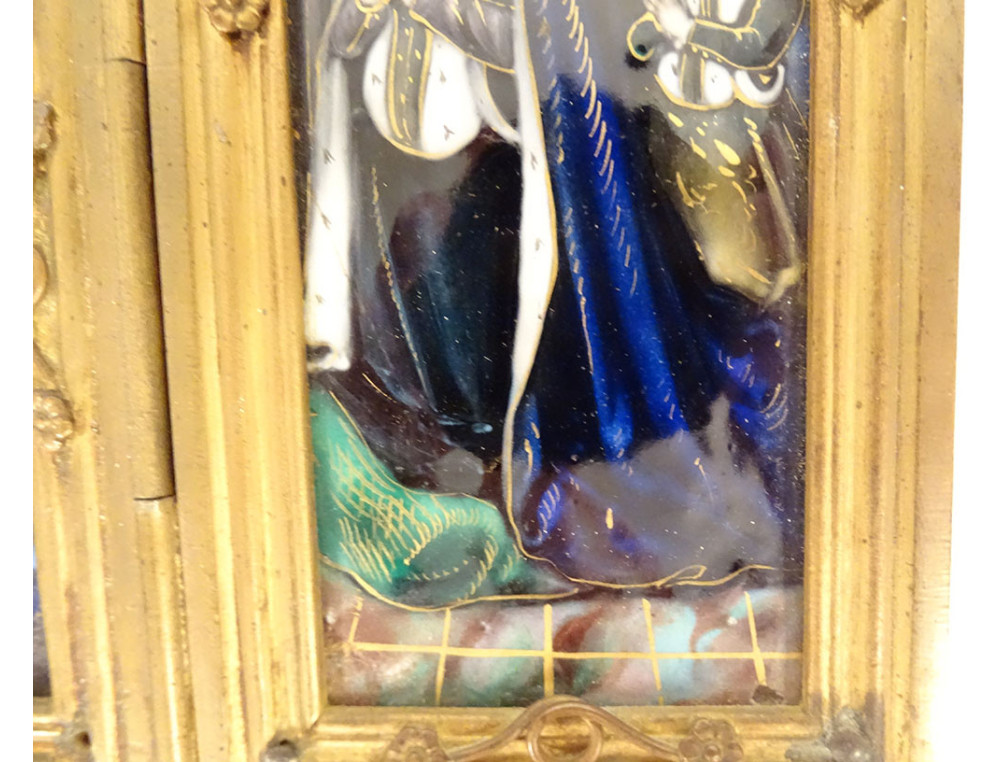
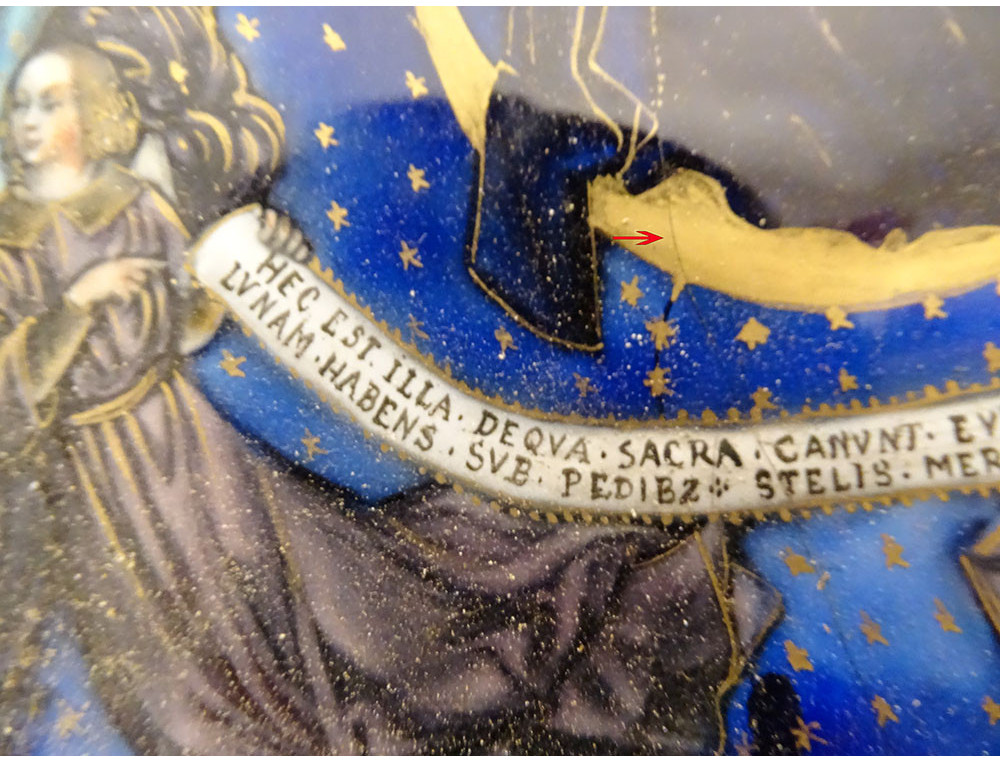
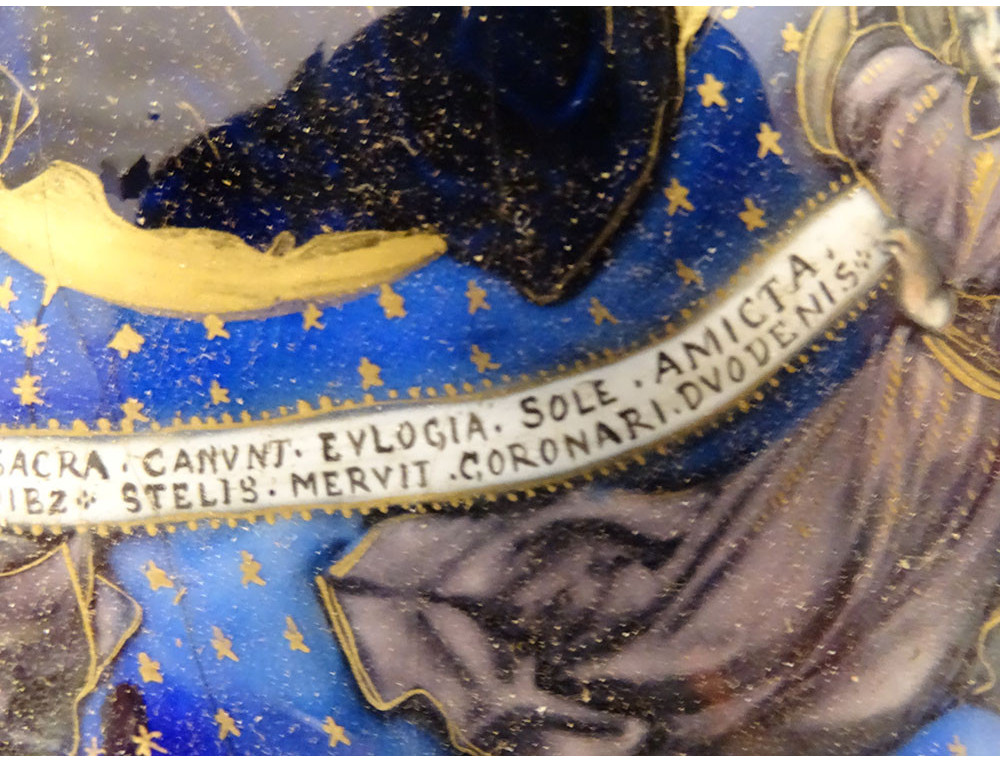
Please note: hair in the enamel under the Virgin (see red arrow), some scratches and dirt from time, see photos.
Enamel painted on copper appeared in Limoges at the end of the 15th century. Enamel is a vitreous substance colored by metallic oxides (tin, cobalt, manganese, antimony, etc.). Copper is the best medium available thanks to the proximity between its melting point and that of glass. The first objects manufactured were rectangular plaques (often associated in triptychs) illustrating religious themes. Artists drew their inspiration from the drawings in books of hours. The fashion for grisaille emerged fairly quickly, then Italian painting served as a model. Towards the middle of the 16th century, the best enamelers were inspired by the engravings in books, which were themselves influenced by the art of Fontainebleau. Thus appeared Pierre Reymond, Pierre Courteys, Maître IC, etc. But it is Léonard Limosin that art historians place as the leading figure of Limousin enameling at this time. (see heritage-history site, page dedicated to the rooms of the Louvre)