

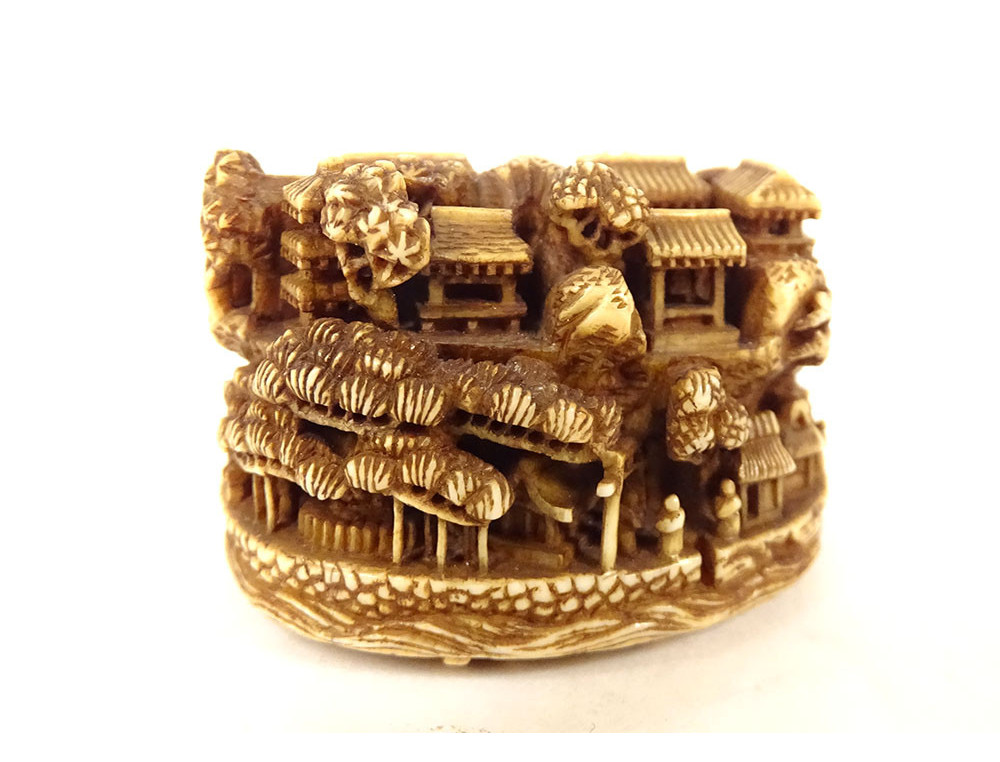
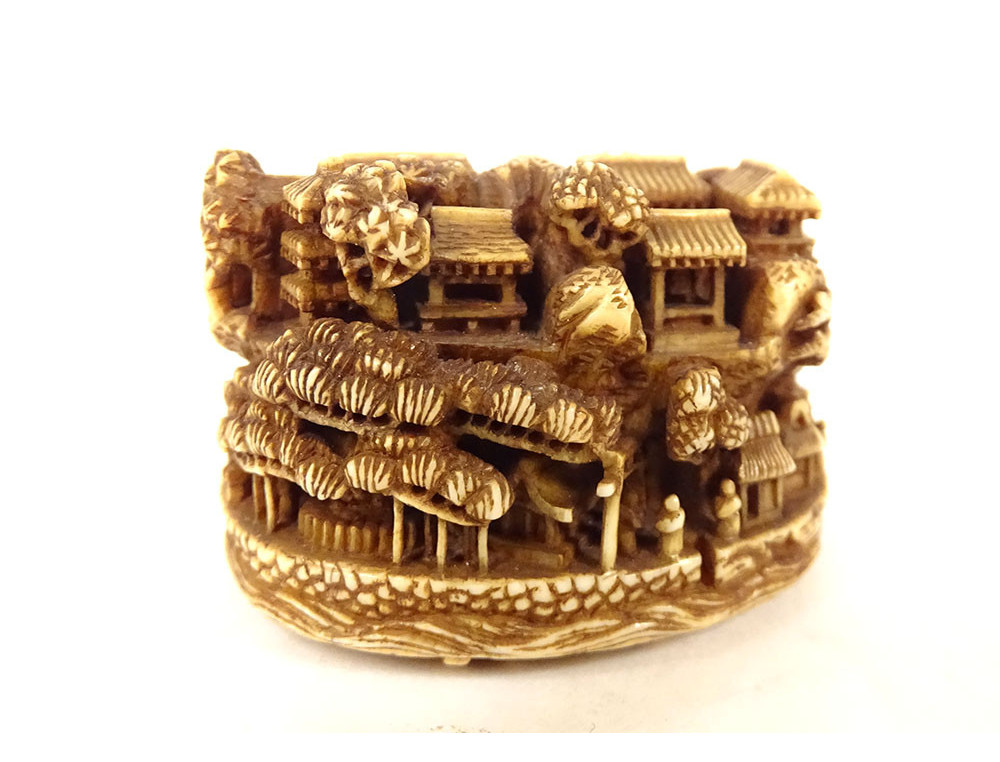
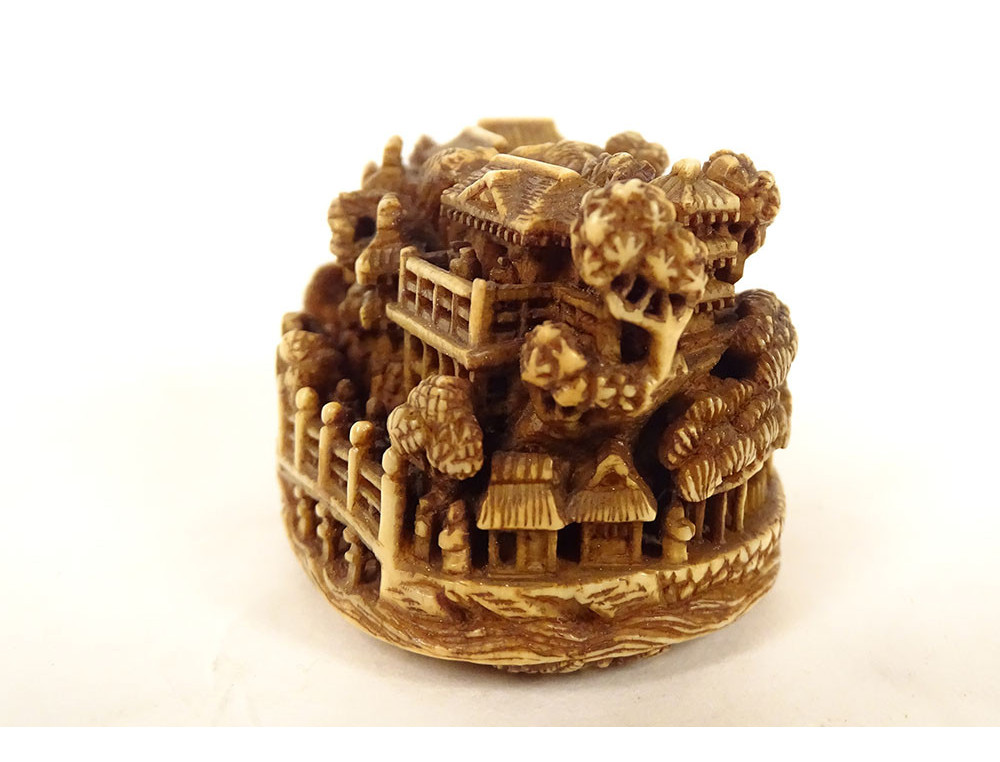
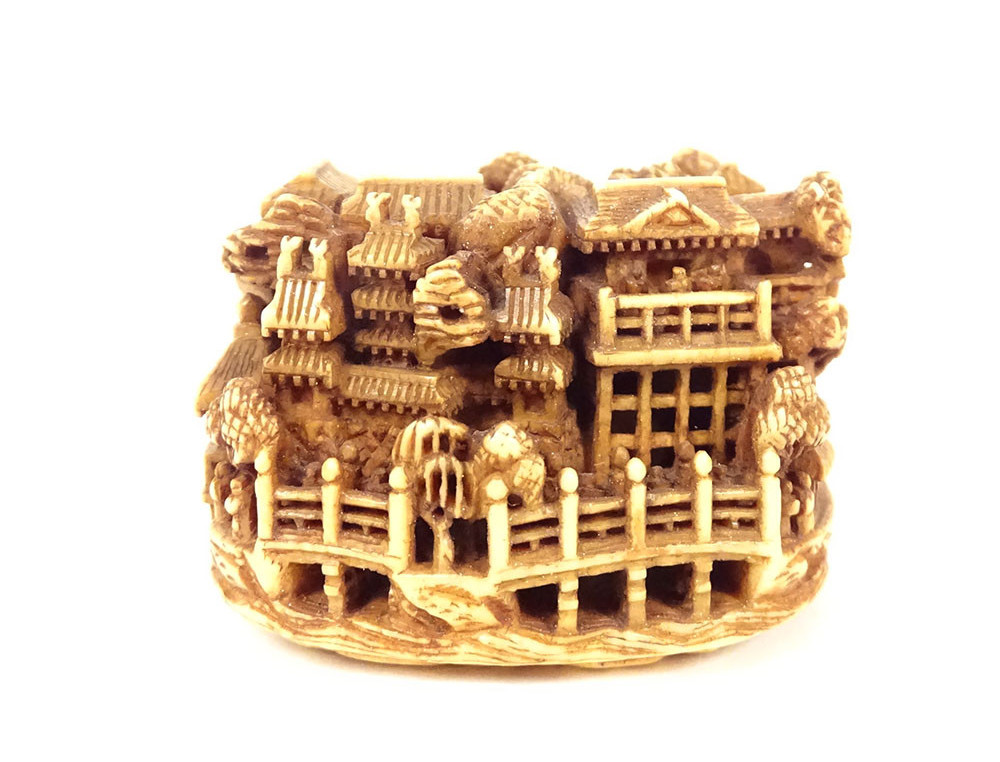
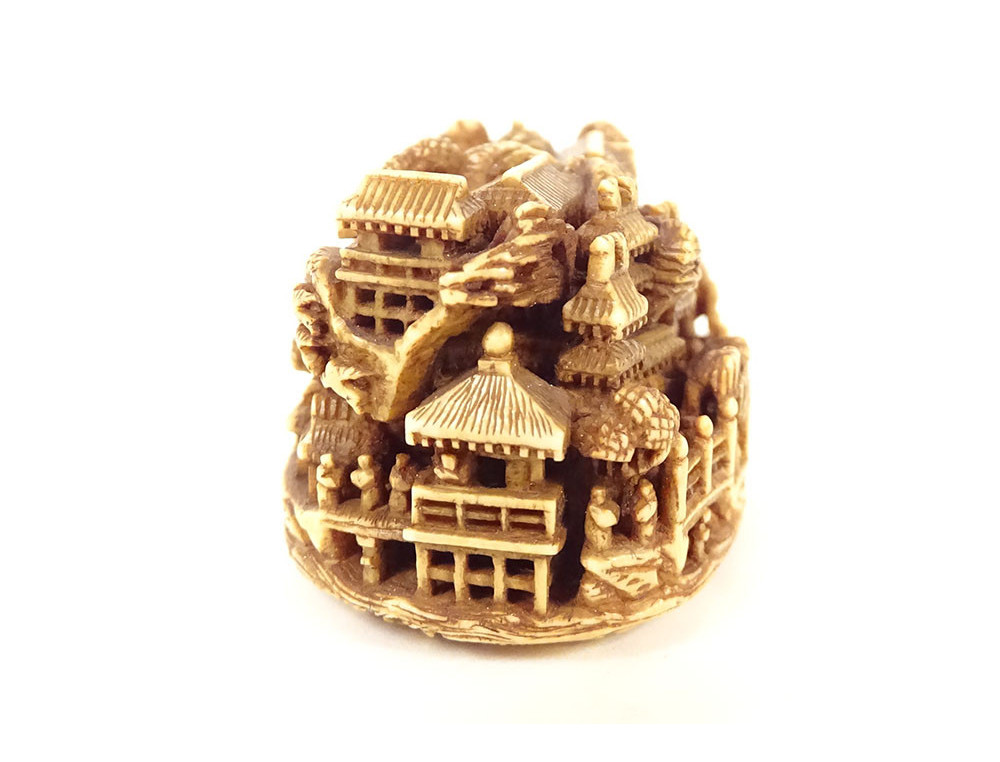
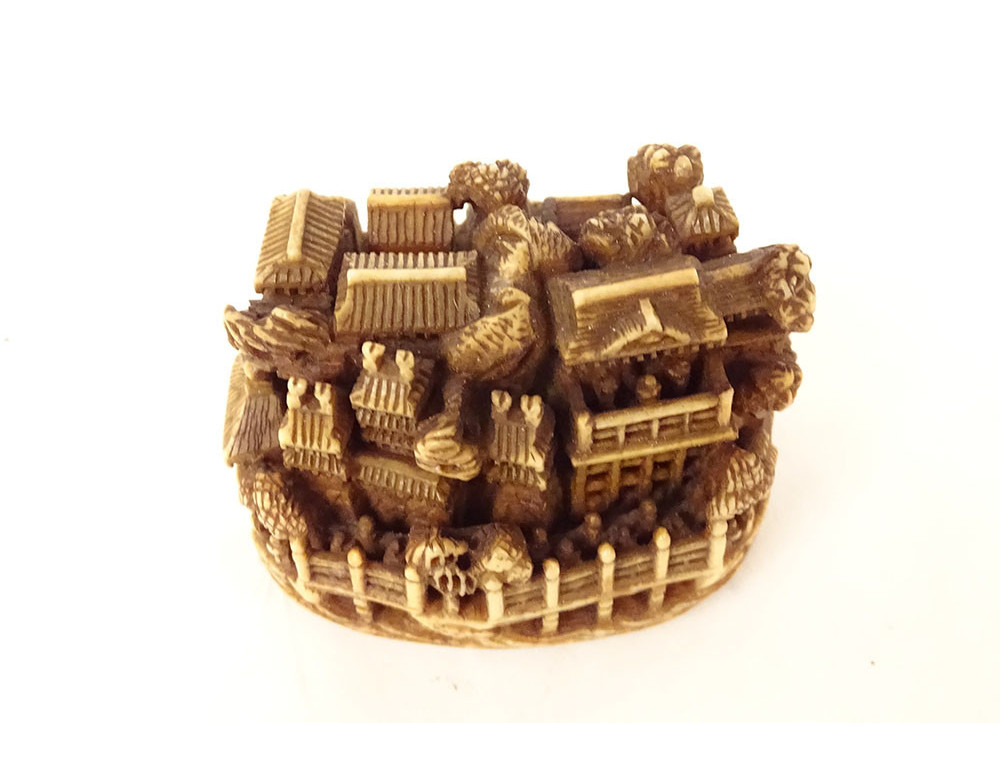
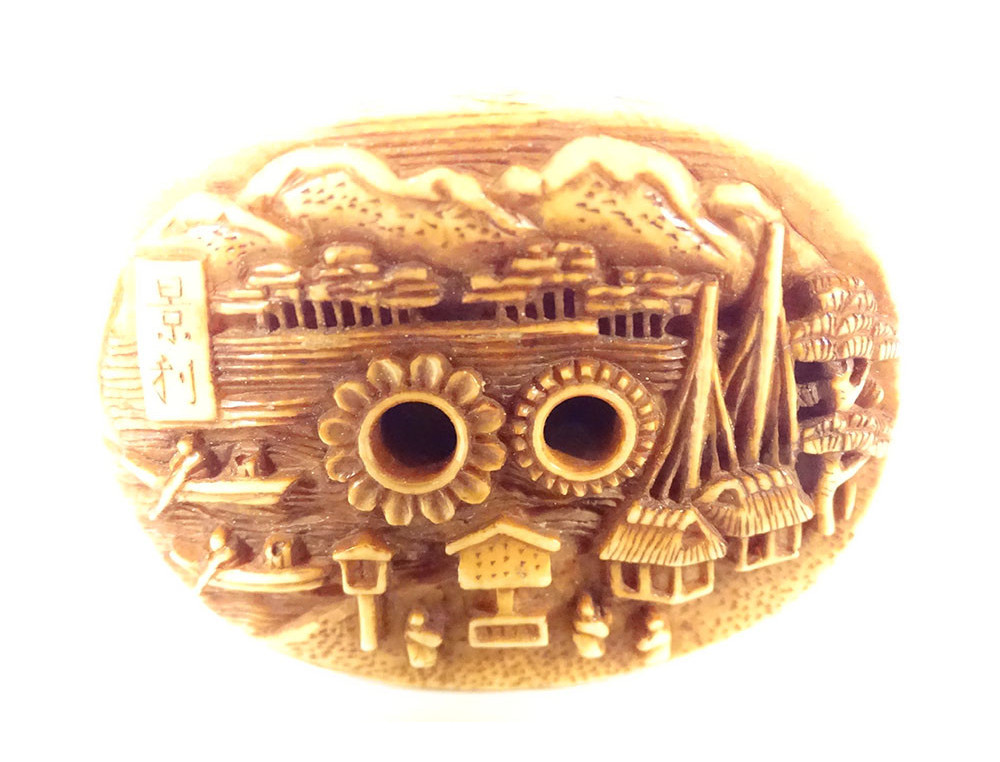
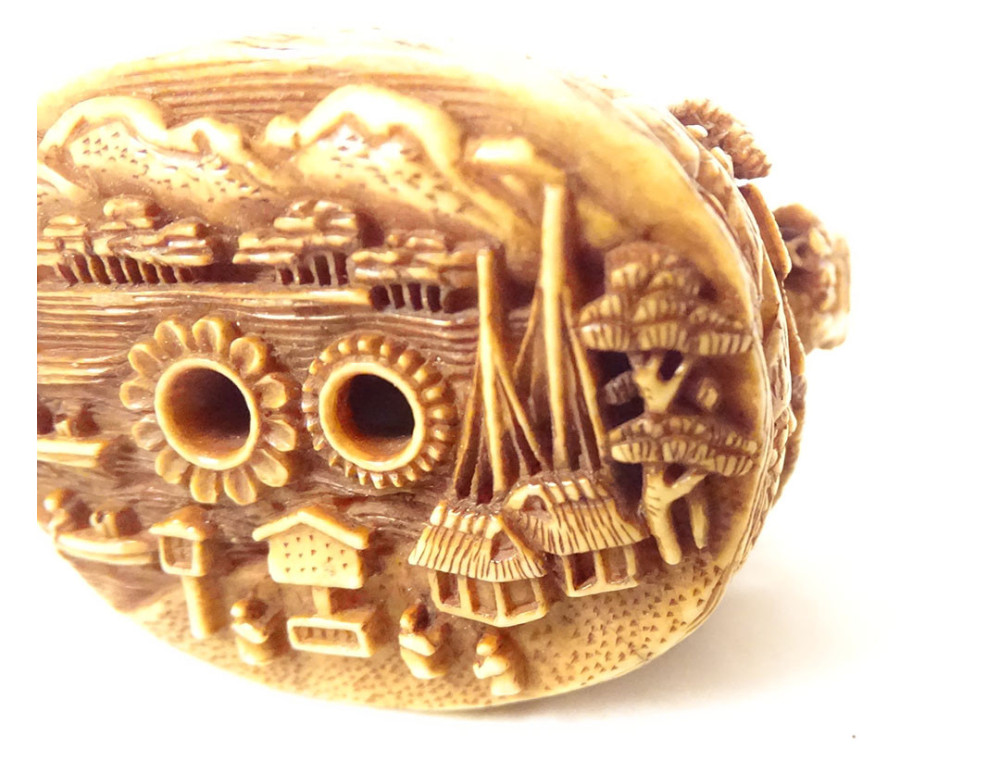
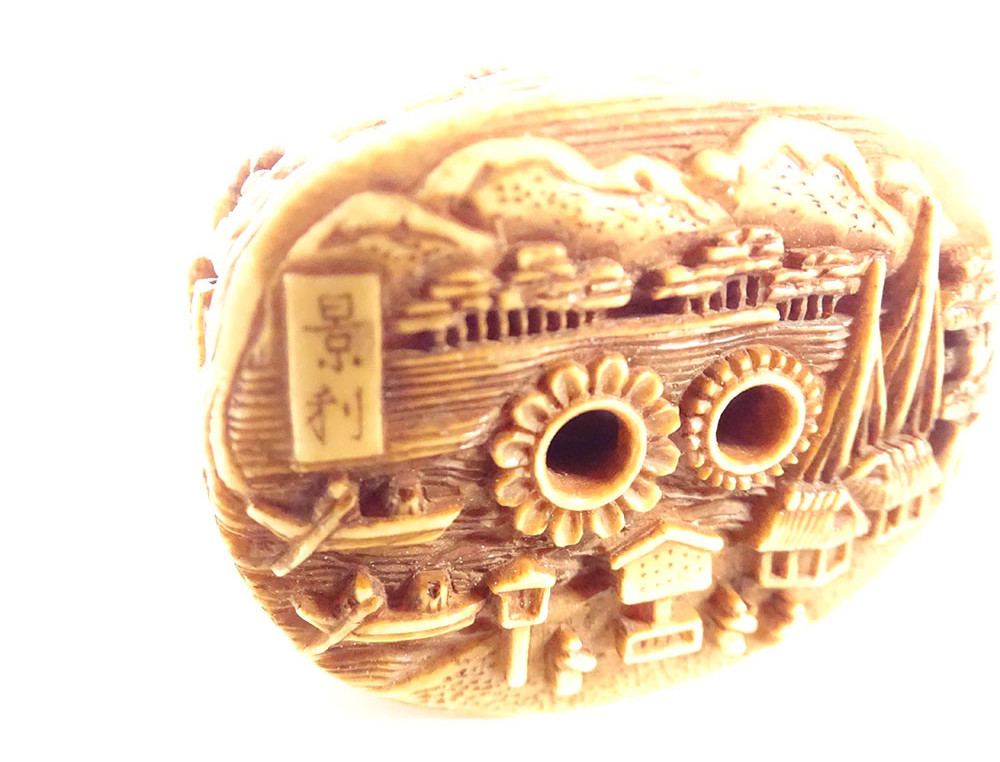

Carved ivory netsuke signed Kagetoshi miniature village temple Edo Japan 19th century

 Articles
A rare carved ivory netsuke signed Kagetoshi* depicting a miniature village with several houses and a multi-story temple, bridges spanning a river, and figures moving about in this pine-shaded setting. The Kagetoshi signature is in a cartouche below. Origin: Japan, Edo period, mid-19th century
This netsuke is in good condition and is of exceptional quality and fineness of carving.
Kagetoshi is famous for his meticulous sukashi-bori sculptures, of which this netsuke is a perfect example. His works are highly sought after at auction.
Note: minor signs of wear consistent with age, see photos.
Worked ivory specimen, prior to July 1, 1947 and therefore compliant with EC Regulation 338/97 of 09/12/1996 art.2-Wmc.
The netsuke is a traditional Japanese garment accessory used to hold sagemono (literally "hanging objects"). Since kimonos have no pockets, various everyday items are carried in small boxes called sagemono. These objects are suspended from the wearer's obi by a cord.
He worked primarily as a netsuke sculptor in the early 19th century, crafting ivory, boxwood, and ebony. His work is distinguished by intricately detailed sculptures with deep reliefs, depicting landscapes or compact groups of figures. While best known for his netsuke, he is also listed as a creator of inro made in this same elaborate sculptural style.