

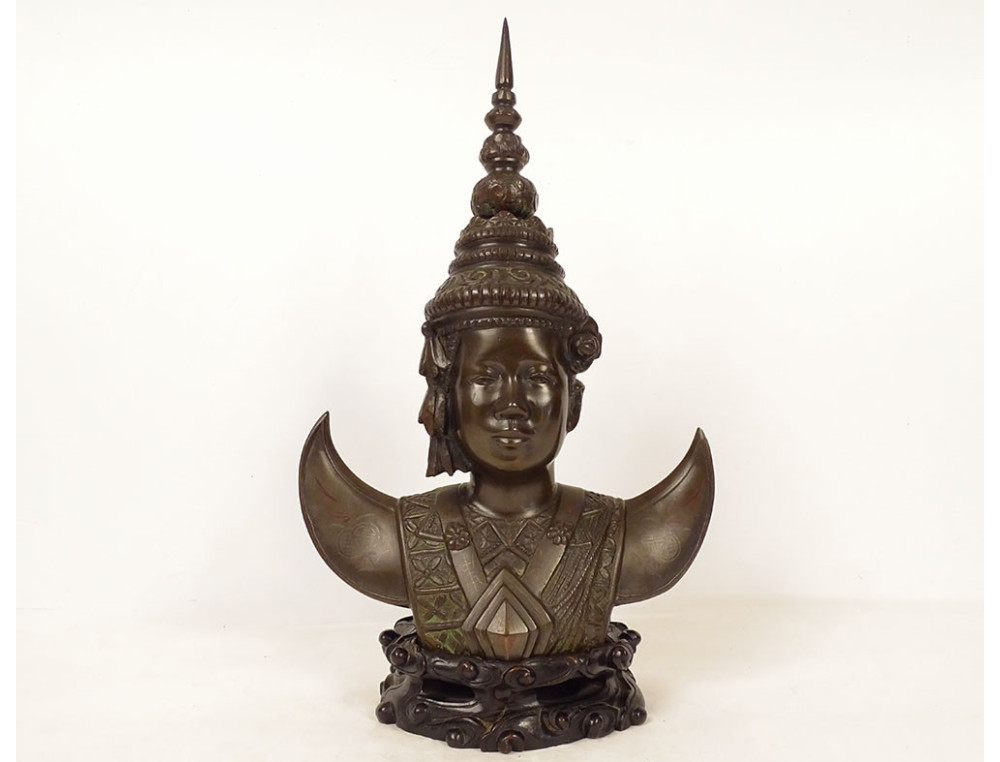
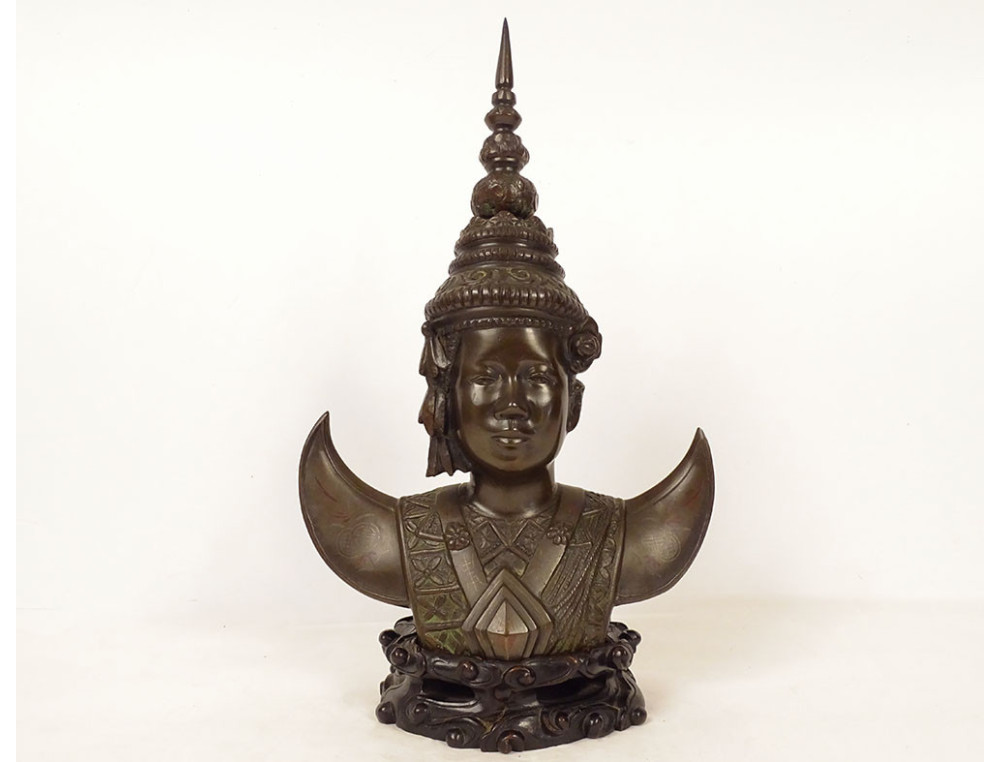
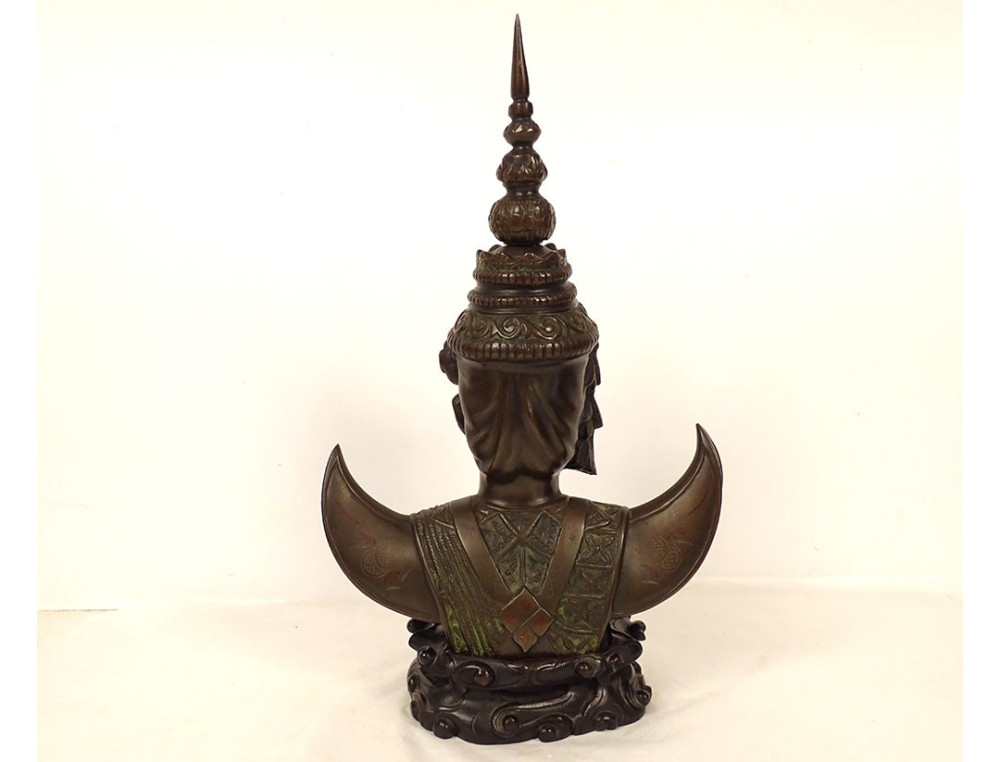

Bronze sculpture of a female Apsara dancer, Vietnam/Indochina, Bien Hoa school, 20th century

 Articles
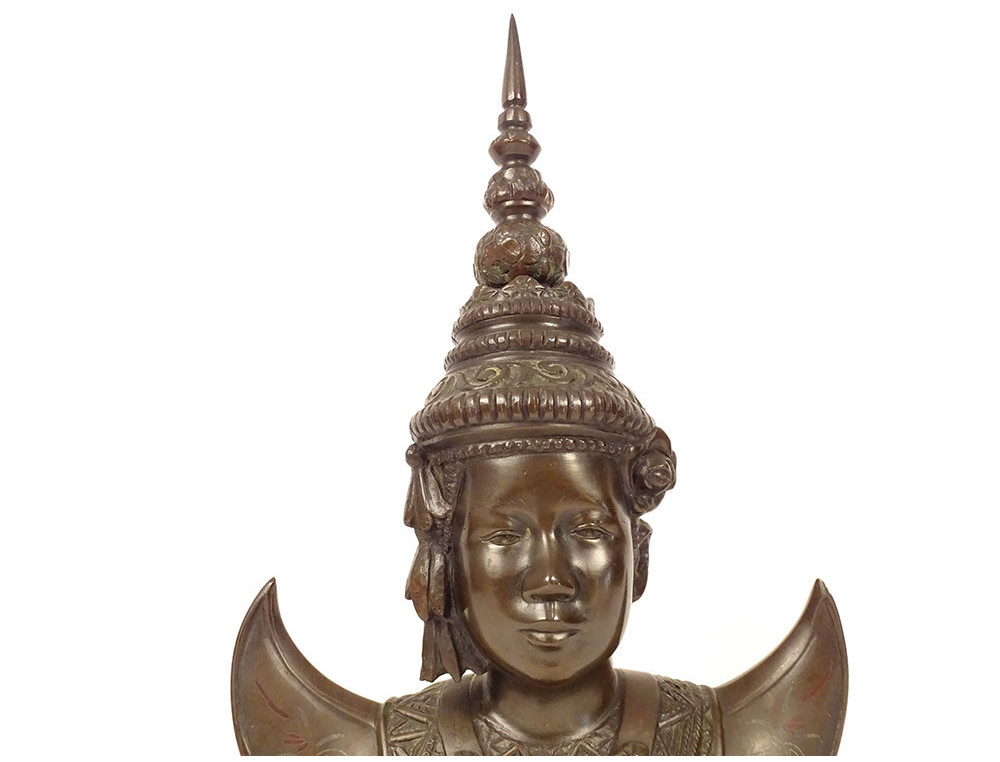
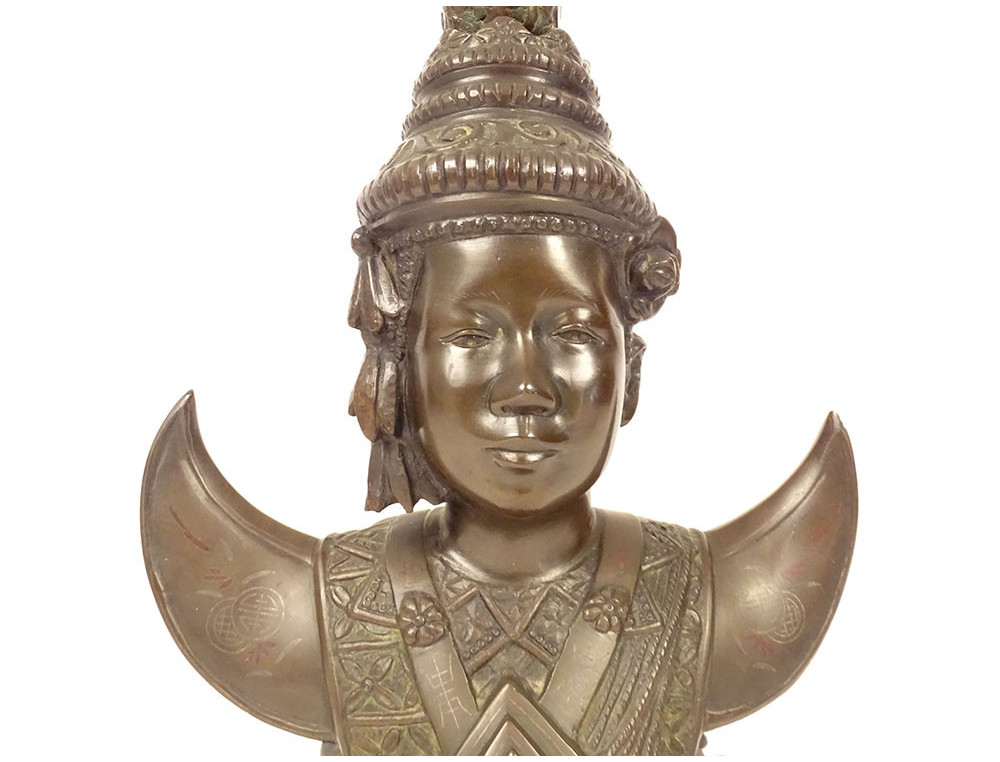
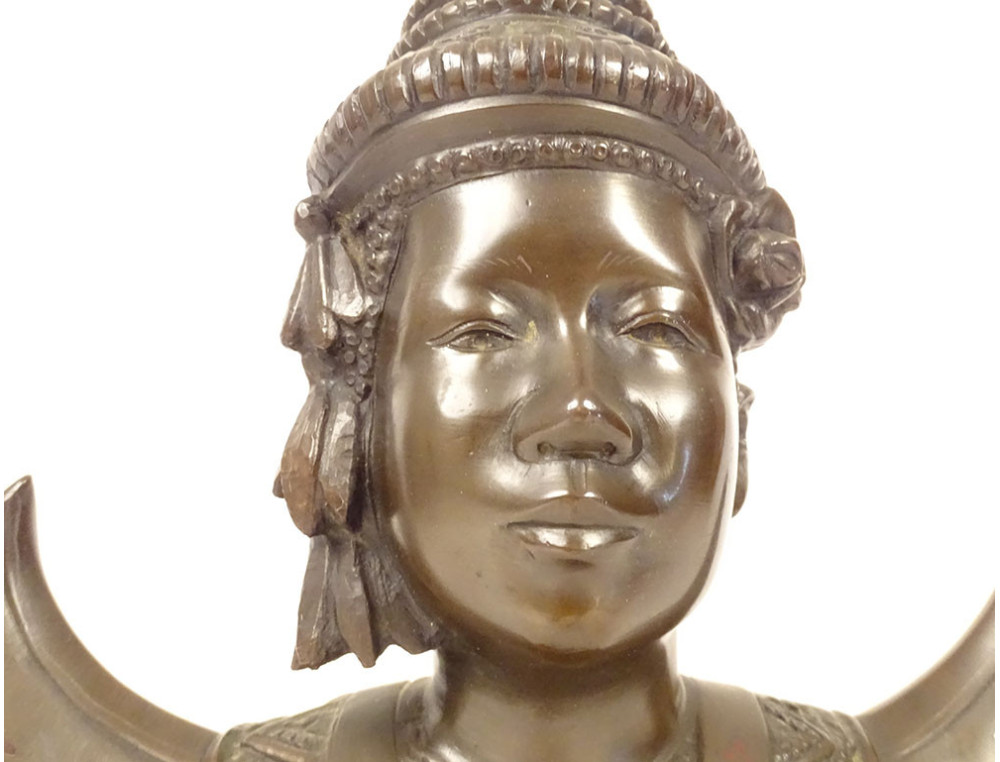
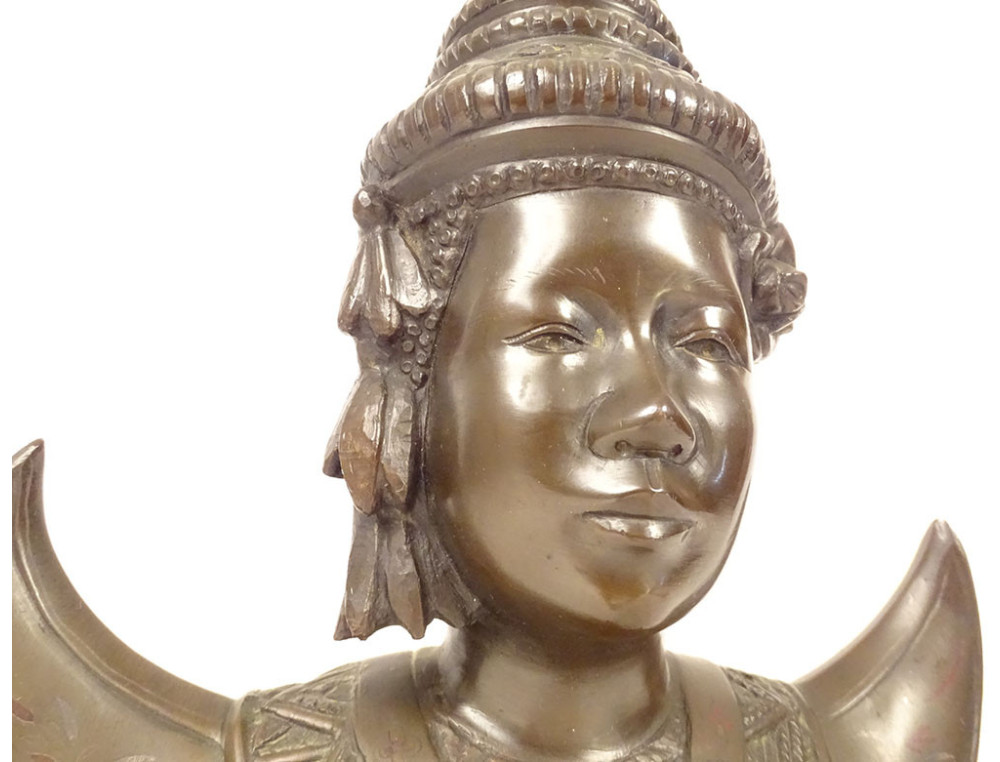
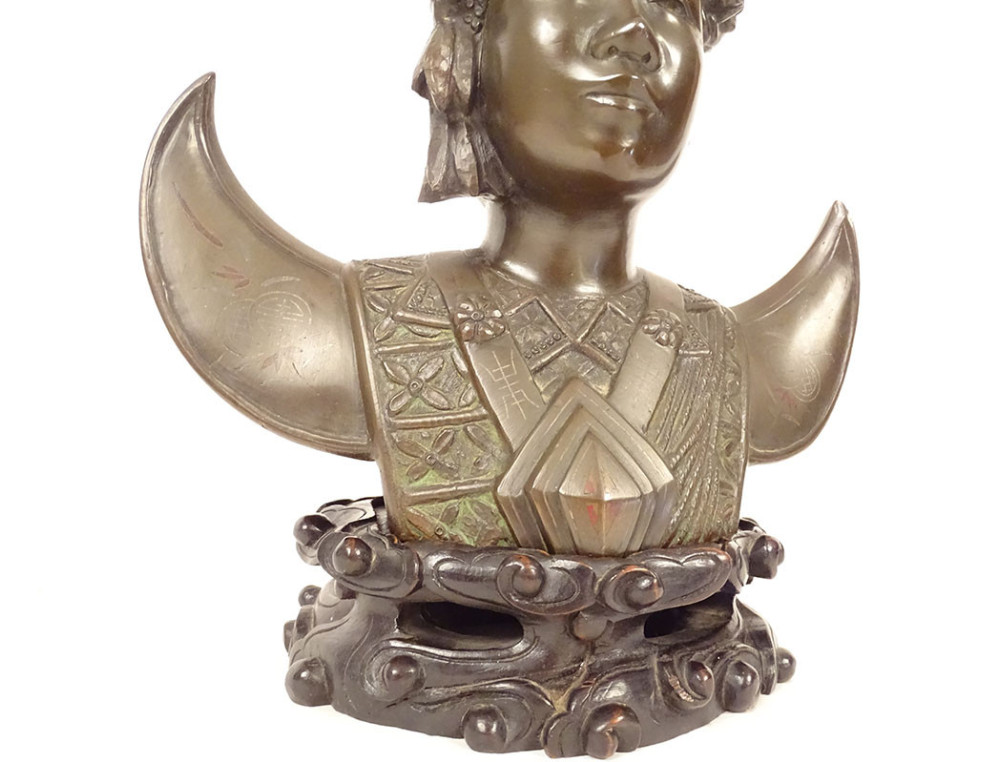
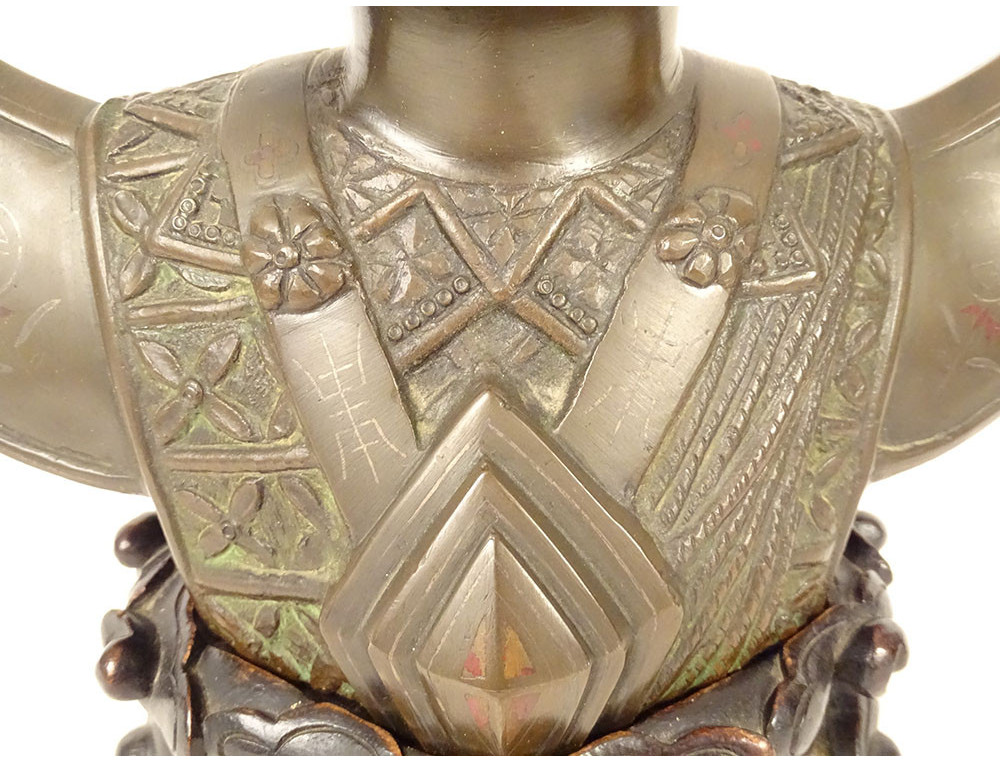
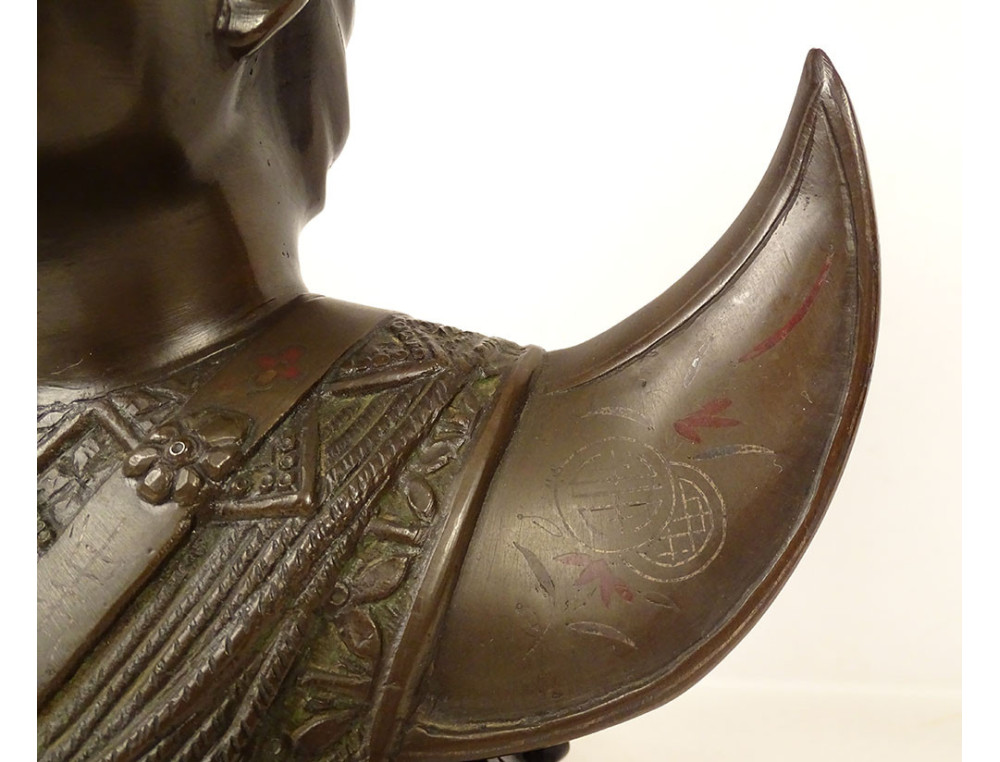
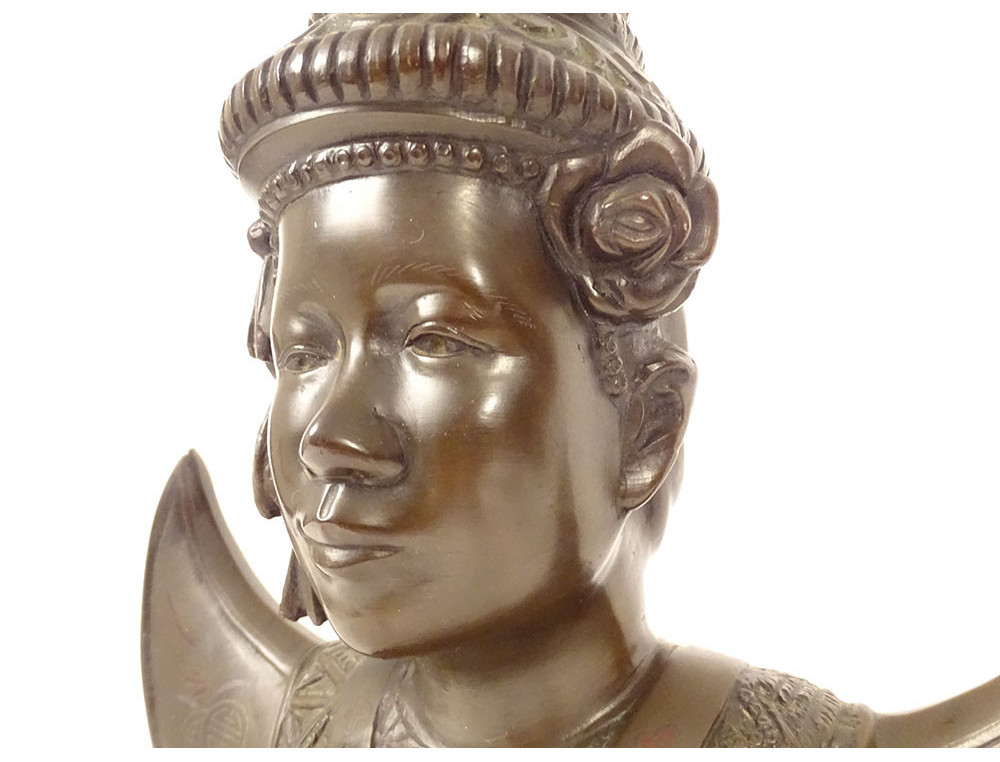
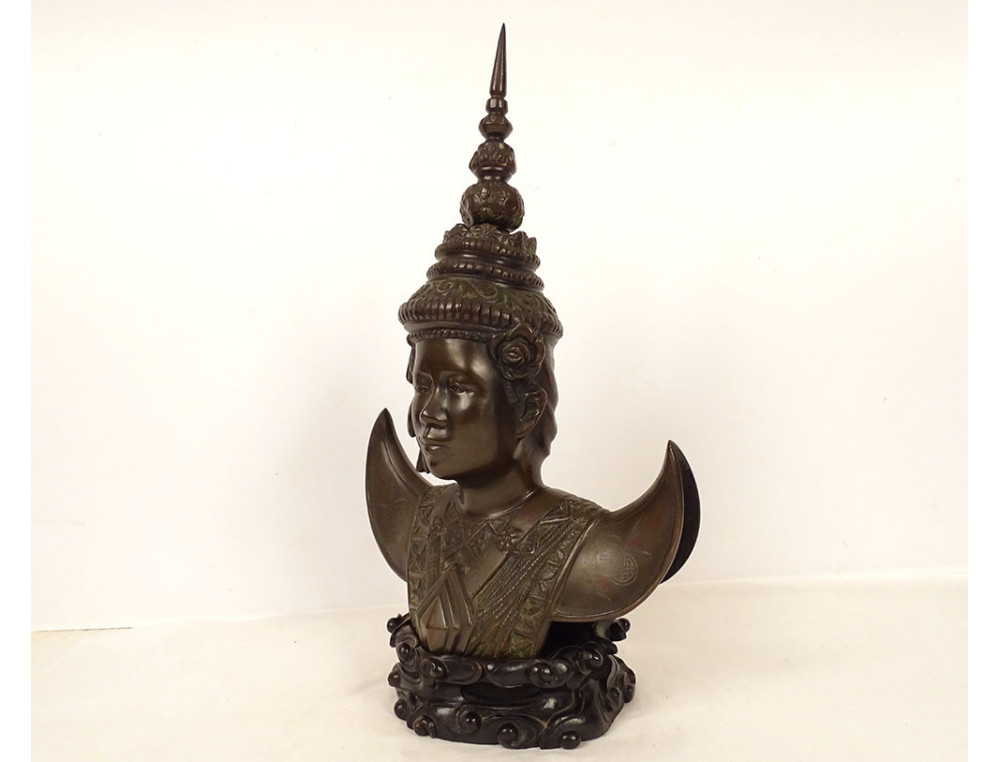
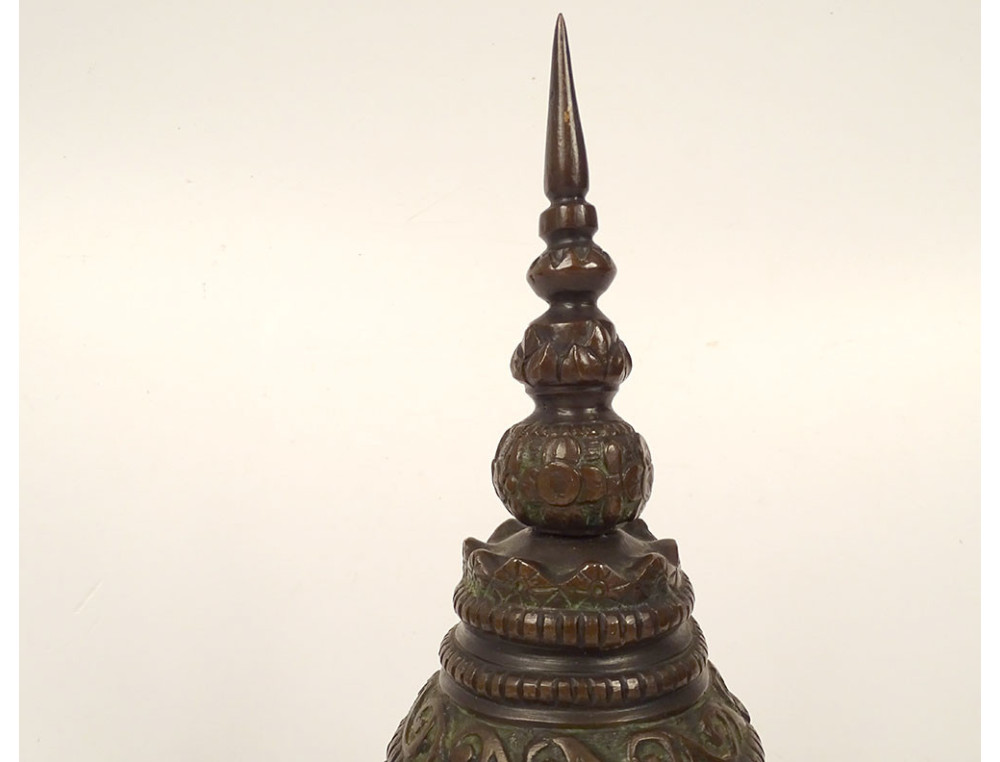
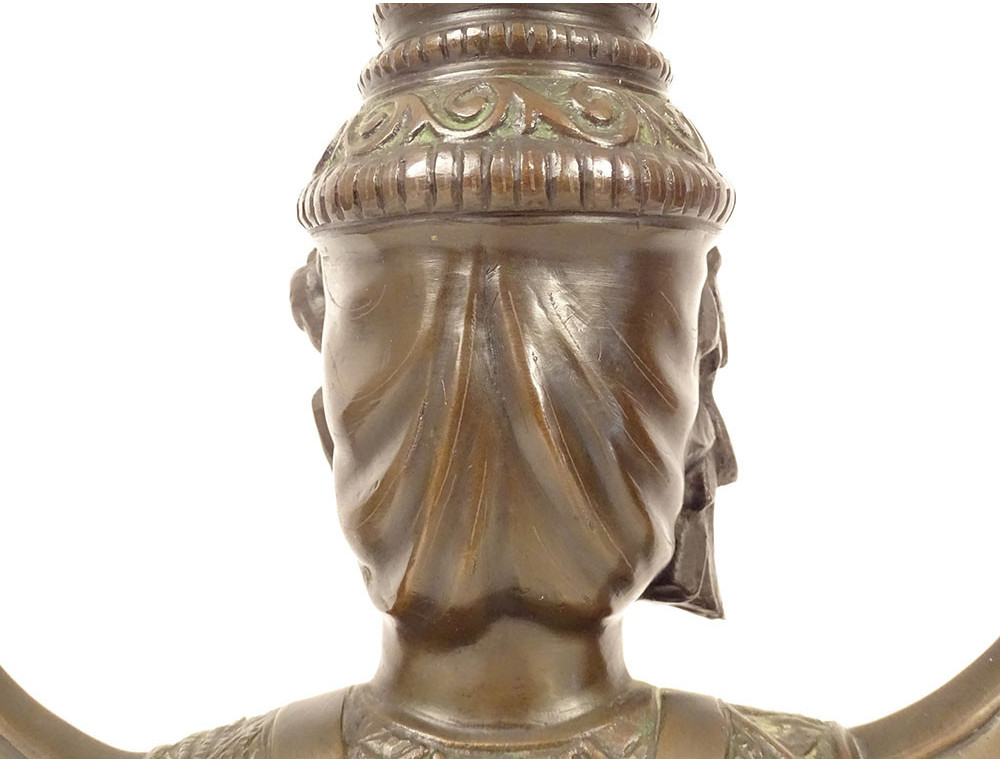
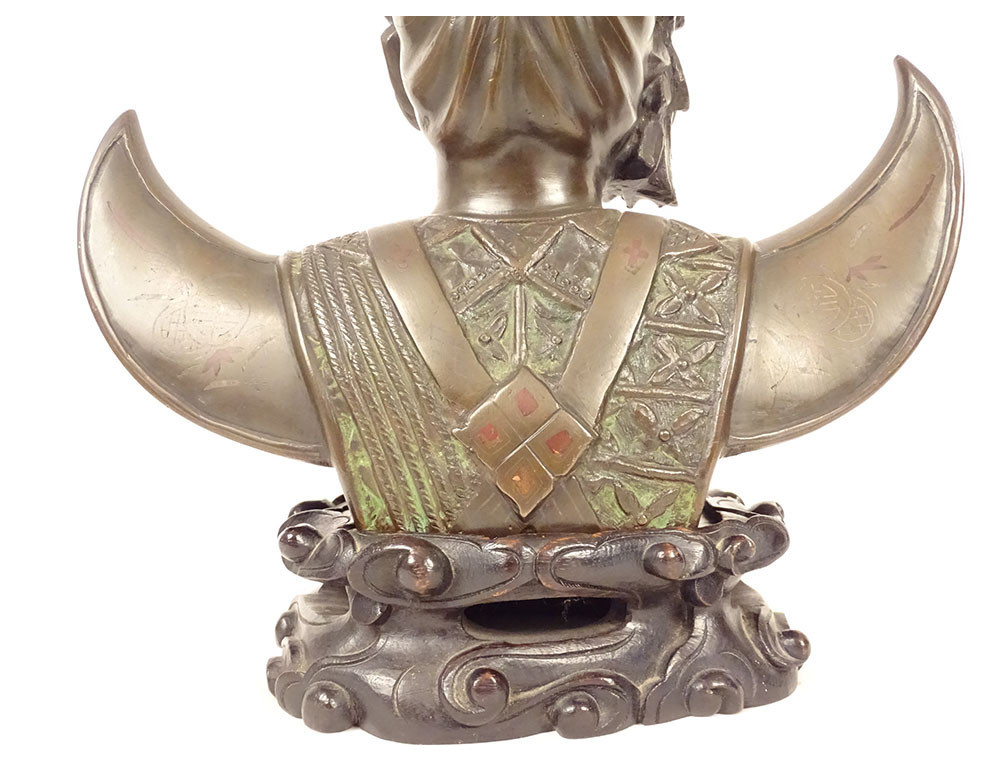
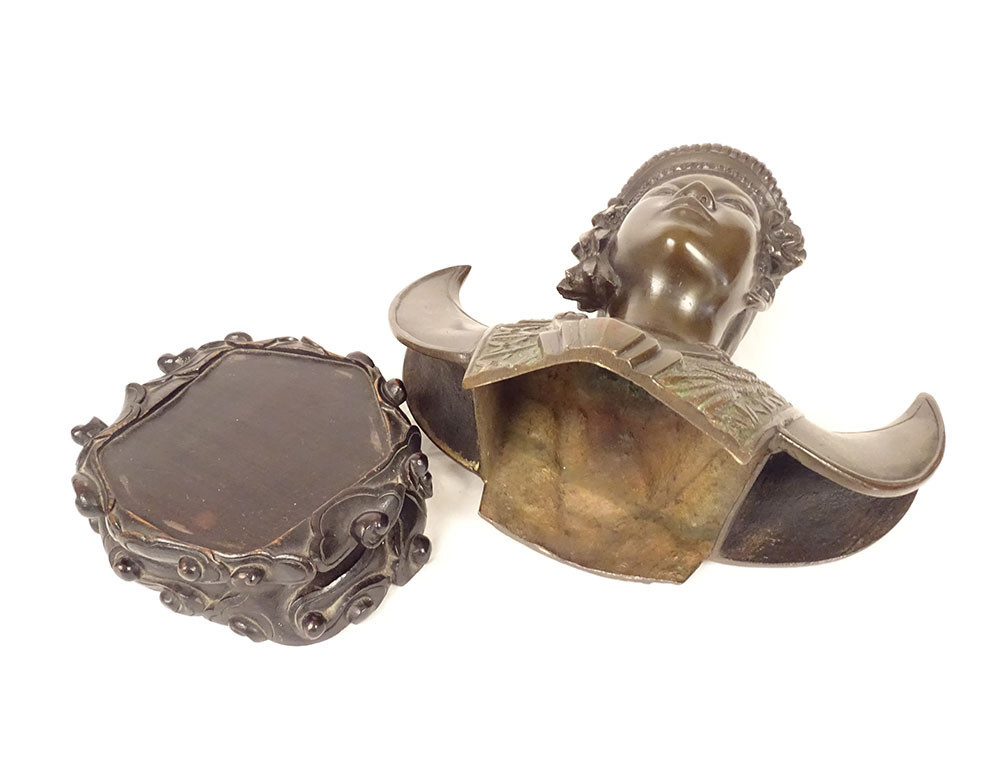
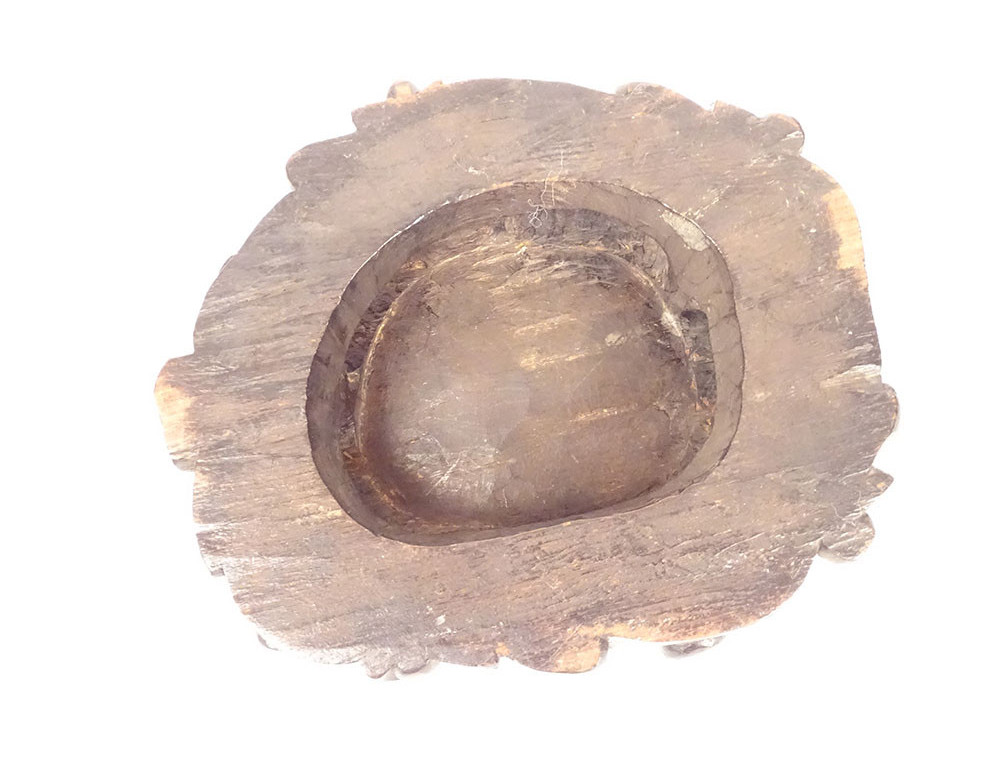
Bronze sculpture with brown patina representing the bust of an Apsara* or Cambodian dancer, her embroidered garment with shoulder pads, tiered headdress with typical spike, presented on a wooden base, originating from Indochina - Vietnam, most certainly a work from the Bien Hoa** School of Applied Arts, from the early 20th century.
This bust is in good condition and of fine quality. Very decorative due to its size.
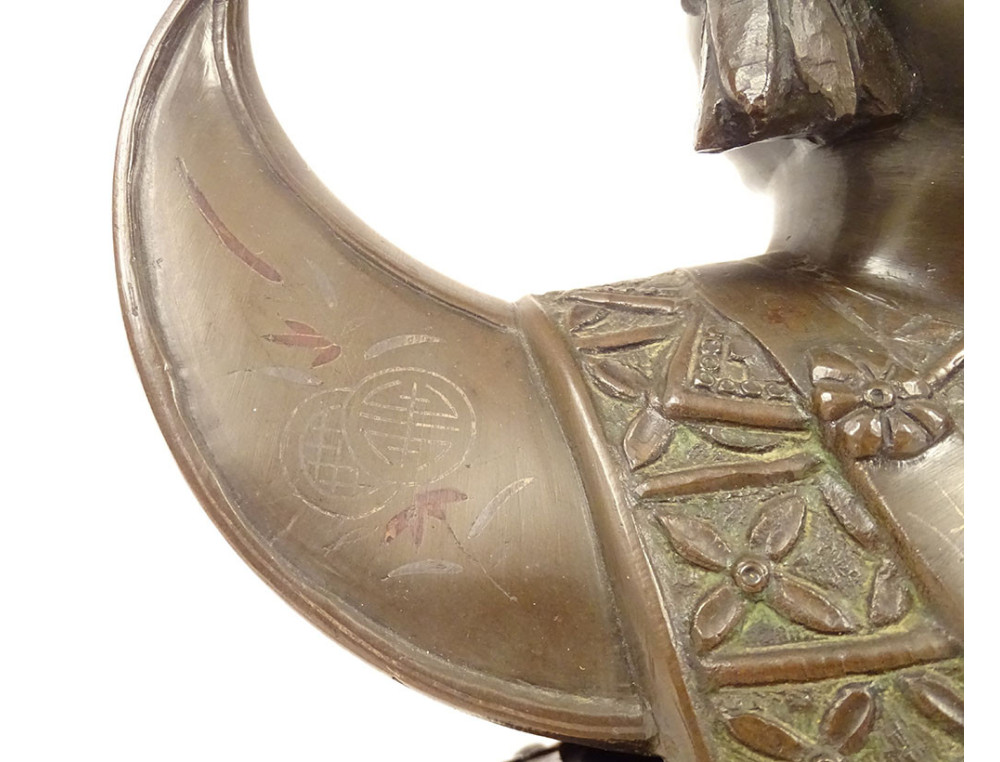
Note: some light soiling and scratches, the colored parts of the garment (most likely enamels) are sometimes worn, wear and tear of time, see photos.
An Apsara is a female spirit of the clouds and waters in Hindu and Buddhist mythology, a "celestial nymph" or "celestial maiden." Apsaras are beautiful, supernatural female beings. They are young, elegant, and superb in the art of dance. They are often the wives of the Gandharvas, the musicians of Indra's court. They dance to music composed by the Gandharvas, usually in the palaces of the gods, entertaining and sometimes seducing both gods and men. As guardians of fallen heroes, they can be compared to the Valkyries of Norse mythology. As ethereal beings who inhabit the heavens and are often depicted in flight or in service to a god, they can be compared to angels. Apsaras are said to be able to change their form at will and to rule over fortune and games. They are also associated with fertility rites.
In 1903, at the initiative of Georges Maspéro, the Biên-Hòa School of Applied Arts was founded with the aim of training art founders, potters, and ceramicists, drawing upon an ancient local folk tradition. The school's curriculum combined aesthetics derived from Vietnamese history with Chinese, Khmer, and French elements (Art Nouveau and later Art Deco), giving Biên-Hòa's production a uniquely syncretic character.