 Articles
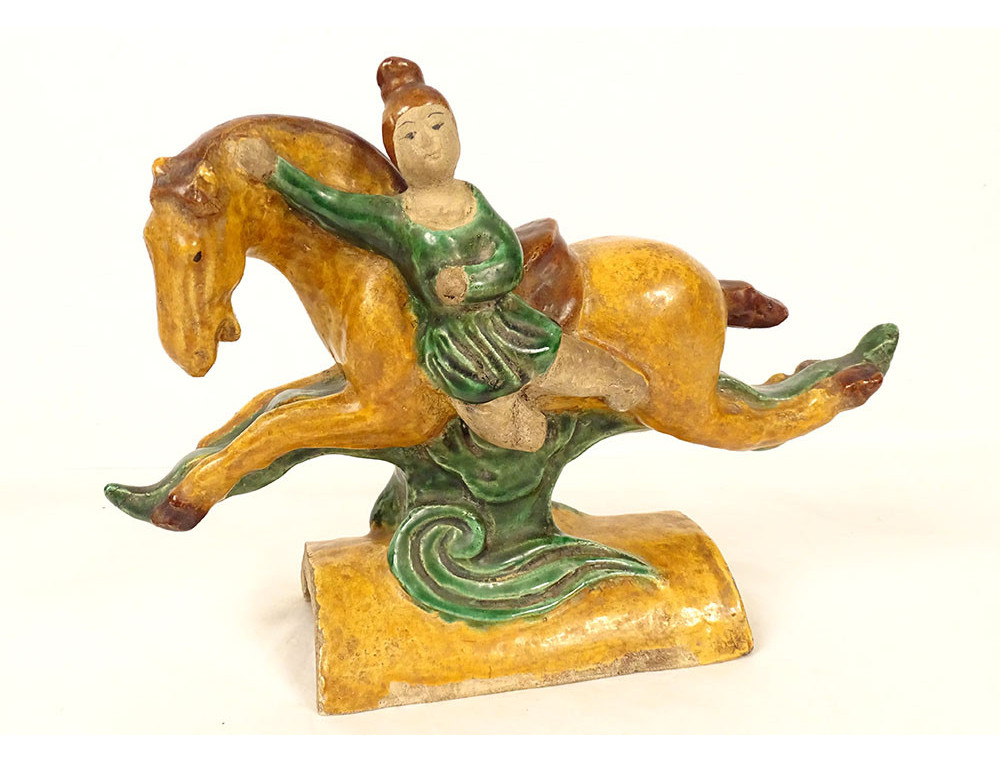
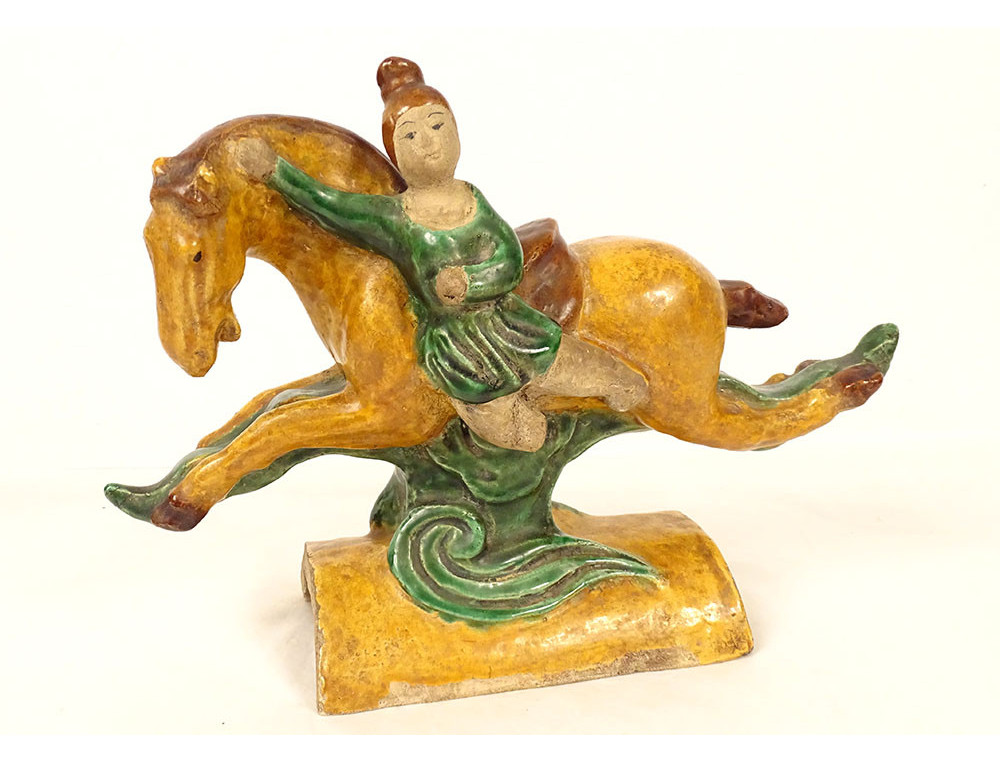
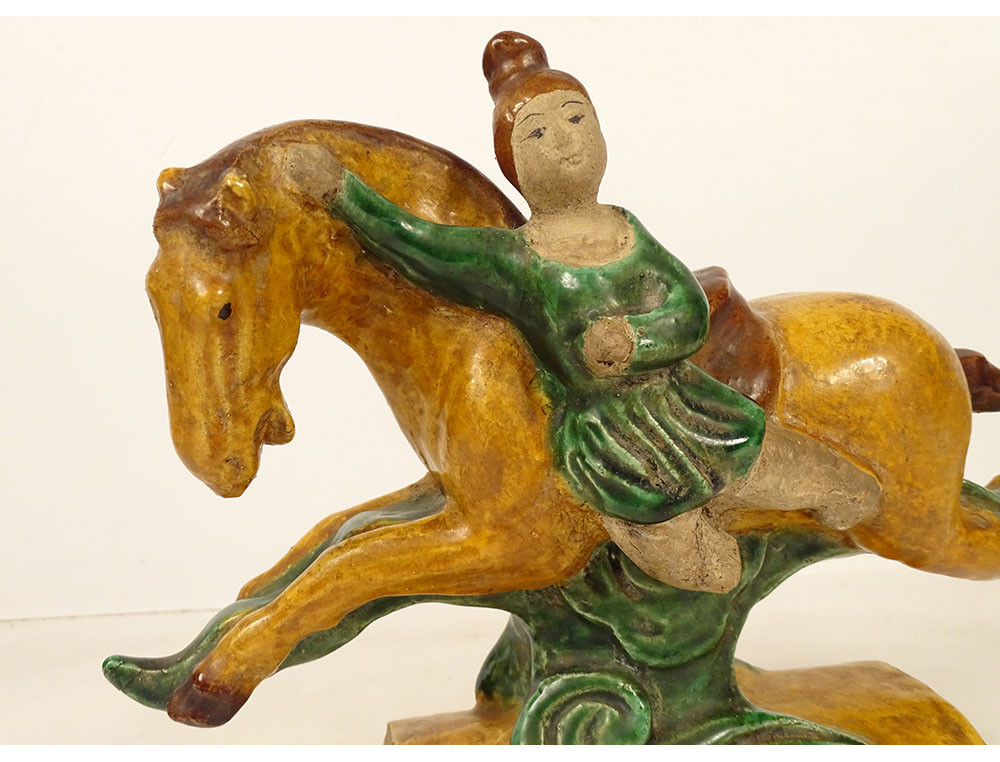
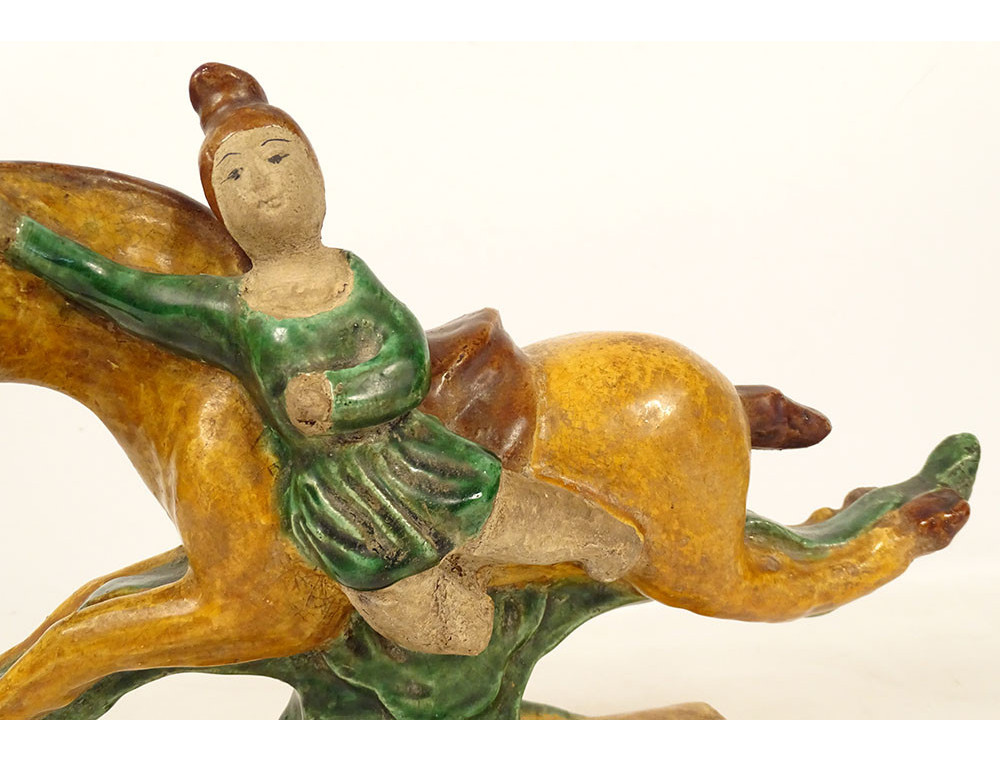
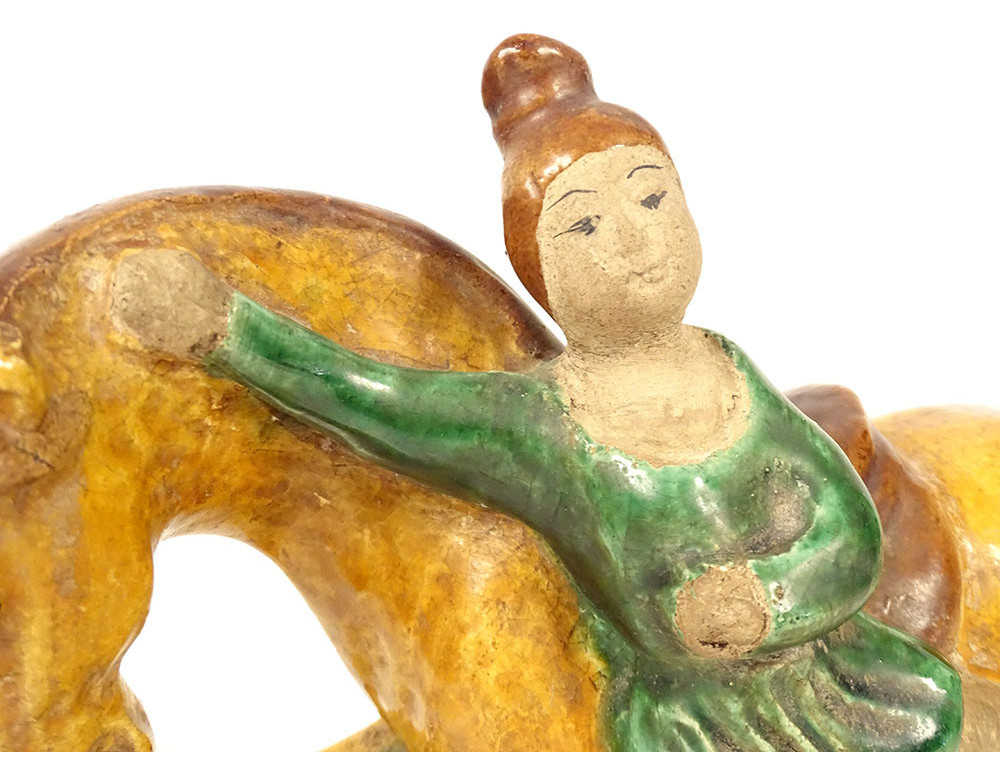
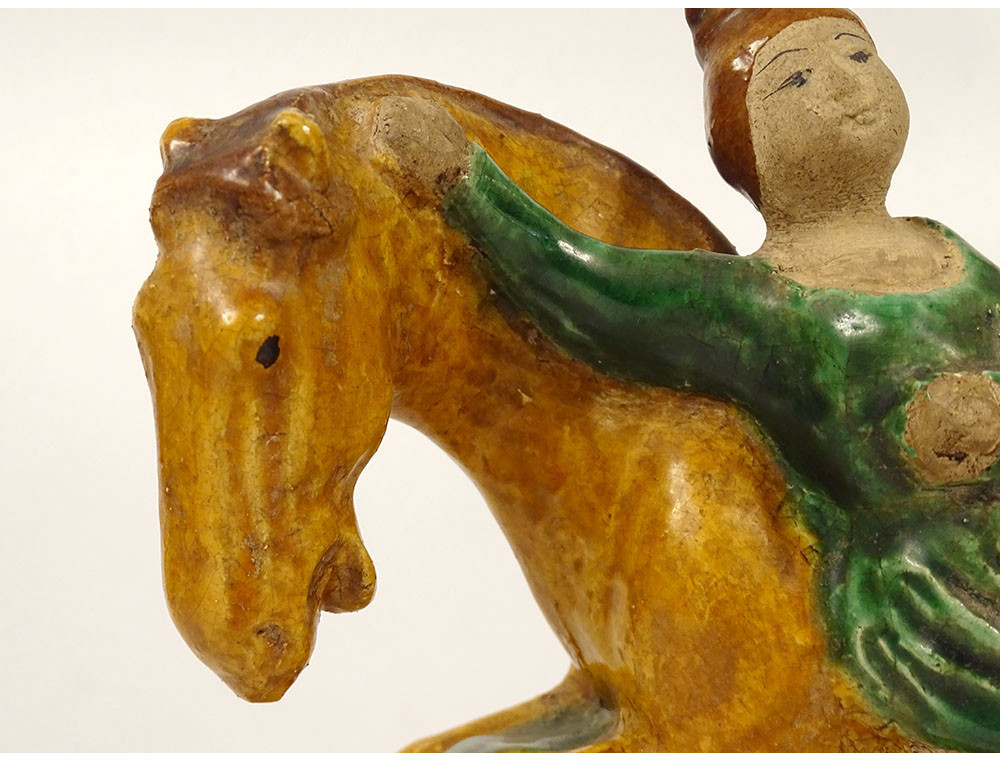
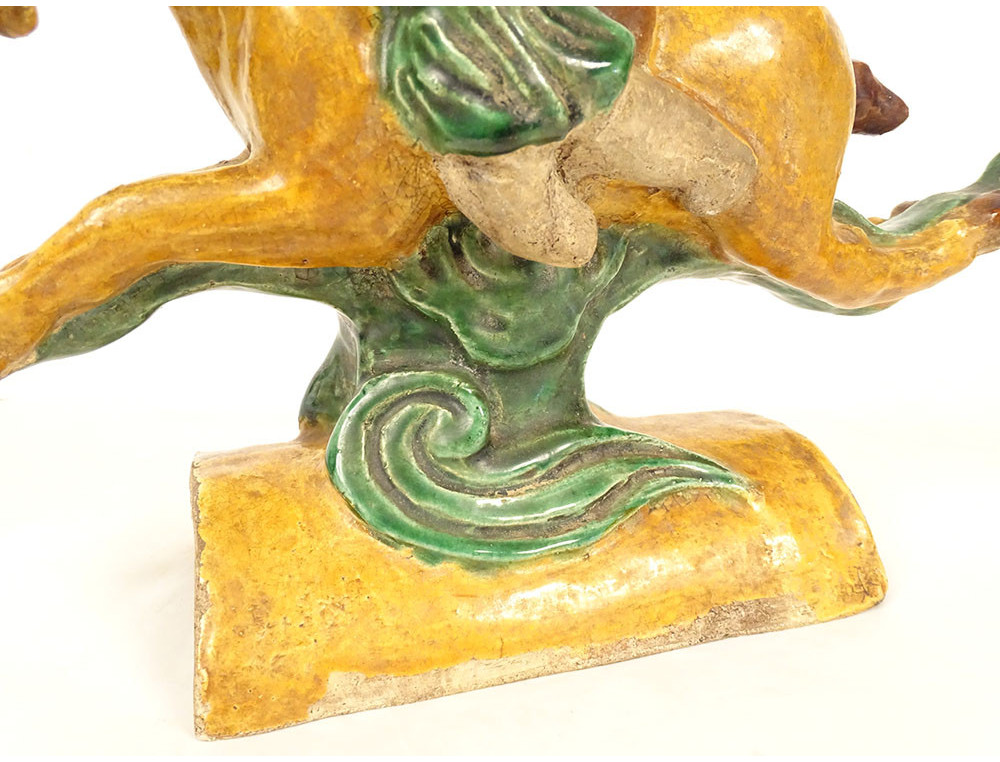
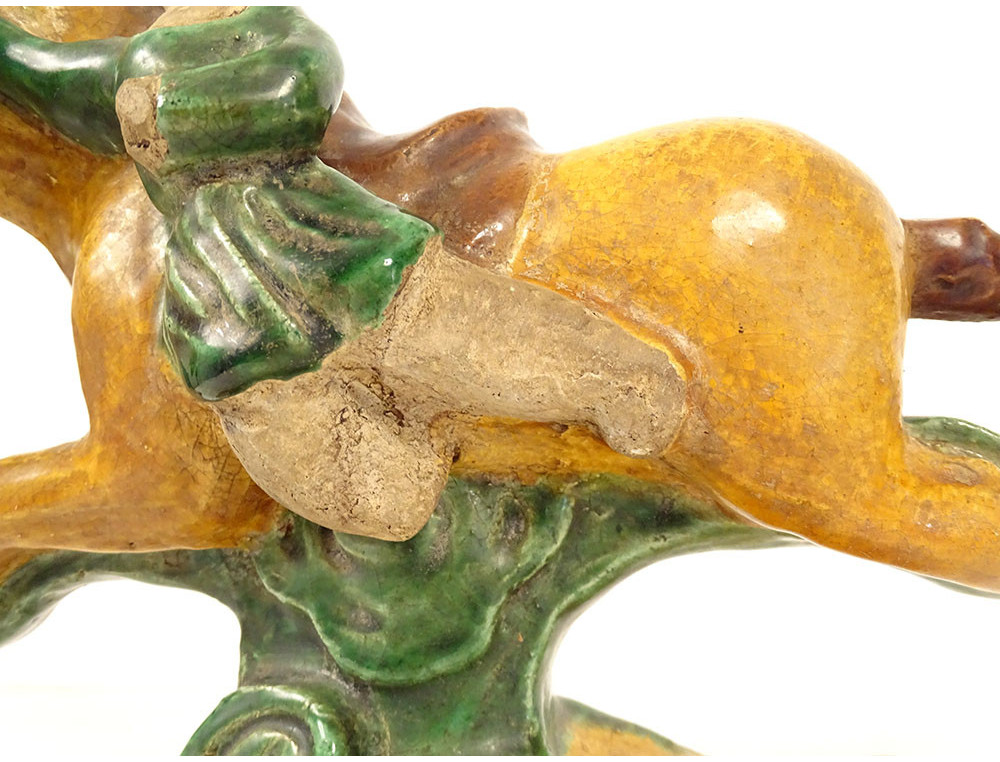
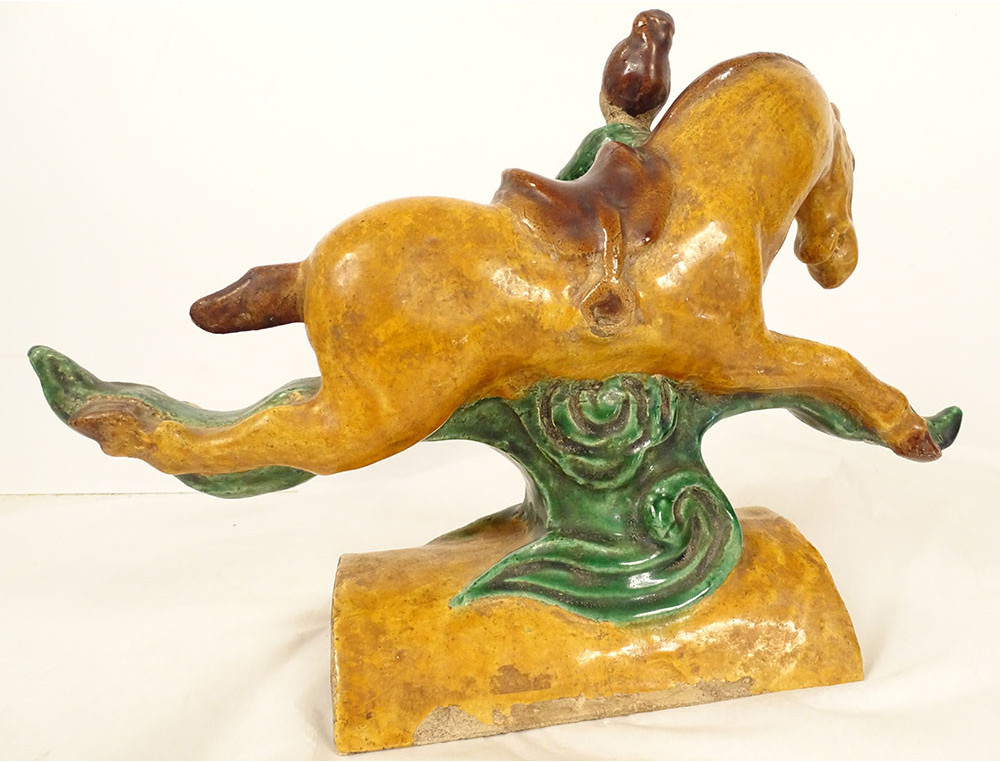
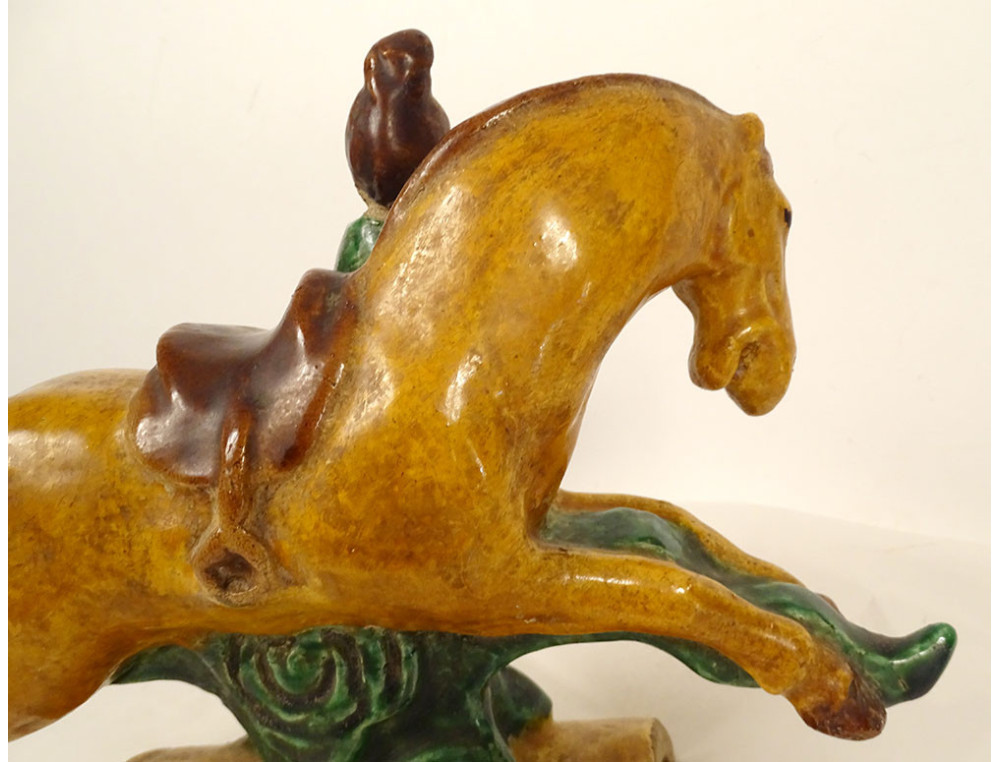
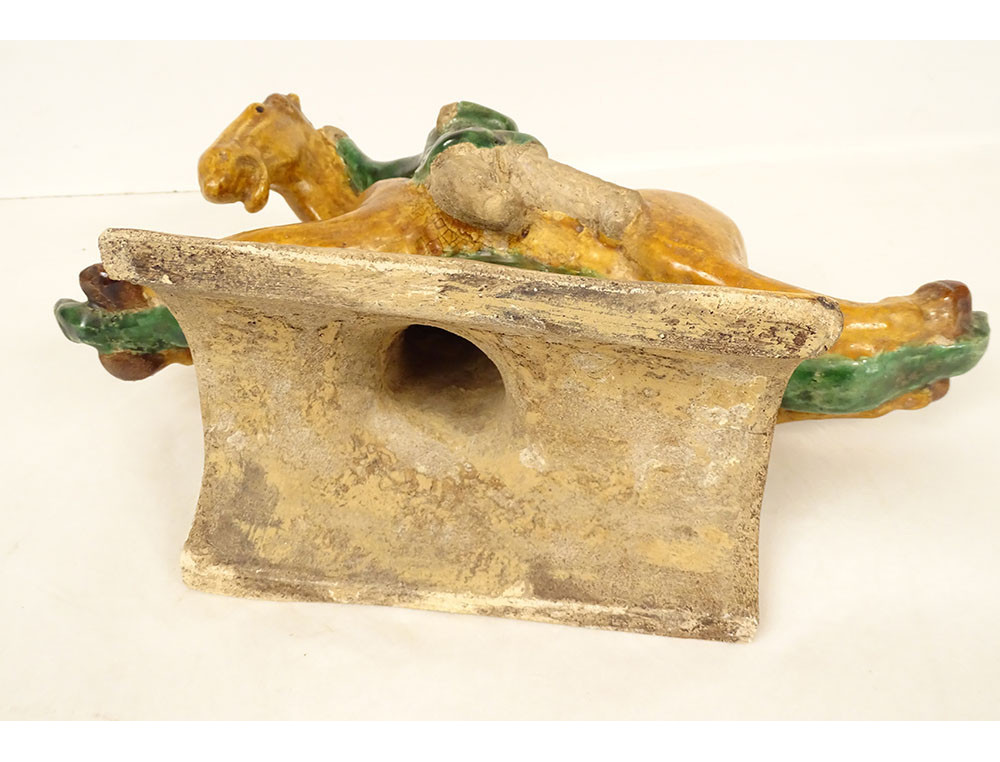
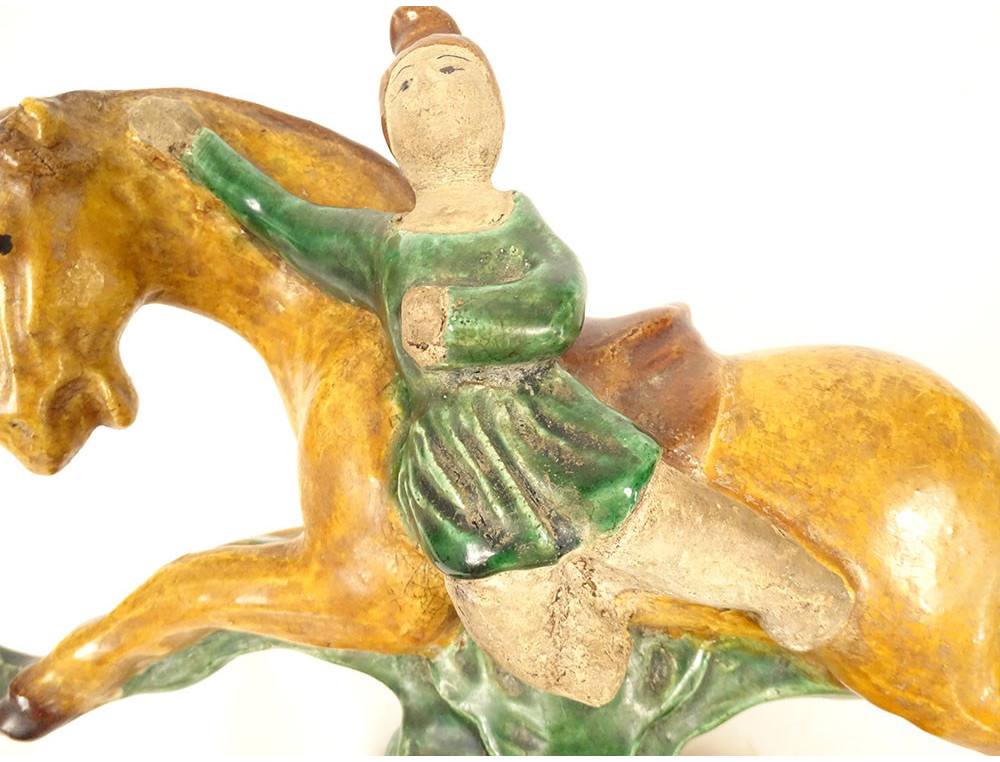
Sancai glazed terracotta ridge tile*, depicting a horseman holding the mane of his galloping horse, from China, from the late Ming dynasty period (1368-1644).
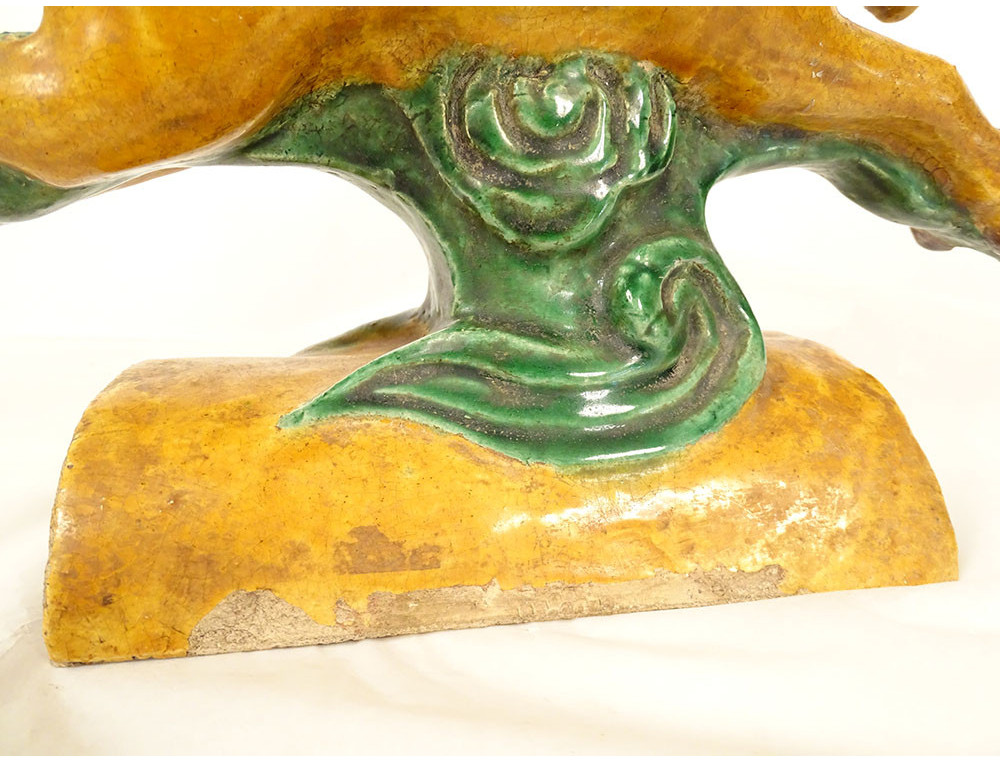
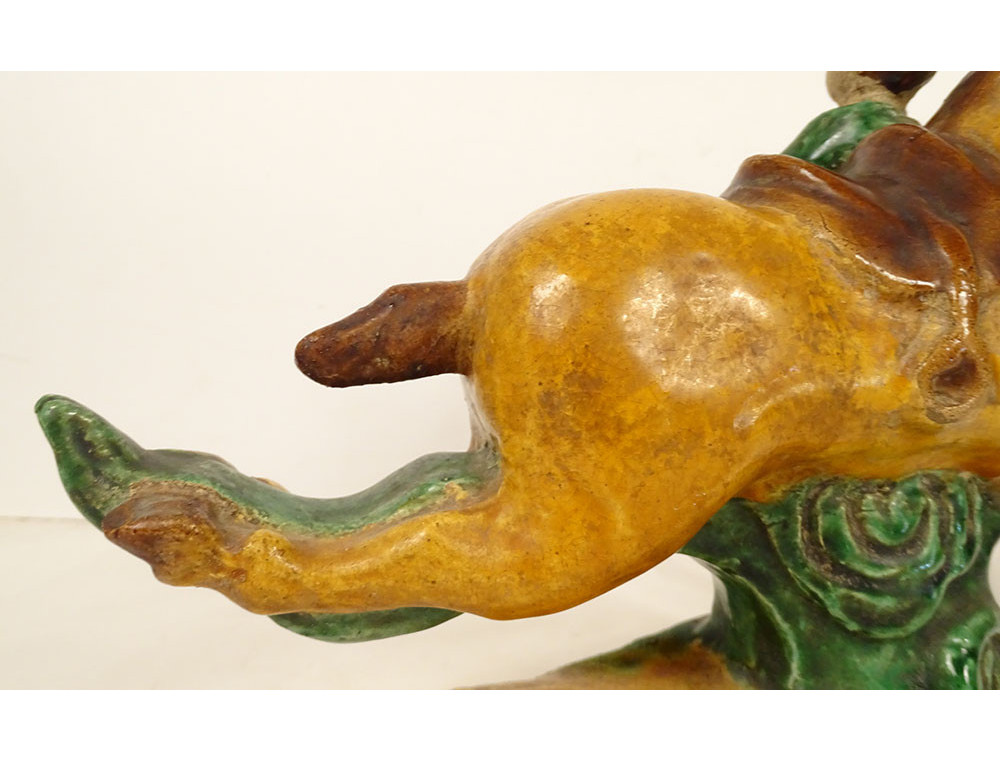
This sculpture is in good overall condition, superb quality.
Please note: some chips and enamel defects, wear and tear from age, see photos.
The term sancai (literally "three colors") refers to a type of Chinese ceramic whose decorations feature polychrome glazes in three or more colors. The sancai ceramic technique dates back to the Tang Dynasty. Despite the name, the number of different colored glazes actually used for sancai, or "three-color" ceramics, could reach a dozen on some highly elaborate pieces. Sancai ceramics were made in northern China using kaolin and refractory clay, and contained very little iron.