 Articles
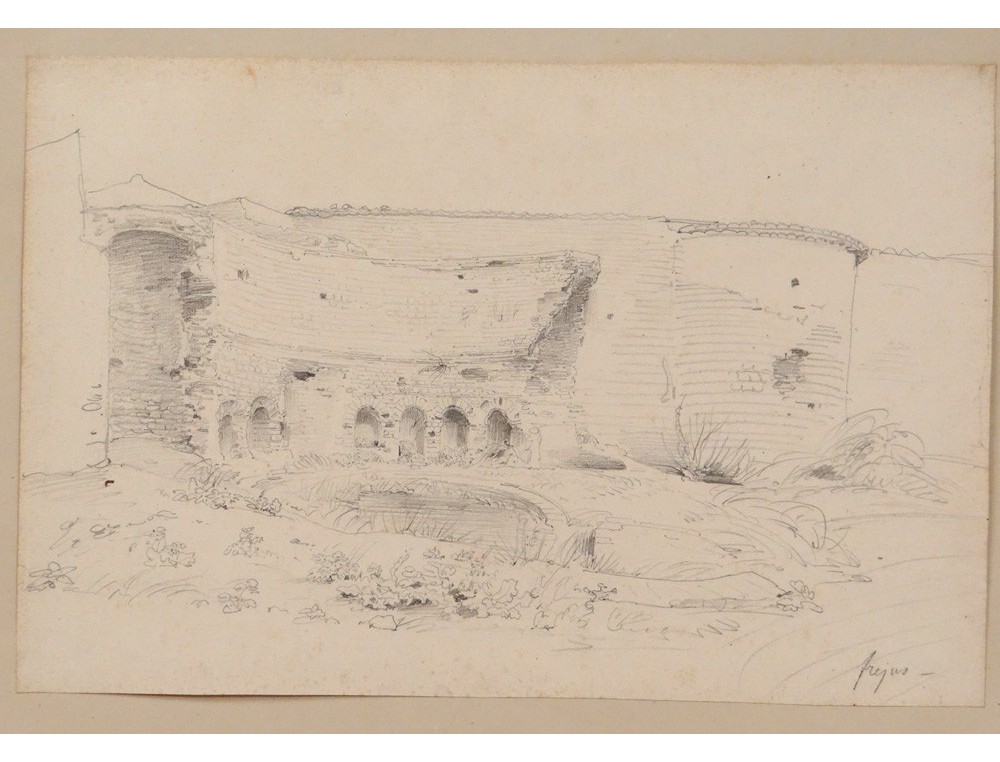
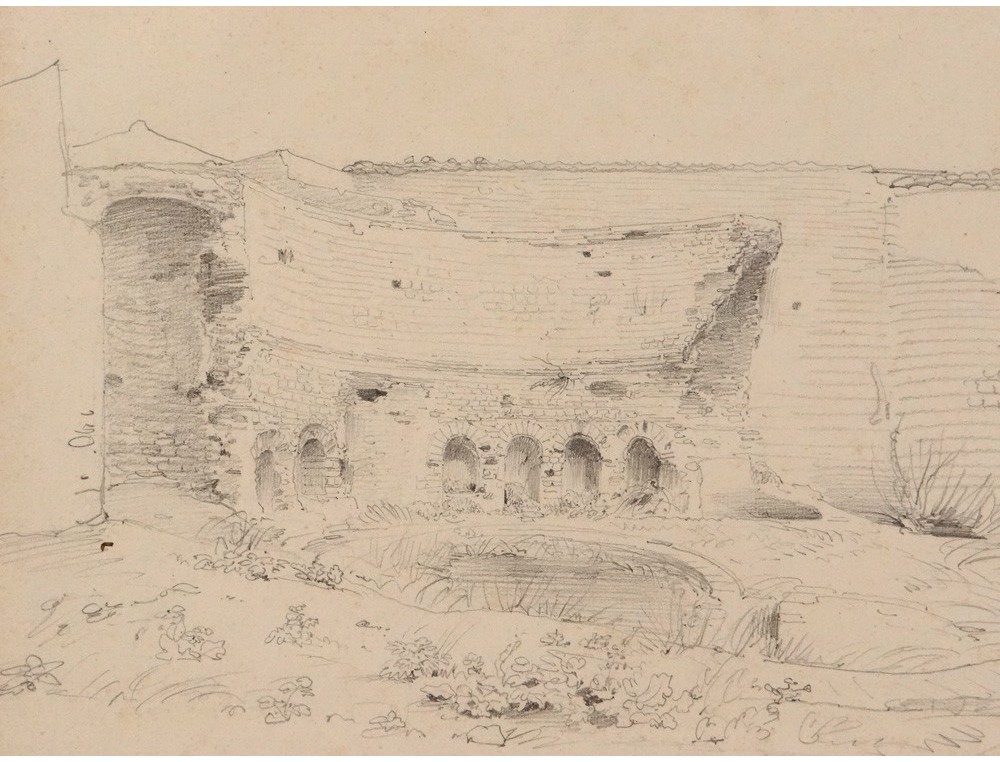
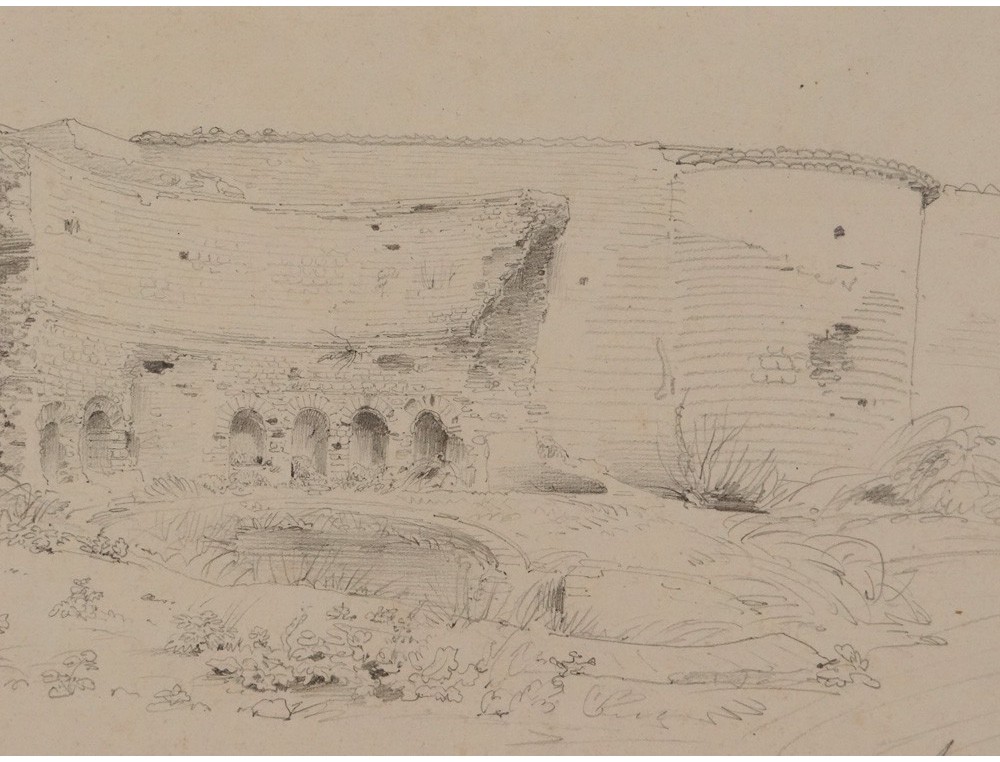
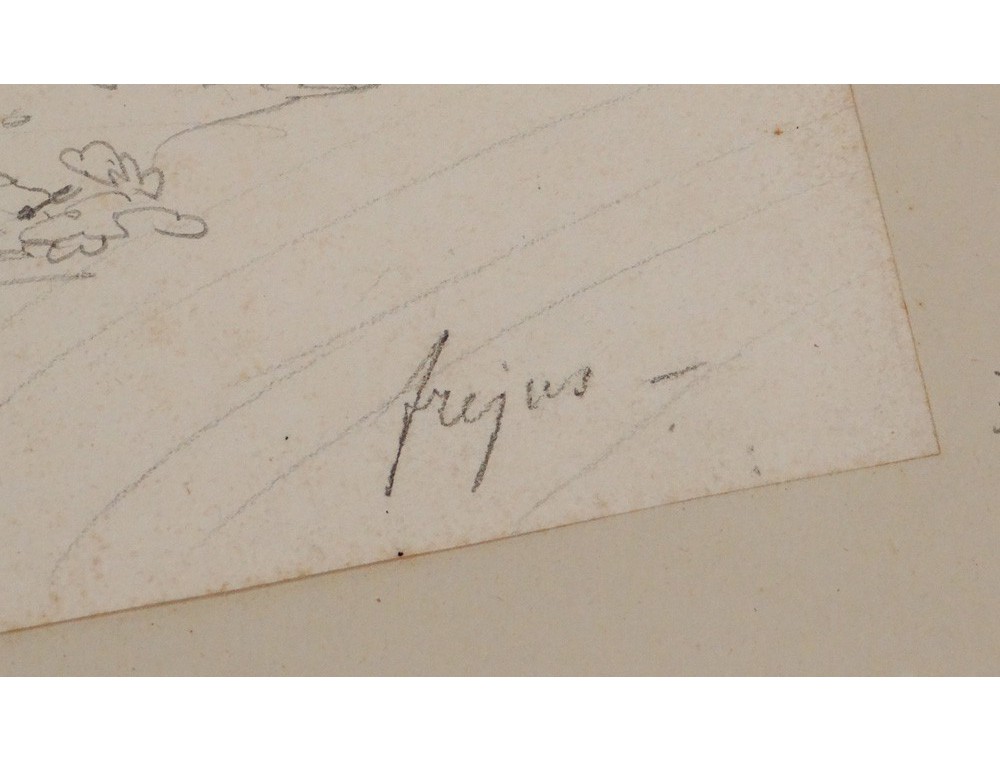
Very nice design Théodore Gudin * representing a view of the ruins of the Roman aqueduct of Frejus in the South of France, XIXth century.
This drawing comes from a set of four complete sketchbooks by the painter. They are unsigned but come from Théodore Gudin's studio; many of the drawings are annotated in his hand.
The drawings in these sketchbooks are done in pencil, charcoal, or ink. They are glued onto a sheet of paper (which may be slightly torn, creased, or stained; see photos). Please examine the photos carefully before purchasing.
Born August 15, 1802, in Paris, died April 12, 1880. Gudin was the first painter to be appointed official painter of the navy in 1830. Gudin passed the entrance exams for the naval academy. However, he joined the American navy and was assigned to the brig Manchester. In the USA, he met exiled Bonapartists, participated in a fisheries surveillance mission off Newfoundland, and witnessed terrible shipwrecks. Upon returning to France, he reunited with his brother, a student of Horace Vernet, who introduced him to maritime painting. Another tragedy struck with the death of his brother. Yet he persevered. Success came quickly. He opened a studio, and students followed his teaching. In 1827, he achieved great success with "The Burning of the Kent." In 1828, Charles X commissioned him to paint "The Death of Ensign Bisson." A friend of Dupetit-Thouars, he was appointed painter to the Royal Navy and took part in the Algiers expedition. Under Louis-Philippe, he was made a baron and commissioned 90 paintings to commemorate episodes of French naval history at the Palace of Versailles. Gudin traveled to Italy and Russia, where he made sketches of Russian naval maneuvers. He returned to France aboard the "Danaé." In 1844, he married the daughter of a Lord, goddaughter of Louis-Philippe. The 1848 revolution broke out. He then divided his time between France and England, maintaining good relations with all political powers. During the 1852 coup d'état, Gudin aided the Republicans. Gudin accompanied Emperor Napoleon III to Algeria, then returned to Tangier aboard the "Reine Hortense." Gudin founded the Central Society for the Rescue of Shipwrecked Persons. In 1870, Gudin was in England. Gudin is slowly fading into obscurity; only his student Morel-Fatio remains known. This artist experienced the highest glory during the Restoration, the most violent attacks, and the deepest oblivion. (source: http://peintres-officiels-de-la-marine.com/huile/gudin.htm)
Highly regarded artist, see ART PRICE, listed in the Bénézit.