

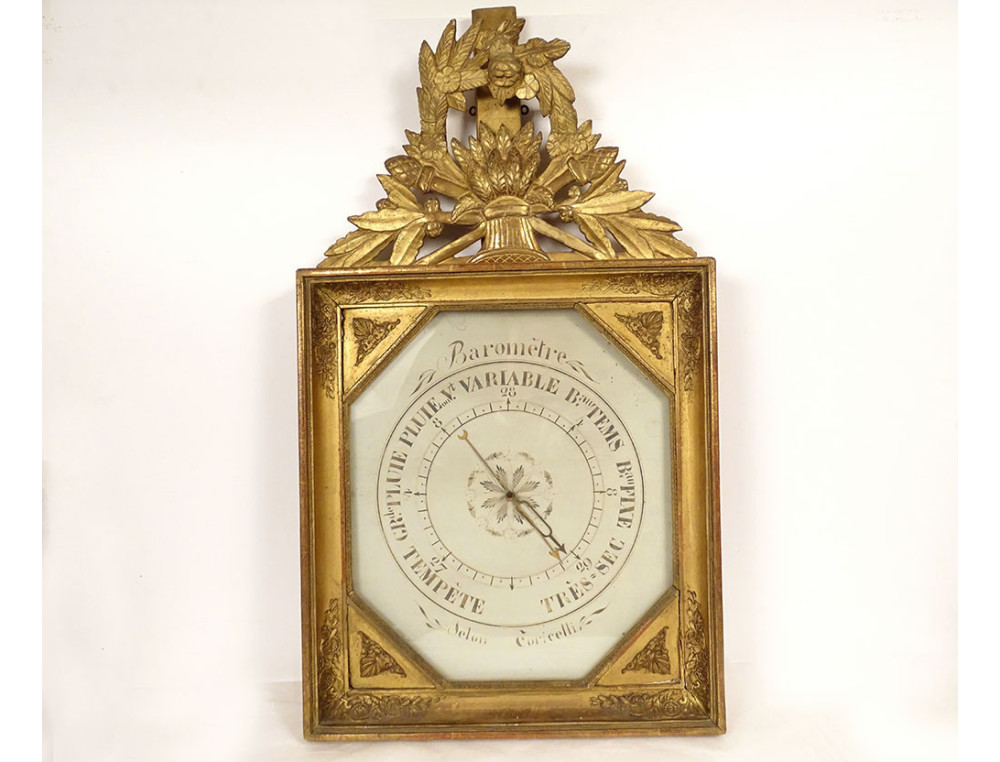
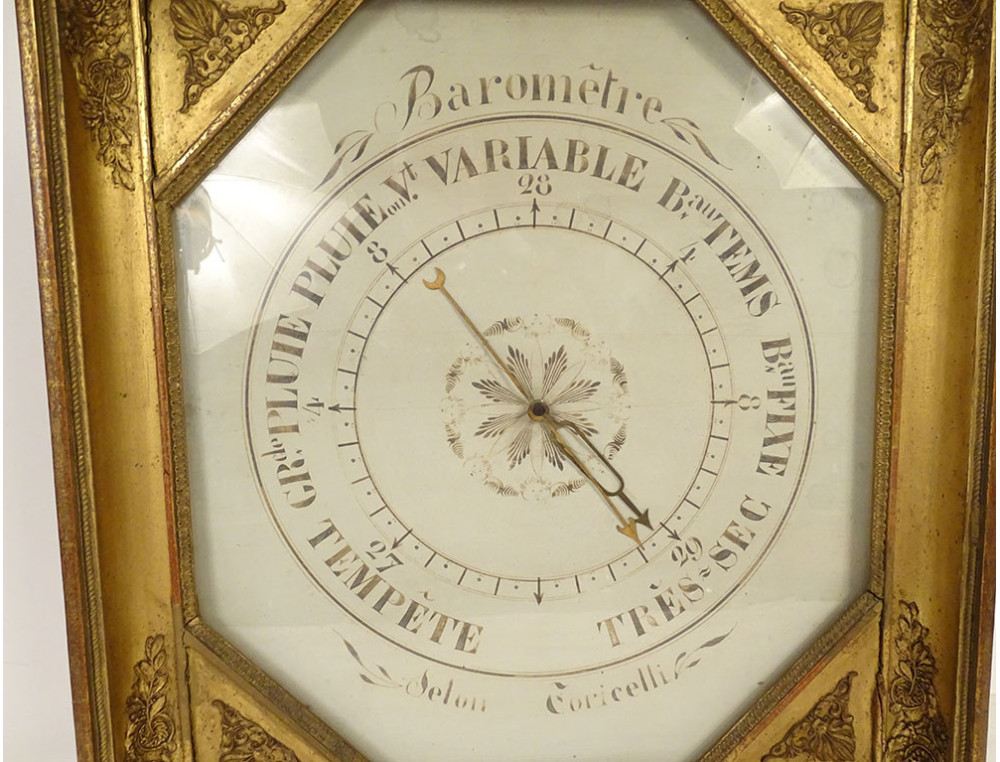
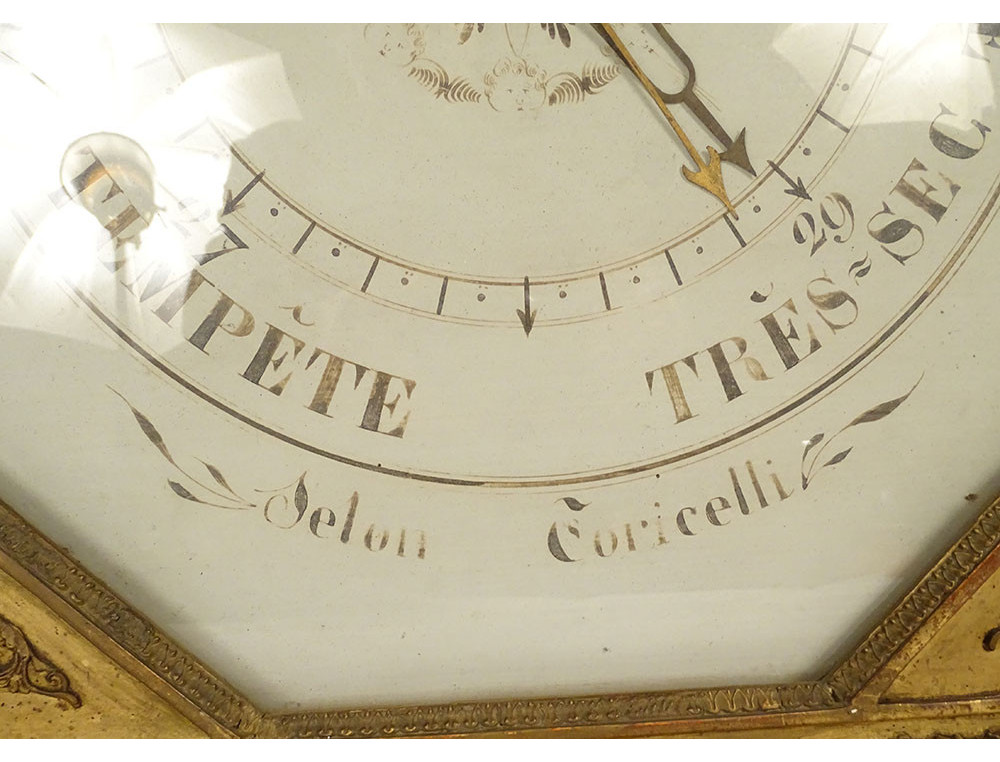

First Empire barometer, gilded carved wood, Torricelli system, flower basket, 19th century

 Articles
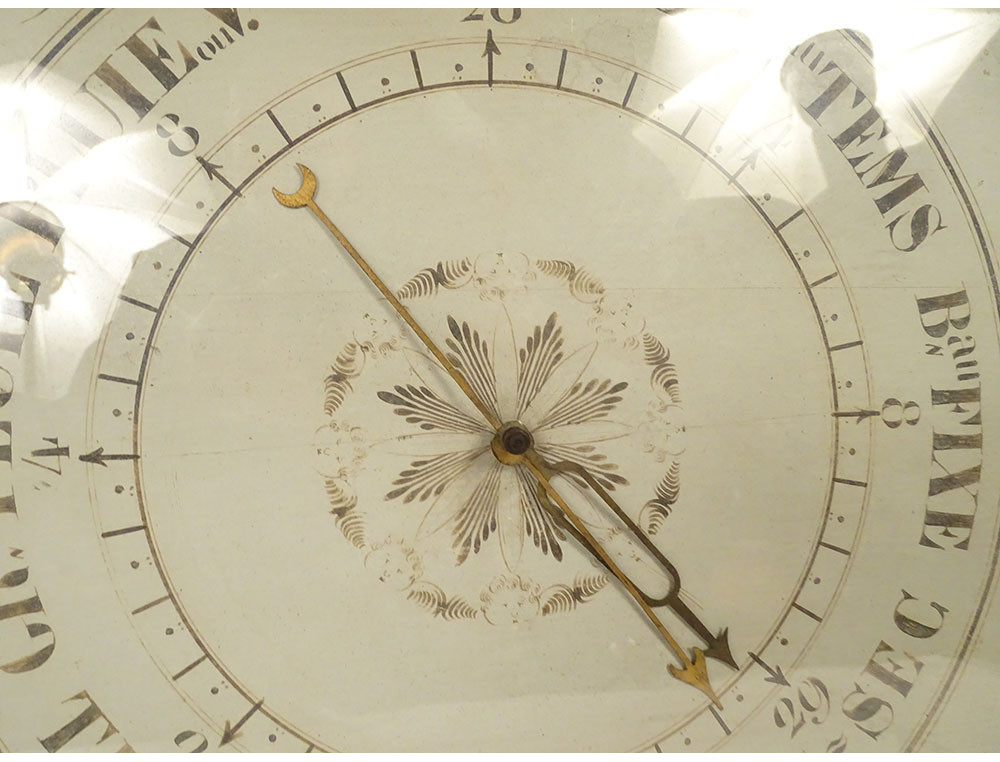
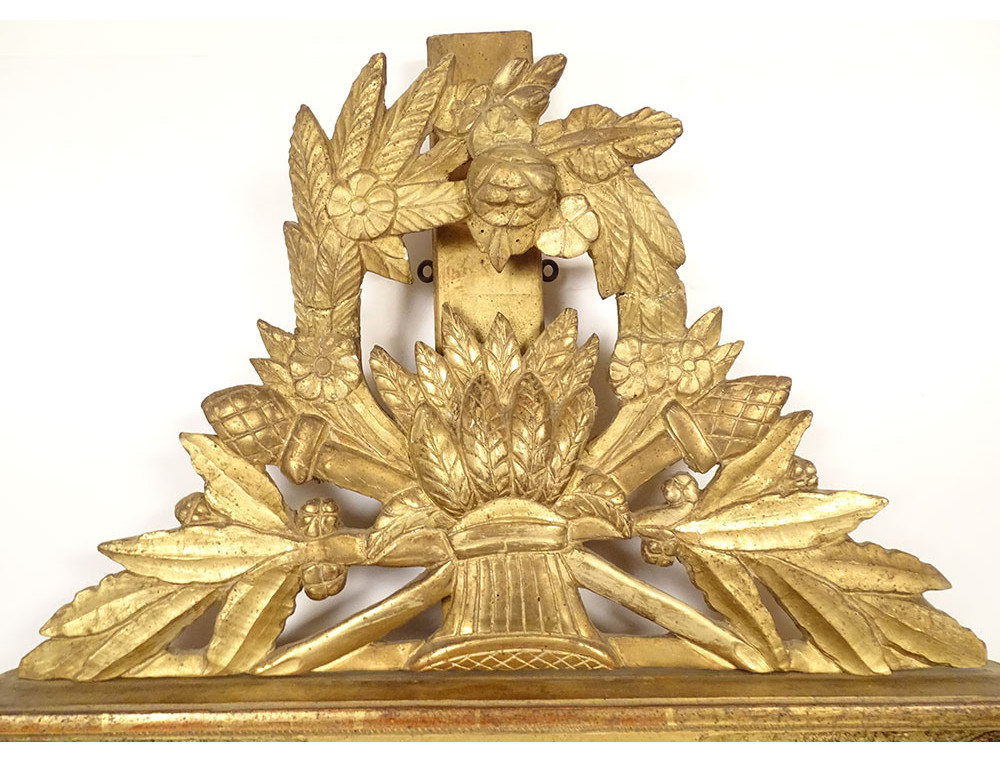
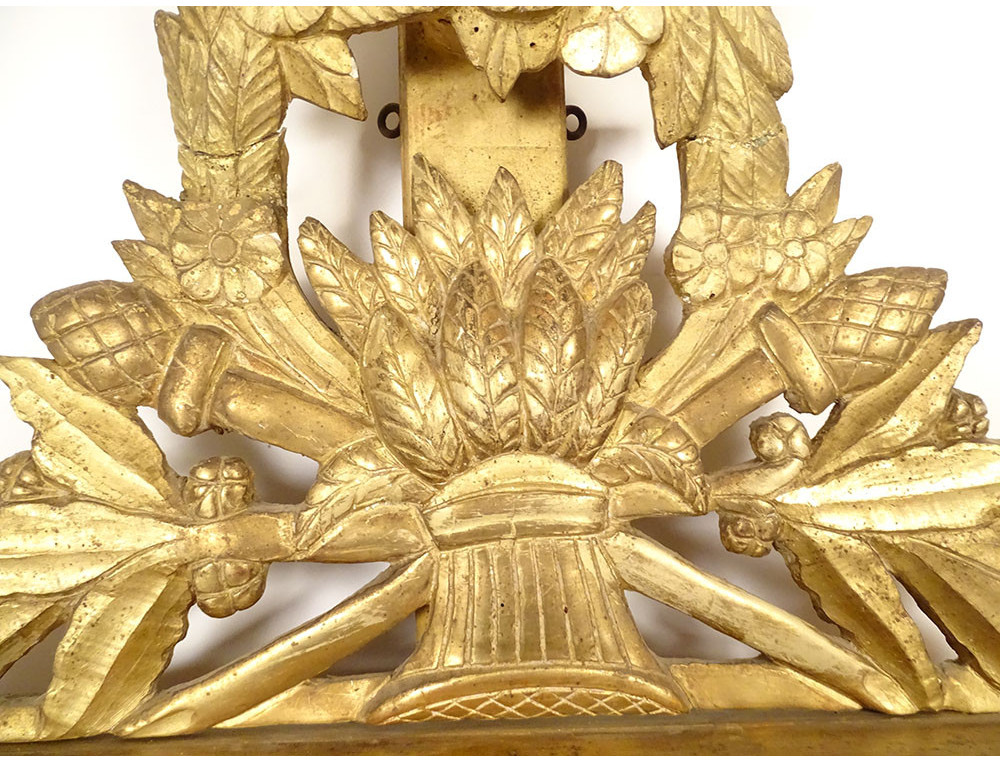
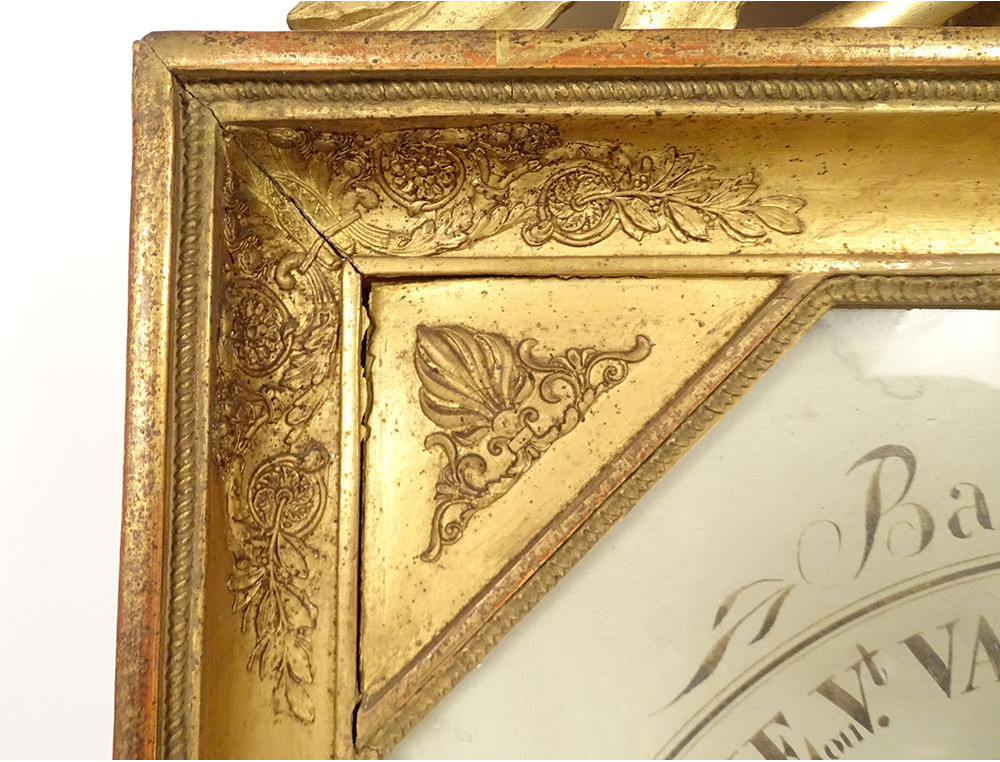
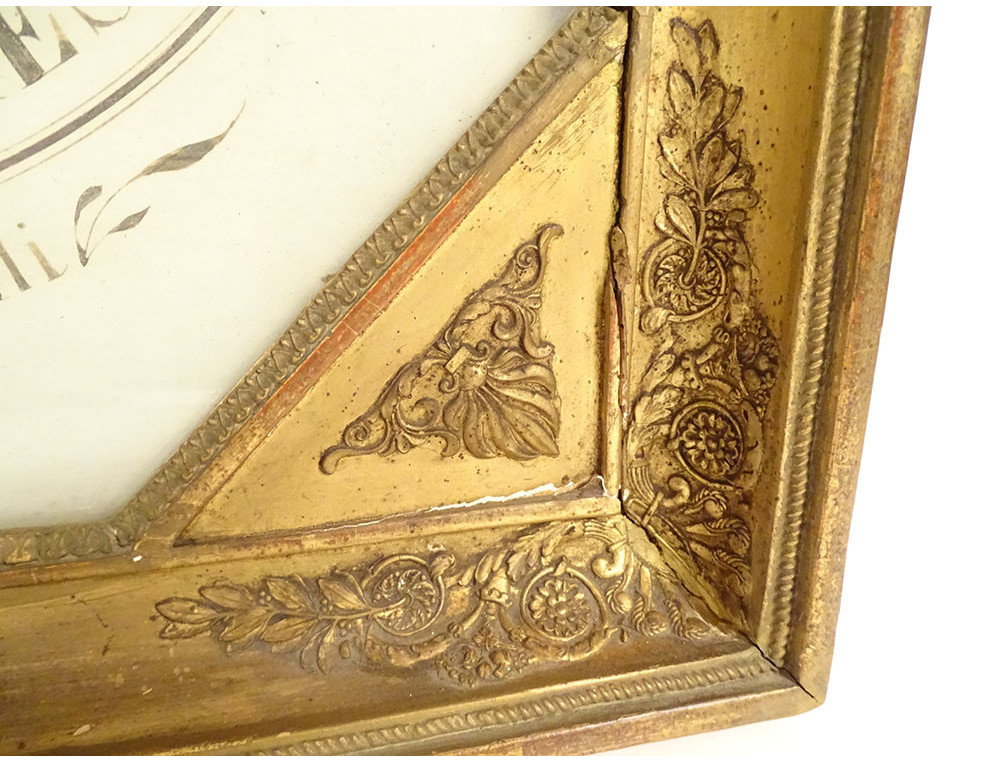
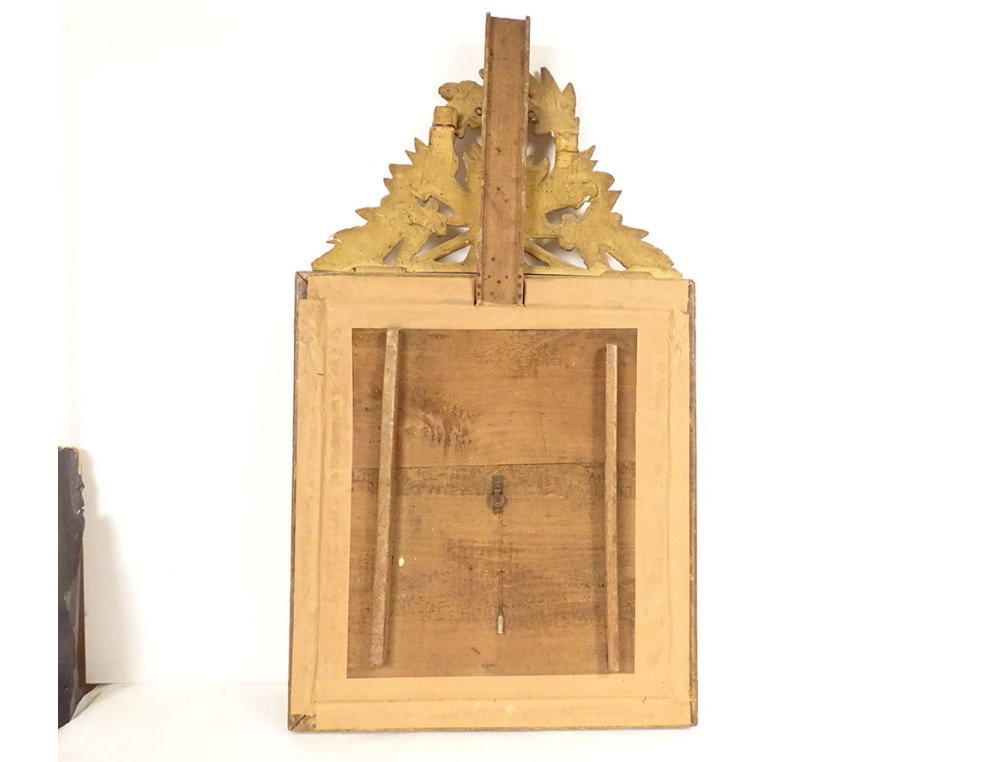
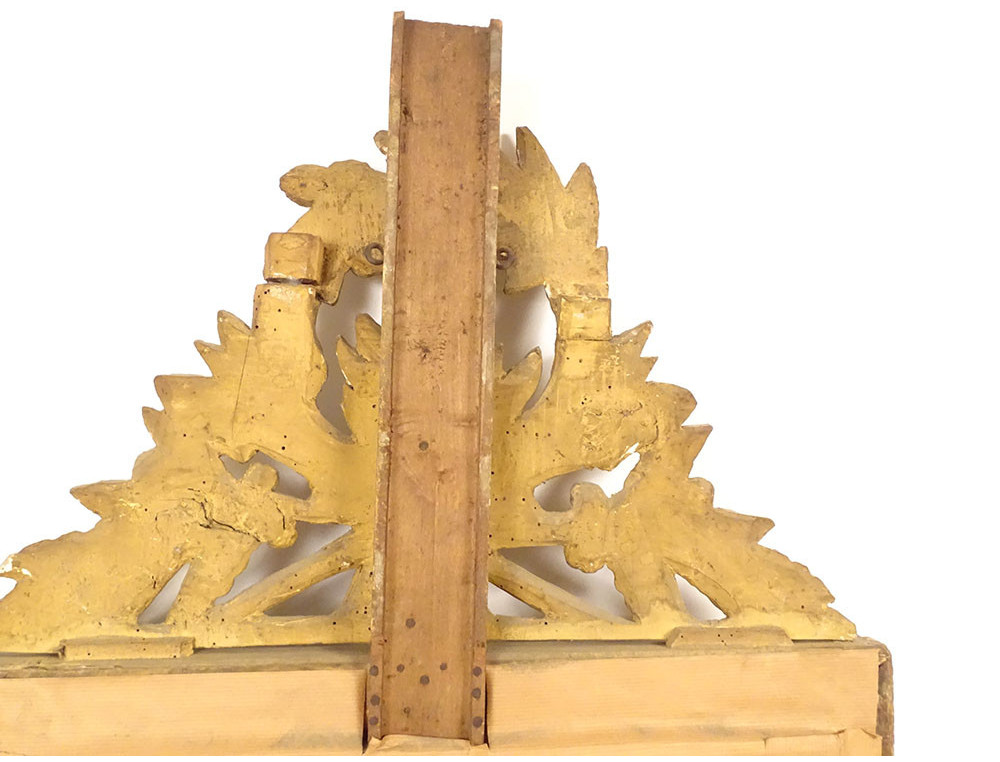
Torricelli-style barometer* in carved and gilded wood, decorated on the pediment with a basket with ears of wheat and laurel wreaths, as well as flowers, frame decorated with palmettes and foliage, from the First Empire period, early 19th century.
This barometer is in good overall condition, superb quality.
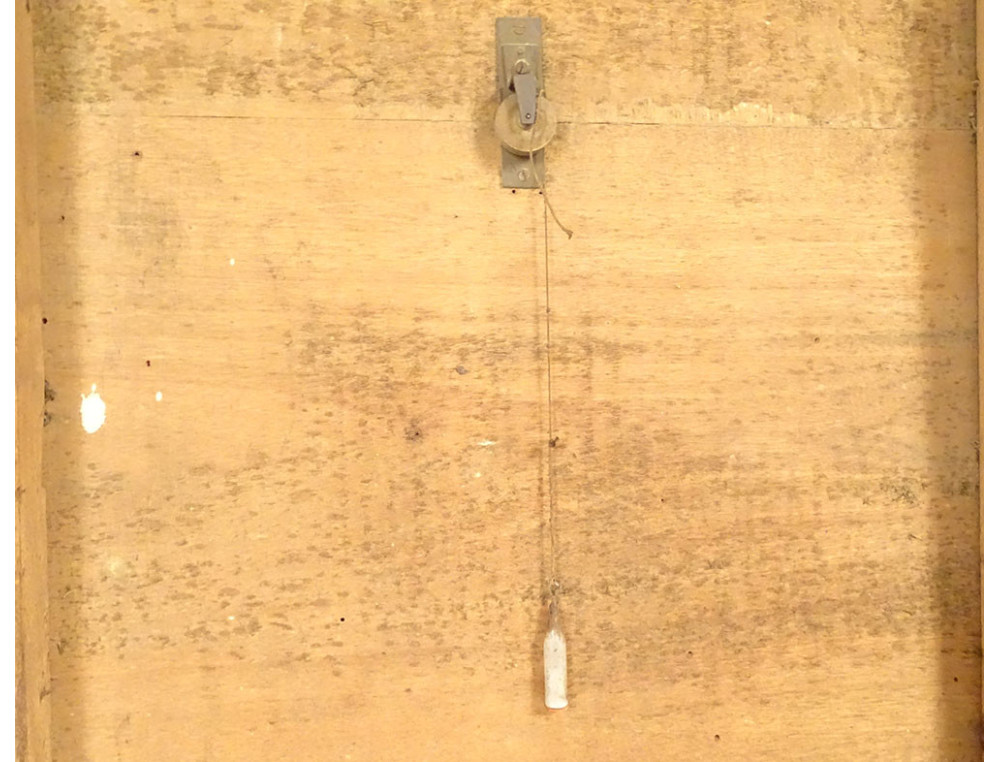
Please note: some damage and cracks in the wood and gilding, paper slightly stained and yellowed, wear and tear of age, see photos.
The barometer is an invention that came about by accident. Torricelli, Galileo's former secretary, wasn't directly interested in atmospheric pressure, but rather in the jets of water in fountains. Around 1643, Torricelli tried to solve a mystery: why didn't columns of water rise higher than 10 meters? Torricelli decided to replace the water with mercury, which is heavier than water and less voluminous because it is denser. He designed a glass tube filled with mercury, which he inverted over a basin of water, without letting any air in. The amount of mercury needed to fill the 76 cm column reproduced the force exerted by a 10-meter column of water. The force exerted by the air on the column slowed its rise, and it was impossible to overcome this force. He then realized that water could not rise higher than 10 meters for physical, not technological, reasons. In 1676, the Academy of Sciences, following Blaise Pascal's work on atmospheric pressure, named this tube Torricelli's barometer, and named its unit of measurement the Torr (1 Torr = 1 mm on the mercury column).
(BNF website)
ATTENTION: FOR A DELIVERY QUOTE CONTACT US WITH CITY AND COUNTRY OF DESTINATION.
BE CAREFUL: PLEASE CONTACT US FOR THE DELIVERY PRICE.