 Articles
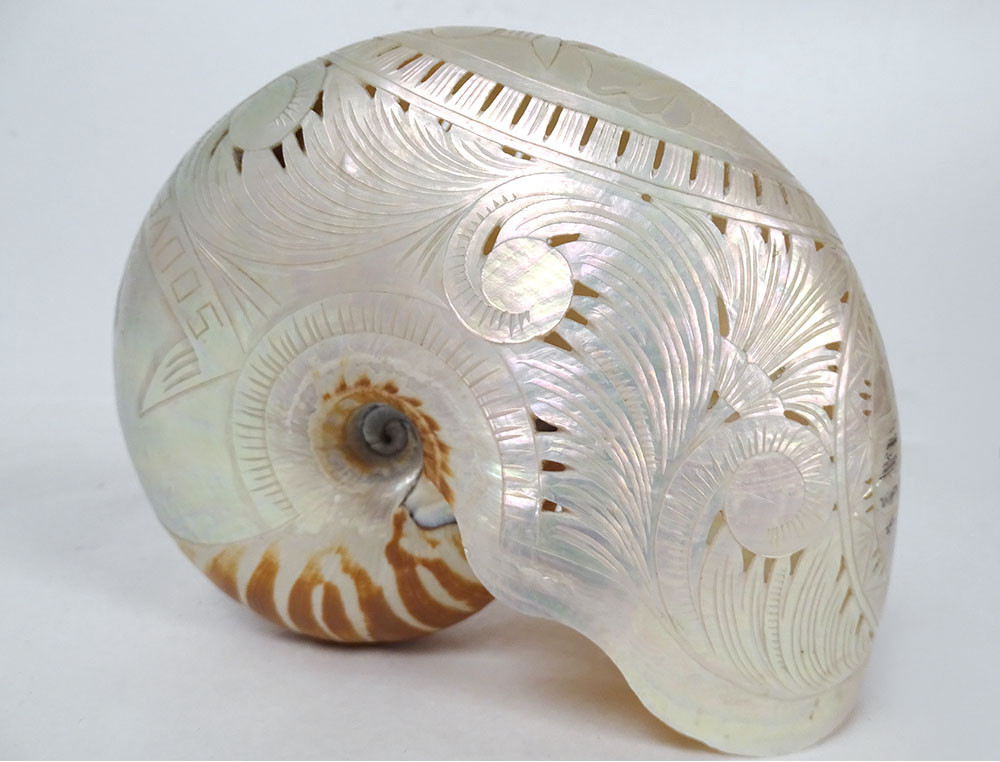
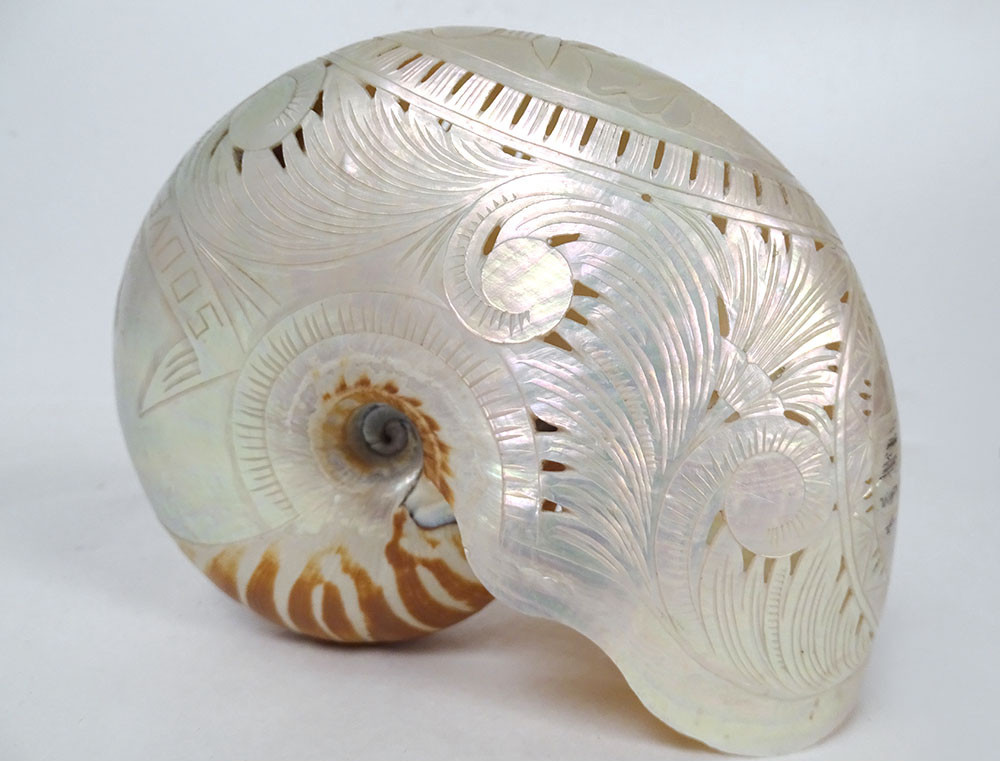
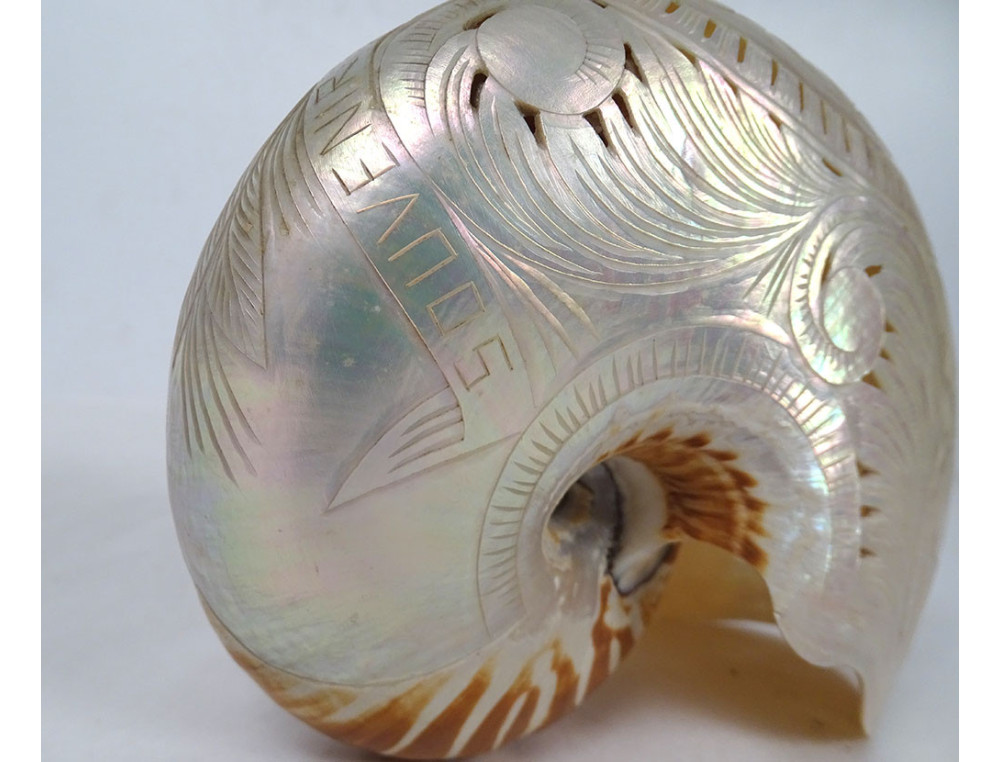
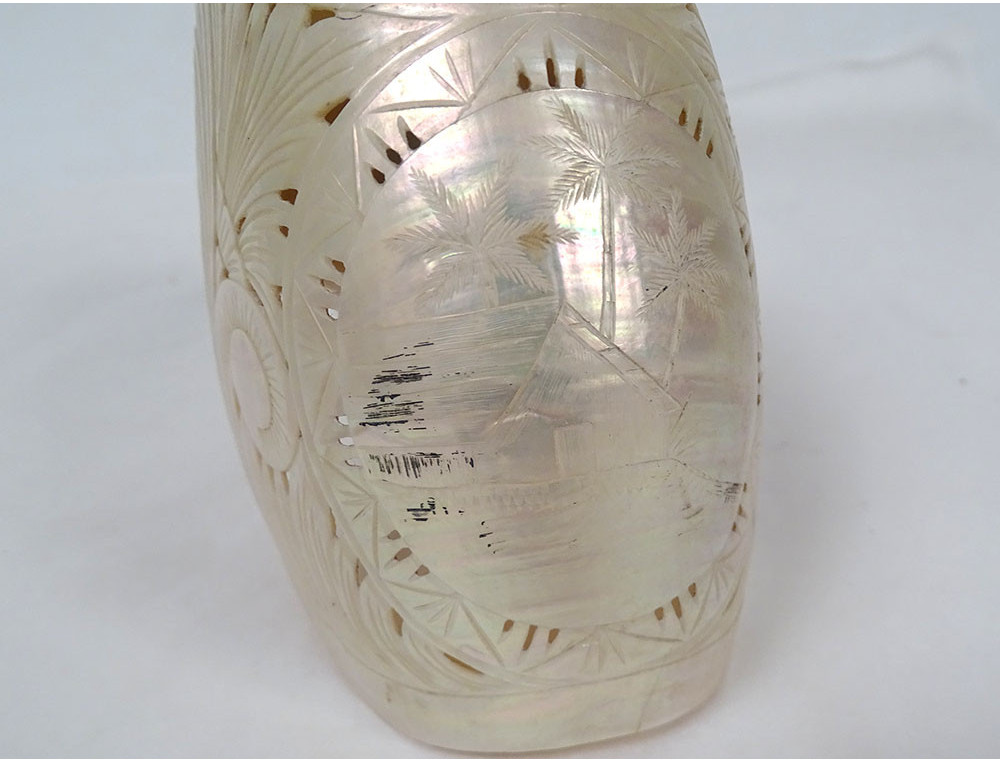
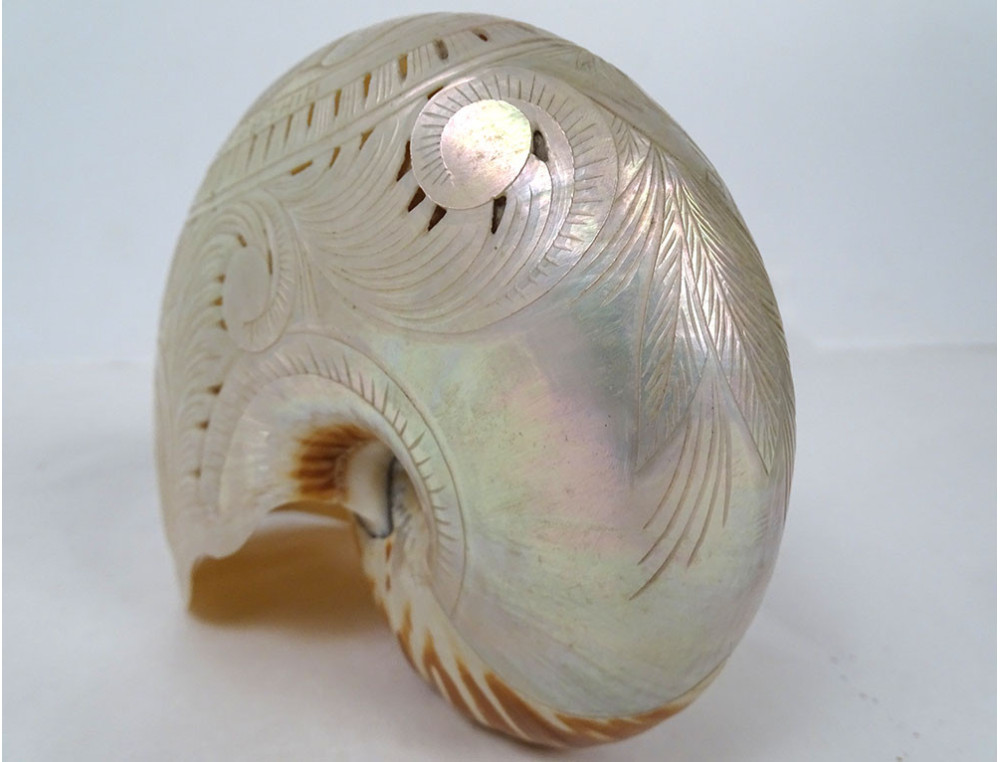
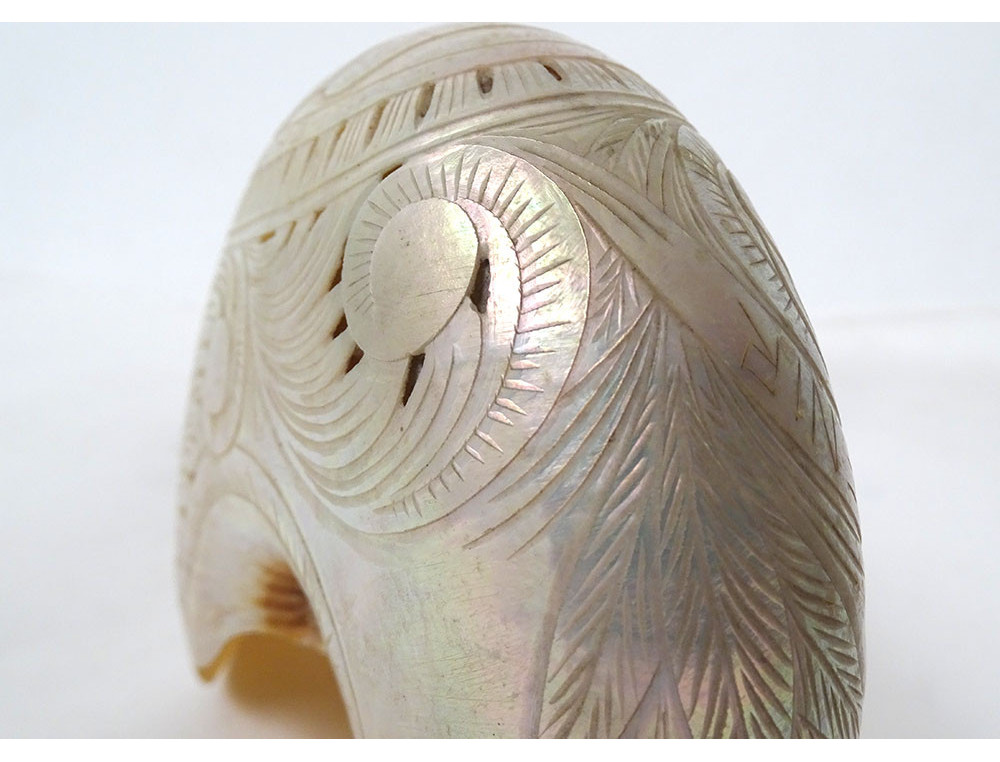
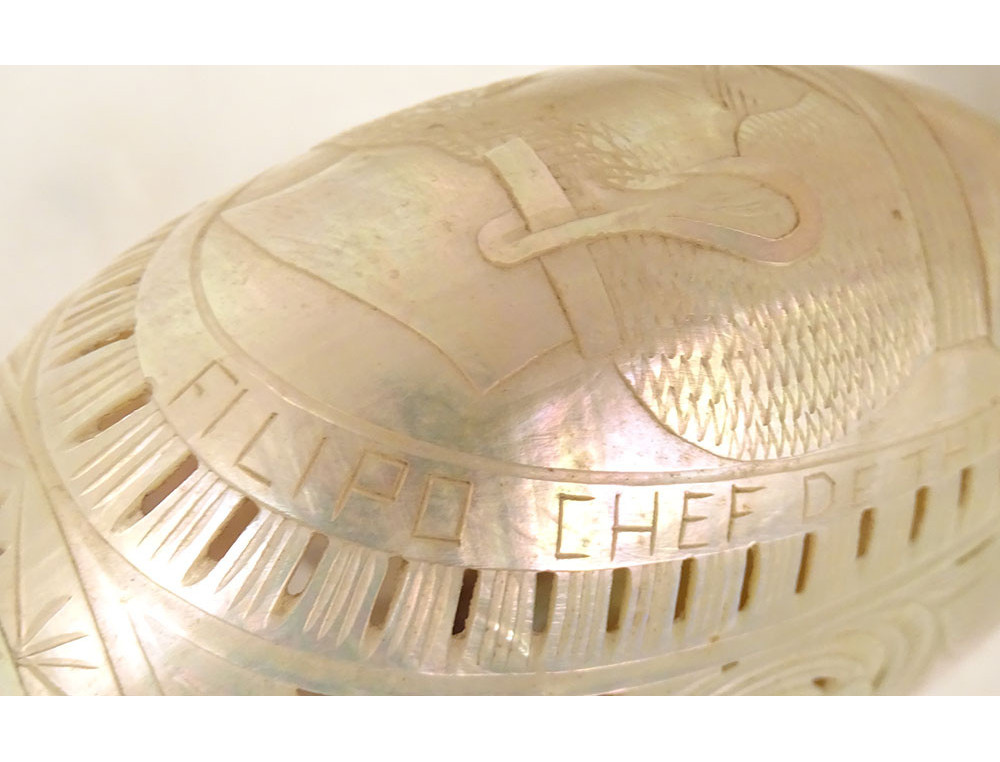
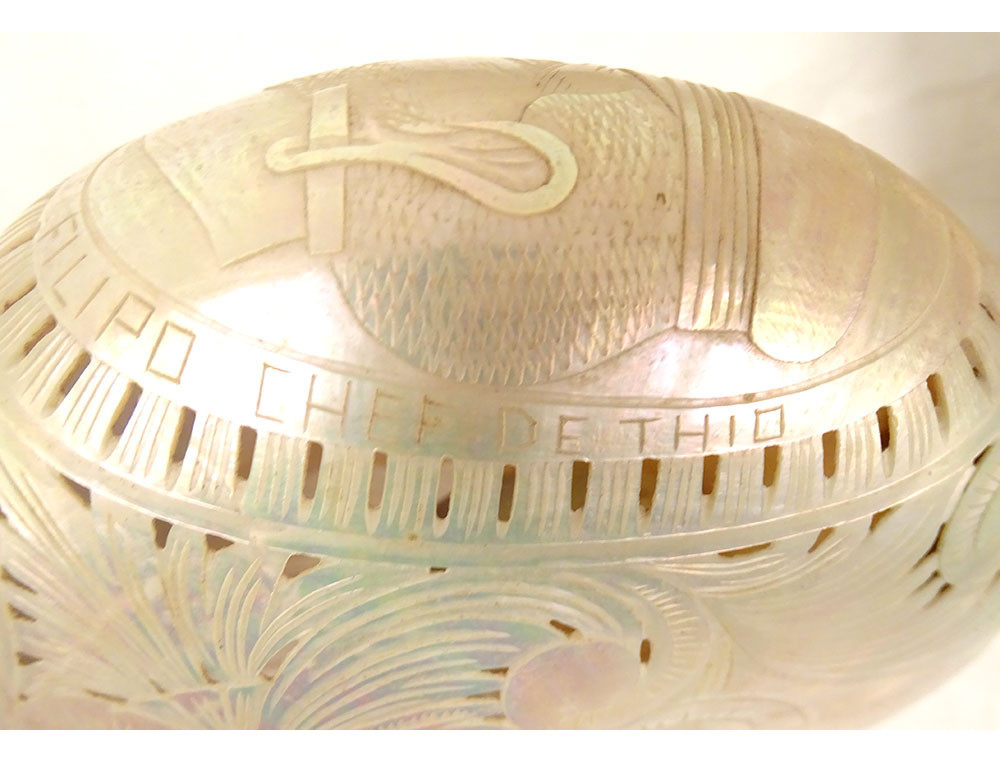
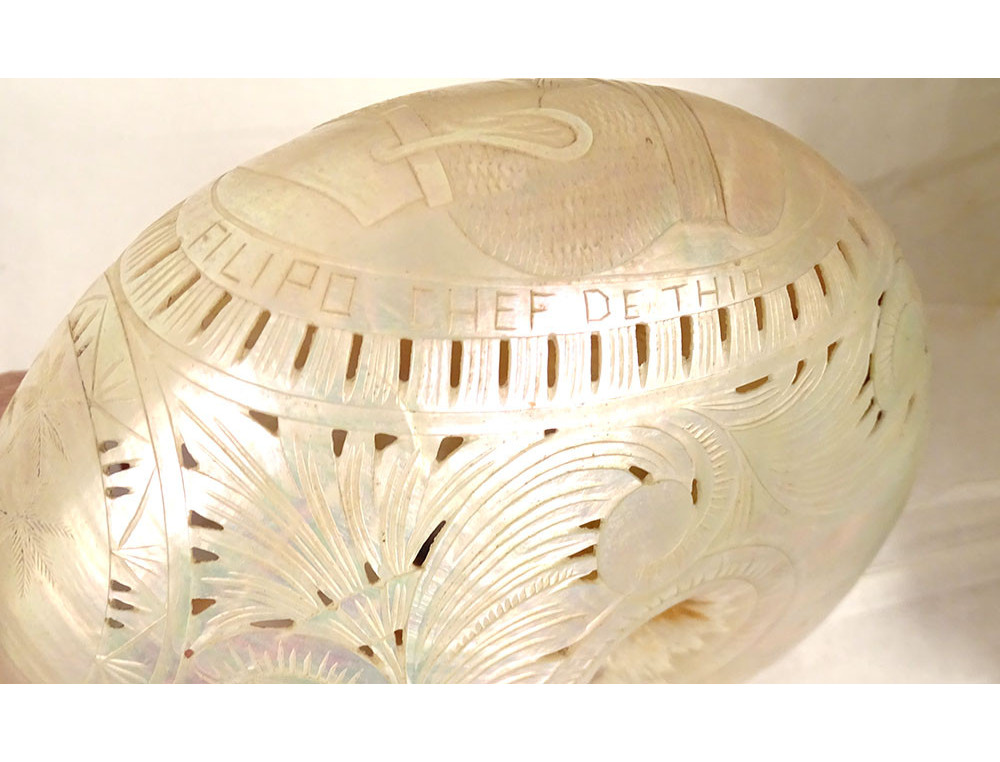
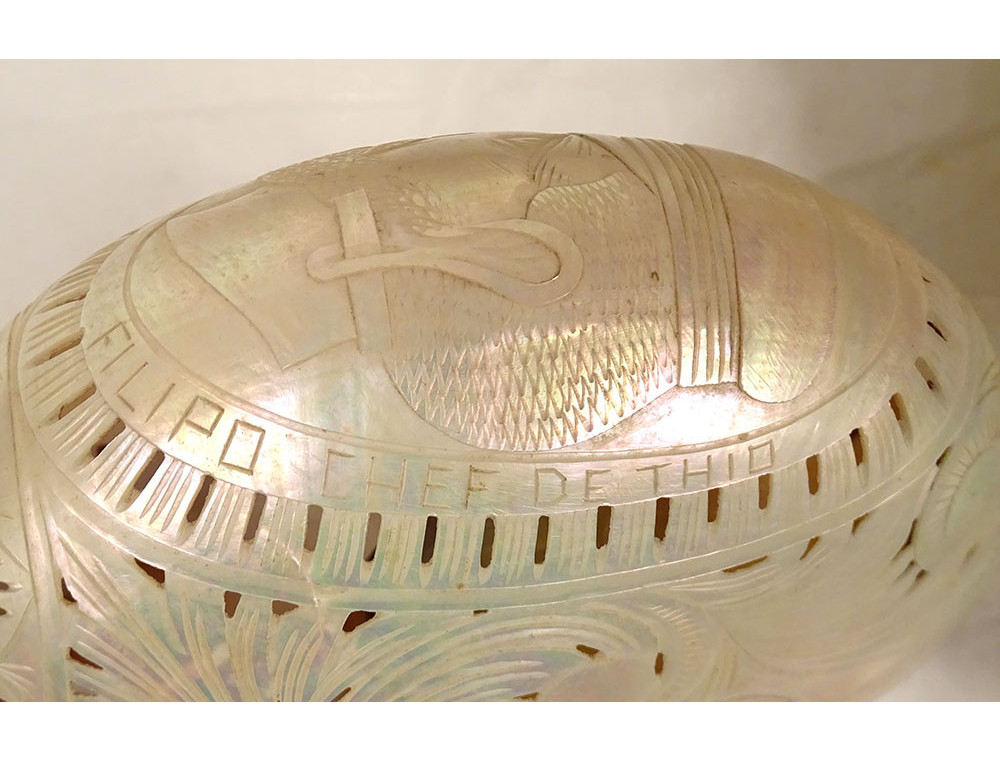
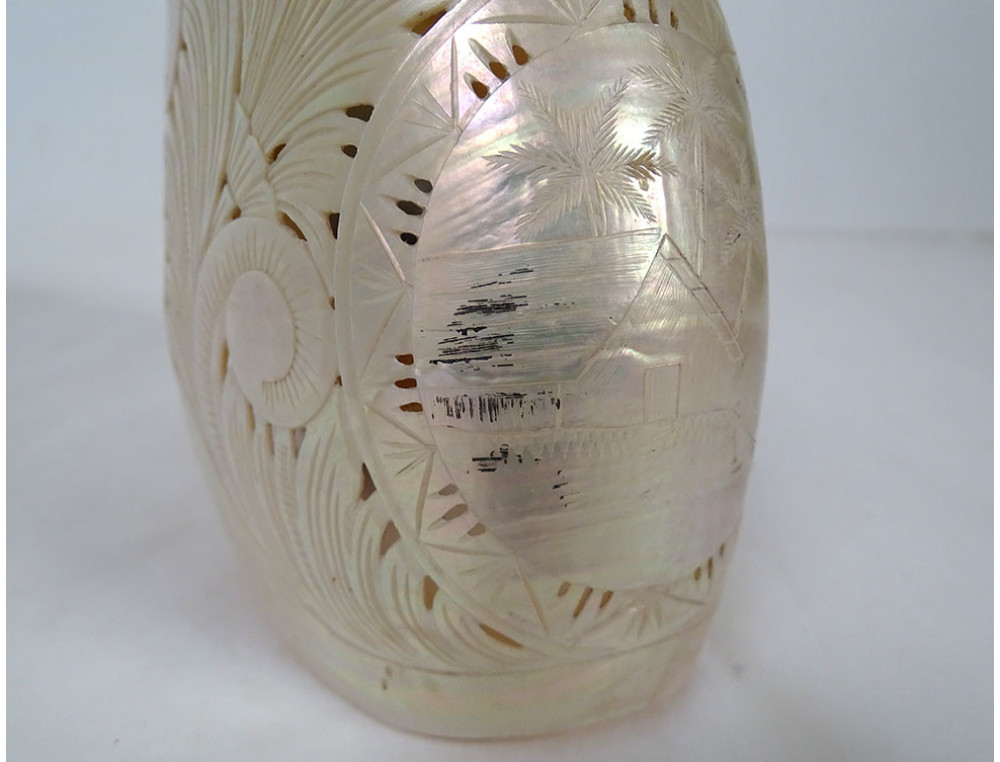
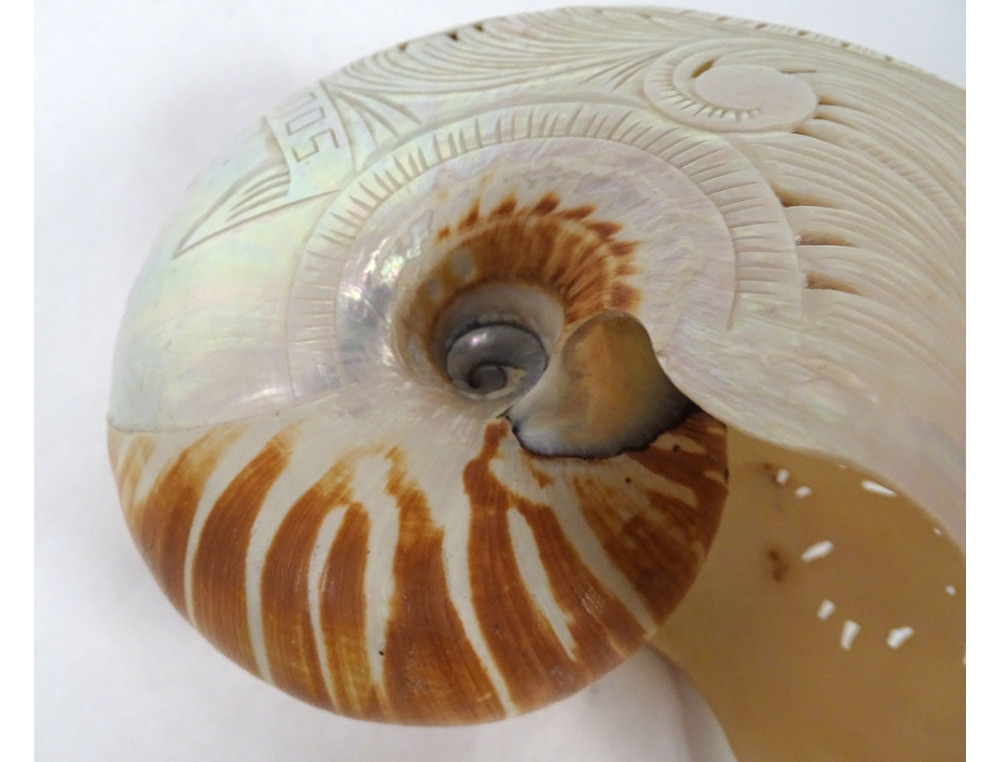
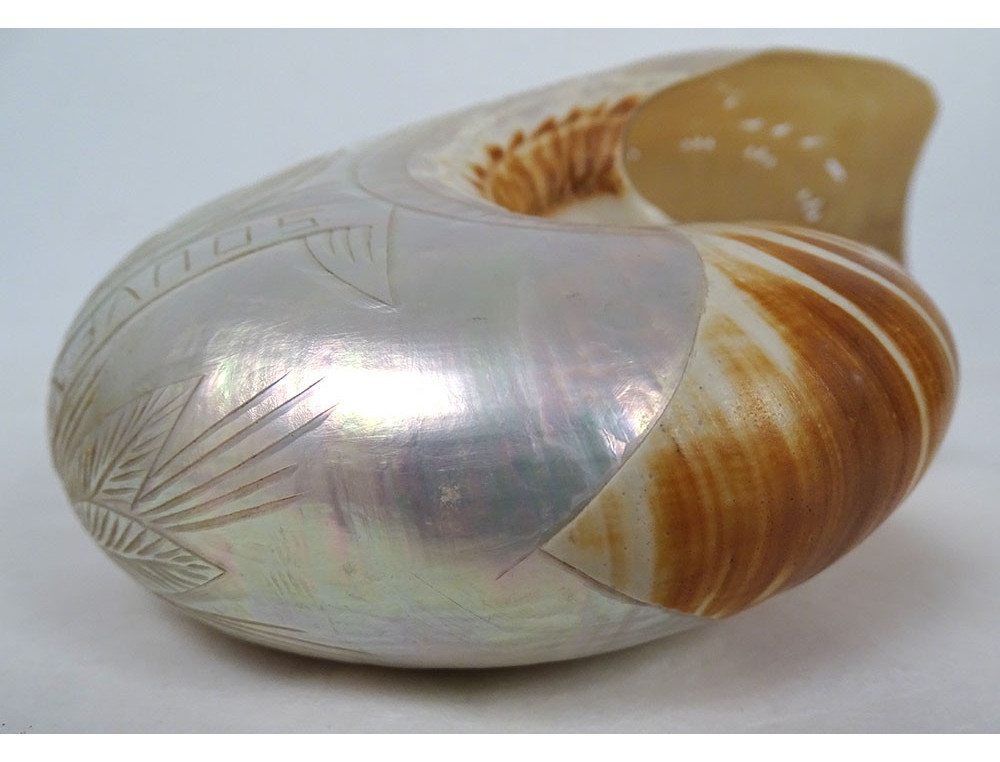
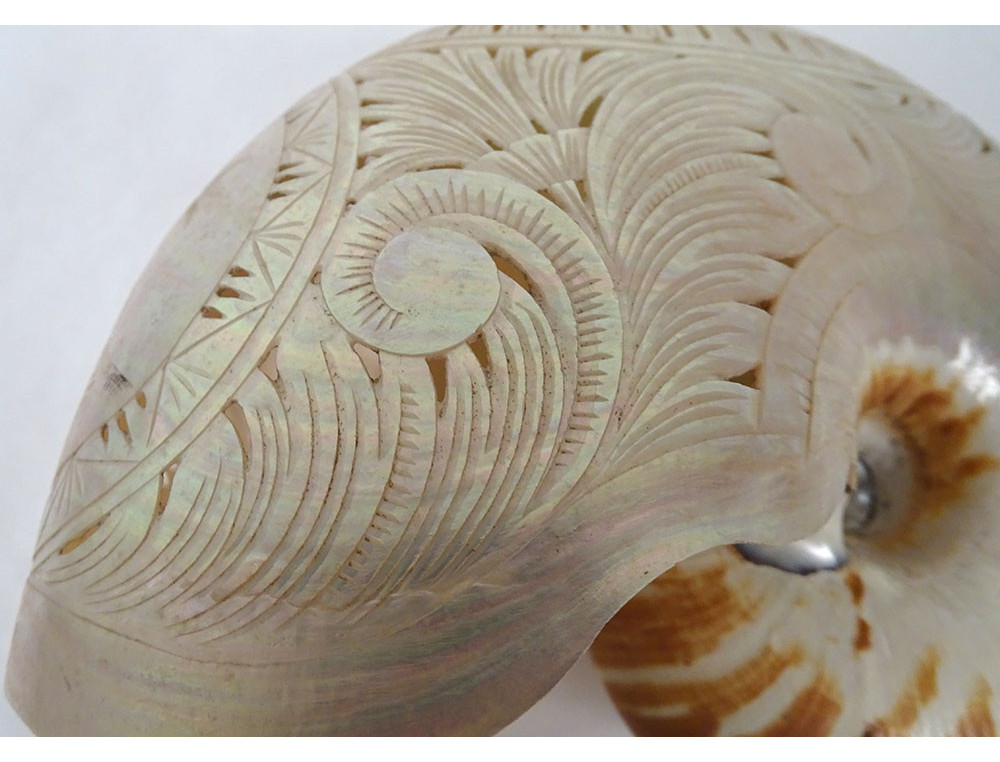
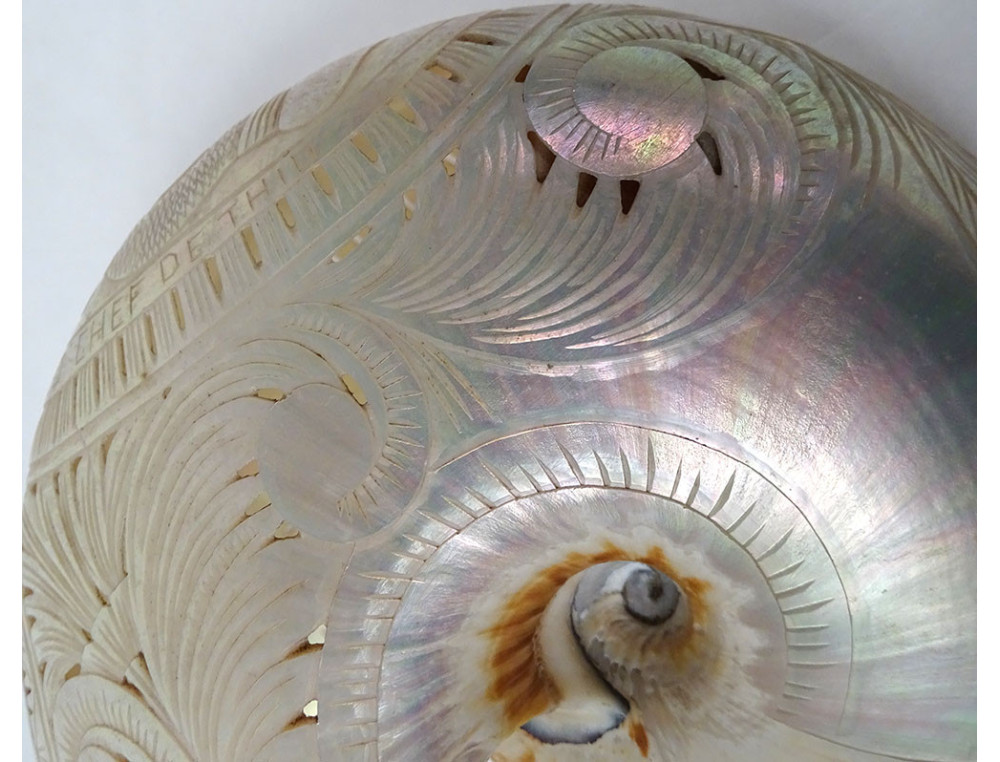
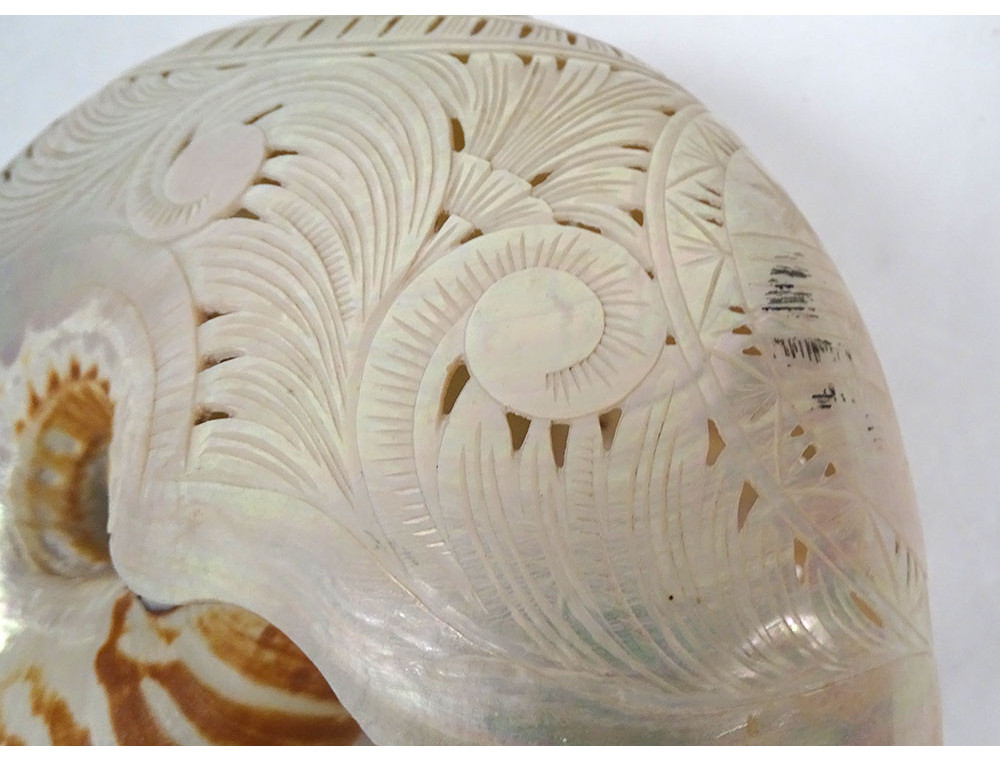
Decorative carved seashell (mother-of-pearl nautilus shell) depicting the portrait of the historical Kanak figure Filippo*, Chief of Thio, engraved souvenir, work of a convict from New Caledonia, late 19th century. This nautilus is finely carved and openwork with stylized motifs, arabesques and vegetal scrolls, as well as a village hut surrounded by palm trees.
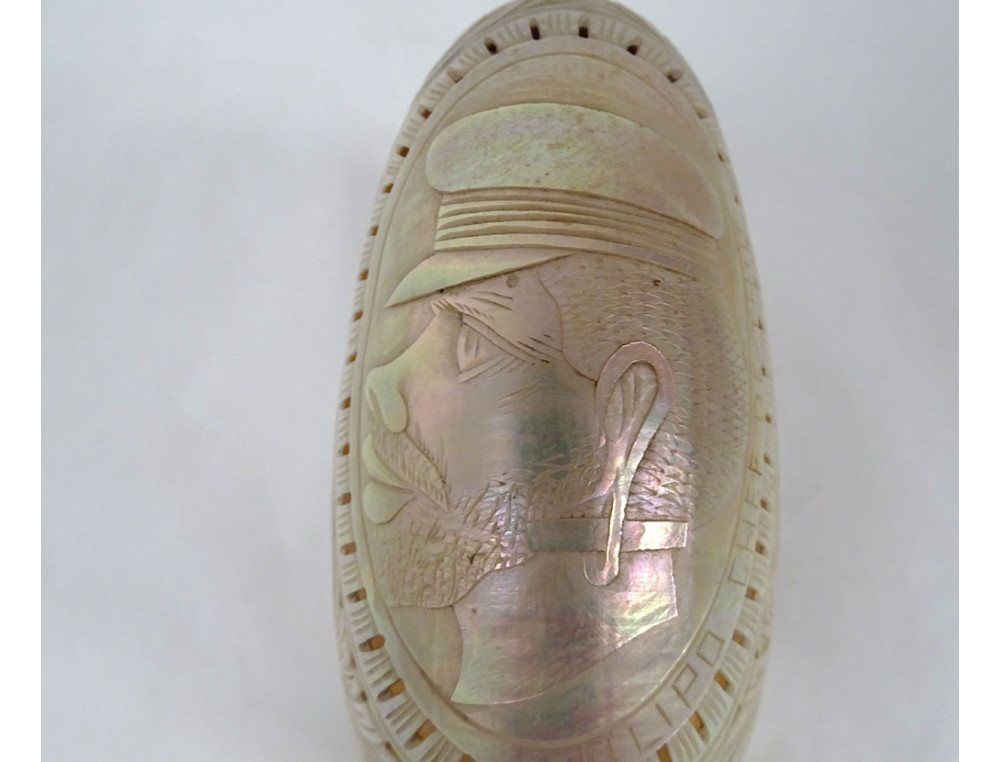
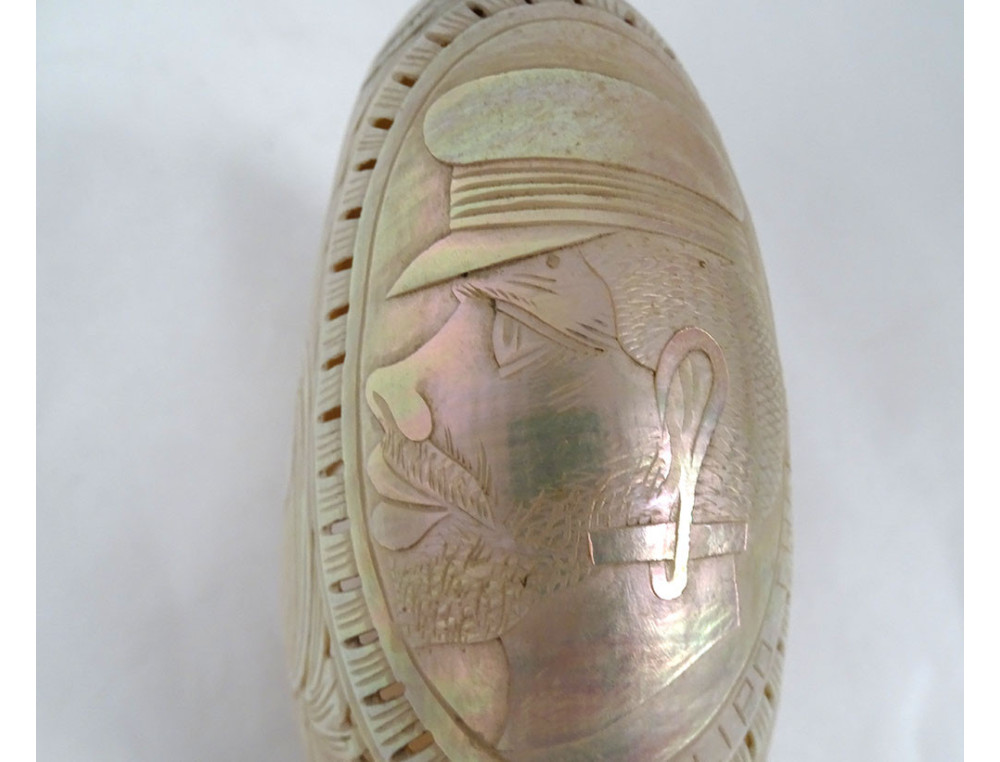
On the back of the shell, a profile portrait of Filippo is carved. He is the chief of the Saint-Philippe tribe in Thio (New Caledonia), known as Filippo Dopoua, also spelled Chief Philippe Philippo Dopoua*. His life is documented and is linked to the Kanak uprising of the late 19th century (see biography below). This shell is therefore a valuable piece of evidence of the island's history.
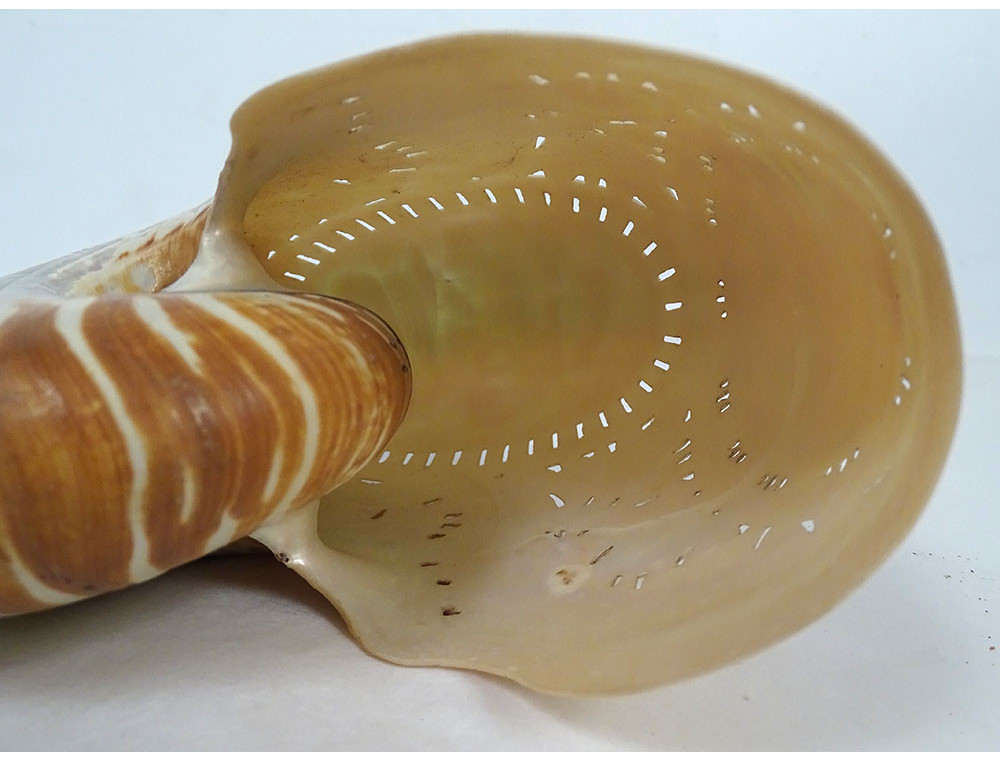
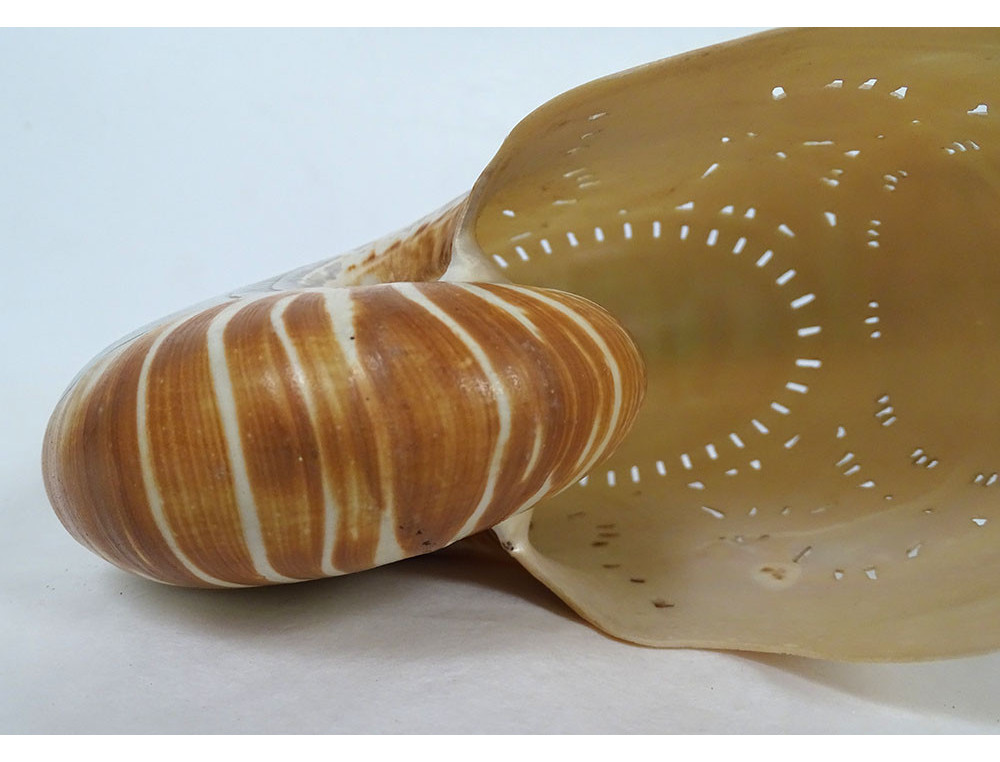
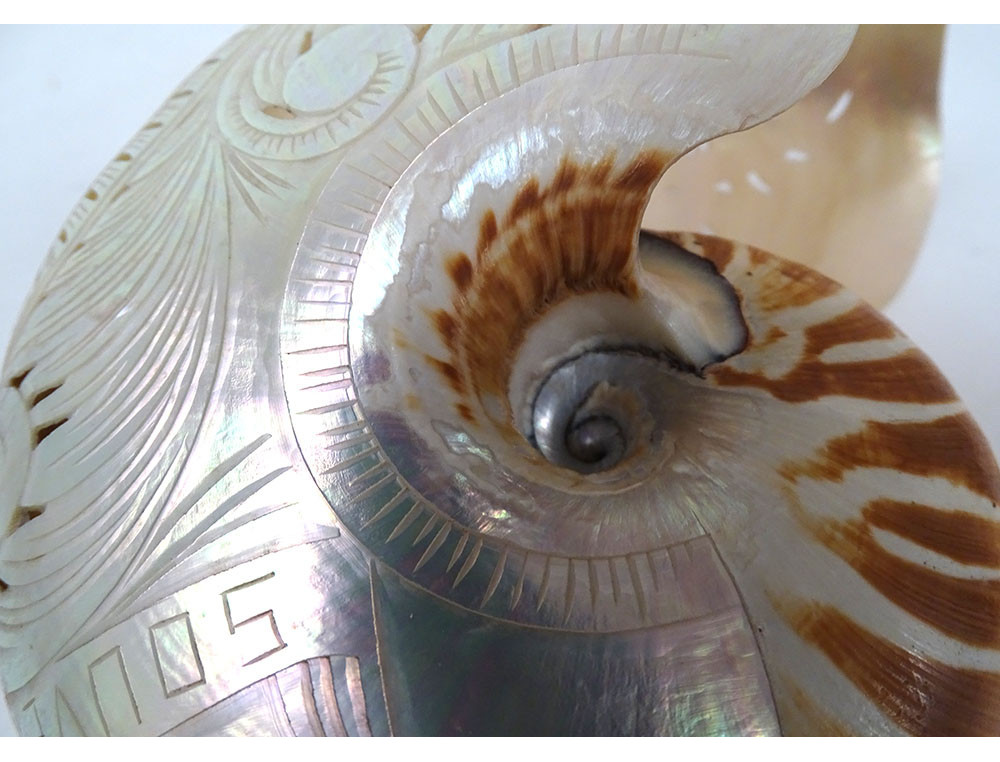
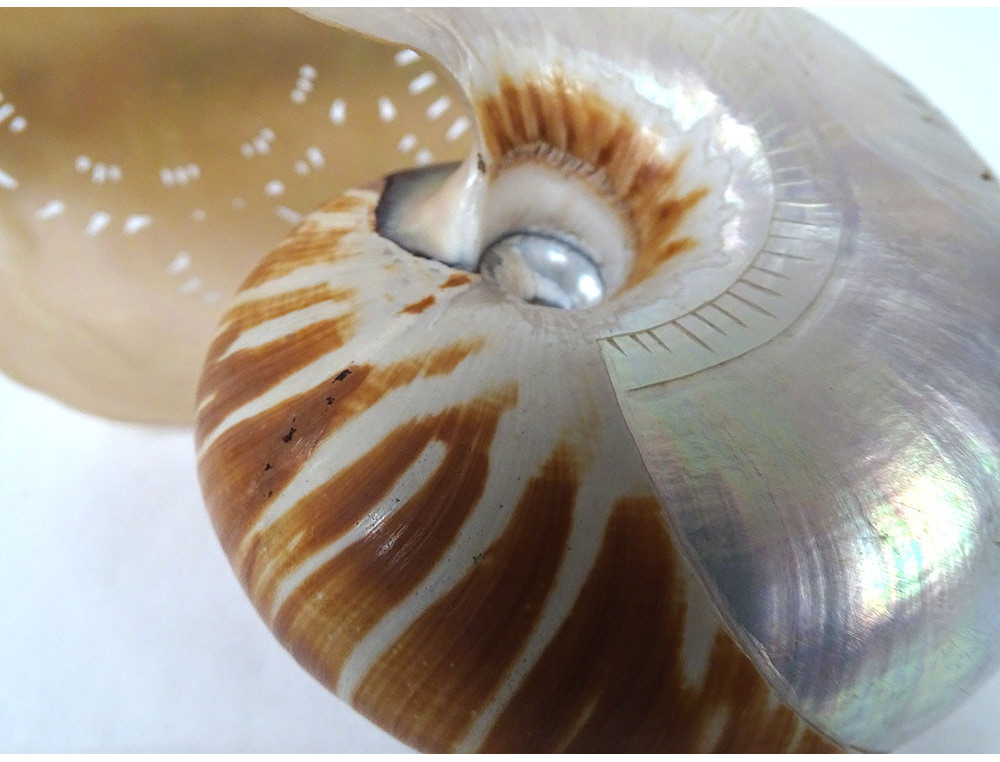
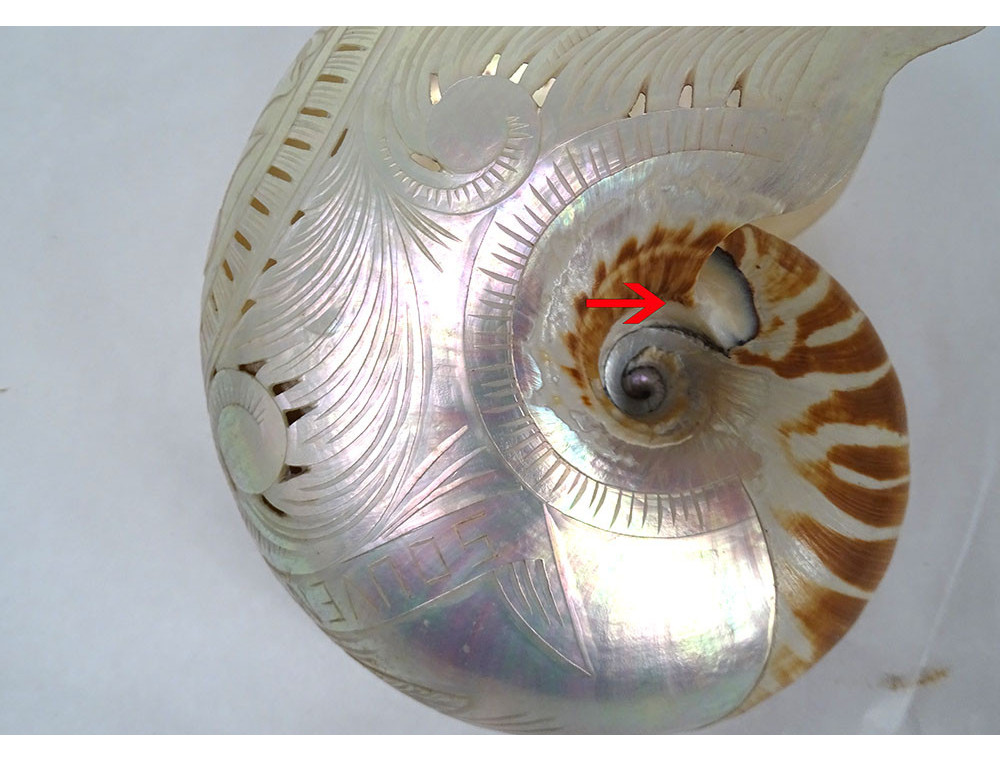
This nautilus shell is in good condition and of exceptional quality. Some areas of the shell are entirely pierced and openwork, requiring immense dexterity to avoid breaking the particularly fragile shell. It is a particularly decorative object; the contrast is striking between the natural base of the shell (which retains its original tawny stripes) and the upper part, entirely whitened, pearly, and sculpted, which plays with the light.
Note: some minor scratches, wear and tear from age on the shell (especially in the center of the coil, see photos), traces of faded polychromy (on the decoration of the case), see photos.
Filippo Dopoua hailed from the Thio region, in the heart of the Xaracuu customary area. Originally, he was not the supreme chief of the region, but a vassal of Kary, the high chief of Bourendy. Dopoua's life changed dramatically in the late 1870s, in the wake of the Kanak uprising of 1878 and the surge of colonization. High Chief Kary died suddenly. After his death, his tribe was converted and baptized. Regional suzerainty was then officially conferred upon Filippo Dopoua by the Catholic missionaries, who saw him as a more conciliatory leader. He took the helm of what became the chieftaincy of the Saint-Philippe mission in Thio. Having become the "Chief of Thio," Dopoua had to navigate an extremely complex position, typical of chiefs appointed by colonial authorities. For the colonial and religious authorities, it was seen as a cog in the machine for maintaining order, recruiting labor, and appropriating the coastal lands of Thio (land suitable for coconut palms). Charles Malato, highly critical of the clergy, harshly described it as a political instrument under the direct influence of the mission. It was during this period of power that it adopted colonial trappings. The portrait engraved on this nautilus shell (showing a proud profile with an officer's cap) corresponds exactly to the imagery of chiefs recognized by the French administration, which often presented them with uniforms or medals to solidify their legal authority among the clans.